
Objective: To investigate the neuroprotective potential of berberine chloride in Parkinson’s disease (PD) by modulating pathological mitochondrial fission through c-Abl–mediated Drp1 phosphorylation using integrated bioinformatics, in vitro, and in vivo approaches.
Background: Mitochondrial dysfunction and excessive mitochondrial fission has been greatly implicated in the PD pathogenesis. Aberrant activation of the c-Abl/Drp1 signaling axis has emerged as a critical regulator of mitochondrial fragmentation and neuronal vulnerability in Parkinsonian pathology.
Method: c-Abl kinase was identified as a therapeutic target using bioinformatics and molecular docking analyses with natural compounds from the ZINC database, followed by ADMET prediction and molecular dynamics simulations. Neuroprotective effects of berberine chloride were evaluated in MPP⁺-exposed SH-SY5Y cells using assays for cell viability, mitochondrial membrane potential (JC-1), reactive oxygen species (DCFDA), and immunofluorescence of TH and α-synuclein. In vivo validation was performed in MPP⁺-treated C57BL/6 mice receiving berberine chloride (25–100 mg/kg, p.o.) for 21 days, with behavioral assessments and molecular analyses of c-Abl/Drp1 signaling and mitochondrial dynamics–related proteins and genes in brain tissue.
Results: Molecular docking revealed that berberine chloride exhibited the strongest binding affinity toward the 3D crystal structure of human c-Abl kinase among 15 screened natural compounds, with stable interactions confirmed by molecular dynamics simulations. In vitro, berberine chloride significantly attenuated MPP⁺-induced oxidative stress and mitochondrial dysfunction. In vivo, berberine chloride treatment significantly improved motor coordination and locomotor activity (p < 0.05), restored mitochondrial biogenesis, and reduced pathological Drp1 phosphorylation through modulation of c-Abl kinase signaling.
Conclusion: Berberine chloride effectively modulates c-Abl–Drp1 signaling to normalize aberrant mitochondrial fission and confer neuroprotection in experimental Parkinson’s disease. These findings highlight berberine chloride as a promising mitochondria-targeted therapeutic candidate warranting further translational and clinical investigation.
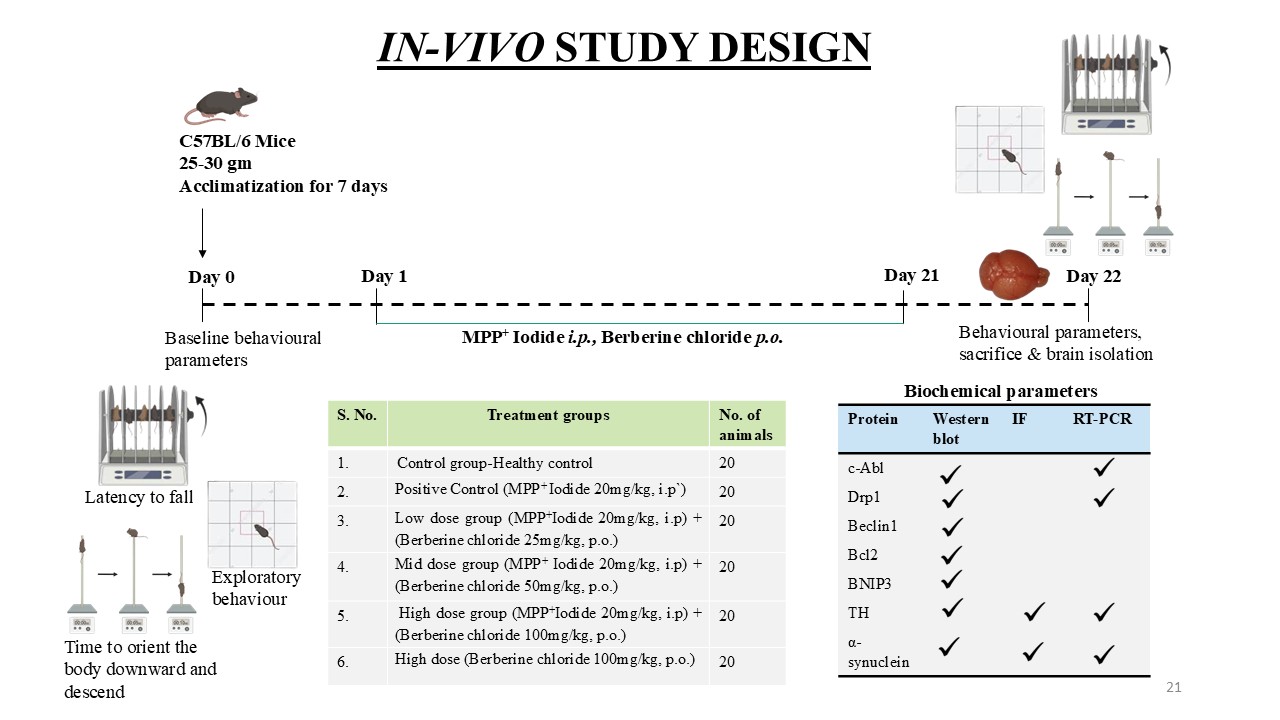
Detailed Animal Study Design and Plan
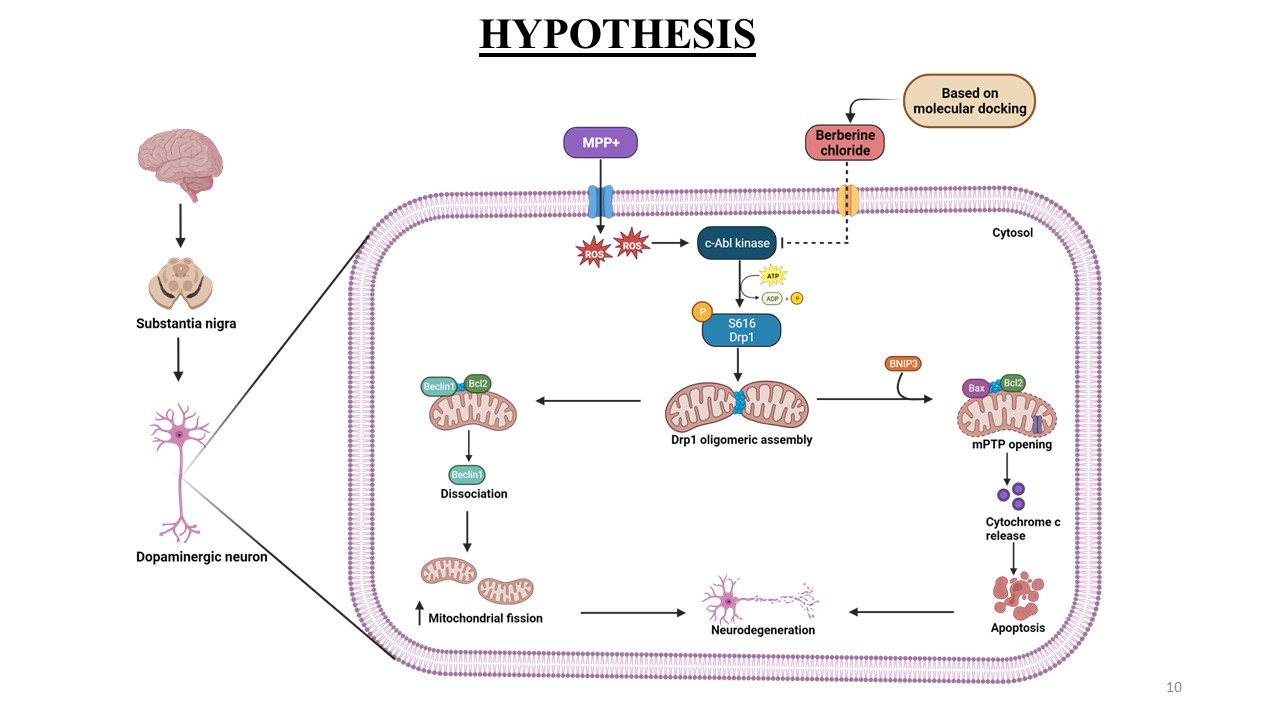
Hypothesis
References: Yasmine J. Liu et al., March 2022, Mitochondrial fission and fusion: A dynamic role in aging and potential target for age-related disease, https://doi.org/10.1016/j.mad.2020.111212
Brahmachari et al., 1 Nov 2017, c-Abl and Parkinson’s Disease: Mechanisms and Therapeutic Potential, Journal of Parkinson’s Disease, vol. 7, no. 4, pp. 589-601, 2017, 10.3233/JPD-171191
Milton H. Werner and C. Warren Olanow, 23 November 2021, Parkinson’s Disease Modification Through Abl Kinase Inhibition: An Opportunity, Wiley Online Library (wileyonlinelibrary.com). DOI: 10.1002/mds.28858
Mahila Lotfi Aski et al., January 2018, Neuroprotective effect of berberine chloride on cognitive impairment and hippocampal damage in experimental model of vascular dementia, Iranian Journal of Basic Medical Sciences, 21(1):53-58, DOI:10.22038/ijbms.2017.23195.5865
To cite this abstract in AMA style:
D. Khatri. Targeting c-Abl/Drp1-Dependent Mitochondrial Fission: Neuroprotective Effects of Berberine Chloride in Parkinson’s Disease Models [abstract]. Mov Disord. 2026; 41 (suppl 1). https://www.mdsabstracts.org/abstract/targeting-c-abl-drp1-dependent-mitochondrial-fission-neuroprotective-effects-of-berberine-chloride-in-parkinsons-disease-models/. Accessed October 1, 2026.« Back to 2026 International Congress
MDS Abstracts - https://www.mdsabstracts.org/abstract/targeting-c-abl-drp1-dependent-mitochondrial-fission-neuroprotective-effects-of-berberine-chloride-in-parkinsons-disease-models/