
Objective: To investigate clinical and treatment predictors of SNR in Egyptian CD patients receiving BoNT-A therapy.
Background:
Secondary non-response (SNR) to botulinum neurotoxin type-A (BoNT-A) presents a clinical challenge in the management of cervical dystonia (CD). Identifying patient- and treatment-related factors associated with SNR can enhance therapeutic planning and improve long-term outcomes.
Method:
A retrospective, multi-center, non-interventional study was conducted at Al-Hussein University Hospital and Cairo Fatemia Hospital between May 2022 and April 2025. A total of 215 CD patients were included. Patients with SNR were matched to up to three responder patients based on therapy duration and number of injection cycles. Potential predictors of SNR were analyzed using univariate logistic regression and confirmed with multivariate conditional logistic regression.
Results: Out of 215 patients, 205 were matched (SNR = 54; responders = 151). At baseline, a higher proportion of SNR patients had undergone previous therapies (p = 0.035) or surgical procedures for CD (p = 0.008) compared with responders. Disease severity at onset was similar between groups; however, at the time of SNR, SNR patients experienced more severe symptoms than controls. Multivariate analysis identified five independent predictors: prior CD surgery (OR 10.2, p = 0.012), history of BoNT-A–related severe adverse event (OR 5.7, p = 0.025), engagement in physical therapy (OR 4.5, p = 0.027), neuroleptic use (OR 3.4, p = 0.018), and higher average BoNT-A dose (OR 2.8, p = 0.009).
Conclusion:
SNR in CD patients may reflect underlying disease severity and prior interventions rather than true pharmacological resistance to BoNT-A. Recognizing these predictors can guide individualized treatment strategies and improve patient management in Egyptian clinical settings.
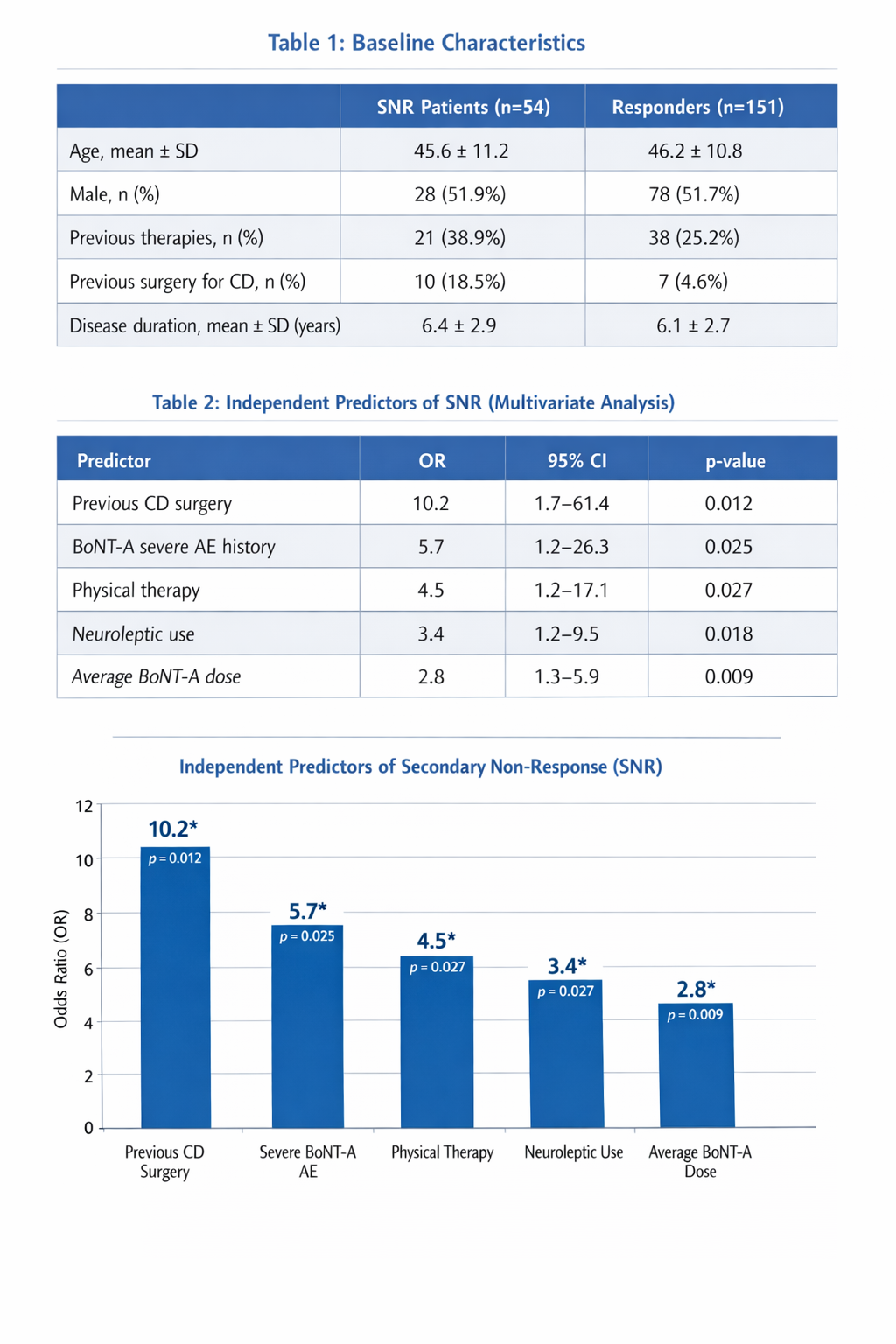
Tables and graphs
To cite this abstract in AMA style:
E. Abed. Predictors of Secondary Non-Response to Botulinum Neurotoxin Type-A in Cervical Dystonia: A Multi-Center Egyptian Study [abstract]. Mov Disord. 2026; 41 (suppl 1). https://www.mdsabstracts.org/abstract/predictors-of-secondary-non-response-to-botulinum-neurotoxin-type-a-in-cervical-dystonia-a-multi-center-egyptian-study/. Accessed October 1, 2026.« Back to 2026 International Congress
MDS Abstracts - https://www.mdsabstracts.org/abstract/predictors-of-secondary-non-response-to-botulinum-neurotoxin-type-a-in-cervical-dystonia-a-multi-center-egyptian-study/