
Objective: To investigate the dynamics of tremor, bradykinesia, and finger dexterity during the OFF-to-ON transition using objective measures. Additionally, assesses medication administration challenges through a novel Time-pill-to-mouth metric.
Background: Managing motor complications like wearing-OFF often involves medical adjustment, yet limited data exists on how motor fluctuations evolve during this transition and their impact on patients’ medication administration.
Method: Idiopathic PD patients with stable motor fluctuations were evaluated. Motor function was assessed via a smartphone-based finger-tapping test and MDS-UPDRS-3 tremor/bradykinesia subscales every 15 minutes from the self-reported wearing-off stage through OFF and until ON. Medication administration was analyzed by timing the sequence of reaching, opening, and taking L-dopa. [figure 1] Time-series and correlation analyses were performed.
Results: Fifteen patients participated in this study, baseline characteristics and clinical features are shown in Table 1. [table1] Tremor and bradykinesia scores significantly increased from the wearing-off point to peak at the OFF stage (p < 0.001), then significantly decreased upon reaching ON stage (p < 0.001) and were significantly lower than those at the wearing-off point (p < 0.001). Finger dexterity, however, showed consistently low scores at the wearing-off point through OFF (p= 1.0), with a less degree of significant improvement in the ON stage (p = 0.029). [figure 2] The mean total Time-pill-to-mouth was 70.2 (± 10.4) seconds, with 70.5% of the time spent opening pill containers (20.5 ± 20.9s). [figure 3]
Conclusion: The consistent pattern observed between bradykinesia and tremor severity, with both significantly increased from the wearing-off point to peak at the OFF stage, then decreased below the wearing-off point when reaching ON stage, indicating their responsiveness to dopaminergic medication. In contrast, finger dexterity was consistently impaired even at the wearing-off stage, with a less significant improvement in the ON stage, suggesting distinct pathophysiology, with evidences linked to an abnormal sensorimotor integration in the somatosensory cortex; therefore, considered as part of limb-kinetic apraxia. [1-4] Medication administration is notably delayed, primarily due to difficulty opening pill containers. Optimizing pill packaging design could reduce delays and improve adherence.
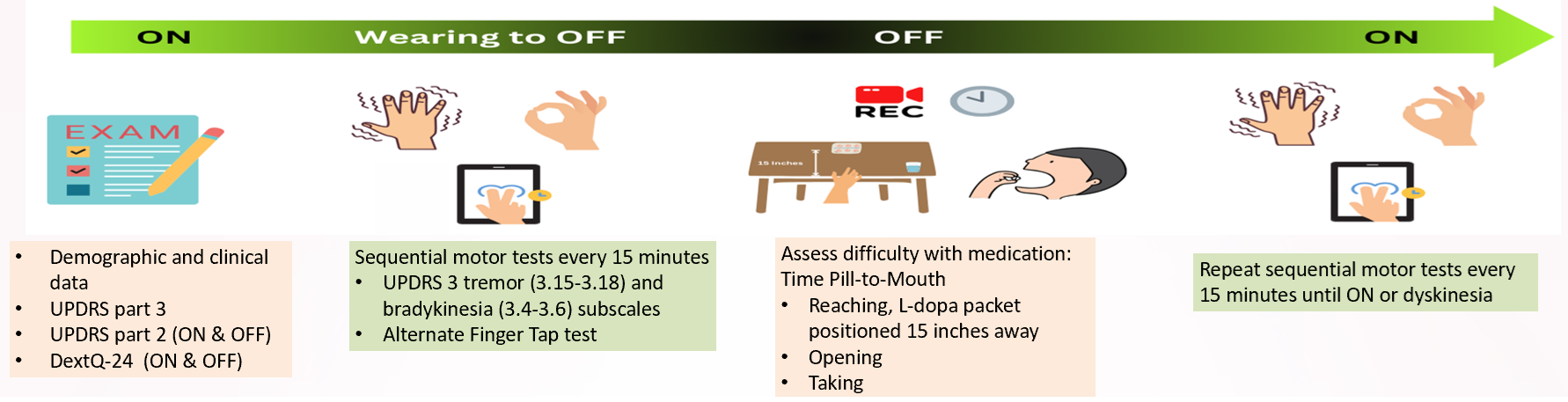
Figure 1
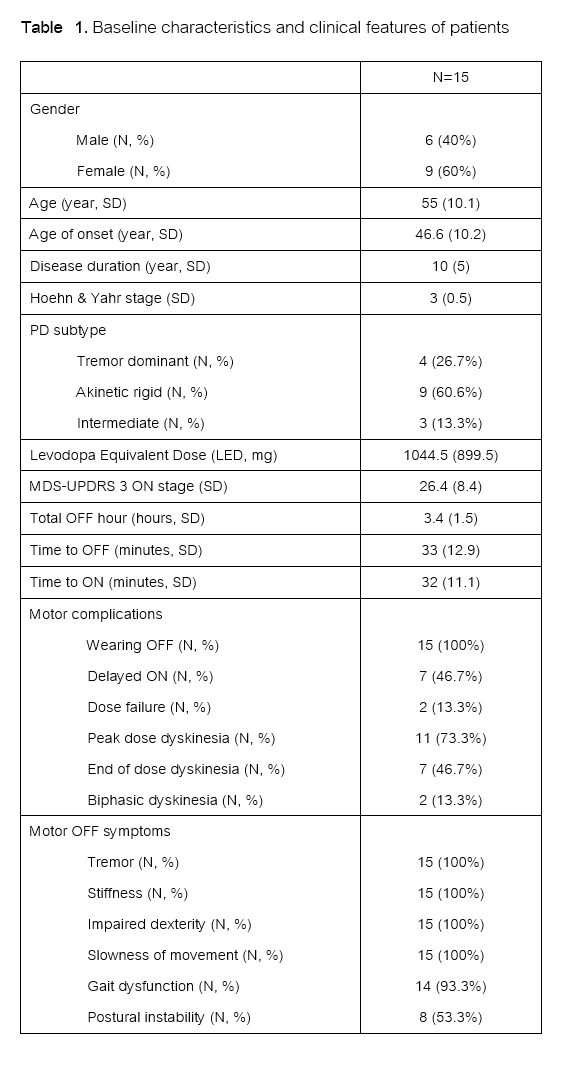
Table 1
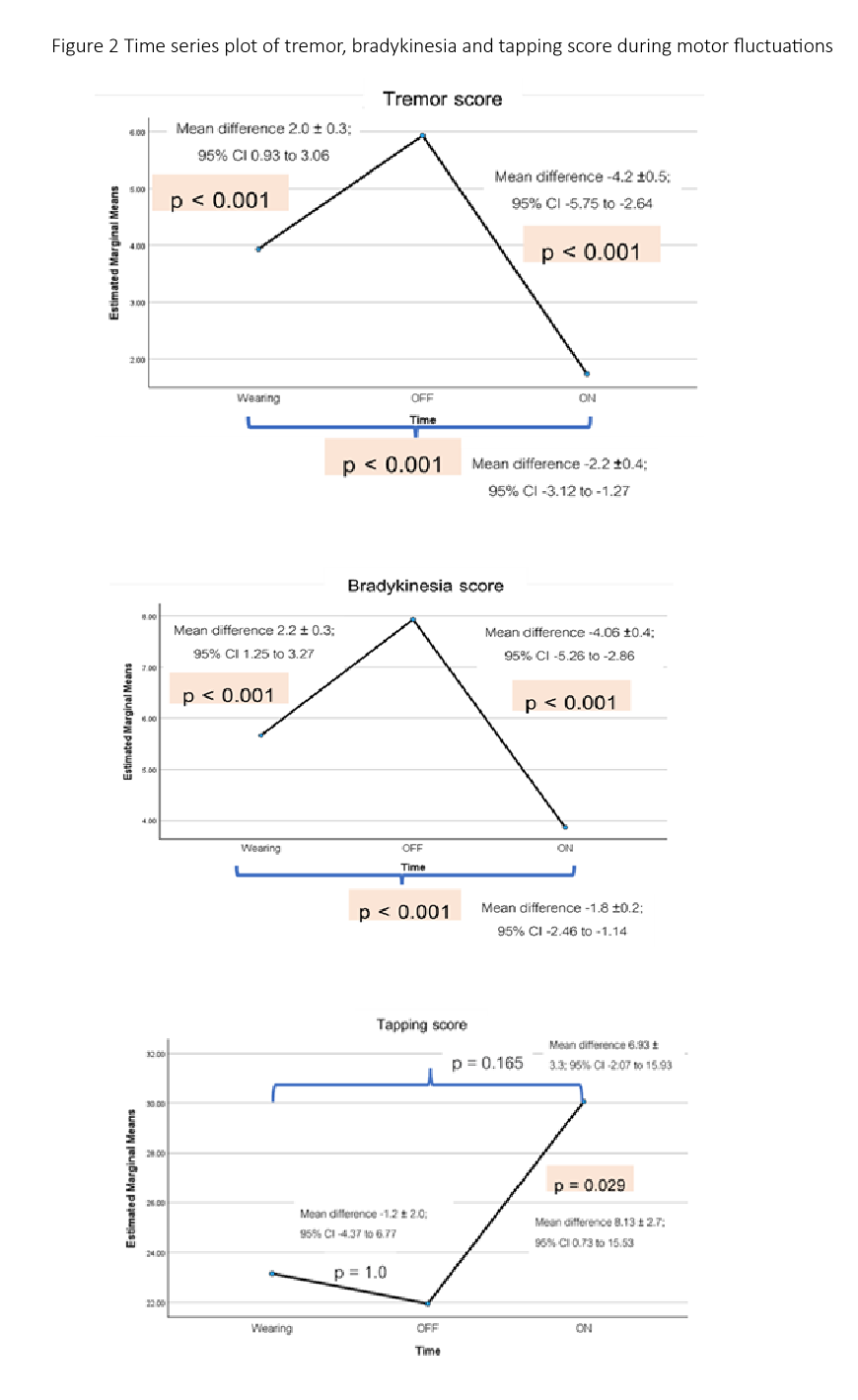
Figure 2
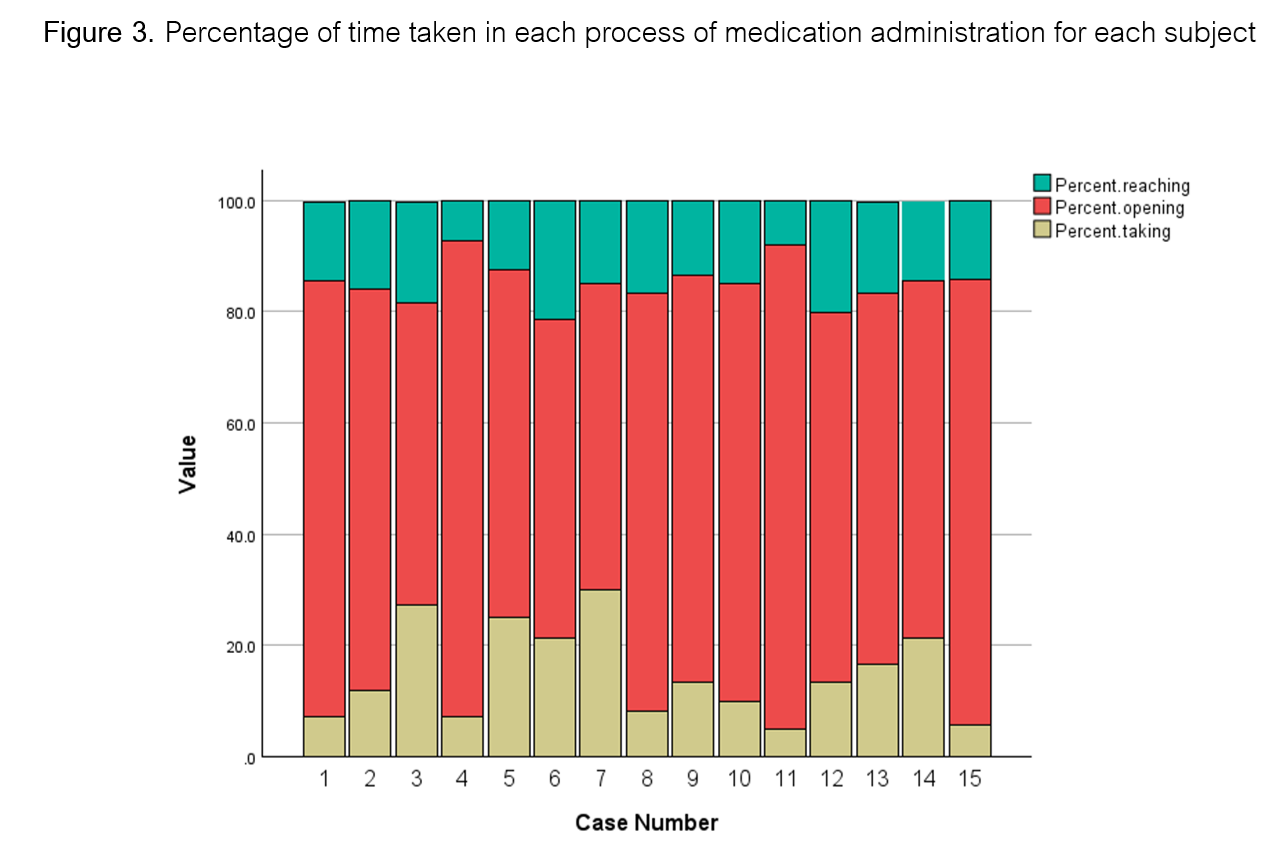
Figure 3
References: 1. Gebhardt A, Vanbellingen T, Baronti F, Kersten B, Bohlhalter S. Poor dopaminergic response of impaired dexterity in Parkinson’s disease: Bradykinesia or limb kinetic apraxia? Mov Disord. 2008 Sep 15;23(12):1701-6.
2. Quencer K, Okun MS, Crucian G, Fernandez HH, Skidmore F, Heilman KM. Limb-kinetic apraxia in Parkinson disease. Neurology. 2007 Jan 9;68(2):150-1.
3. Vanbellingen T, Kersten B, Bellion M, Temperli P, Baronti F, Müri R et al. Impaired finger dexterity in Parkinson’s disease is associated with praxis function. Brain Cogn. 2011 Oct;77(1):48-52.
4. Foki T, Pirker W, Geißler A, Haubenberger D, Hilbert M, Hoellinger I et al. Finger dexterity deficits in Parkinson’s disease and somatosensory cortical dysfunction. Parkinsonism Relat Disord. 2015 Mar;21(3):259-65.
To cite this abstract in AMA style:
O. Udomsirithamrong, R. Bhidayasiri, P. Panyakeaw. Dynamics of Motor Fluctuations and Medication Challenges in Parkinson’s Disease [abstract]. Mov Disord. 2026; 41 (suppl 1). https://www.mdsabstracts.org/abstract/dynamics-of-motor-fluctuations-and-medication-challenges-in-parkinsons-disease/. Accessed October 1, 2026.« Back to 2026 International Congress
MDS Abstracts - https://www.mdsabstracts.org/abstract/dynamics-of-motor-fluctuations-and-medication-challenges-in-parkinsons-disease/