
Category: Myoclonus/Tics/Stereotypies
Objective: To evaluate the efficacy and safety of ecopipam for tic reduction in Tourette syndrome (TS).
Background: Ecopipam, a selective dopamine D1 receptor antagonist, has emerged as a promising non‑D2‑blocking therapy for TS. Multiple clinical trials have examined its effects on tic severity and psychiatric comorbidities, but results have not been collectively summarized.
Method: A meta‑analytic synthesis was performed using data from PubMed trials. Outcomes included Yale Global Tic Severity Scale–Total Tic Score (YGTSS‑TTS), Clinical Global Impression–Severity (CGI‑S), and measures of depression (HAM-D, CDI, CDRS) and obsessive‑compulsive symptoms (Y-BOCS, CY-BOCS). Safety outcomes included serious (SAEs) and non‑SAEs. Mean differences (MD), standardized mean differences (SMD), and risk ratios (RR) were calculated using inverse‑variance and Mantel‑Haenszel methods.
Results: Across four trials (n=392), ecopipam significantly reduced YGTSS‑TTS versus placebo (MD −8.59; 95% CI −12.19 to −4.98) [Figure 1]. CGI‑S scores also improved (MD −0.92; 95% CI −1.08 to −0.76) [Figure 2]. Depression scores showed a small but significant benefit (SMD −0.21; 95% CI −0.39 to −0.02) [Figure 3], while obsessive‑compulsive symptom changes were not significant (SMD −0.12; 95% CI −0.36 to 0.12). SAEs were rare and did not differ from placebo (RR 1.18; 95% CI 0.41–3.45). Non‑SAEs were comparable between groups (RR 1.14; 95% CI 0.89–1.46). Insomnia (RR 2.46; 95% CI 0.37–16.14), fatigue (RR 3.26; 95% CI 0.42–25.10), and headache (RR 1.43; 95% CI 0.66–3.08) also did not differ from placebo.
Conclusion: Ecopipam demonstrates consistent, clinically meaningful reductions in tic severity, with a favorable safety profile and minimal risk of dopaminergic adverse effects. Improvements in global severity and depressive symptoms further support its therapeutic potential. These findings highlight ecopipam as a promising non‑D2‑blocking treatment option for TS, warranting continued investigation in larger, long‑term trials.
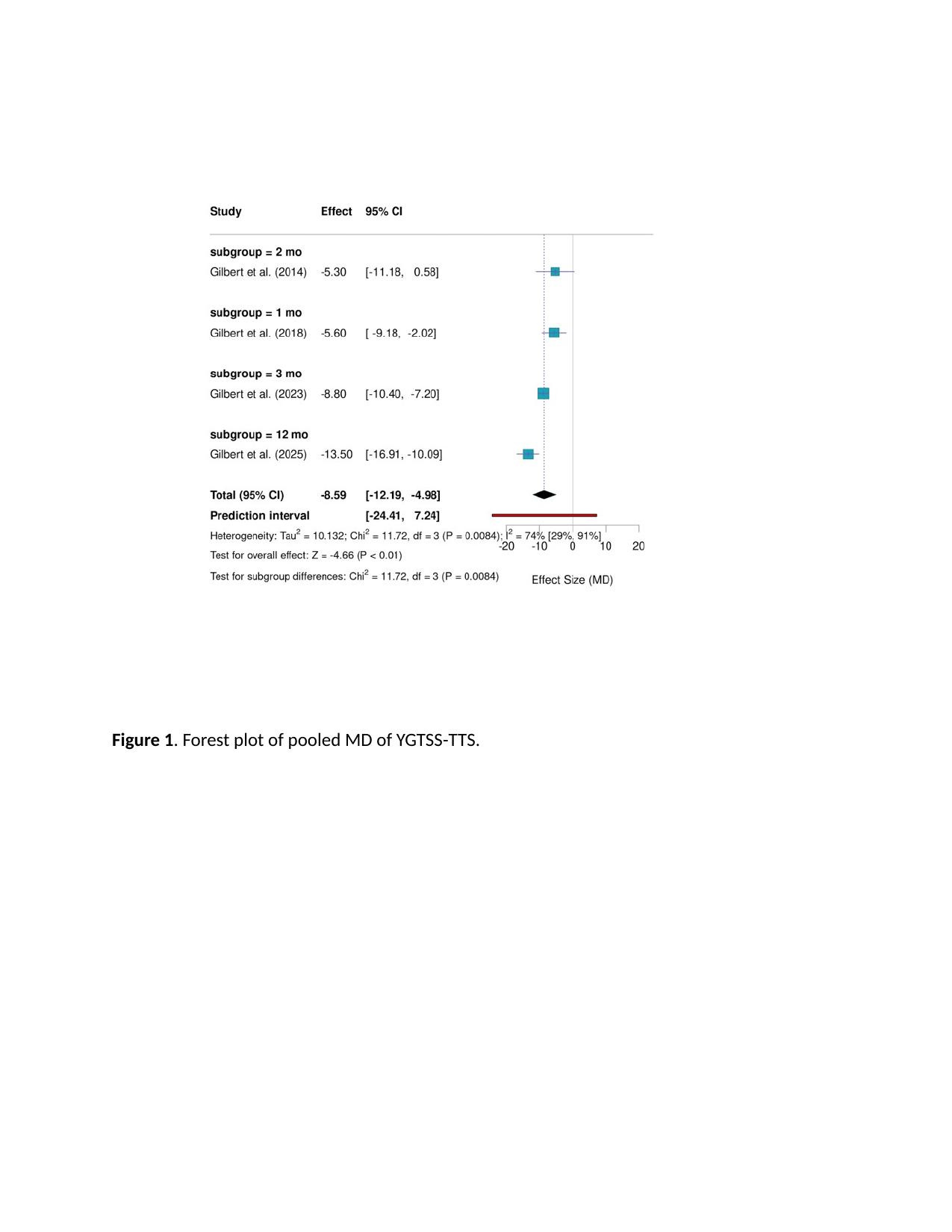
Forest plot of pooled MD of YGTSS TTS.
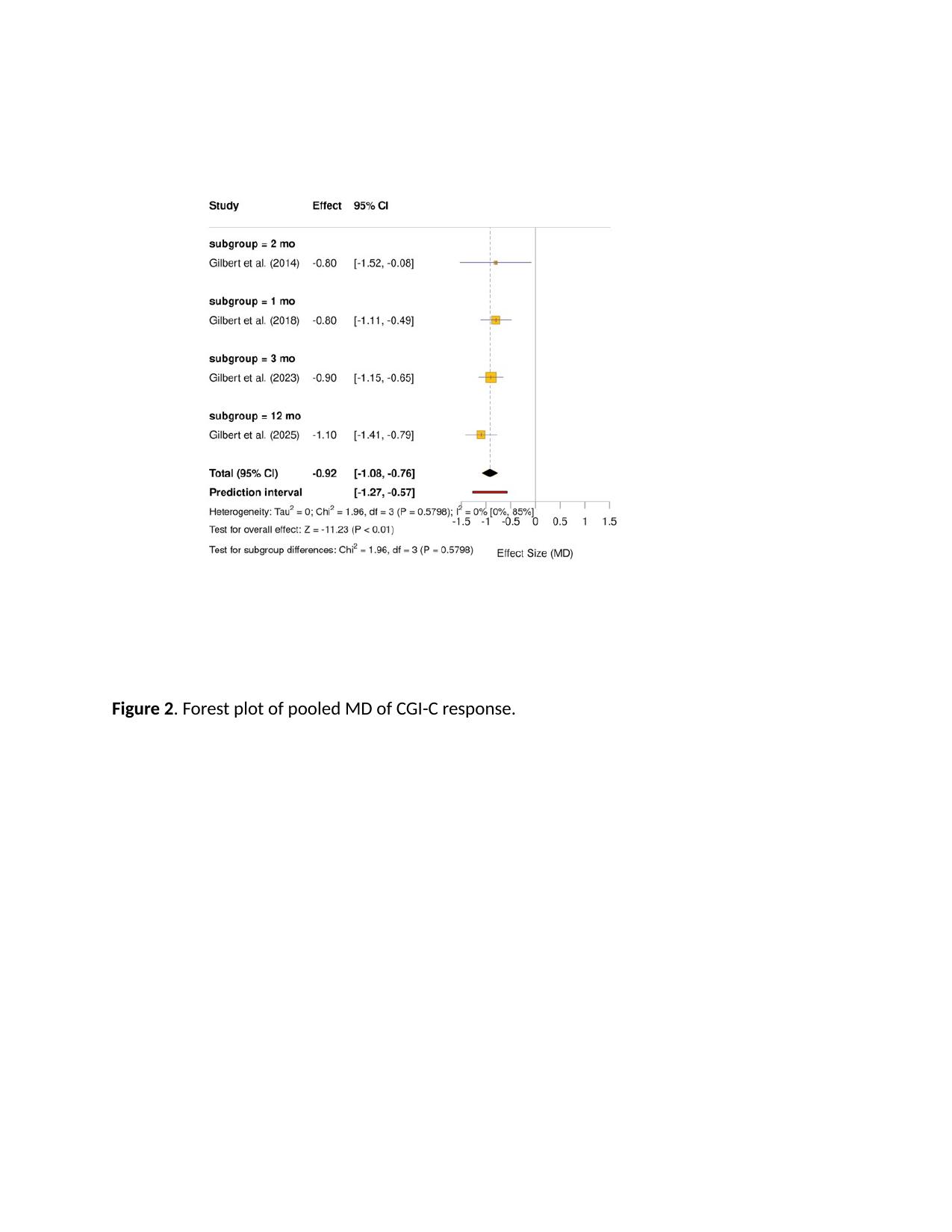
Forest plot of pooled MD of CGI-C response.
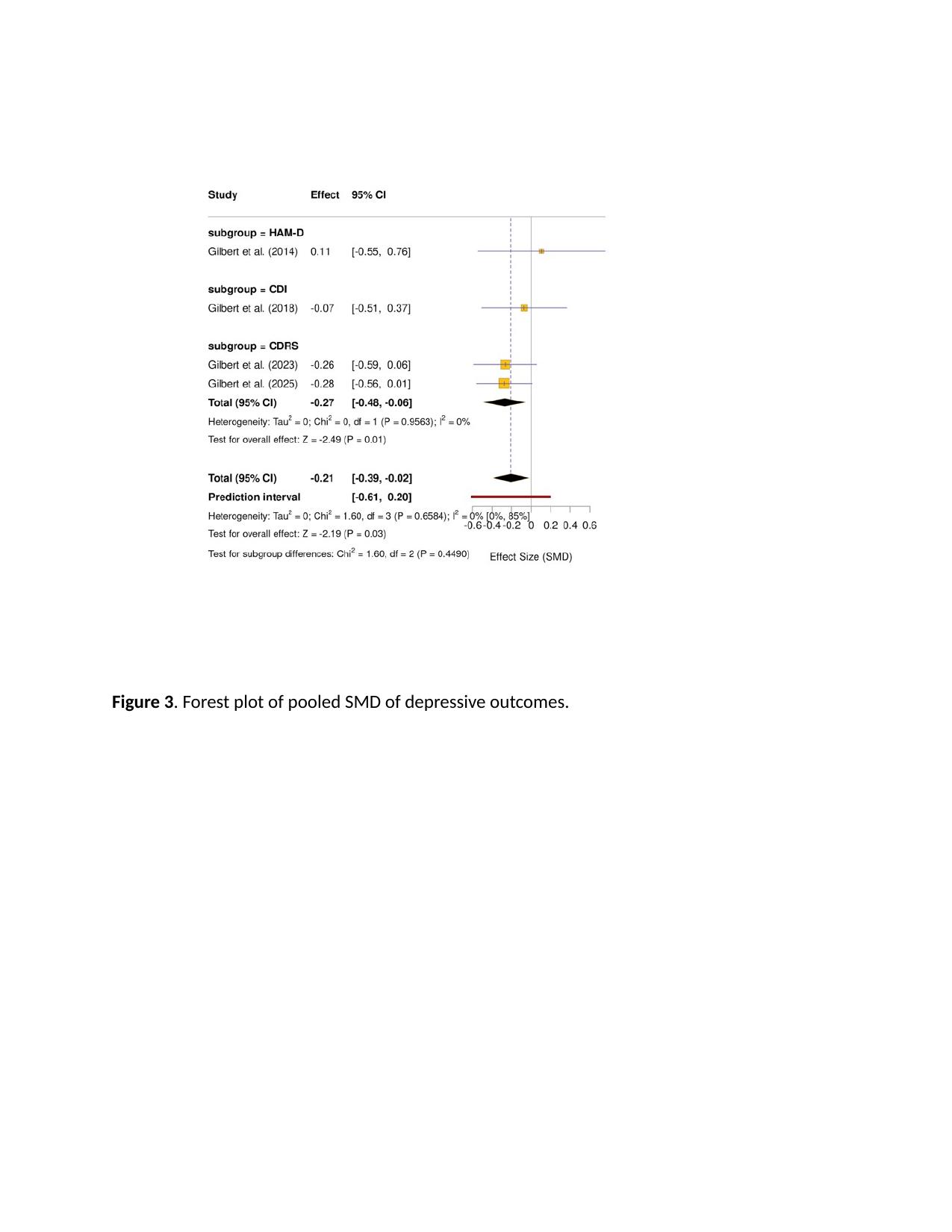
Forest plot of pooled SMD of depressive outcomes
References: Ecopipam demonstrates consistent, clinically meaningful reductions in tic severity, with a favorable safety profile and minimal risk of dopaminergic adverse effects. Improvements in global severity and depressive symptoms further support its therapeutic potential. These findings highlight ecopipam as a promising non D2 blocking treatment option for TS, warranting continued investigation in larger, long term trials.
To cite this abstract in AMA style:
A. Achuthaprasad, J. Rissardo, J. Patino, A. Caprara, A. Mcgarry, I. Walker. Efficacy and Safety of Ecopipam for Tourette Syndrome: A Meta analysis of Controlled Trials [abstract]. Mov Disord. 2026; 41 (suppl 1). https://www.mdsabstracts.org/abstract/efficacy-and-safety-of-ecopipam-for-tourette-syndrome-a-meta-analysis-of-controlled-trials/. Accessed October 1, 2026.« Back to 2026 International Congress
MDS Abstracts - https://www.mdsabstracts.org/abstract/efficacy-and-safety-of-ecopipam-for-tourette-syndrome-a-meta-analysis-of-controlled-trials/