
Objective: To assess autonomic nervous system (ANS) involvement and pain prevalence among non-motor symptoms (NMS) in different types of dystonia
Background: Prevalence and functional impact of NMS in dystonia remain generally underexplored. Specifically, pain and ANS involvement are rarely assessed.
Method: In this case–control study, we analysed NMS in 24 patients with facio-cranial dystonia (FCD) (17 Blepharospasm, 6 Meige syndrome, 1 oromandibular dystonia), 34 with cervical dystonia (CD), and 31 controls with idiopathic hemifacial spasm. NMS were assessed with the Dystonia Non-Motor Symptoms Questionnaire (DNMSQ), ANS symptoms with the Composite Autonomic Symptom Score-31 (COMPASS-31), and pain with an adapted Toronto Western Spasmodic Torticollis Rating Scale 2 Pain Scale (TWSTRS-2 PS). Disability and depressive symptoms were evaluated using the TWSTRS-2 Disability Scale and the Beck Depression Inventory-II (BDI), while CD severity was measured with the TWSTRS-2 Severity Scale (TWSTRS-2 SS). Patients with conditions independently affecting the ANS (drugs, comorbidities) were excluded.
Results: Both FCD and CD showed a trend toward a higher NMS burden than controls (4.3±3.2 and 4.3±3.2 vs 2.6±2.7, p=0.052) (Table 1). ANS symptoms were more clinically relevant in FCD (16.9±11.8) and CD (15.1±16.8) than in controls (8.8±11.1; p=0.026 and p=0.002). Secretomotor, bladder, and pupillomotor domains were mainly involved in FCD, whereas gastrointestinal symptoms occurred in both FCD and CD (Figure 1). Pain was more characteristic of CD (TWSTRS-2 PS positivity: 67.7% vs 3.2%, p<0.001) and did not differentiate FCD from controls (16.7% vs 3.2%, p=0.156). In FCD, BDI and COMPASS were not significantly correlated (r=0.240, p=0.259). In an age-adjusted regression model, both BDI (β=0.447, p=0.016) and COMPASS (β=0.375, p=0.037) independently predicted disability, explaining 47% of its variance (p=0.005) (Table 2). In CD, BDI moderately correlated with COMPASS (ρ=0.51, p=0.002), while pain showed no significant correlations. The regression model explained 26.5% of disability variance (p=0.056); only pain was a significant predictor (β=0.463, p=0.012), whereas TWSTRS-2 SS, BDI, and COMPASS were not (Table 3).
Conclusion: ANS symptoms and pain appear to be part of the NMS spectrum in FCD and CD and contribute significantly to the functional impact in these patients.
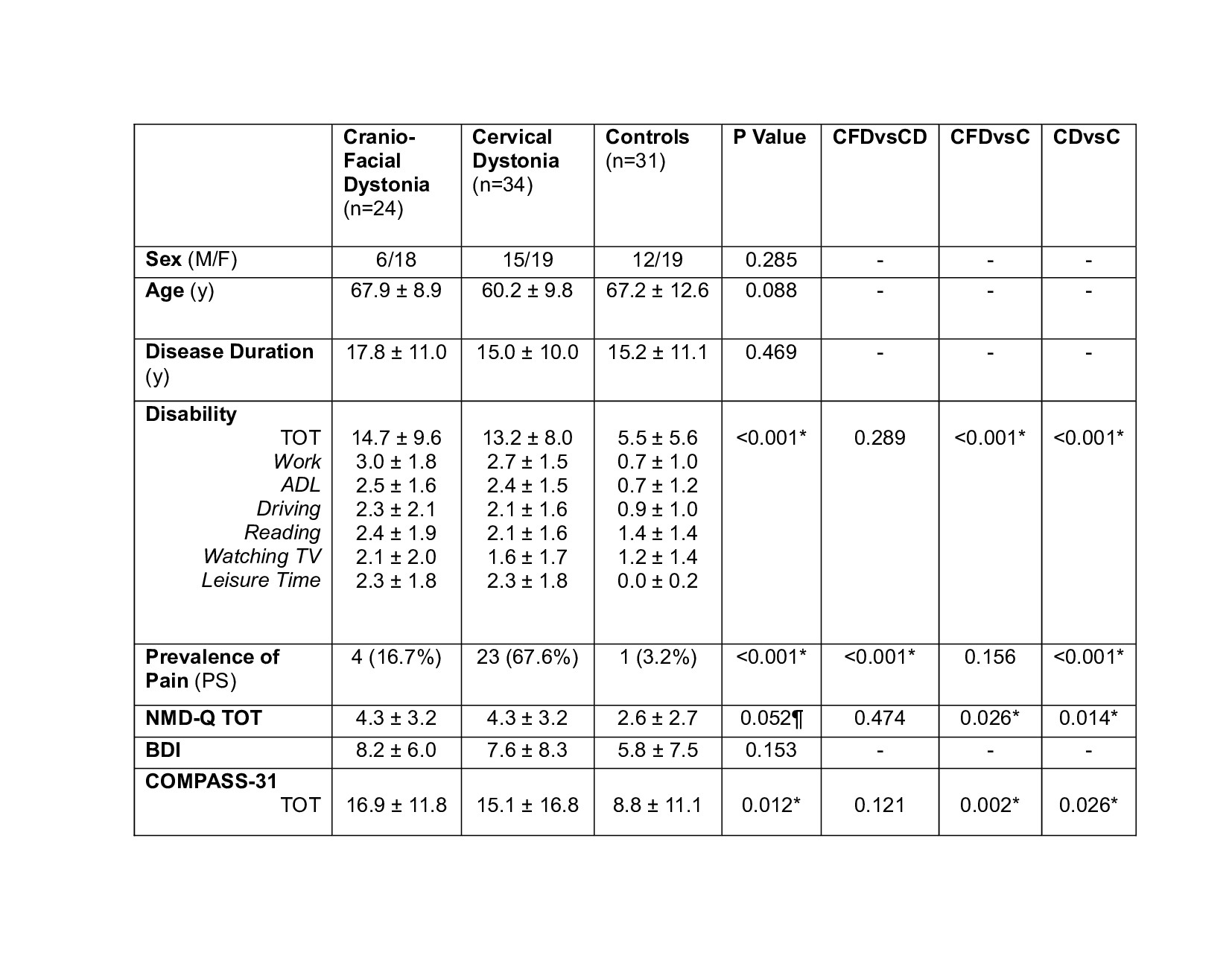
Patient characteristics and clinical scale results
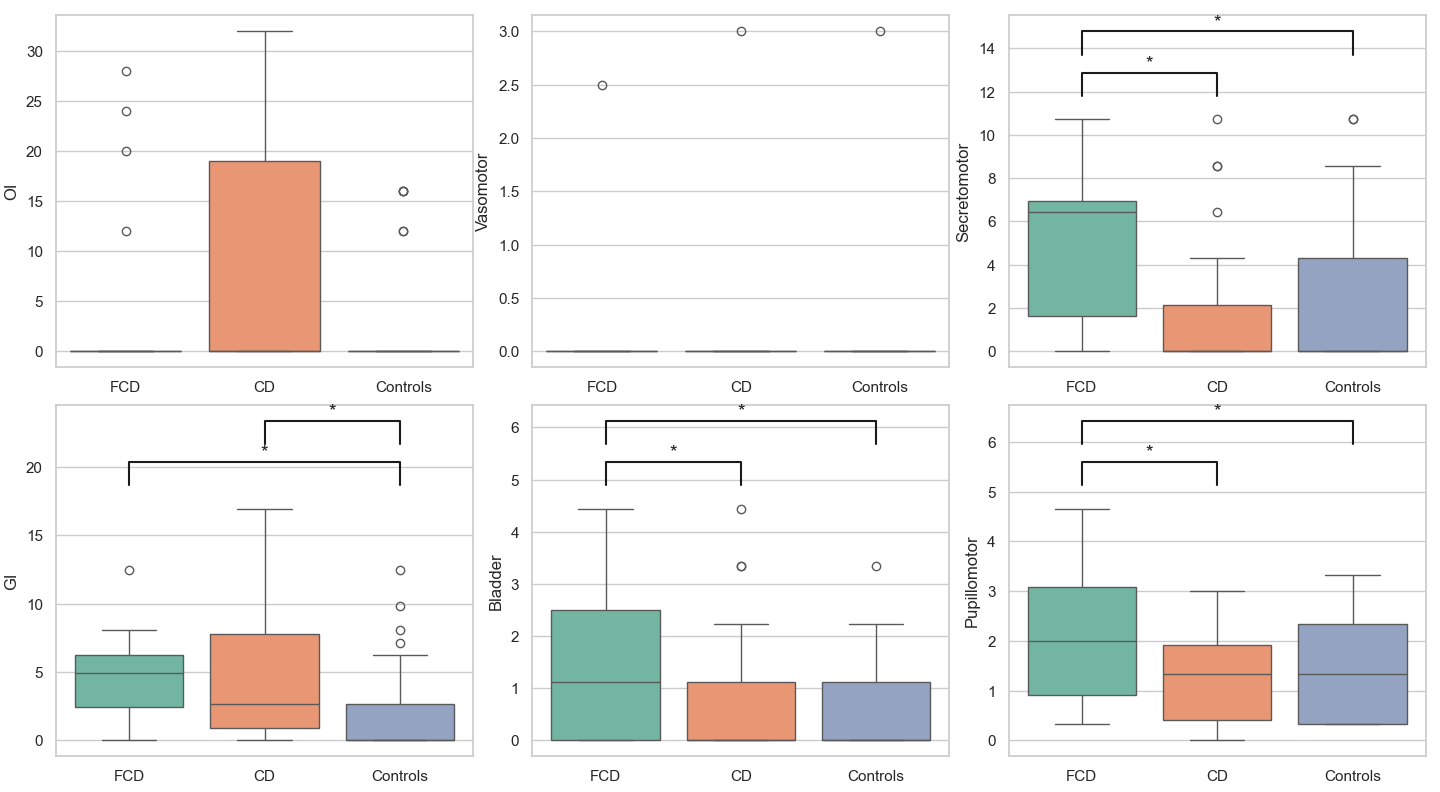
COMPASS domains in FCD, CD and controls
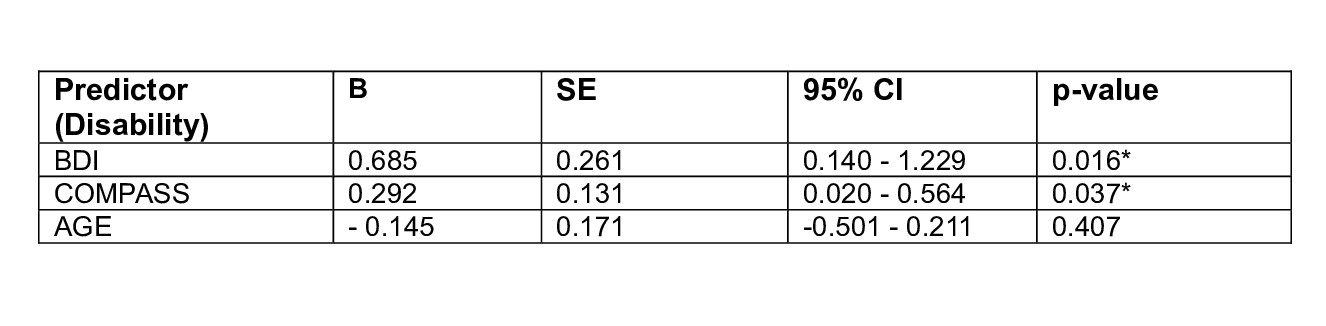
Linear regression predicting disability for FCD
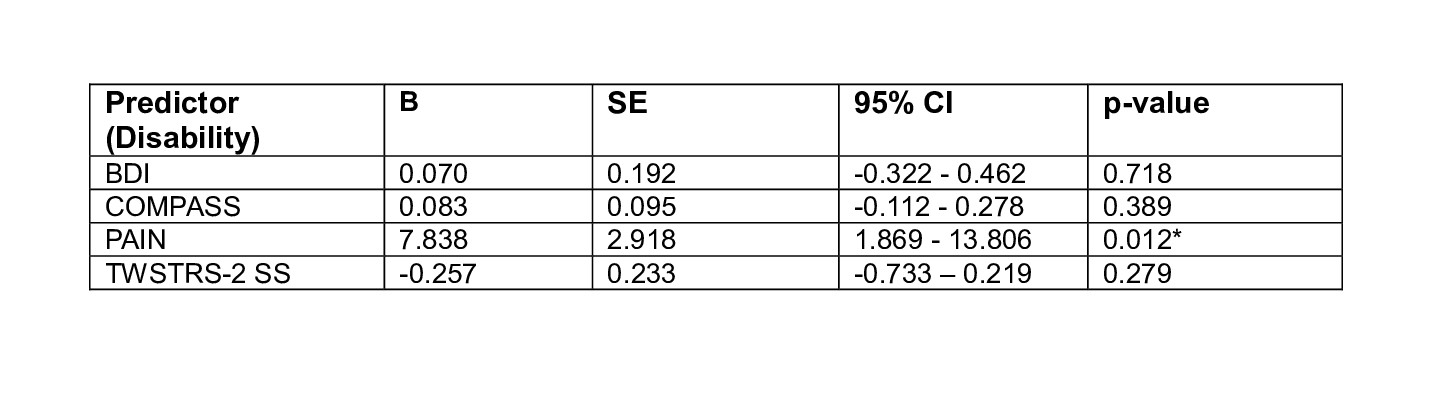
Linear regression predicting disability for CD
References: 1) Wadon, M. E., Fenner, E., Kendall, K. M., Bailey, G. A., Sandor, C., Rees, E., & Peall, K. J. (2022). Clinical and genotypic analysis in determining dystonia non-motor phenotypic heterogeneity: a UK Biobank study. Journal of neurology, 269(12), 6436–6451. https://doi.org/10.1007/s00415-022-11307-4
2) Colucci, F., Pugliatti, M., Casetta, I., Capone, J. G., Diozzi, E., Sensi, M., & Tugnoli, V. (2024). Idiopathic cervical dystonia and non-motor symptoms: a pilot case-control study on autonomic nervous system. Neurological sciences : official journal of the Italian Neurological Society and of the Italian Society of Clinical Neurophysiology, 45(2), 629–638.
3) Yang, J., Shao, N., Song, W., Wei, Q., Ou, R., Wu, Y., & Shang, H. F. (2016). Nonmotor symptoms in primary adult-onset cervical dystonia and blepharospasm. Brain and behavior, 7(2), e00592. https://doi.org/10.1002/brb3.592
4) Ferrazzano, G., Berardelli, I., Conte, A., Baione, V., Concolato, C., Belvisi, D., Fabbrini, G., Defazio, G., & Berardelli, A. (2019). Motor and non-motor symptoms in blepharospasm: clinical and pathophysiological implications. Journal of neurology, 266(11), 2780–2785. https://doi.org/10.1007/s00415-019-09484-w
5) Yilmaz, H. N., & Bilen, S. (2023). Evaluation of non-motor symptoms in cervical dystonia, hemifacial spasm, and blepharospasm patients and their correlation with motor symptoms. Neurological sciences : official journal of the Italian Neurological Society and of the Italian Society of Clinical Neurophysiology, 44(11), 4077–4086. https://doi.org/10.1007/s10072-023-07055-6
To cite this abstract in AMA style:
P. Antenucci, F. Colucci, A. Gozzi, A. Mechelli, M. Fraccalanza, F. Rovito, M. Pugliatti, E. Sette, D. Gragnaniello, M. Sensi. Expanding the Spectrum of Non Motor Symptoms in Dystonia: Focus on Autonomic Signs and Pain [abstract]. Mov Disord. 2026; 41 (suppl 1). https://www.mdsabstracts.org/abstract/expanding-the-spectrum-of-non-motor-symptoms-in-dystonia-focus-on-autonomic-signs-and-pain/. Accessed October 1, 2026.« Back to 2026 International Congress
MDS Abstracts - https://www.mdsabstracts.org/abstract/expanding-the-spectrum-of-non-motor-symptoms-in-dystonia-focus-on-autonomic-signs-and-pain/