
Category: Parkinson's Disease: Disease mechanisms
Objective: To elucidate the neurobiological mechanisms through which acupuncture may alleviate levodopa-induced dyskinesia (LID) in Parkinson’s disease (PD).
Background: Levodopa-induced dyskinesia (LID) is a frequent complication of long-term dopaminergic therapy in PD, resulting from maladaptive plasticity within basal ganglia-thalamocortical circuits. Pulsatile dopamine stimulation, imbalance between direct and indirect pathways, abnormal synaptic plasticity, non-dopaminergic neurotransmitter dysregulation, and neuroinflammation collectively contribute to dyskinesia. Current therapeutic options are limited. Acupuncture has shown clinical potential as an adjunctive intervention, but its mechanistic basis remains unclear.
Method: This study performed a structured narrative synthesis of experimental and clinical studies investigating the mechanisms of acupuncture in LID models and PD patients. Evidence was integrated across dopaminergic regulation, synaptic plasticity, neurotransmitter systems, and neuroinflammatory pathways.
Results: Evidence suggests that acupuncture exerts multi-level regulatory effects in LID. At the dopaminergic level, acupuncture enhances dopamine synthesis and stabilizes release dynamics, potentially reducing pathological fluctuations. It modulates D1/D2 receptor signaling, contributing to restoration of direct-indirect pathway balance. At the synaptic level, acupuncture regulates neurotrophic signaling (e.g., BDNF-related pathways), normalizes aberrant long-term potentiation/depression, and suppresses maladaptive plasticity-associated transcription factors. Acupuncture also modulates glutamatergic, GABAergic, and serotonergic systems, rebalancing excitatory–inhibitory signaling within basal ganglia circuits. In parallel, it attenuates microglial activation and pro-inflammatory cytokine expression, suggesting a role in interrupting the neuroinflammation-dyskinesia cycle.
Conclusion: Acupuncture may alleviate LID through coordinated multi-target modulation of dopaminergic signaling, synaptic plasticity, neurotransmitter balance, and neuroinflammation. Rather than acting on a single pathway, acupuncture appears to restore circuit-level homeostasis within basal ganglia networks.
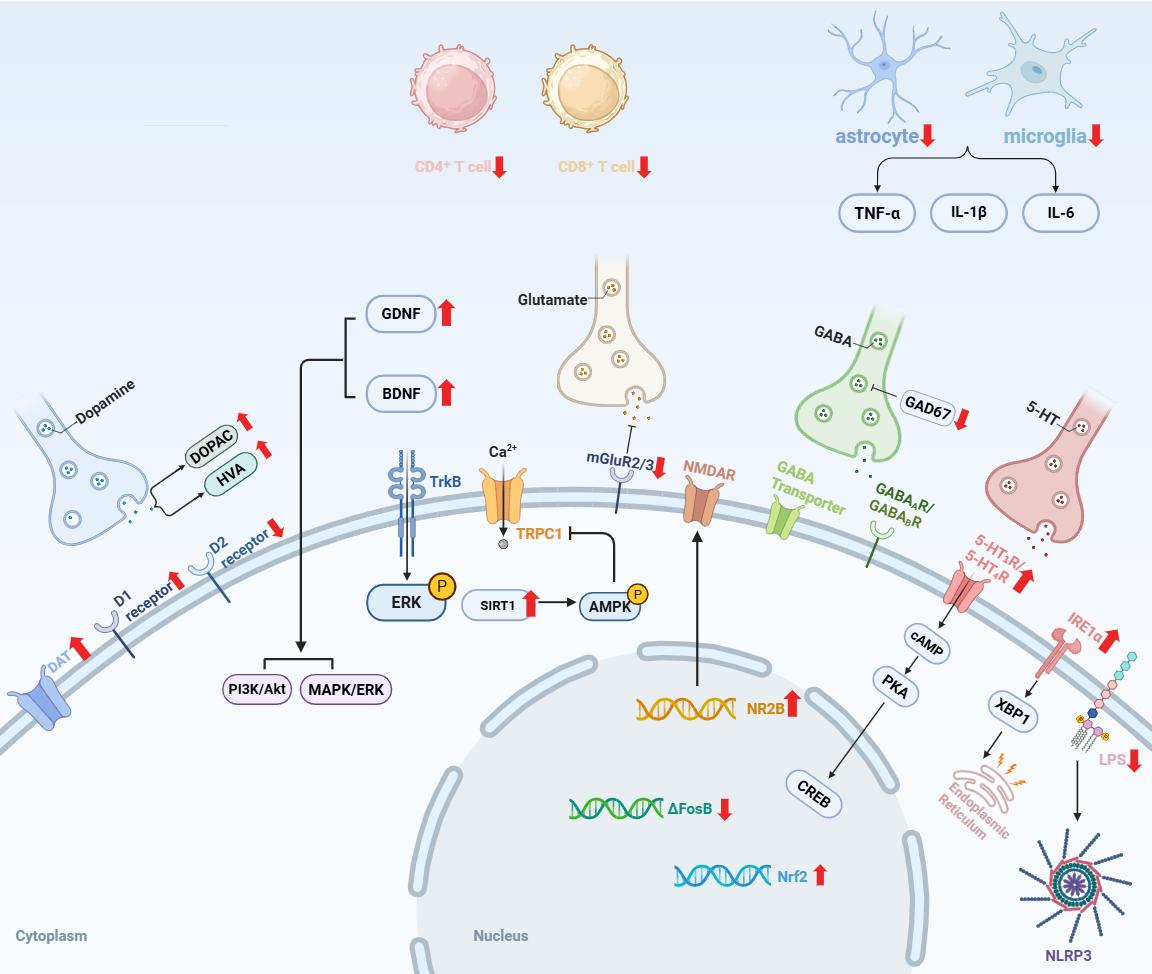
Figure1 Potential mechanism of acupuncture for LID
To cite this abstract in AMA style:
X. Liu, YT. Wang, JQ. Fan, MY. Yan, YX. Wu, SM. Lin, YF. Zhang, LX. Zhuang. Multi-Target Neurobiological Mechanisms of Acupuncture in Levodopa-Induced Dyskinesia: From Dopamine Stabilization to Network Plasticity Modulation [abstract]. Mov Disord. 2026; 41 (suppl 1). https://www.mdsabstracts.org/abstract/multi-target-neurobiological-mechanisms-of-acupuncture-in-levodopa-induced-dyskinesia-from-dopamine-stabilization-to-network-plasticity-modulation/. Accessed October 1, 2026.« Back to 2026 International Congress
MDS Abstracts - https://www.mdsabstracts.org/abstract/multi-target-neurobiological-mechanisms-of-acupuncture-in-levodopa-induced-dyskinesia-from-dopamine-stabilization-to-network-plasticity-modulation/