
Category: Rare Neurometabolic Movement Disorders
Objective: To evaluate exchangeable copper (CuEXC) longitudinal kinetics and its association with clinical outcomes at 24 months in Wilson disease (WD).
Background: CuEXC, reflecting the labile serum copper fraction, is a validated diagnostic biomarker for WD. Its trajectory under treatment and ability to predict clinical evolution remain poorly characterized.
Method: We prospectively followed 158 WD patients (81 hepatic, 66 neurologic, 11 asymptomatic) at diagnosis, 6, 12, and 24 months, treated with chelators (n=129) or zinc salts (n=21). At M24, outcomes were classified as stable/remission or worsening (transaminase elevation, UWDRS increase >10%, death or transplantation). Therapeutic targets were defined as the 2.5th–97.5th percentile of CuEXC values in stable/remission patients at M24, for each phenotype.
Results: At diagnosis, CuEXC was higher in neurologic (median 2.84 [2.09–3.33] µmol/L) than hepatic patients (1.75 [1.07–2.48]; p<0.001) [figure 1]. CuEXC decreased rapidly, with median values of 0.60 [0.47–0.80] (hepatic, n=56) and 0.55 [0.44–0.86] (neurologic, n=53) at M24; 67.9% and 50.9% within normal range. Trajectories did not differ between phenotypes [figure 2]. At M24, 32/61 hepatic (52.5%) and 31/53 neurologic (58.5%) patients were stable. CuEXC was significantly higher in worsening hepatic patients at M12 (p<0.001) and M24 (p=0.02), with no difference in neurologic forms [figure 3]. Among hepatic patients, trajectories diverged from M12 onward (p=0.088) [figure 4]. CuEXC converged regardless of treatment (chelators or zinc salts) despite urinary copper differences (p<0.001). Baseline CuEXC was not associated with M24 evolution. The magnitude of CuEXC decline from diagnosis to M12 was greater in stable than worsening hepatic patients (−73% vs −47%, p=0.016), whereas kinetics between diagnosis and M6 were not predictive in either phenotype. Proposed CuEXC targets were 0.27–1.18µmol/L (hepatic) and 0.29–2.15µmol/L (neurologic).
Conclusion: CuEXC declines consistently under treatment, converging between phenotypes within 6–12 months regardless of therapeutic strategy. It is associated with clinical outcome in hepatic forms — with evidence-based therapeutic targets of 0.27–1.18µmol/L — but not in neurological forms, supporting its role as a phenotype-specific monitoring biomarker and highlighting the need for complementary tools to assess neurological disease activity.
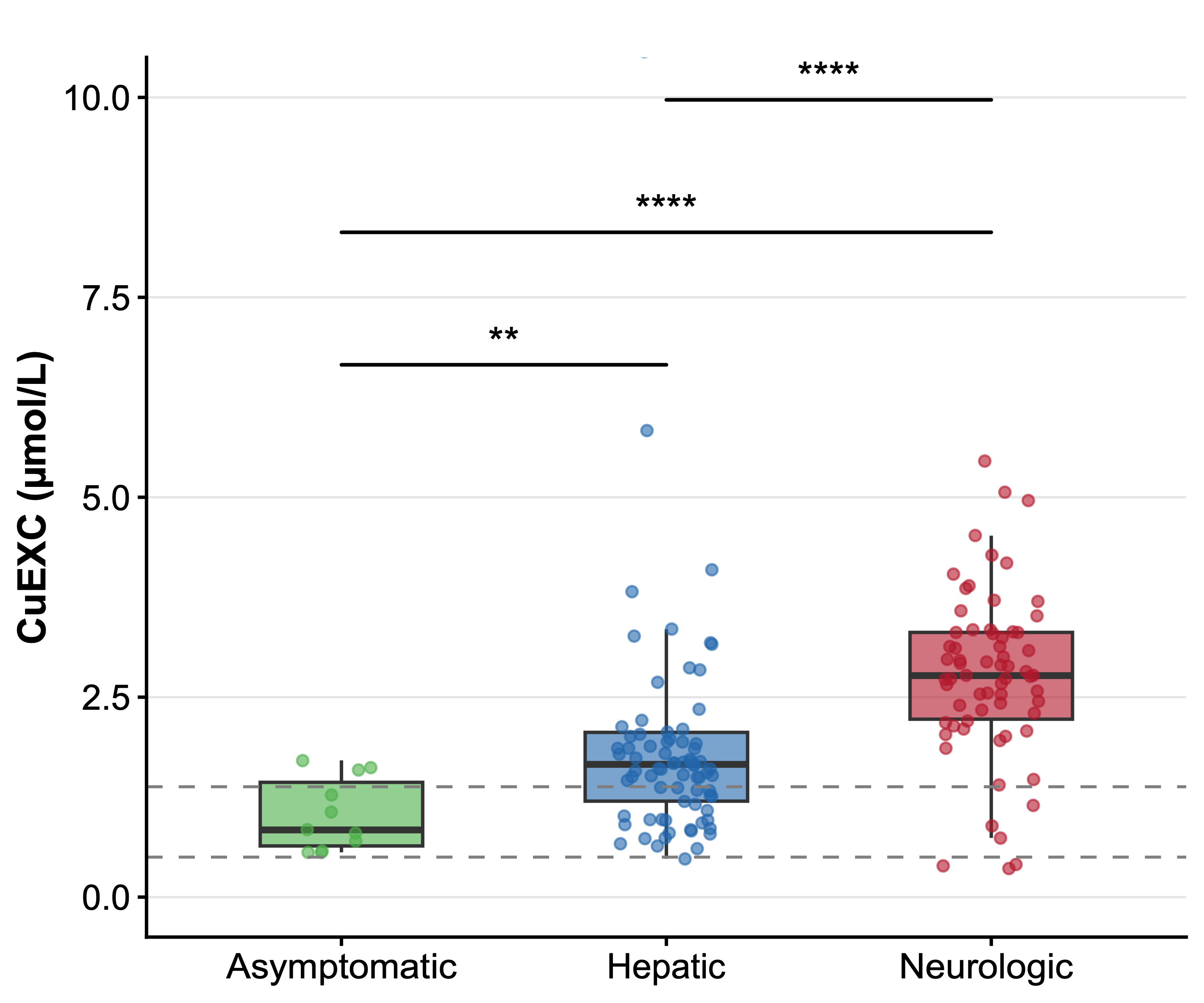
Figure 1
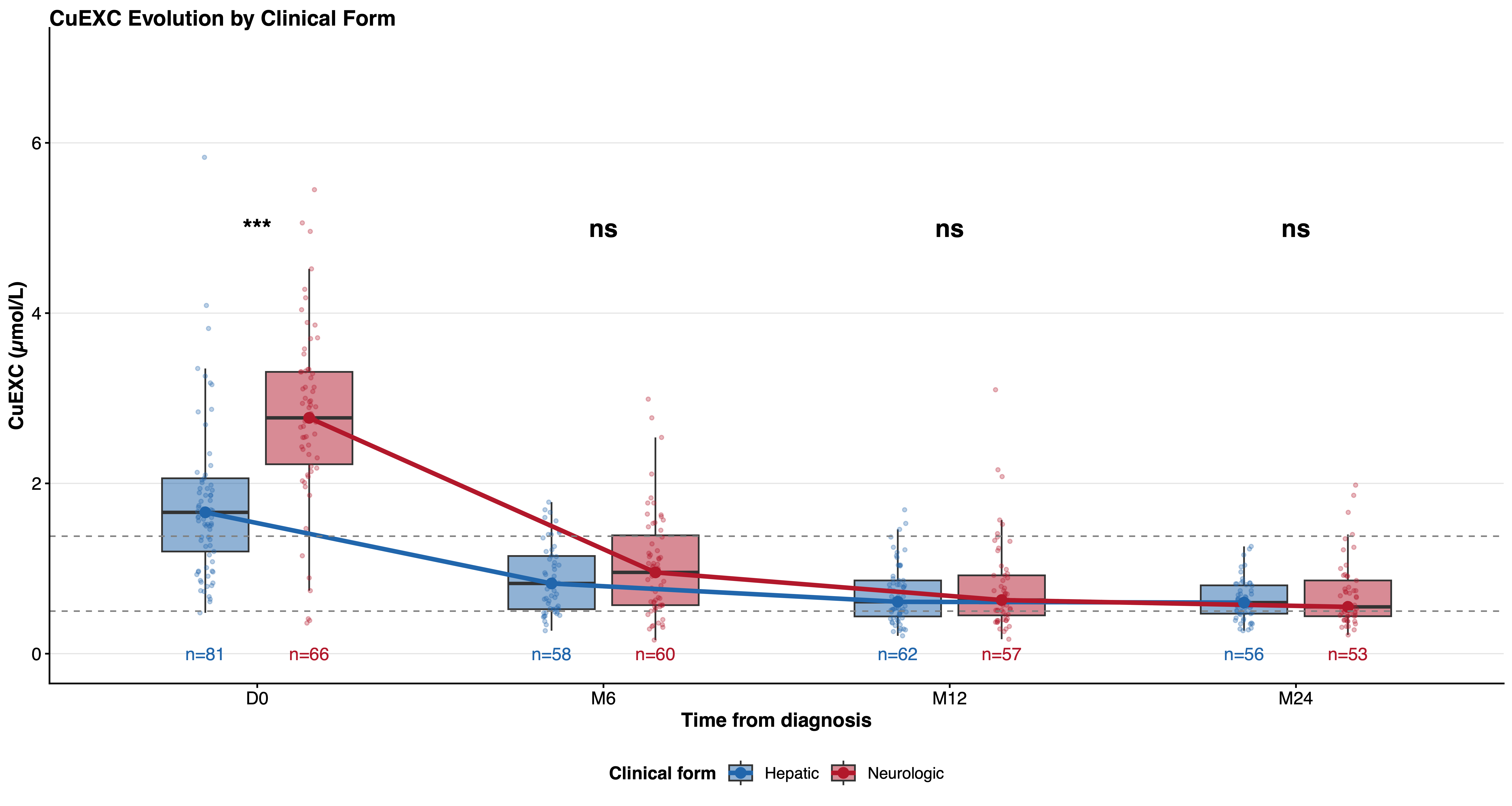
Figure 2
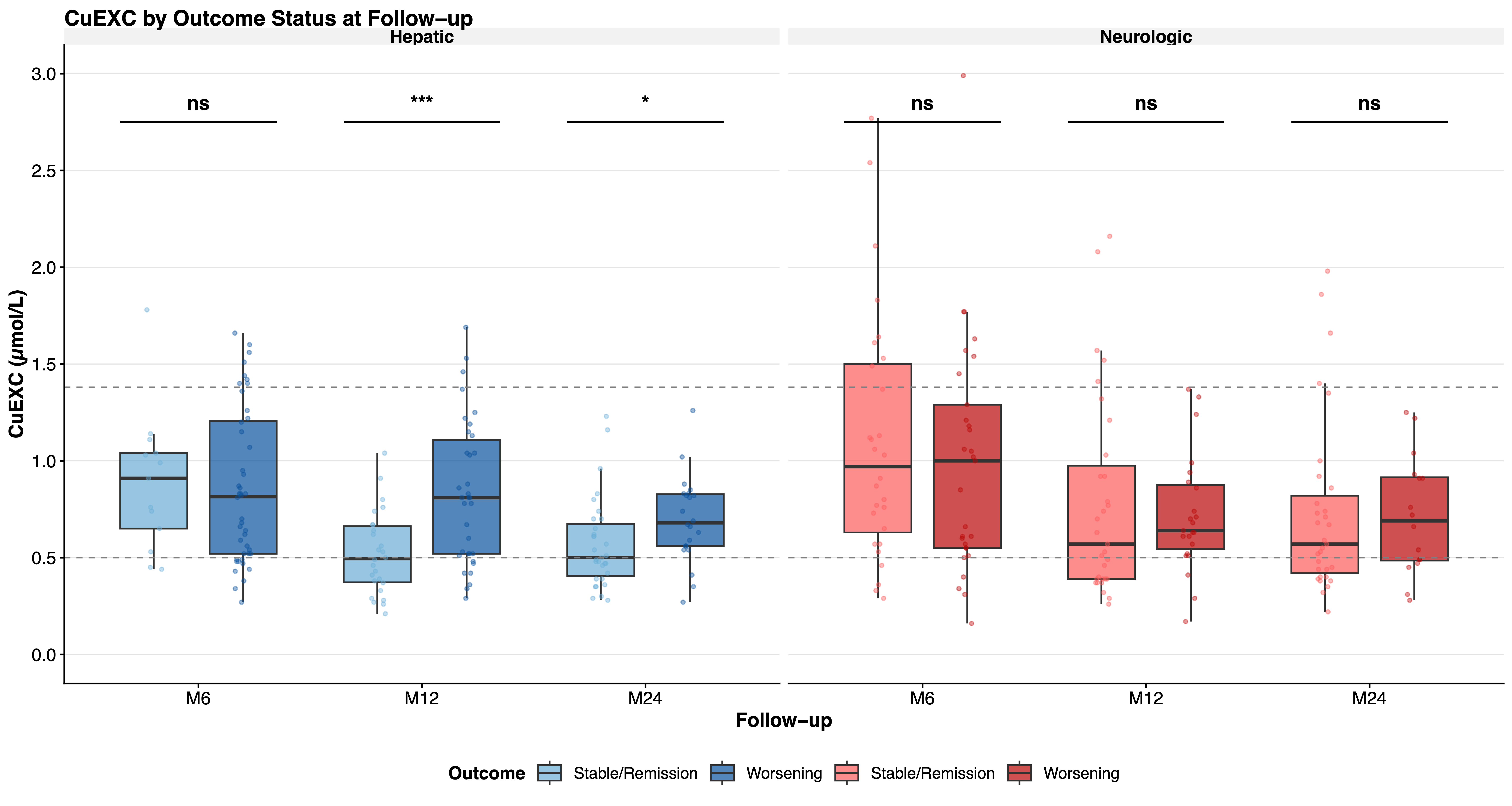
Figure 3
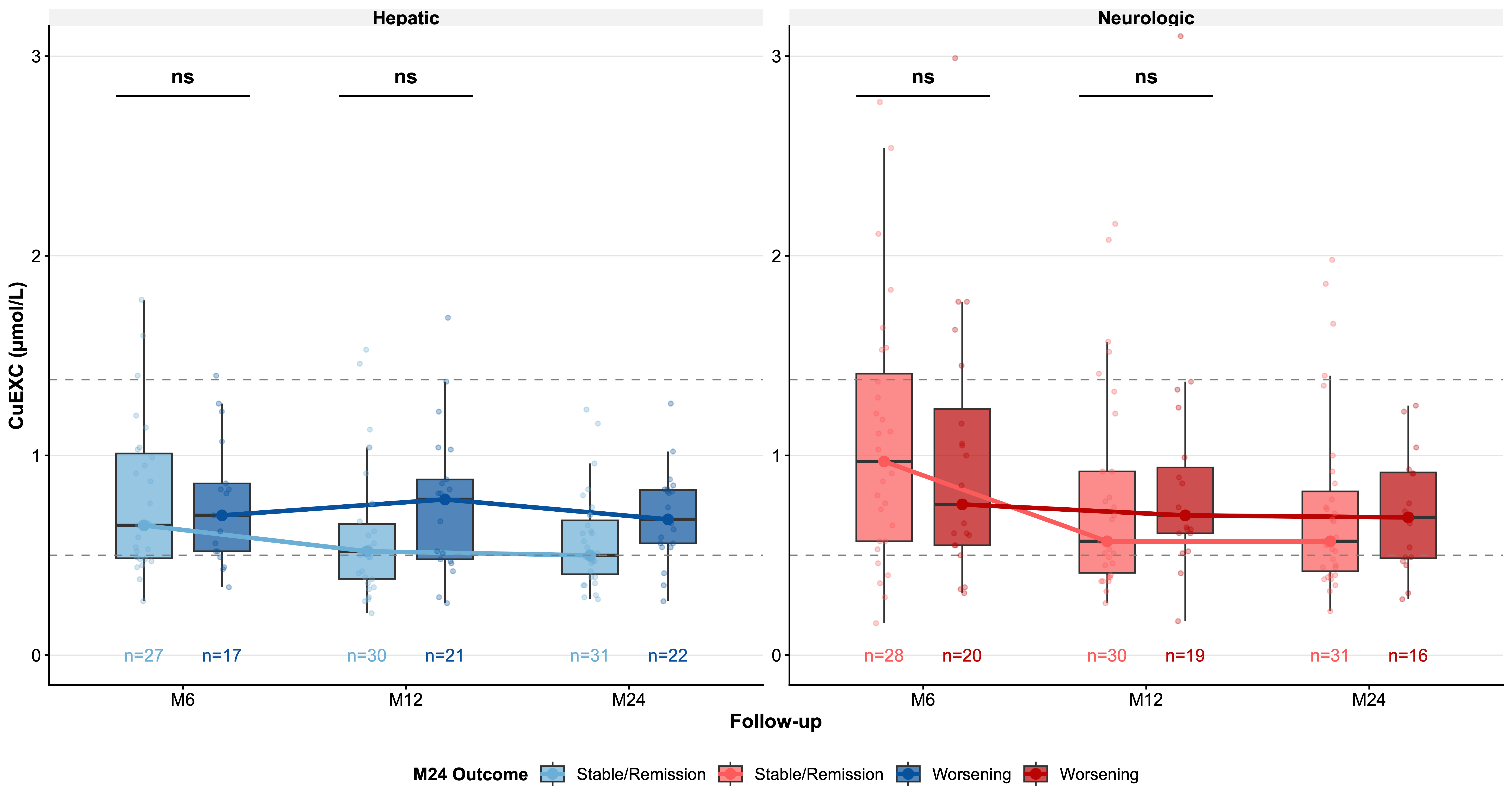
Figure 4
To cite this abstract in AMA style:
C. Desjardins, N. Djebrani-Oussedik, M. Obadia, D. Rahli, D. Debray, A. Poujois. Exchangeable copper as a monitoring tool in Wilson disease: lessons from a 24-month prospective cohort [abstract]. Mov Disord. 2026; 41 (suppl 1). https://www.mdsabstracts.org/abstract/exchangeable-copper-as-a-monitoring-tool-in-wilson-disease-lessons-from-a-24-month-prospective-cohort/. Accessed October 1, 2026.« Back to 2026 International Congress
MDS Abstracts - https://www.mdsabstracts.org/abstract/exchangeable-copper-as-a-monitoring-tool-in-wilson-disease-lessons-from-a-24-month-prospective-cohort/