
Objective: To assess the frequency and severity of gastrointestinal dysfunction (GID) in Idiopathic Parkinson’s disease (PD) and explore its relationship with psychosocial distress.
Background: Gastrointestinal problems are common non-motor symptom in PD and can significantly impact mental well-being, cognition, and quality of life. Understanding how these symptoms relate to psychological distress is essential for holistic patient care.
Method: In this prospective cross-sectional study, patients with idiopathic PD attending a tertiary care neurology center were evaluated. Clinical and demographic data, including age, disease duration, and disease severity, were collected. GID was measured using the Gastrointestinal Dysfunction Scale for PD (GIDS-PD), psychosocial distress with the SCOPA-Psychiatric Scale (SCOPA-PS), overall non-motor symptoms using NMSS, and disease severity using UPDRS and Hoehn & Yahr staging. Cognitive function was assessed with the Montreal Cognitive Assessment (MoCA). Pearson correlation analysis was performed (p < 0.05).
Results: GIDS-PD scores showed a moderate correlation with psychosocial distress (r = 0.38) and a stronger correlation with overall non-motor symptom burden (r = 0.52). Correlations with motor severity were weaker (UPDRS r = 0.28; Hoehn & Yahr r = 0.34), while disease duration had a modest relationship (r = 0.30). Among gastrointestinal domains, bowel irritability had the strongest link with psychosocial distress (r = 0.39). Higher GID scores were also associated with lower cognitive performance (MoCA r = −0.41). Age showed minimal correlation with gastrointestinal symptoms (r = 0.09)
Conclusion: Gastrointestinal dysfunction is common in PD and closely associated with psychological distress, non-motor symptom burden, disease progression, and cognitive impairment. Routine assessment and timely management of gastrointestinal symptoms may help reduce distress and improve overall quality of life for patients with Parkinson’s disease
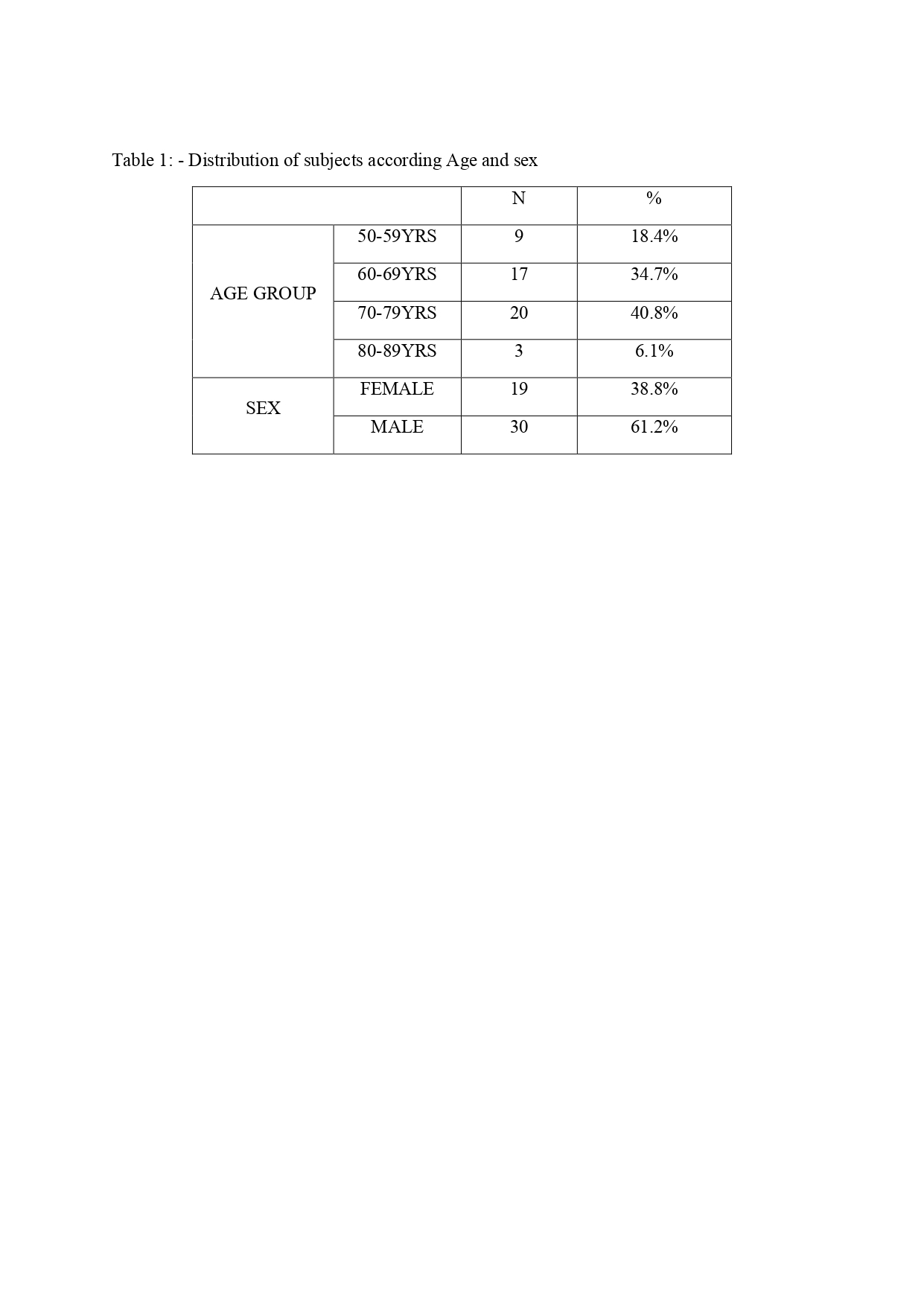
Table 1
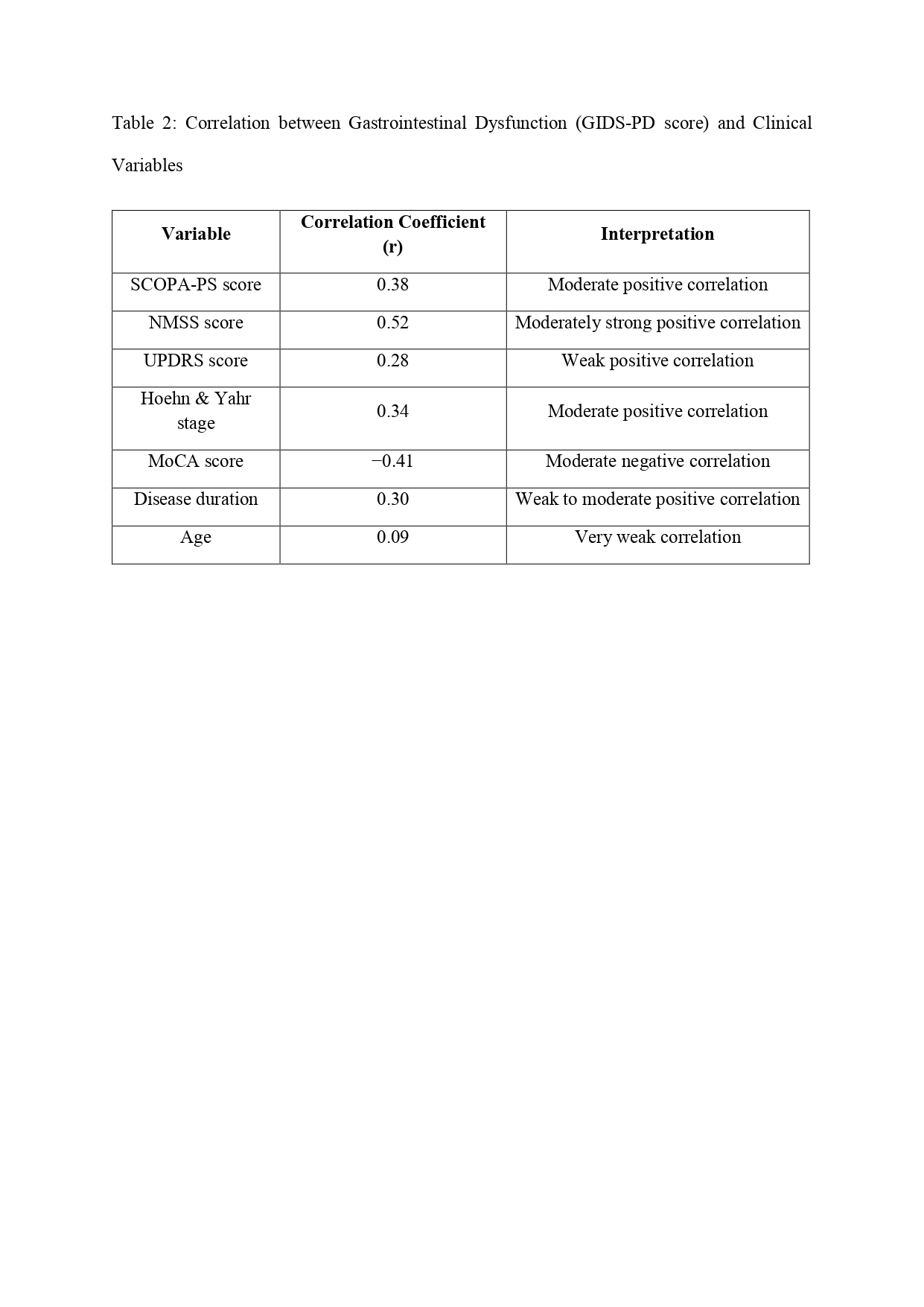
Table 2
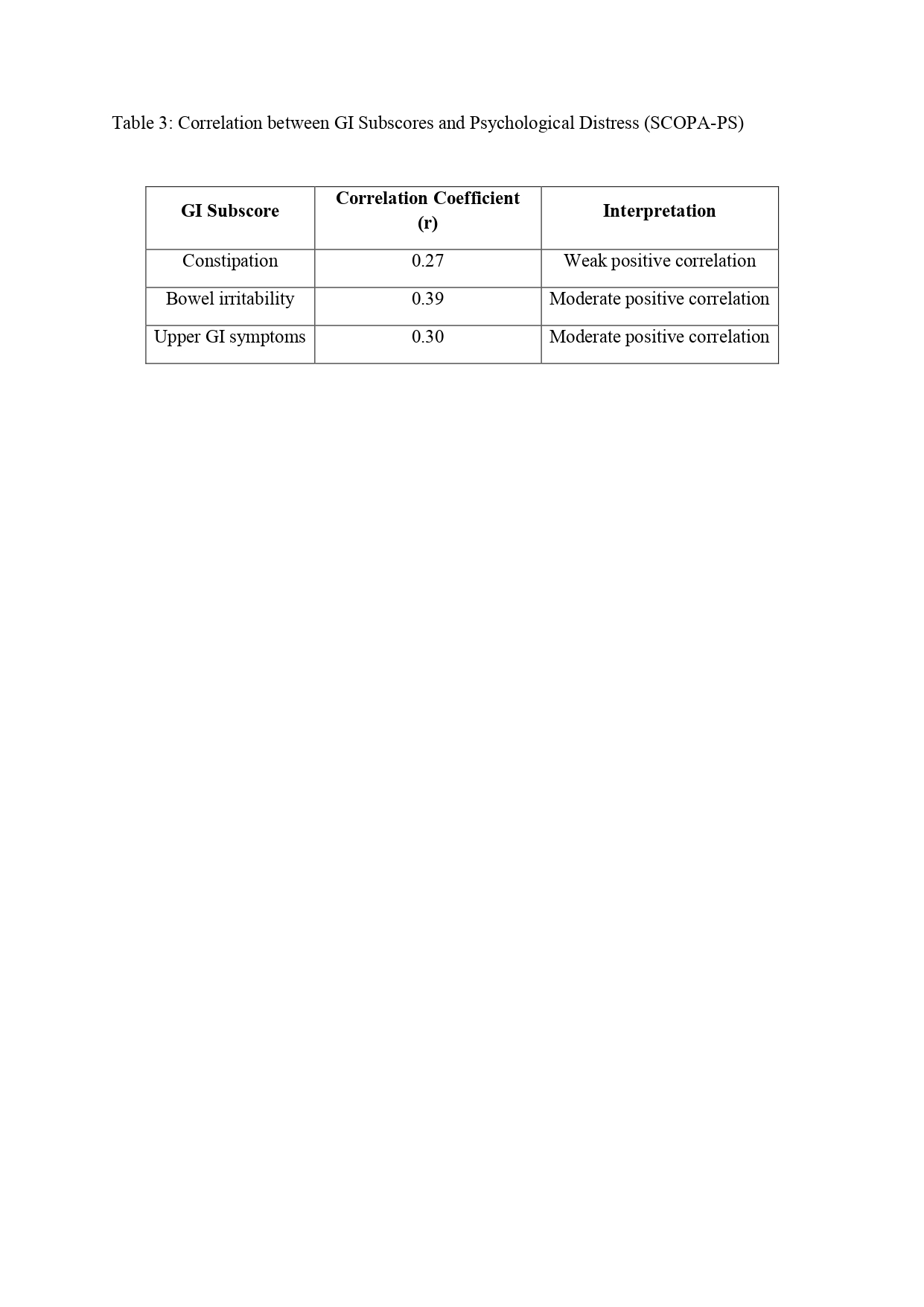
Table 3
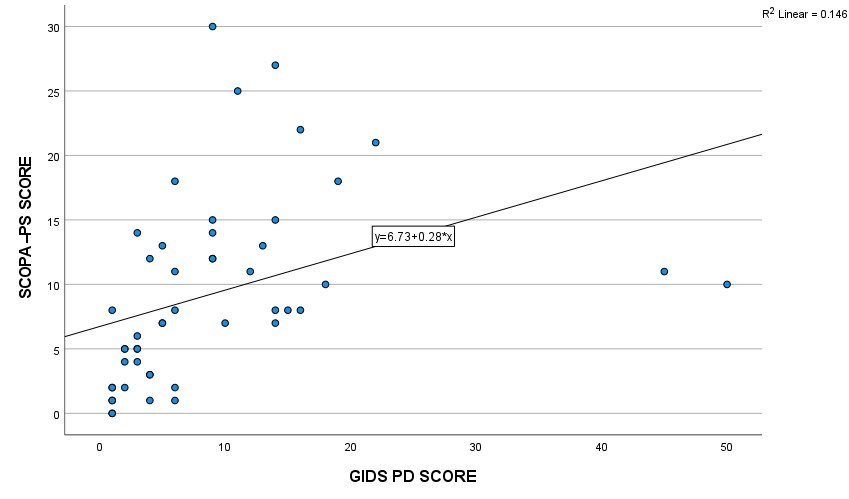
Figure 1
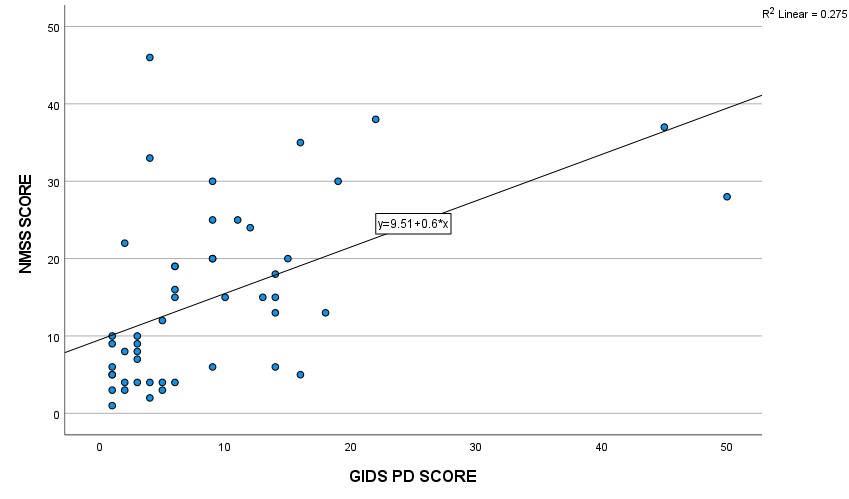
Figure 2
References: 1. Chaudhuri KR, Healy DG, Schapira AH. Non-motor symptoms of Parkinson’s disease: diagnosis and management. Lancet Neurology. 2006;5(3):235–245.
2. Pfeiffer RF. Gastrointestinal dysfunction in Parkinson’s disease. Lancet Neurology. 2003;2(2):107–116.
3. Fasano A, Visanji NP, Liu LW, Lang AE, Pfeiffer RF. Gastrointestinal dysfunction in Parkinson’s disease. Lancet Neurology. 2015;14(6):625–639.
4. Martinez-Martin P, Ray Chaudhuri K, et al. Gastrointestinal Dysfunction Scale for Parkinson’s Disease (GIDS-PD): development and validation. Movement Disorders.
5. Visser M, Marinus J, Stiggelbout AM, Van Hilten JJ. Assessment of psychiatric complications in Parkinson’s disease: SCOPA-PS. Movement Disorders. 2004;19(11):1306–1315.
6. Martinez-Martin P, Rodriguez-Blazquez C, et al. The Non-Motor Symptoms Scale (NMSS) for Parkinson’s disease. Movement Disorders. 2007;22(13):1901–1911.
7. Nasreddine ZS, Phillips NA, et al. The Montreal Cognitive Assessment (MoCA): a brief screening tool for mild cognitive impairment. Journal of the American Geriatrics Society. 2005;53(4):695–699
To cite this abstract in AMA style:
A. Janardhan, A. Mehta, P. Hiremath, P. R, L. R, M. Javali, P. Acharya. Characterizing Gastrointestinal Dysfunction and its Psychosocial Associations in Idiopathic Parkinson’s Disease: Findings from a Single centre Prospective Cross-sectional Indian study [abstract]. Mov Disord. 2026; 41 (suppl 1). https://www.mdsabstracts.org/abstract/characterizing-gastrointestinal-dysfunction-and-its-psychosocial-associations-in-idiopathic-parkinsons-disease-findings-from-a-single-centre-prospective-cross-sectional-indian-study/. Accessed October 1, 2026.« Back to 2026 International Congress
MDS Abstracts - https://www.mdsabstracts.org/abstract/characterizing-gastrointestinal-dysfunction-and-its-psychosocial-associations-in-idiopathic-parkinsons-disease-findings-from-a-single-centre-prospective-cross-sectional-indian-study/