
Objective: To test the hypothesis that dopamine receptor blocking agents (DRBAs) contribute to the later diagnosis of Parkinson’s disease (PD).
Background: Recent evidence suggests that dopamine receptor blockade may cause neurodegeneration, not merely reversible extrapyramidal symptoms. The rise in antipsychotic prescriptions may contribute meaningfully to growing PD incidence.
Method: We analyzed Merative Marketscan, a collection of administrative and pharmacy codes for 218 million unique commercially-insured individuals in the United States between 2001-2021 using a case-control design. New cases of PD were defined as having a relevant ICD code and a pharmacy claim for a levodopa-containing drug. Controls were matched 10:1 for sex and birth year. Exposures included all antipsychotic drugs. The primary outcome was the association of PD with ever-exposure to DRBA using fixed effects logistic regression with adjustment for healthcare utilization, comorbidity burden, and mental health burden. To address confounding by indication, we examined the non-antipsychotic metoclopramide, when compared to the non-DRBA ondansetron.
Results: We identified 231,992 new cases of PD and 2,318,743 matched controls. Following adjustment, cases had 1.57 (aOR; 95% CI: 1.54 – 1.61) fold larger odds of DRBA ever use (Figure 1). This was confirmed in analyses using stricter definitions of PD. We observed a dose-response-like increase in the OR when examining by duration of exposure and affinity for the D2 receptor (Figure 1-2). When examining metoclopramide, ever use was more common in those with PD (OR = 1.44; 95% CI: 1.40 – 1.47) while use of ondansetron was largely unassociated (OR = 1.05; 95% CI: 1.03 – 1.08) (Figure 3).
Conclusion: In this large insurance claims-based case-control study, we found higher odds of ever use of any antipsychotic among cases with PD compared to controls. Importantly, there was a dose-response-like relationship with increasing ORs with longer exposures and lower dissociation constants, which suggests a biological mechanism. While this could represent an unmasking of subclinical disease, DRBA exposure several years prior which is not continued is unlikely to be an extrapyramidal side effect. Importantly, second-generation antipsychotics do not appear to be “safe”. Assuming a causal relationship, 2.0% of all cases of PD may be explained by antipsychotic exposure.
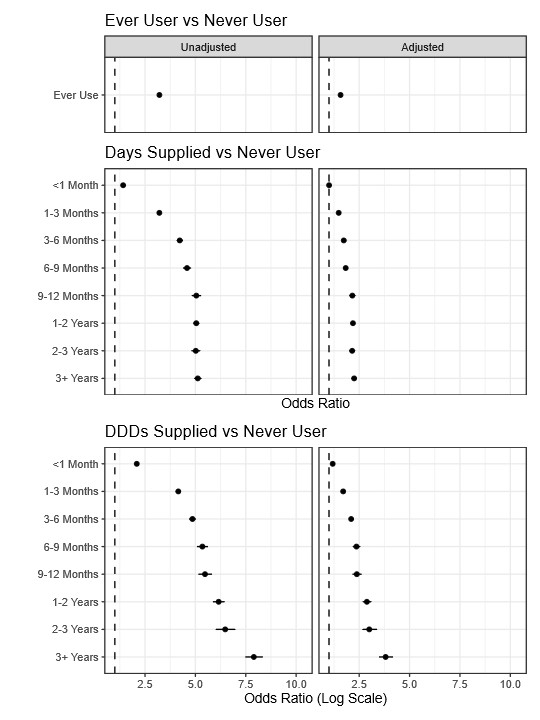
Figure 1: Associations Between DRBA Use and PD
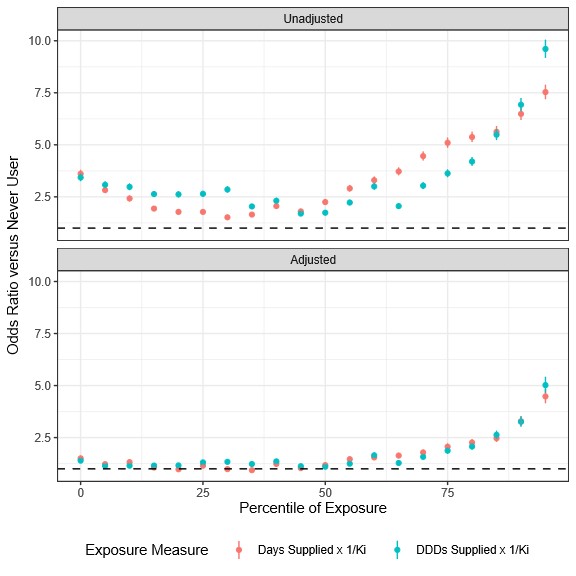
Figure 2: OR for PD by D2 Affinity
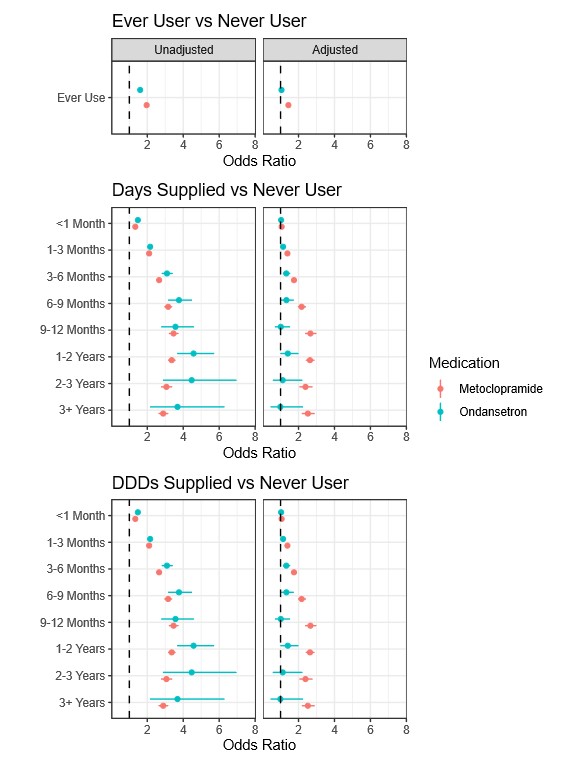
Figure 3: Associations between GI Meds and PD
To cite this abstract in AMA style:
L. Neilson, R. Carnahan, V. Kijewski, S. Duffy, G. Scott, N. Narayanan, J. Simmering. Dopamine Receptor Blocking Drug Exposure is Associated with Parkinson’s Disease [abstract]. Mov Disord. 2026; 41 (suppl 1). https://www.mdsabstracts.org/abstract/dopamine-receptor-blocking-drug-exposure-is-associated-with-parkinsons-disease/. Accessed October 1, 2026.« Back to 2026 International Congress
MDS Abstracts - https://www.mdsabstracts.org/abstract/dopamine-receptor-blocking-drug-exposure-is-associated-with-parkinsons-disease/