
Objective: To characterise the epidemiology of Parkinson’s Disease(PD) and compare risk factors/exposures between Regional and Metropolitan New South Wales(NSW).
Background: The Natural History of PD Study is a prospective five-year cohort study conducted through Neurosciences Research Australia(NeuRA) aiming to characterise disease progression and risk factors associated with PD.PD care in regional Australia remains comparatively under-resourced,with reduced access to specialist services.Gene–environment interactions are increasingly recognised in PD,including pesticide and chemical exposures such as paraquat,and are more prevalent in agricultural settings.
Method: Participants were recruited through clinician referrals and nurse-initiated outreach across NSW.Demographic,anthropometric and clinical data were collected in clinic following consent.Exposure history,diagnostic timelines and management variables were retrospectively recorded in REDCap.Metropolitan and non-metropolitan participants were compared.
Results: A total of 121 participants(86metropolitan,35non-metropolitan) mean age 68.2years(SD11.0) and 54.5%male(Figure1) were recruited from 2025.Regional participants demonstrated lower tertiary education attainment(48.6%vs69.8%;MD21.2%,95%CI2.0–40.4%;p=0.028) and higher vocational education rates(31.4%vs14.0%;MD17.5%,95%CI0.04–34.5%,p=0.026) compared to metropolitan participants(Table1).Comorbidities were more frequent regionally, including diabetes(11.4%vs3.5%;MD7.9%,95%CI3.3–19.2%;p=0.090).Environmental exposures were higher in regional participants,particularly pesticides(40.0%vs14.0%;MD26%,95%CI8.2-43.9%;p=0.002) and heavy metals(8.6%vs2.3%;MD6.2%,95%CI-3.6-16.1%;p=0.12). Age of onset,age at diagnosis and time from symptom onset to diagnosis were similar between groups(≈2.5 years).Access to advanced therapies was lower in our regional cohort,with fewer individuals receiving device-assisted treatments or deep brain stimulation.
Conclusion: Interim data suggests that PD patients in regional NSW vary from their metropolitan counterparts with respect to environmental exposures,comorbidity profile,and use of advanced therapies.Limitations include selection bias of referrals to NeuRA and the small cohort size.Ongoing recruitment in this study and targeted research will help inform service planning and risk profiles among the regional PD community.
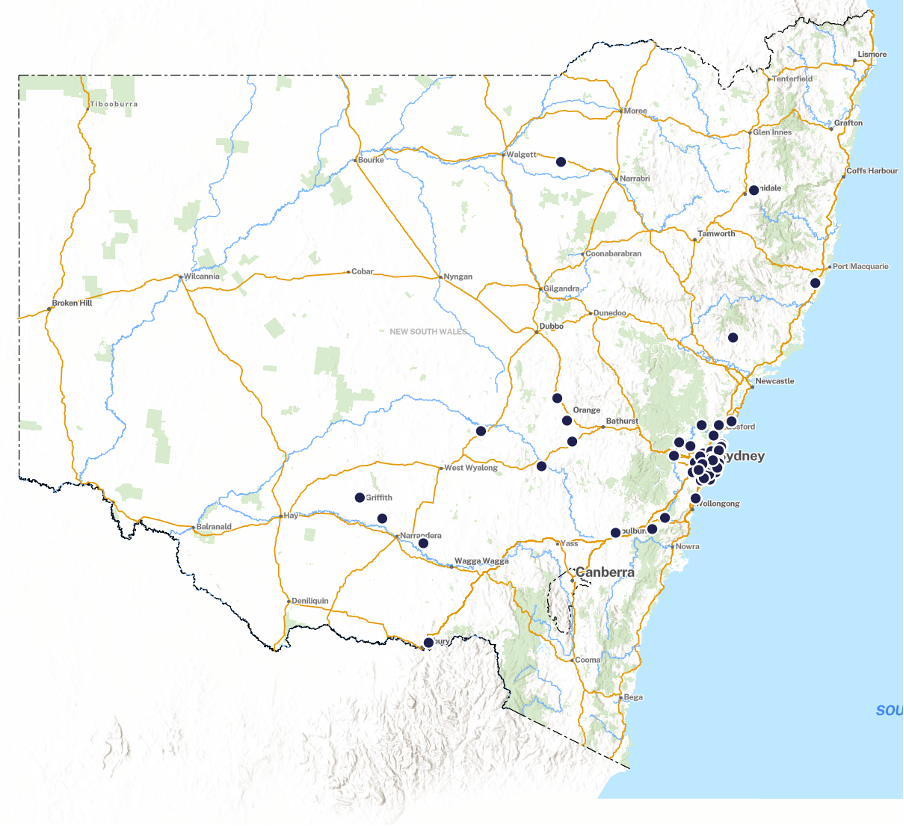
Figure 1: PD Patient distribution throughout NSW
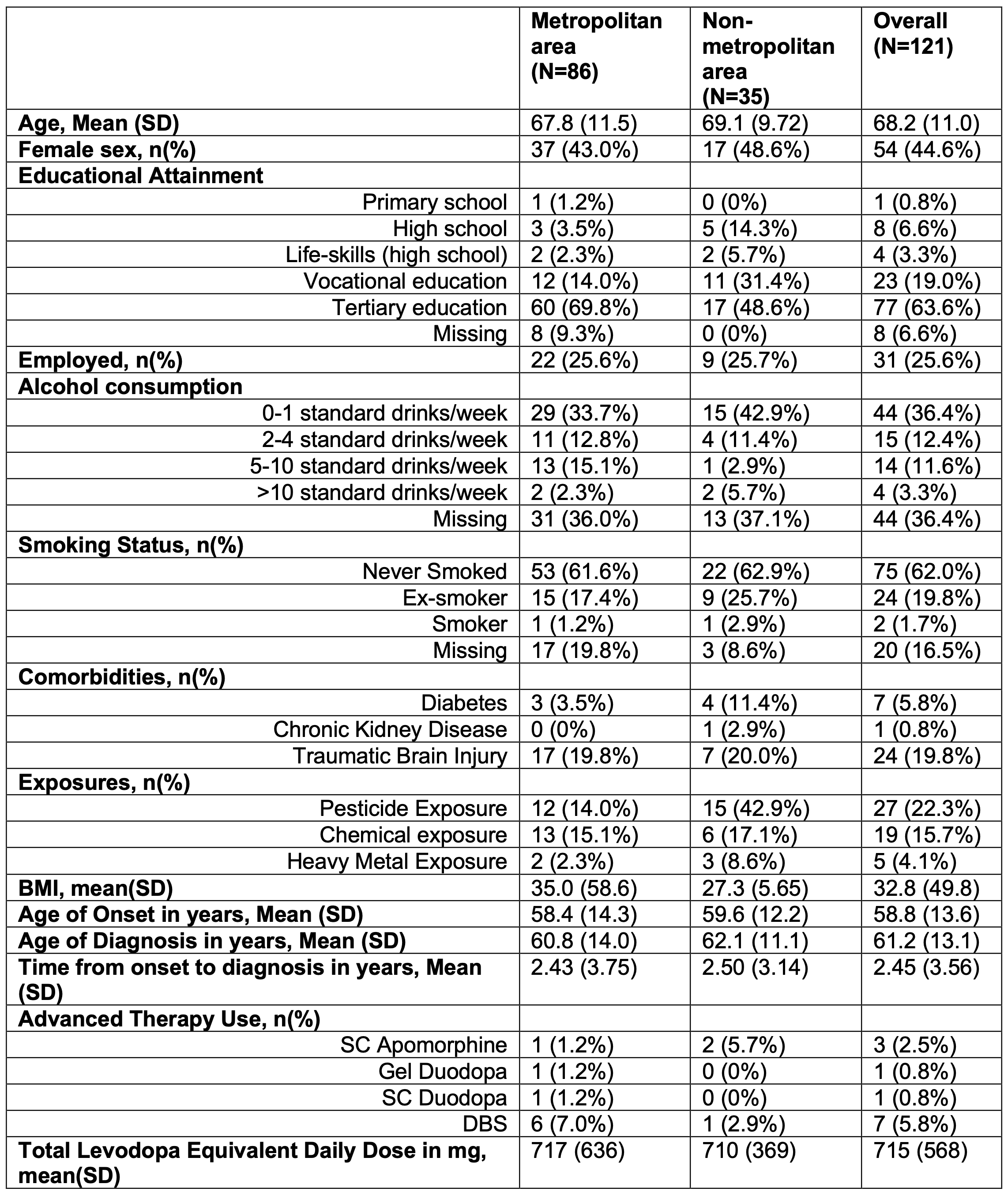
Table 1: Baseline Characteristics
To cite this abstract in AMA style:
W. Liu, M. Li, R. Mackinnon, S. Geara, S. Lush, S. Rowe, C. Sue. Regional landscape of Parkinson’s disease: An update from the NeuRA Natural History of Parkinson’s Study [abstract]. Mov Disord. 2026; 41 (suppl 1). https://www.mdsabstracts.org/abstract/regional-landscape-of-parkinsons-disease-an-update-from-the-neura-natural-history-of-parkinsons-study/. Accessed October 1, 2026.« Back to 2026 International Congress
MDS Abstracts - https://www.mdsabstracts.org/abstract/regional-landscape-of-parkinsons-disease-an-update-from-the-neura-natural-history-of-parkinsons-study/