
Category: Dystonia: Genetics
Objective: To identify clinical predictors of genetic positivity in dystonia and to develop a phenotype-based predictive score to guide genetic testing.
Background: Dystonia is a heterogeneous movement disorder (1). Making a genetic diagnosis is crucial because a patient’s genotype can affect treatment outcomes, including levodopa responsiveness, suitability for deep brain stimulation, and prognosis counseling (2).
Method: This prospective cross-sectional study was conducted at a tertiary movement disorders center in India. Detailed clinical phenotyping was performed, and genetic evaluation was undertaken using whole-exome sequencing with ACMG-based variant classification. Clinical predictors of genetic positivity were analyzed using regression and Random Forest models. Visual analyses were performed using Python and GraphPad Prism.
Results: Genetic analysis was available for 136 patients; pathogenic or likely pathogenic variants were identified in 45 patients (33.1%). Patients with pathogenic variants had a significantly earlier age at onset (mean 15.2 years) compared with VUS (21.6 years) and idiopathic cases (31.7 years) (p < 0.001). Positive family history (20%) and consanguinity (28.9%) were also significantly more frequent in genetically positive cases.
Clinical predictors of genetic positivity included adolescent onset, lower limb onset, and levodopa responsiveness. Logistic regression demonstrated that lower limb onset increased the odds of detecting a pathogenic variant nearly fivefold (OR ≈ 5.1, p = 0.04), while later onset groups had significantly lower odds of genetic positivity. Machine learning models confirmed age at onset, initial body region involved, and distribution of dystonia as the most important predictive variables.
Based on these predictors, a Pathogenicity Predictive Score (PPS) was developed, incorporating age at onset, body region of onset, distribution, phenotype, family history, and levodopa response. High PPS scores were strongly associated with genetic positivity. 73.3% of pathogenic cases had a score ≥4 compared with 30.9% of idiopathic cases. ROC analysis showed moderate predictive performance, with a sensitivity of 68.9% and specificity of 61.8% at a PPS cut-off ≥4.
Conclusion: Clinical phenotyping can meaningfully predict the likelihood of genetic positivity in idiopathic dystonia. Early onset with lower limb involvement, along with levodopa responsiveness, were key predictors of pathogenic variants.
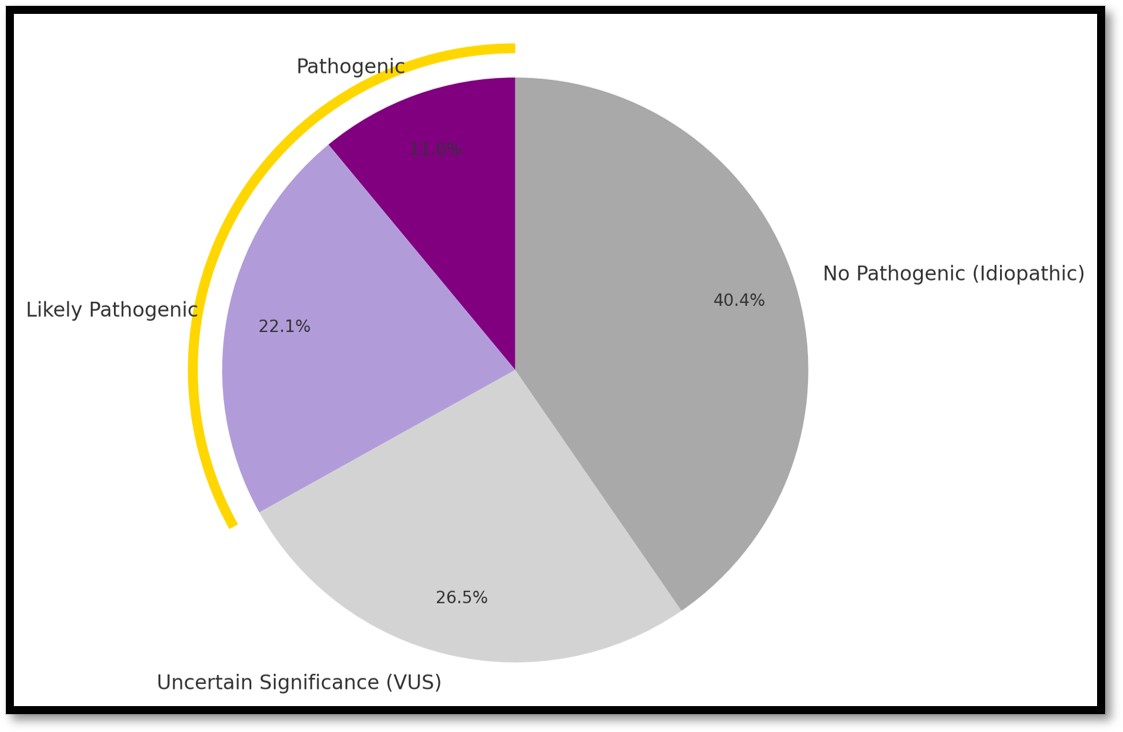
Figure 1. Genetic yield in the dystonia cohort
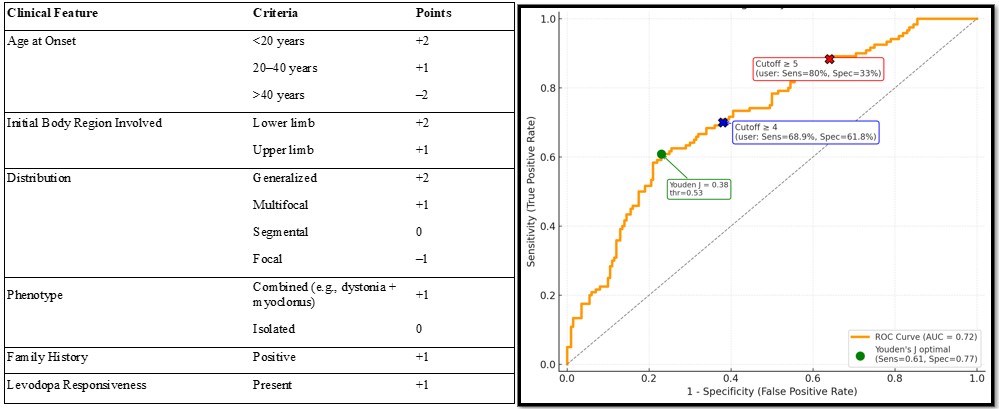
Figure 2. Pathogenic Prediction Score (PPS)
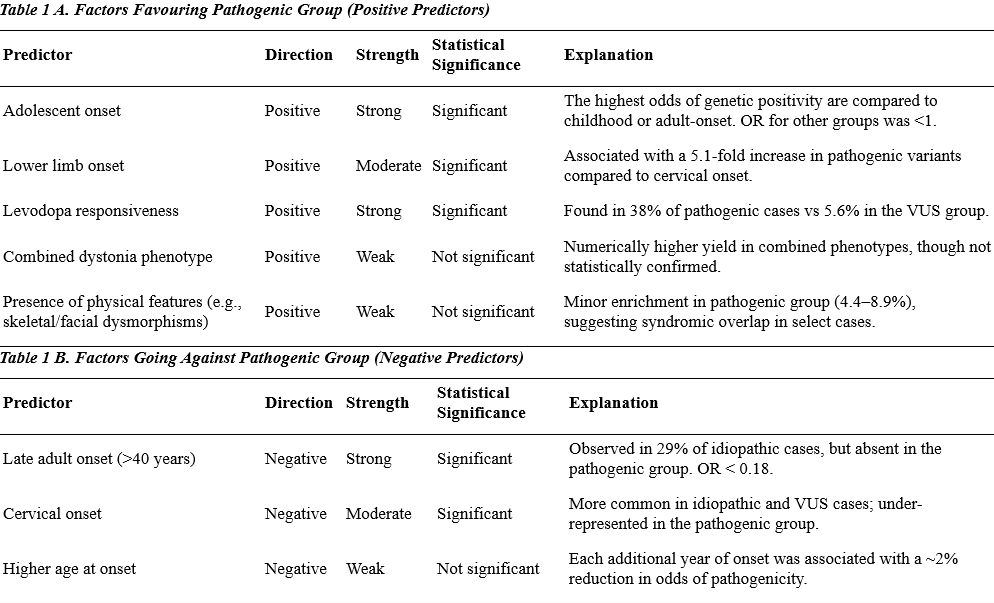
Table 1. Clinical predictors
References: 1. Albanese A, et al. Phenomenology and classification of dystonia: a consensus update. Movement Disorders. 2013.
2. Lange LM, et al. Genotype–phenotype relations for isolated dystonia: systematic review and meta-analysis of MDSGene data. Movement Disorders. 2021.
To cite this abstract in AMA style:
N. Gowda, N. Kamble, V. Holla, R. Yadav, P. Pal. Genetic Predictors in Dystonia: A Phenotypic Analysis. [abstract]. Mov Disord. 2026; 41 (suppl 1). https://www.mdsabstracts.org/abstract/genetic-predictors-in-dystonia-a-phenotypic-analysis/. Accessed October 1, 2026.« Back to 2026 International Congress
MDS Abstracts - https://www.mdsabstracts.org/abstract/genetic-predictors-in-dystonia-a-phenotypic-analysis/