
Category: MSA, PSP, CBS (Other)
Objective: To examine the relationship between cognitive, executive, motor & autonomic function, neuropsychiatric symptoms, and health-related quality of life (HRQoL) in patients with progressive supranuclear palsy (PSP) in Singapore.
Background: While impairments in cognition, executive, and motor functions are common in patients with PSP, their relationship with HRQoL is less frequently explored. The relationship between these patients’ autonomic functions, neuropsychiatric symptoms and their HRQoL are also unclear.
Method: Patients fulfilling MDS-PSP’s criteria for probable PSP were recruited from the National Neuroscience Institute’s outpatient clinic. MDS-Unified Parkinson’s Disease Rating Scale (Part III) (UPDRS-III) assessed motor function. Cognitive function was evaluated by Mini-Mental State Examination (MMSE) & Montreal Cognitive Assessment (MOCA), and executive function by Frontal Assessment Battery (FAB). Scales for Outcomes in Parkinson’s Disease – Autonomic Dysfunction (SCOPA-AUT) was used for autonomic function, while Neuropsychiatric Inventory Questionnaire (NPI-Q) assessed the presence & severity of neuropsychiatric symptoms. HRQoL was determined by the EQ-5D-5L index. Associations were evaluated using Spearman’s rank correlation coefficient test.
Results: A total of 47 patients (aged 71.0±6.8 years at recruitment; 55.3% males) were included. The EQ-5D-5L index correlated positively with cognitive scores (MOCA, ρ=0.35, p<0.05; MMSE, ρ=0.53, p<0.001), & negatively with motor impairment (UPDRS-III, ρ=-0.78, p<0.001). No significant correlation was observed with FAB, although FAB correlated with MMSE (ρ=0.69, p<0.001) & MOCA (ρ=0.75, p<0.001).
Lower EQ-5D-5L index was significantly associated with these autonomic dysfunctions: gastrointestinal symptoms (fecal incontinence, early abdominal fullness, dysphagia, & swallowing/choking); hyperhidrosis (day & night); and urinary symptoms (incomplete emptying, nocturia, urgency, & urinary incontinence (ρ=-0.32 to -0.53). Amongst neuropsychiatric symptoms, only nighttime behaviors (such as waking during the night) showed a significant correlation with EQ-5D-5L index (ρ=-0.35, p<0.05).
Conclusion: PSP patients’ HRQoL is most associated with motor function followed by swallowing/choking and urinary incontinence symptoms. While it may be difficult to treat motor dysfunction, active screening and treatment for autonomic symptoms may help to improve their HRQoL.
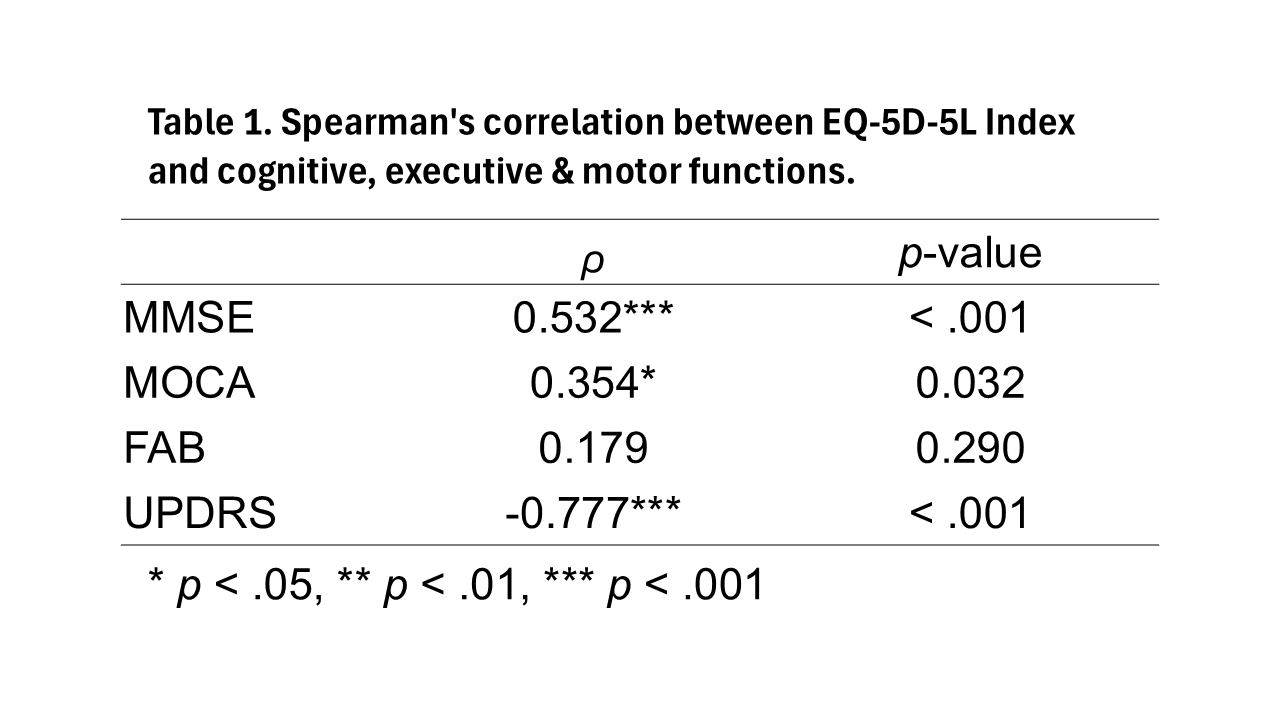
EQ-5D-5L Index vs Cognitive, Executive & Motor
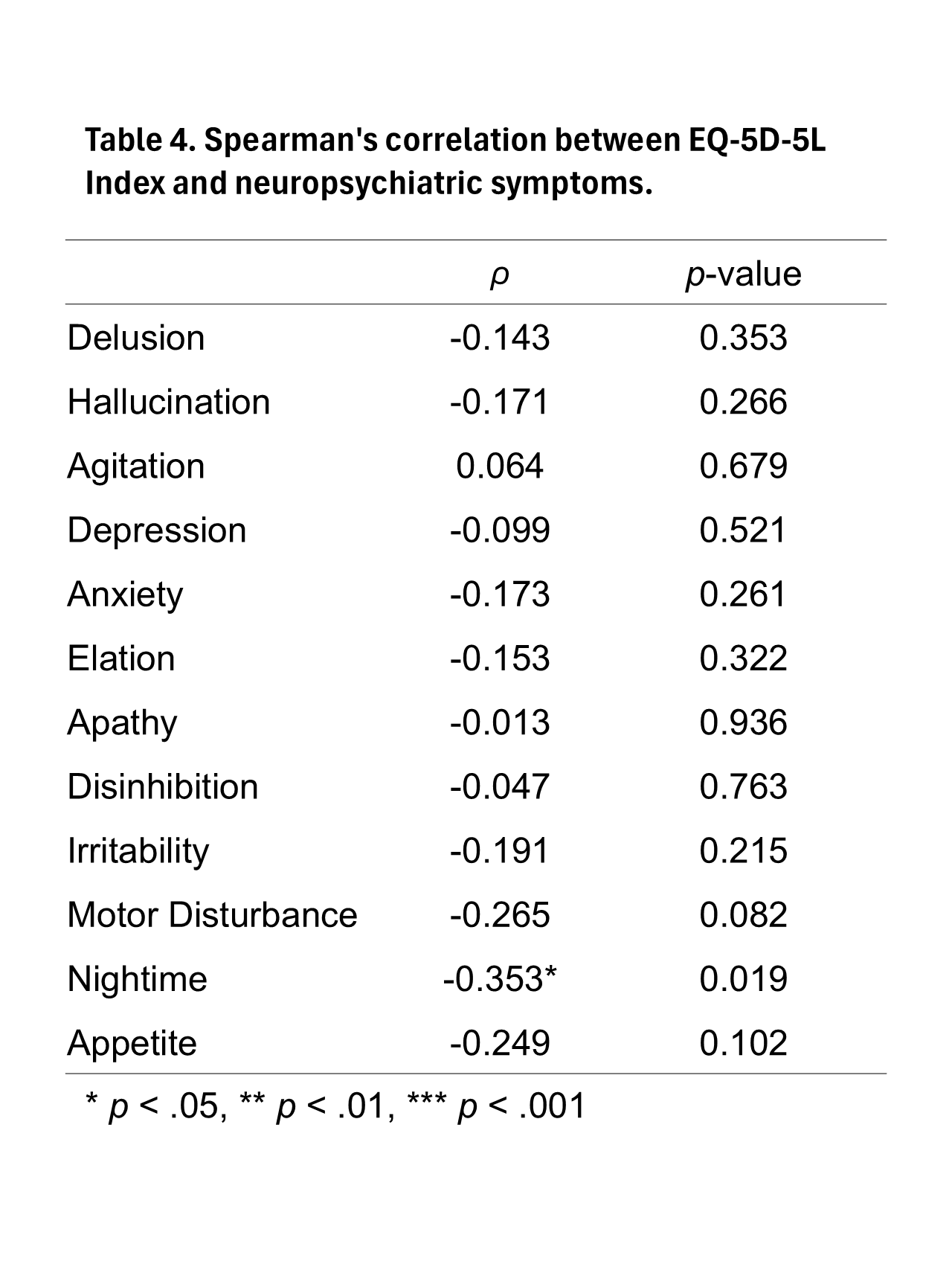
EQ-5D-5L Index vs Neuropsychiatric Symptoms
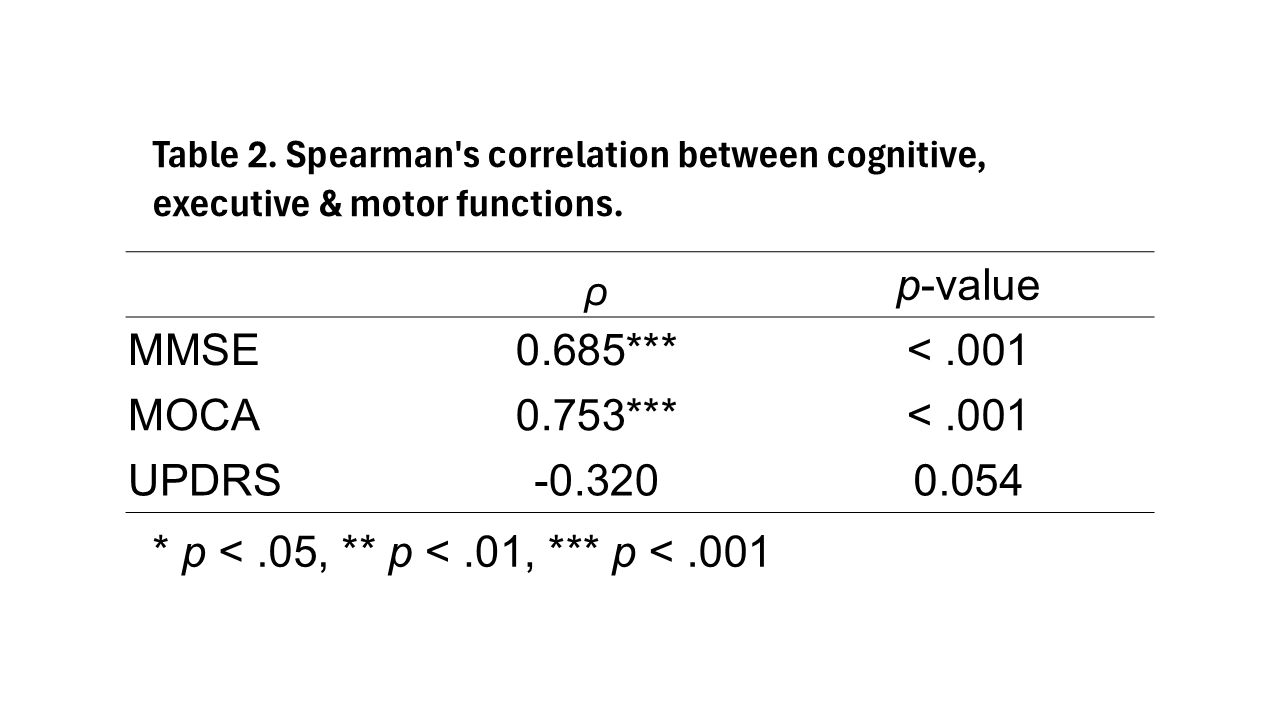
Executive VS Cognitive & Motor Functions
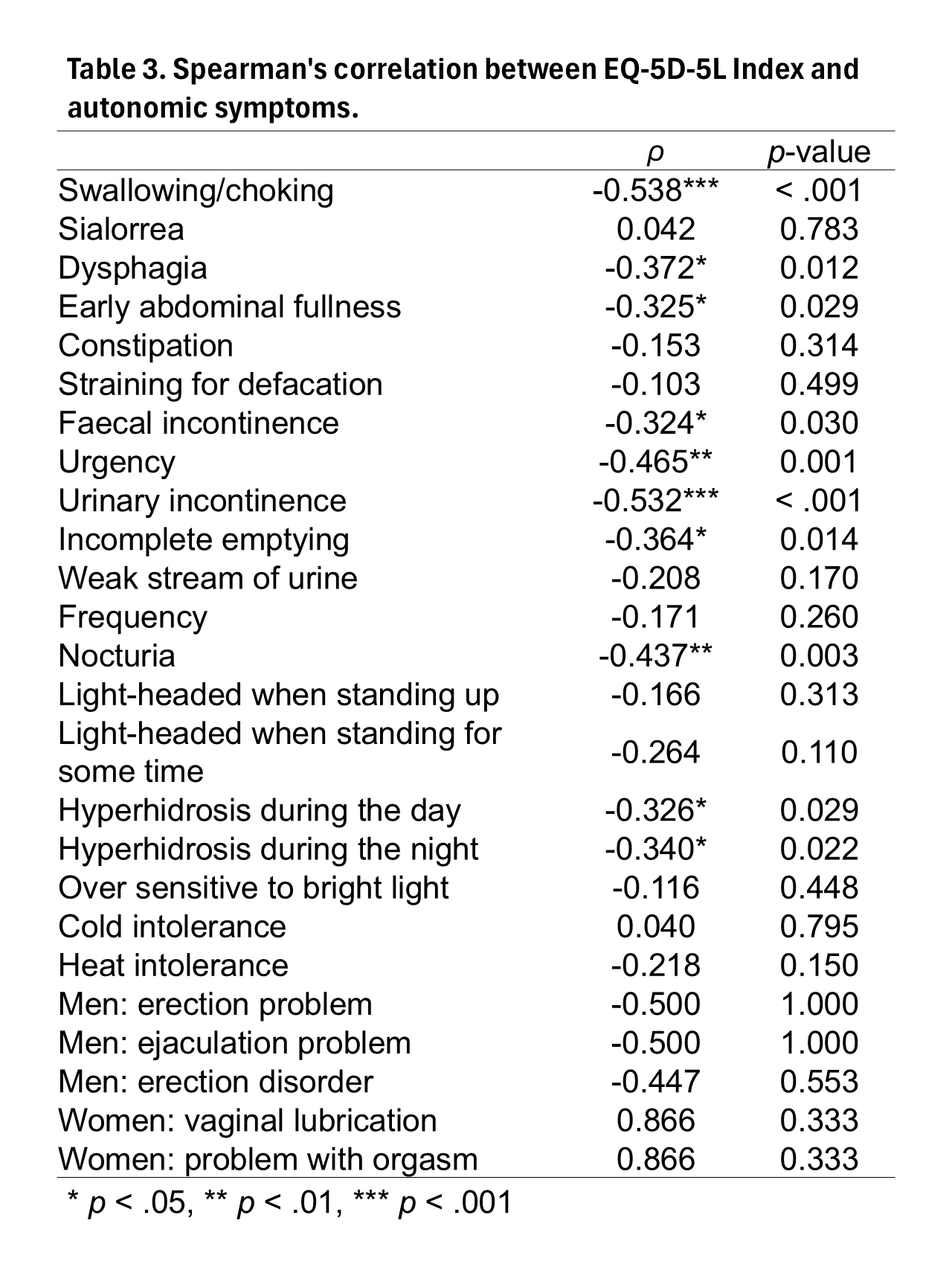
EQ-5D-5L Index vs Autonomic Symptoms
To cite this abstract in AMA style:
T. Leong, U. Ha, JY. Goh, R. Hoe, KY. Tay, WL. Au, L. Tan, A. Ng, S. Neo. Cognitive & Clinical Correlates of Quality of Life in Probable Progressive Supranuclear Palsy [abstract]. Mov Disord. 2026; 41 (suppl 1). https://www.mdsabstracts.org/abstract/cognitive-clinical-correlates-of-quality-of-life-in-probable-progressive-supranuclear-palsy/. Accessed October 1, 2026.« Back to 2026 International Congress
MDS Abstracts - https://www.mdsabstracts.org/abstract/cognitive-clinical-correlates-of-quality-of-life-in-probable-progressive-supranuclear-palsy/