
Category: Parkinson’s Disease: Clinical Trials
Objective: To assess clinician and researcher views on the integration of biomarkers and biological subtyping in PD trials and perceived barriers to recruitment and completion.
Background: Investigator perspectives on barriers to address the biological heterogeneity in disease-modifying clinical trials of Parkinson’s disease (PD) remain poorly characterized.
Method: A survey developed by CureNow:PD in collaboration with the Pan-American Section of the Movement Disorders Society was distributed electronically to investigators involved in PD research and clinical care.
Results: Ninety-eight respondents completed the survey (86.7% clinicians). Most considered biological subtyping very important or essential for disease-modifying therapies (85.7%), yet only 29.6% reported routinely incorporating biomarkers into trial design. Major barriers included lack of validated biomarkers (53.1%) and limited access to biomarker data (51.0%). Investigators also reported substantial recruitment challenges related to patient awareness, logistical constraints, and limited recruitment resources.
Conclusion: Investigators strongly support precision-medicine approaches in PD but identify significant scientific and operational barriers to implementation.
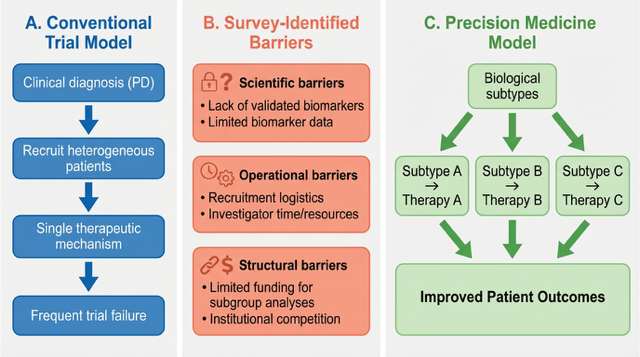
Fig 1 Precision Medicine Model for Clinical Trials
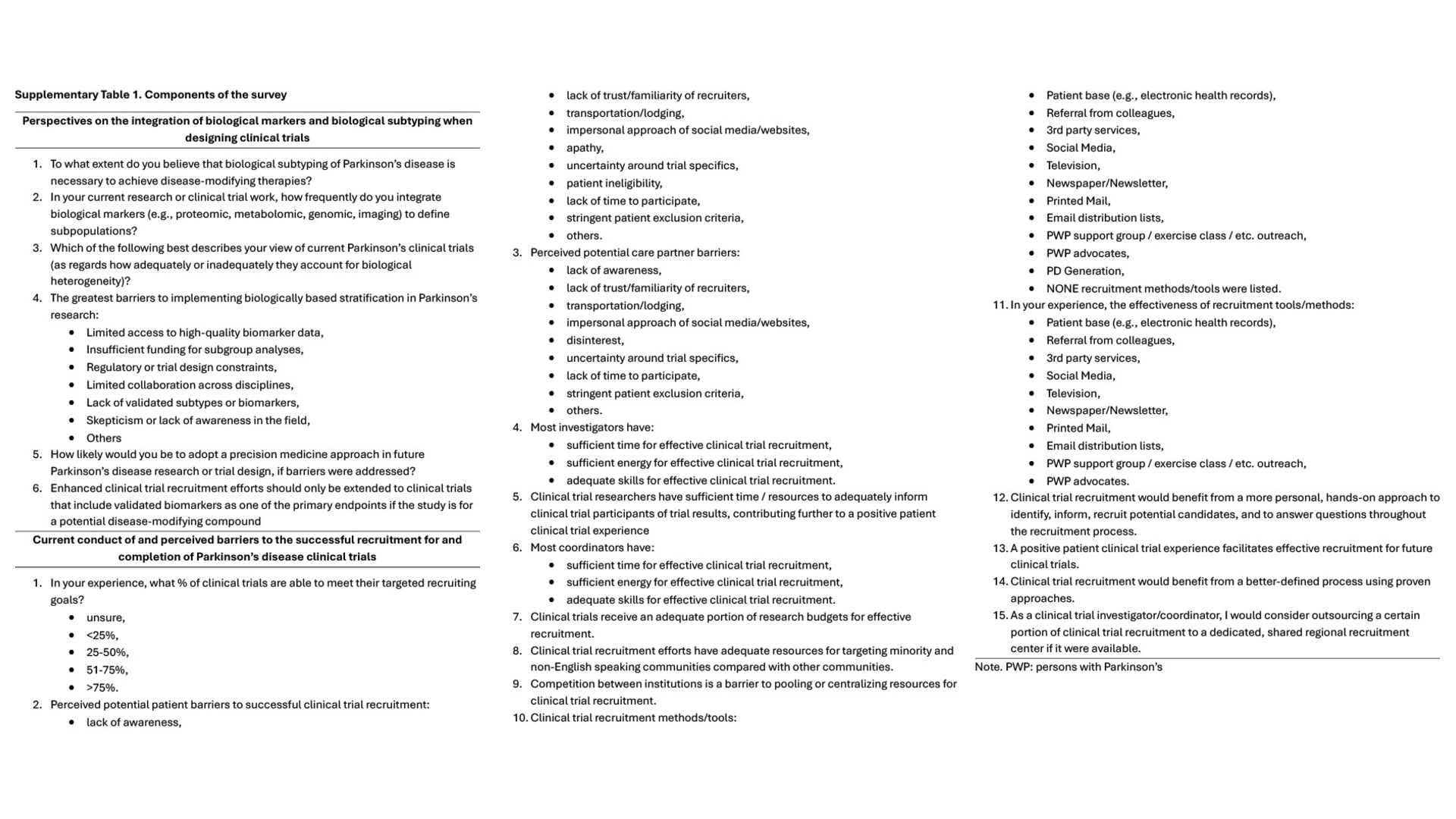
Table 1 Survey Questions
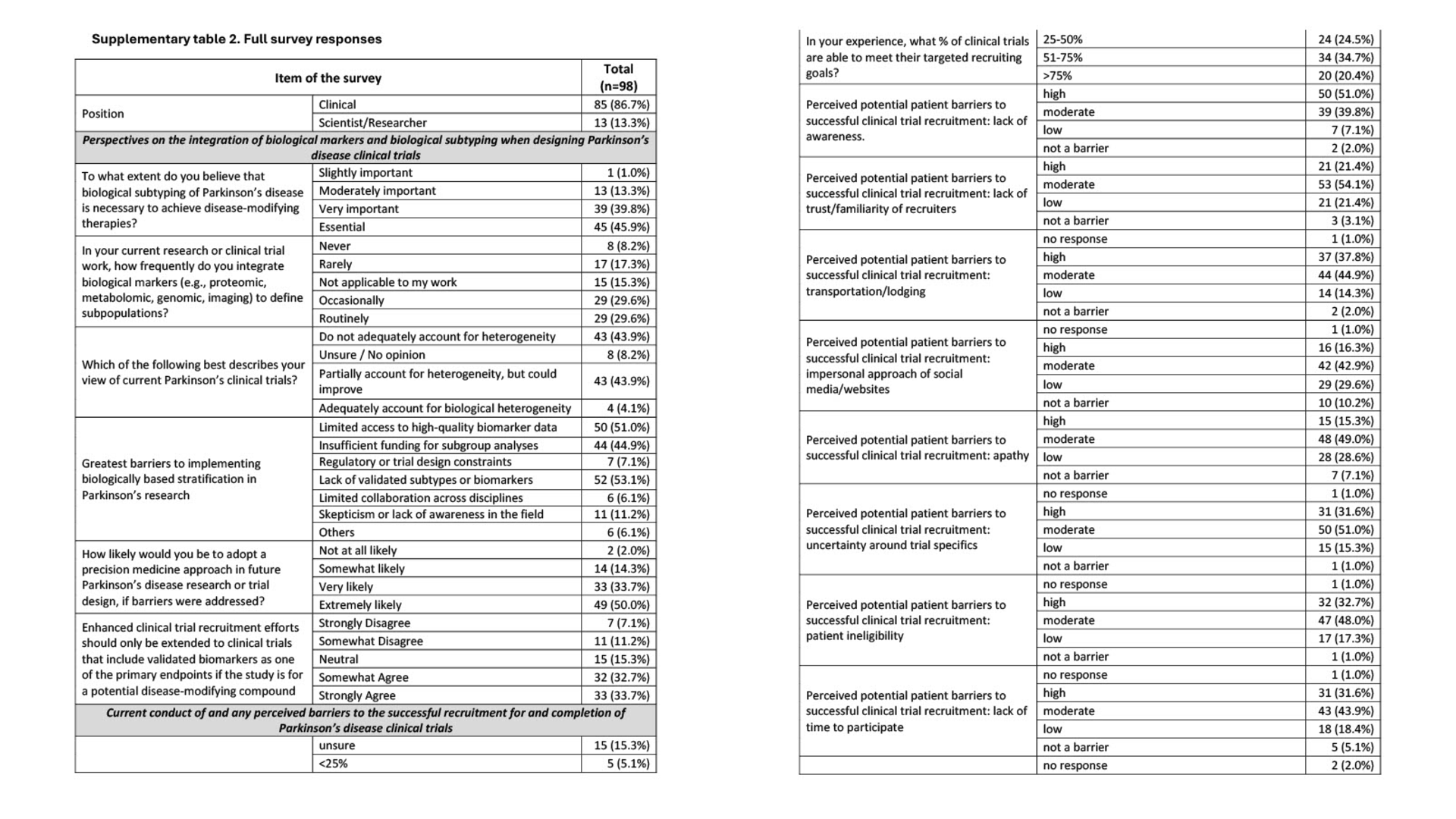
Table 2 Survey Results Part A
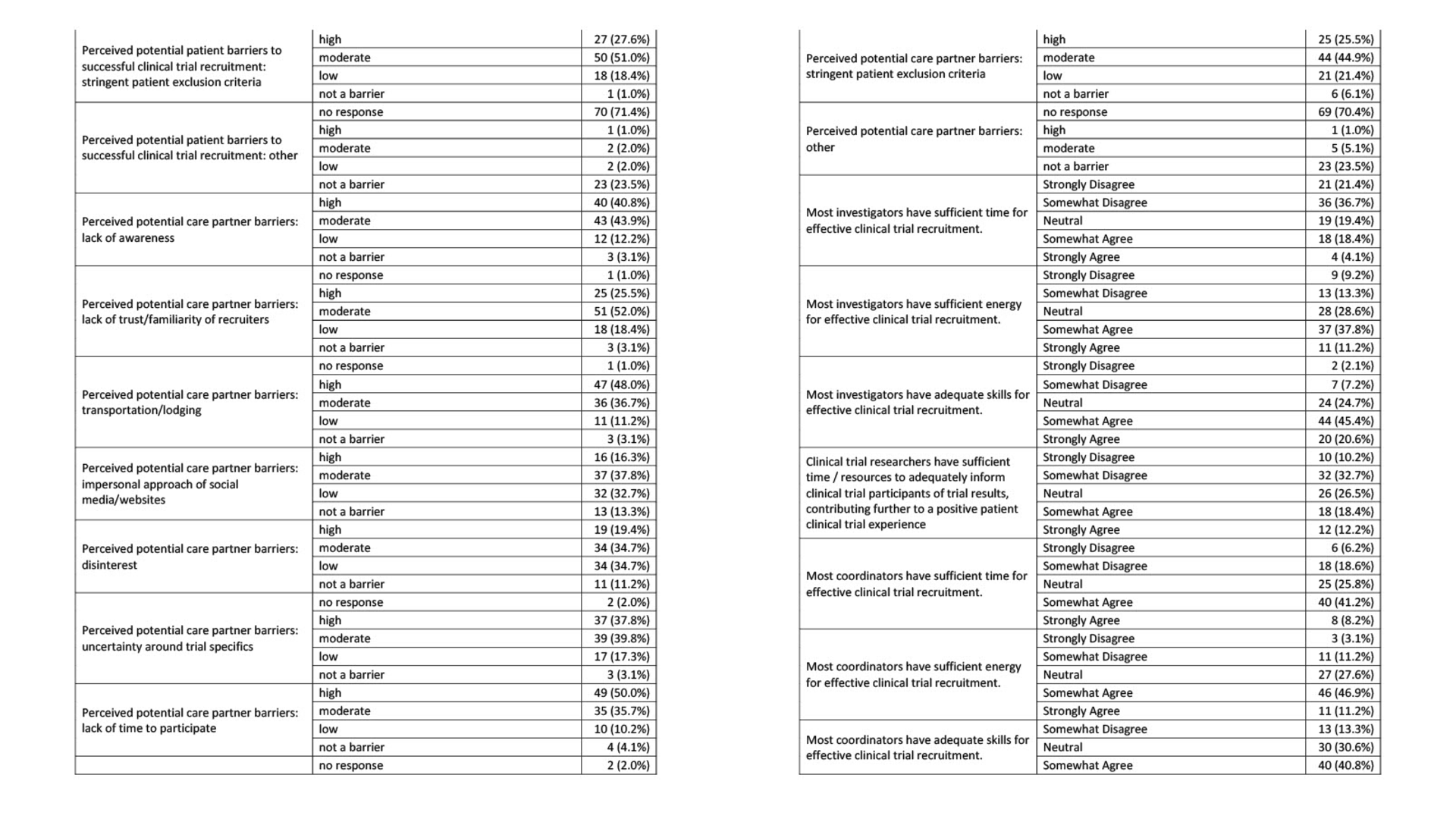
Table 2 Survey Results Part B
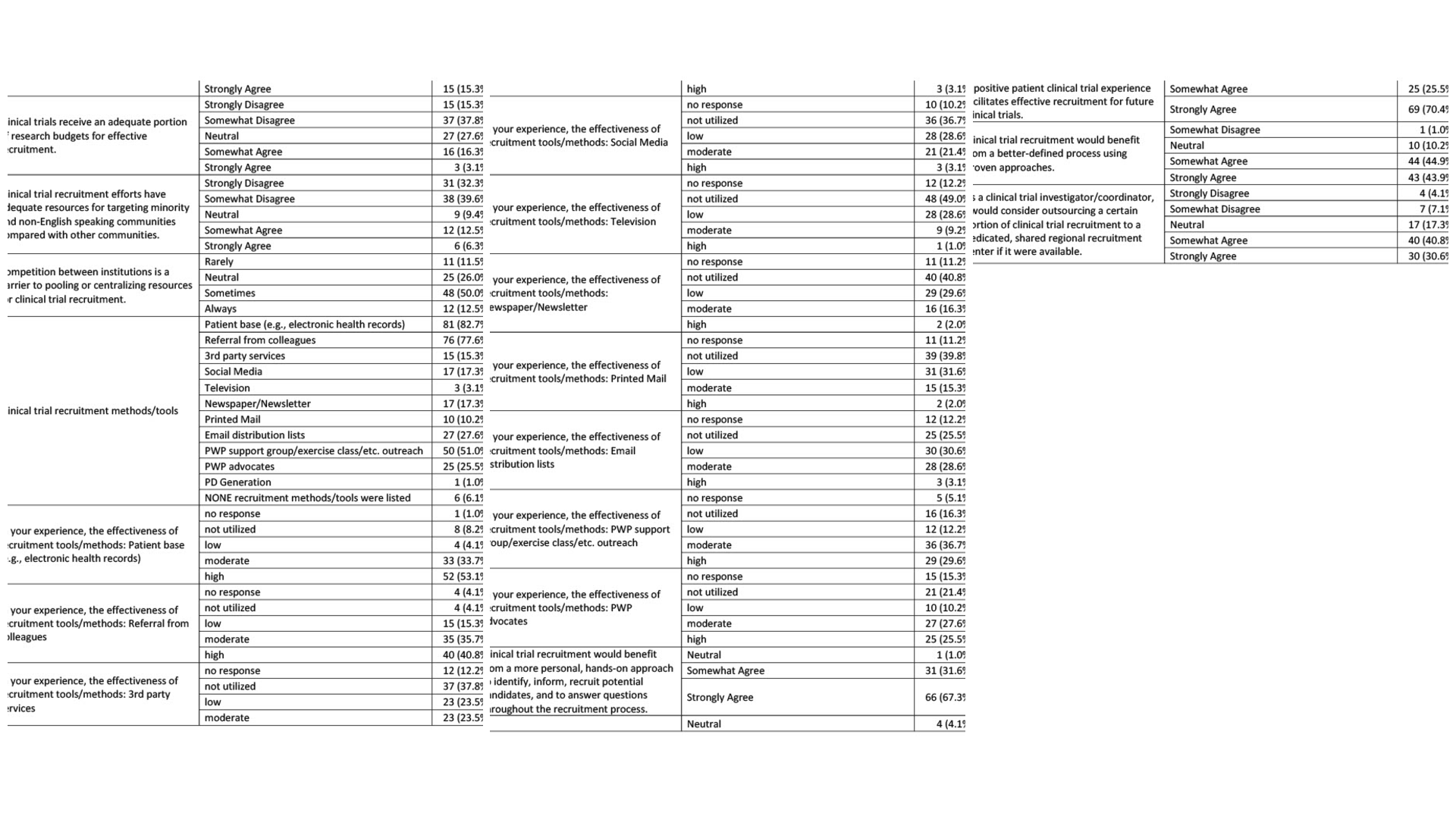
Table 2 Survey Results Part C
References: Approaches, Challenges, and Future Considerations. Mov Disord 2018;33:660-677.
2. Espay AJ, Schwarzschild MA, Tanner CM, et al. Biomarker-driven phenotyping in Parkinson’s disease: A translational missing link in disease-modifying clinical trials. Mov Disord 2017;32:319-324.
3. Pagano G, Taylor KI, Anzures Cabrera J, et al. Prasinezumab slows motor progression in rapidly progressing early-stage Parkinson’s disease. Nat Med 2024;30:1096-1103.
4. Mestre TA, Eberly S, Tanner C, et al. Reproducibility of data-driven Parkinson’s disease subtypes for clinical research. Parkinsonism Relat Disord 2018;56:102-106.
5. Marras C, Fereshtehnejad SM, Berg D, et al. Transitioning from Subtyping to Precision Medicine in Parkinson’s Disease: A Purpose-Driven Approach. Mov Disord 2024;39:462-471.
6. Espay AJ. Models of precision medicine for neurodegeneration. Handb Clin Neurol 2023;192:21-34.
7. Vijiaratnam N, Simuni T, Bandmann O, Morris HR, Foltynie T. Progress towards therapies for disease modification in Parkinson’s disease. Lancet Neurol 2021;20:559-572.
8. McDonald AM, Knight RC, Campbell MK, et al. What influences recruitment to randomised controlled trials? A review of trials funded by two UK funding agencies. Trials 2006;7:9.
9. Espay AJ, Lees AJ, Cardoso F, et al. The α-synuclein seed amplification assay: Interpreting a test of Parkinson’s pathology. Parkinsonism Relat Disord 2025;131:107256.
To cite this abstract in AMA style:
J A. de Marcaida, K. Kearney, S. Mccarthy, G. Woolery, K. Hespeler, M. Hespeler, S. Dewitte, A. Espay. Barriers to Disease-Modifying Clinical Trials in Parkinson’s Disease: A Survey of Clinicians and Researchers Involved in Clinical Trials [abstract]. Mov Disord. 2026; 41 (suppl 1). https://www.mdsabstracts.org/abstract/barriers-to-disease-modifying-clinical-trials-in-parkinsons-disease-a-survey-of-clinicians-and-researchers-involved-in-clinical-trials/. Accessed October 1, 2026.« Back to 2026 International Congress
MDS Abstracts - https://www.mdsabstracts.org/abstract/barriers-to-disease-modifying-clinical-trials-in-parkinsons-disease-a-survey-of-clinicians-and-researchers-involved-in-clinical-trials/