
Objective: To investigate the effect of acupuncture versus sham acupuncture for PDA.
Background: Anxiety in PD (PDA) is identified by continuous feeling of worry, muscle tension, and increased severity of tremors.1 Disturbances in gait and freezing of gait have been reported to be associated with anxiety symptoms.Acupuncture has been recommended as a complementary therapy for neuropsychiatric symptoms of PD with level B evidence.
Method: This randomized double-blind trial enrolled with PDA patients, allocating them 1:1 to intervention (real acupuncture, RA) or control (sham acupuncture, SA) groups.
Eligible patients from the First Affiliated Hospital met: 1) idiopathic PD diagnosis; 2) Hoehn-Yahr stages 1-4; 3) Hamilton Anxiety Scale scores 14-29; 4) age 35-80 years; and 5) provided consent. Exclusion criteria included cognitive impairment (MoCA<23), levodopa unresponsiveness, substance abuse, recent acupuncture or anti-anxiety medication use (within 30 days), major organ dysfunction, or acupuncture intolerance.Randomization and Blinding Double-blinding was achieved using a patented sham needle device capable of angled penetration, ensuring identical appearance between real and sham needles. Patients wore eye masks during treatment. Both groups received 30-minute sessions, three times weekly for 8 weeks at identical acupoints: GV24, GV29, bilateral HT7, bilateral SP6.Trial Registration:ChiCTR2100047253.
Results: 70 eligible patients were enrolled, including 34 women(48.5%) and 36 men(51.4%). 64 patients (91%) completed the intervention and the two-month follow-up,including 30 women(46.9%) and 34 men(53.1%) with a mean (SD) age of 61.84(8.47) years. At the end of treatment, the variation of HAM-A score was 0.22 (95% CI, -0.63 to 1.07; P =0.62) between the RA and SA groups. At the end of follow-up, RA group had significantly reduction in HAM-A score of 7.03 compared with SA group(95% CI, 6.18 to 7.88; P<0.001).After the acupuncture period,the change of ACTH between the RA and SA groups was statistically significant.(2.16[95% CI,0.90 to3.45],P<0.001).
Conclusion: Acupuncture is an effective treatment for PDA and can enhance the well-being of participants with PD. Mechanism of acupuncture may be related to the inhibition of HPA axis hyperactivity.
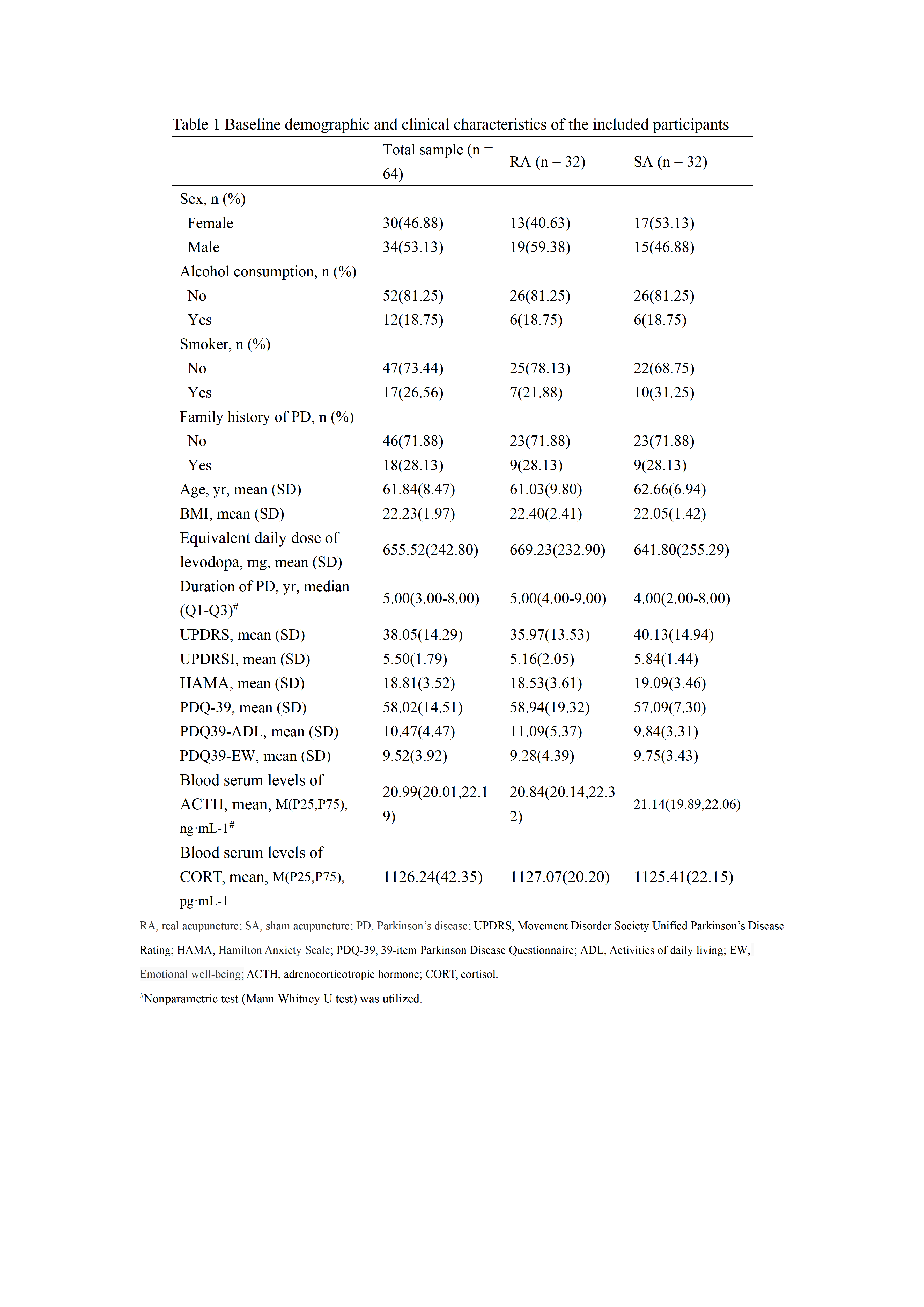
Table 1 Baseline demographic
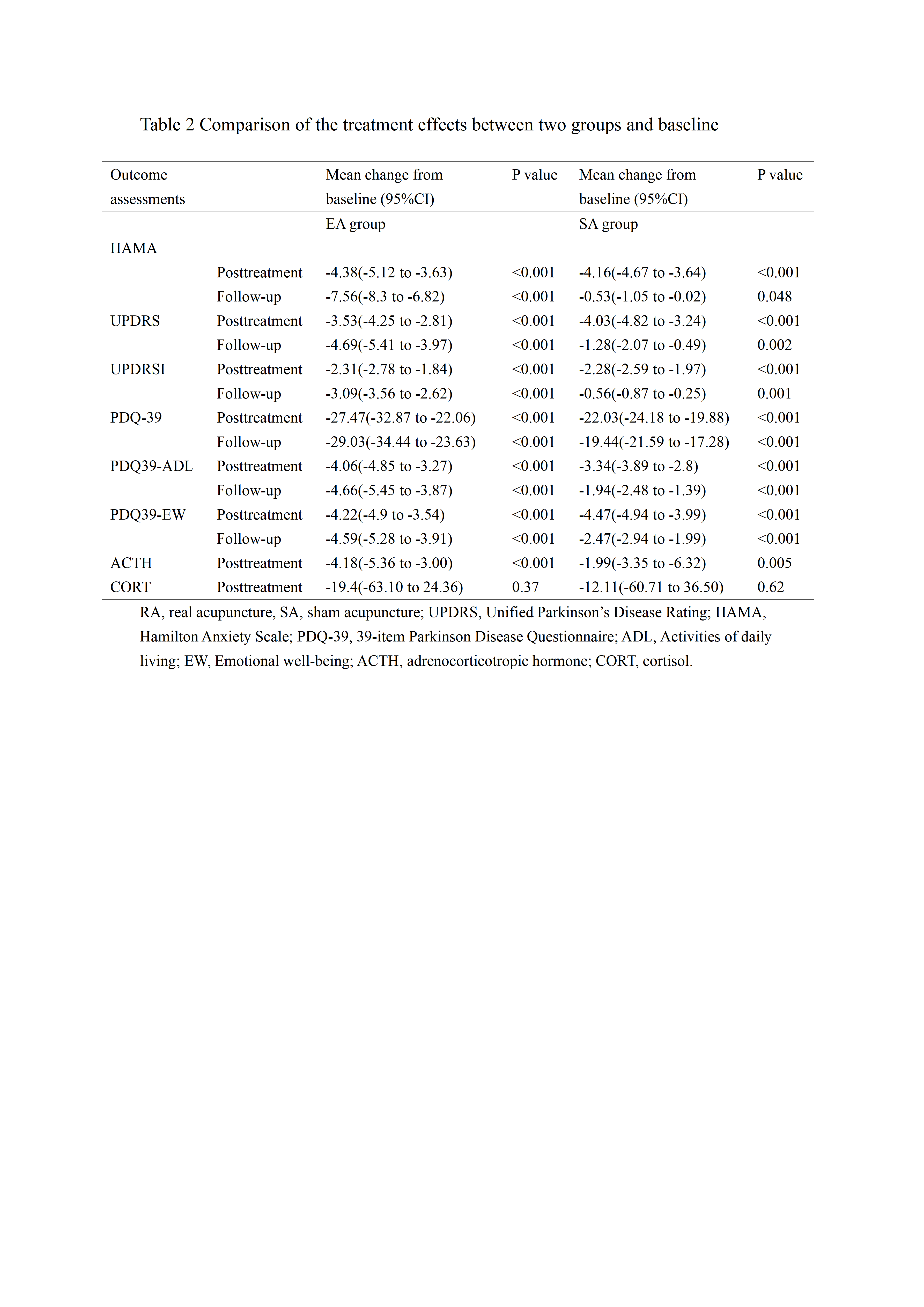
Table 2 Comparison of the treatment effects
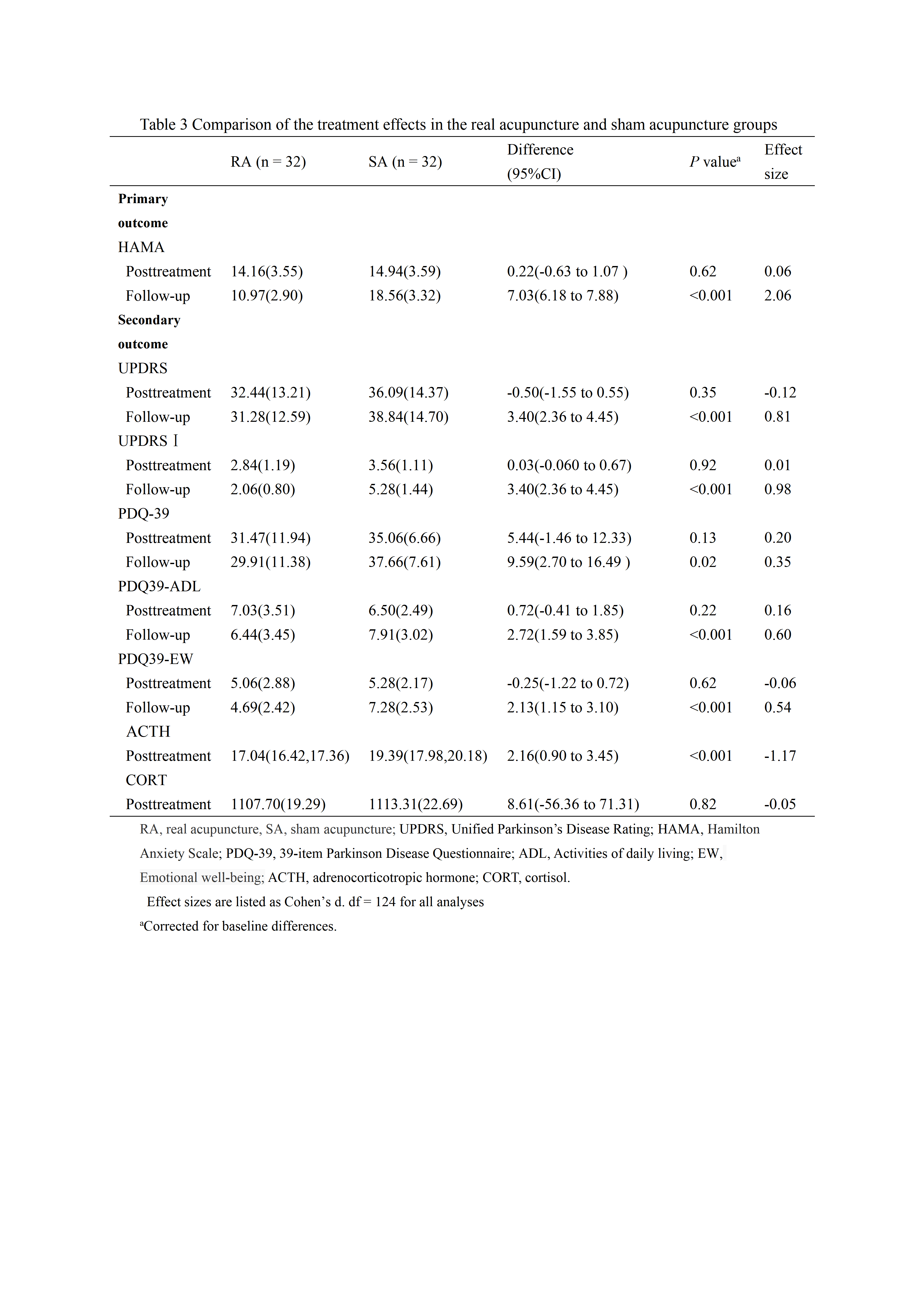
Table 3 Comparison of the treatment effects
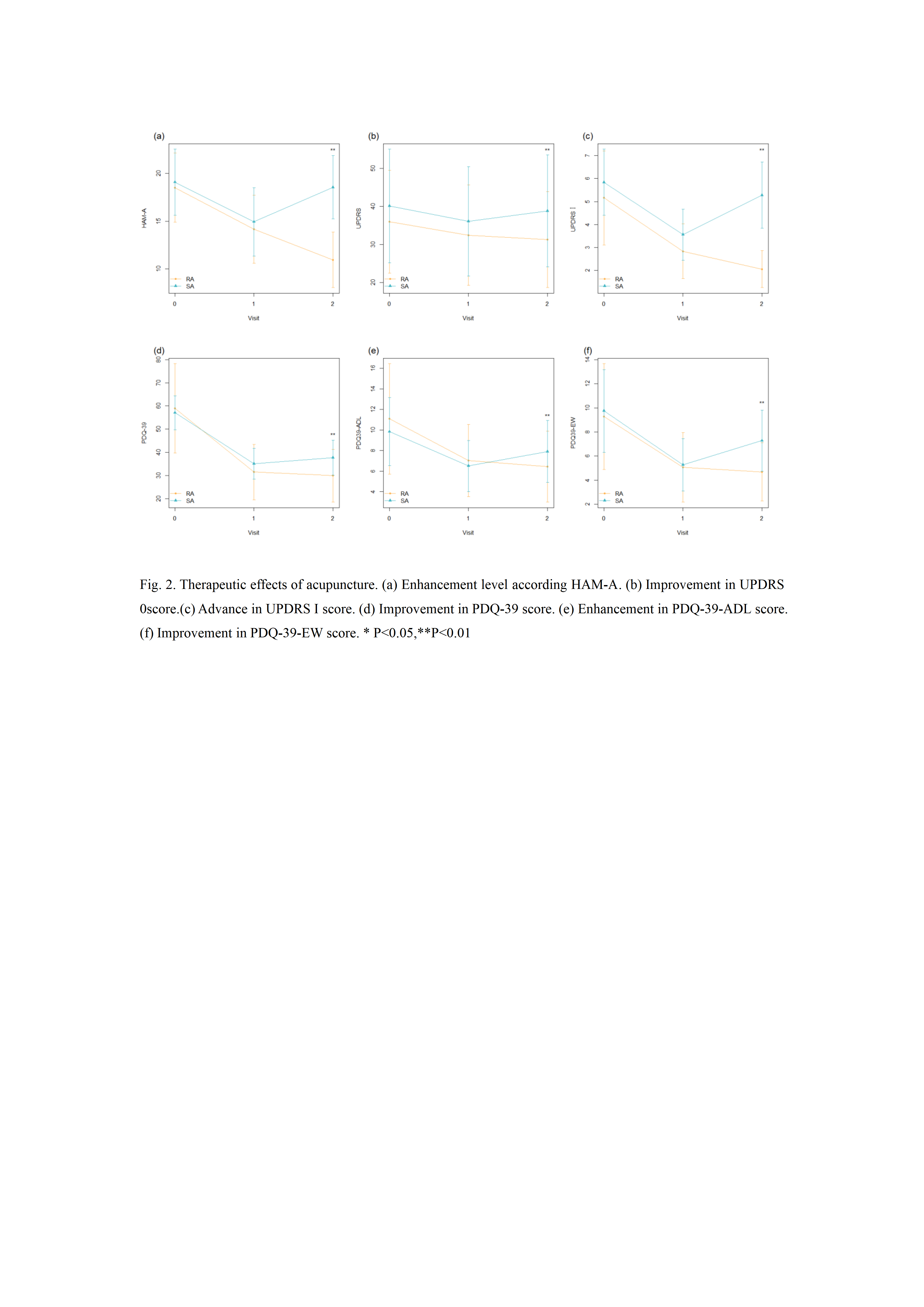
Fig. 2. Therapeutic effects of acupuncture.
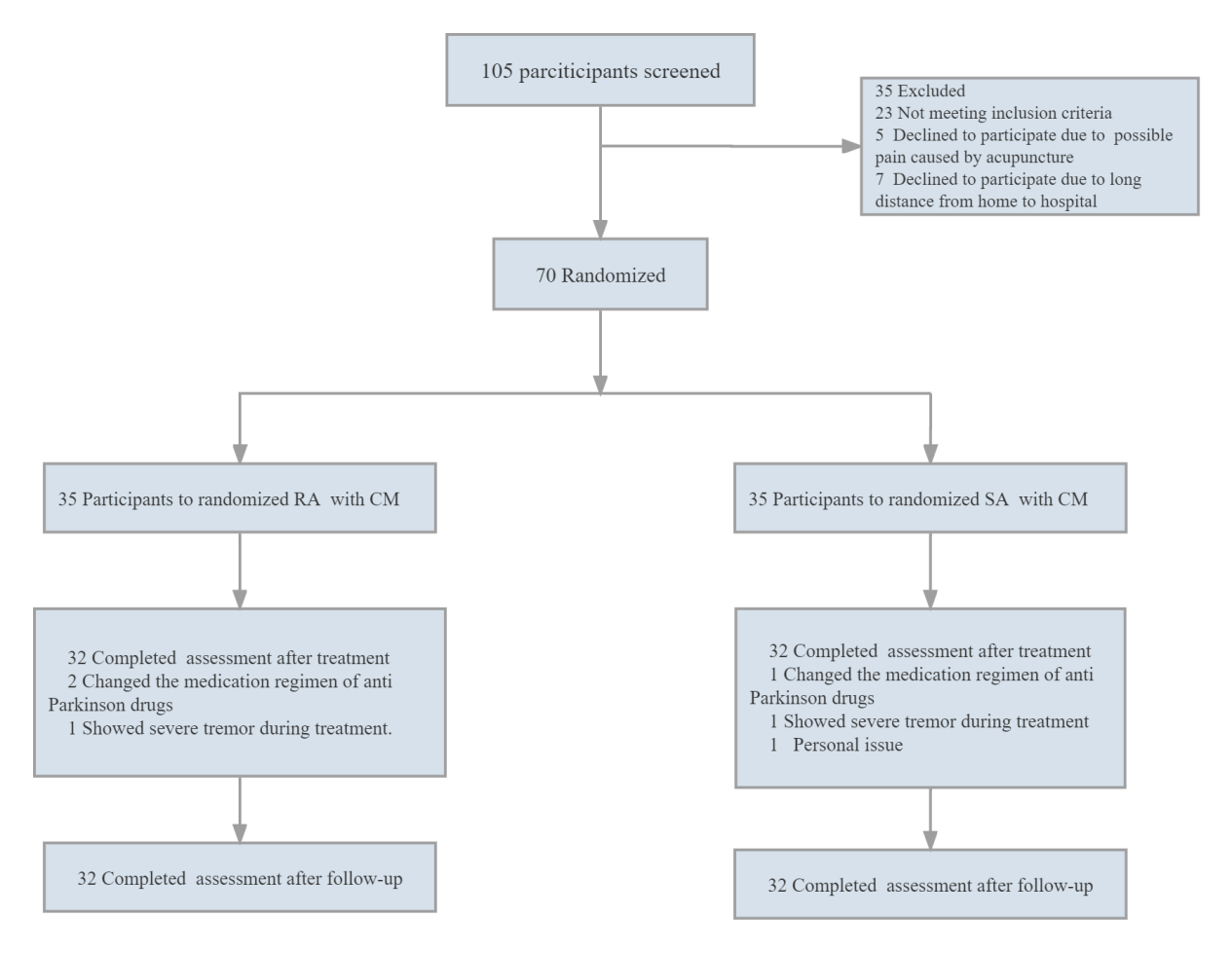
Fig 1. CONSORT flowchart.
References: 1. Dissanayaka NN,et al. Anxiety disorders in Parkinson’s disease: prevalence and risk factors. Mov Disord. 2010;25(7):838-845.
To cite this abstract in AMA style:
JQ. Fan, WJ. Lu, X. Liu, YT. Wang, LX. Zhuang. Clinical study on acupuncture improving anxiety in Parkinson’s disease by regulating the HPA axis [abstract]. Mov Disord. 2026; 41 (suppl 1). https://www.mdsabstracts.org/abstract/clinical-study-on-acupuncture-improving-anxiety-in-parkinsons-disease-by-regulating-the-hpa-axis/. Accessed October 1, 2026.« Back to 2026 International Congress
MDS Abstracts - https://www.mdsabstracts.org/abstract/clinical-study-on-acupuncture-improving-anxiety-in-parkinsons-disease-by-regulating-the-hpa-axis/