
Category: Ataxia
Objective: The current study aims to identify the dysregulated proteome in the plasma through unbiased proteomics analysis in spinocerebellar ataxia type 12 (SCA12) patients.
Background: SCA12 is a late-onset autosomal dominant neurodegenerative disorder caused by a CAG repeat expansion in the PPP2R2B gene. The molecular pathways to disease pathogenesis remain largely unknown. Recently, we reported downregulation of antioxidant genes contributing to mitochondrial stress in the peripheral blood of SCA12 patients [1].
Method: Plasma was isolated from 20 genetically confirmed SCA12 patients and 20 age-matched healthy controls. Protein sample (100 µg) was reduced, alkylated, and trypsin-digested. Desalted peptides were dried, reconstituted, and 1 µg was analyzed on a ZenoTOF 7600 system in SWATH mode. Data were processed using Spectronaut Pulsar 18 univariate and multivariate analyses with Benjamini-Hochberg correction to identify differentially expressed proteins. Proteins with ≤ 30% missing intensity values were included, and the remaining missing values were then imputed to enable reliable statistical and downstream analysis.
Results: Plasma proteomic analysis identified 526 proteins. Differential protein analysis with the threshold of 1.3 ≥ Log 2-fold change ≥ 0.76 shows 27 proteins were upregulated and 11 were downregulated (Figure 1A & B). The major dysregulated pathways were associated with oxidative stress, immune activation, and protein quality control, known to play important roles in neurodegenerative processes (Figure 2). Correlation analysis shows that proteins LGALS3BP, IGLV3-10, PZP, A2M, IGHV5-10-1, were significantly negatively correlated with CAG repeat expansion, suggesting larger CAG expansions are associated with reduced levels of immune-related and protease-regulatory proteins (Figure 3). CST3, a cysteine protease inhibitor, showed a significant positive correlation with ICARS score and motor dysfunction, indicating its association with increased motor severity in SCA12.
Conclusion: Current findings suggest that SCA12 is associated with alterations in oxidative stress, immune regulation, and protein homeostasis pathways. Correlations of specific proteins with CAG repeat length and motor severity indicate peripheral proteomic changes may reflect disease burden and progression.
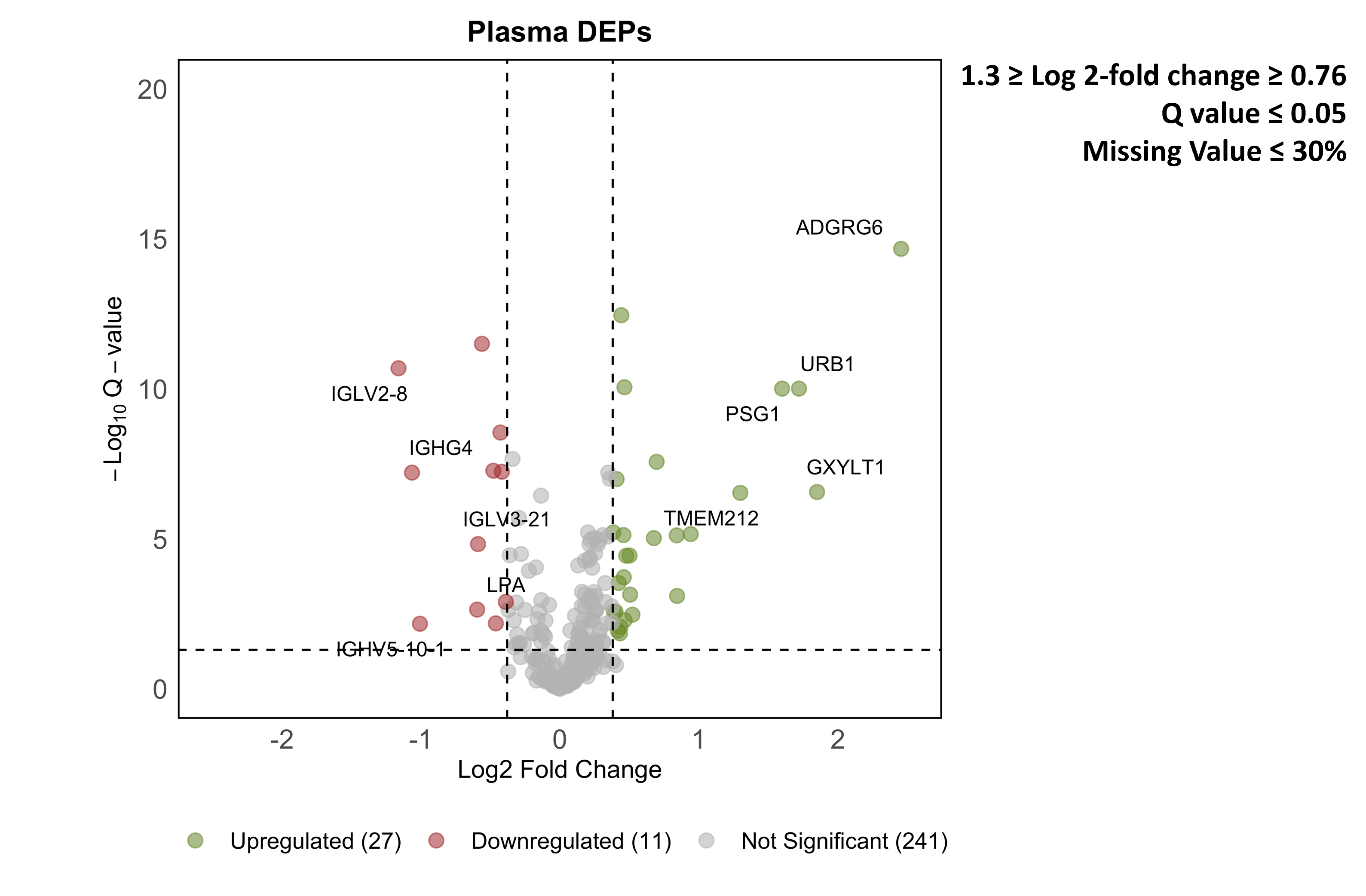
Volcano plot

List of differentially expressed plasma proteins
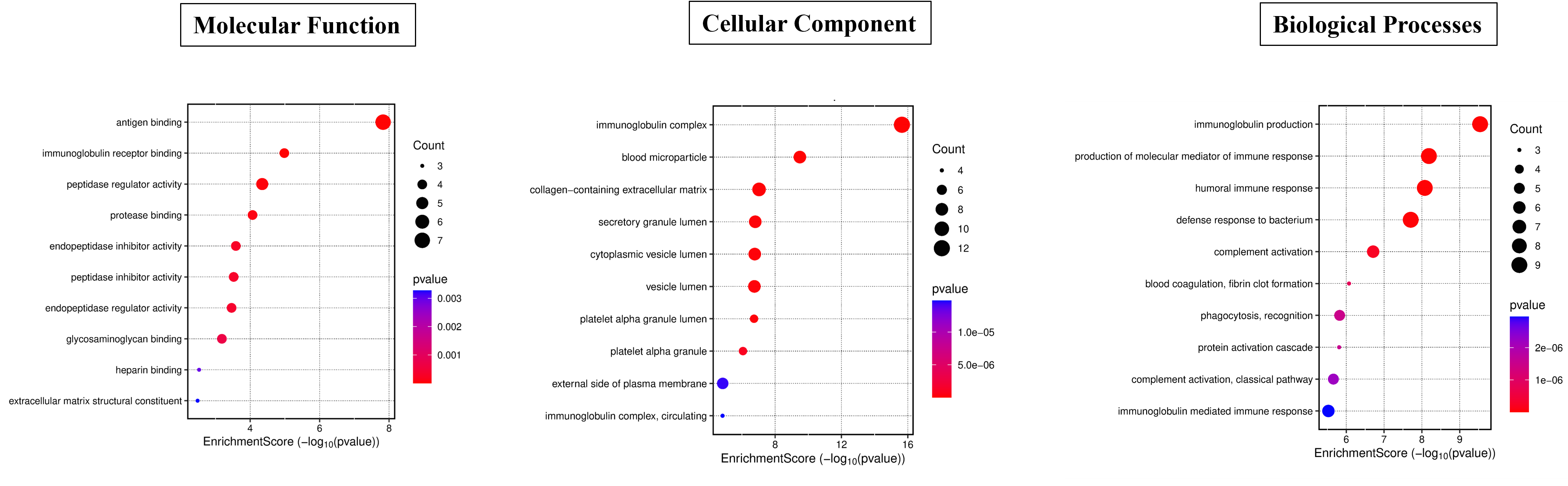
Figure 2. Gene ontology
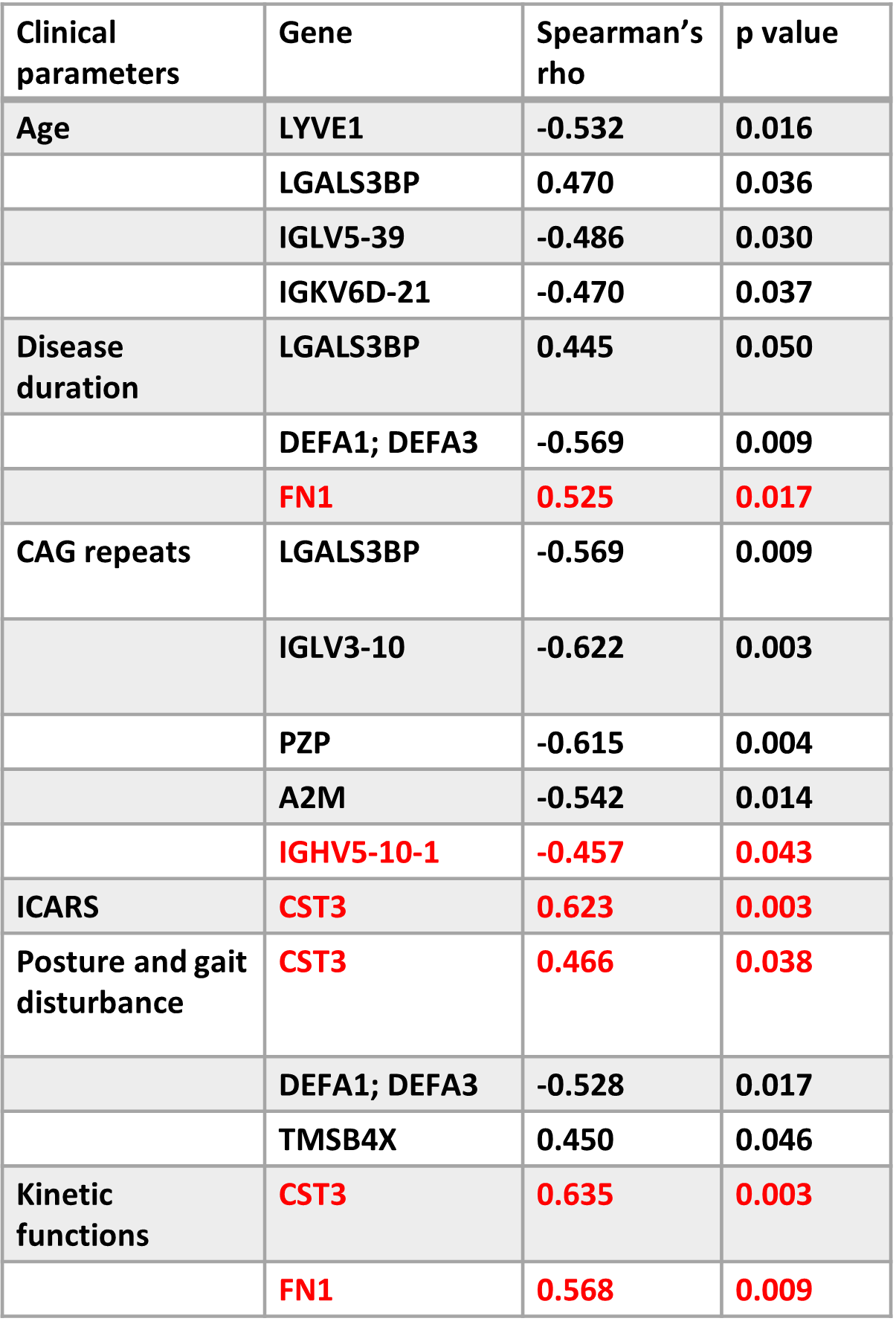
Spearman correlation analysis
References: Ansari S, Rungta J, Banerjee R, Sengupta S, Biswas B, Pal R, Dey S, Chattarji S, Ganguly J, Choudhury S, Kumar H. Mitochondrial quality control gene expression in peripheral blood mononuclear cells of SCA12 patients. Parkinsonism Relat Disord. 2026 Feb 12;145:108228. doi: 10.1016/j.parkreldis.2026.108228. Epub ahead of print. PMID: 41691974.
To cite this abstract in AMA style:
S. Ansari, I. Sadaf, A. Bhardwaj, S. Haldar, J. Rungta, S. Sengupta, R. Banerjee, J. Ganguly, D. Dutta, S. Mukherjee, P. Basu, R. Pal, S. Chattarji, T. Maiti, S. Choudhury, H. Kumar. Plasma Proteomics Reveals Altered Redox Balance And Protein Homeostasis In Spinocerebellar Ataxia Type 12 [abstract]. Mov Disord. 2026; 41 (suppl 1). https://www.mdsabstracts.org/abstract/plasma-proteomics-reveals-altered-redox-balance-and-protein-homeostasis-in-spinocerebellar-ataxia-type-12/. Accessed October 1, 2026.« Back to 2026 International Congress
MDS Abstracts - https://www.mdsabstracts.org/abstract/plasma-proteomics-reveals-altered-redox-balance-and-protein-homeostasis-in-spinocerebellar-ataxia-type-12/