
Category: Autoimmune Movement Disorders
Objective: To review evidence on autoimmune movement disorders that may present with functional appearing phenomenology and identify clinical clues that distinguish immune mediated disorders from functional movement disorders.
Background: Distinguishing functional movement disorders from organic neurological disease is a common challenge in movement disorders practice. Autoimmune neurological syndromes including antibody mediated encephalitis and paraneoplastic disorders may produce fluctuating or atypical movement phenomenology resembling functional presentations. Failure to recognize these conditions early may delay immunotherapy and worsen neurological outcomes.
Method: A structured review of PubMed indexed literature was conducted focusing on autoimmune and paraneoplastic neurological disorders presenting with prominent movement abnormalities and reports describing diagnostic confusion. Evidence from cohort studies and case series was synthesized qualitatively because of heterogeneity in study design and clinical presentation.
Results: Several autoimmune neurological syndromes can mimic functional movement disorders. In anti NMDA receptor encephalitis, Titulaer et al reported abnormal electroencephalography in 90 percent, cerebrospinal fluid abnormalities in 79 percent, and magnetic resonance imaging abnormalities in 33 percent of patients. LGI1 associated faciobrachial dystonic seizures are brief dystonic movements that often precede cognitive decline and respond better to immunotherapy than antiseizure medication. Across studies, delayed recognition of autoimmune movement disorders presenting with functional appearing phenomenology was linked to postponed immunotherapy.
Conclusion: Autoimmune movement disorders may present with fluctuating or atypical phenomenology resembling functional syndromes. Recognition of clinical red flags including subacute onset, encephalopathy, seizures, autonomic dysfunction, and supportive laboratory or imaging findings may prompt early immunologic evaluation and treatment.
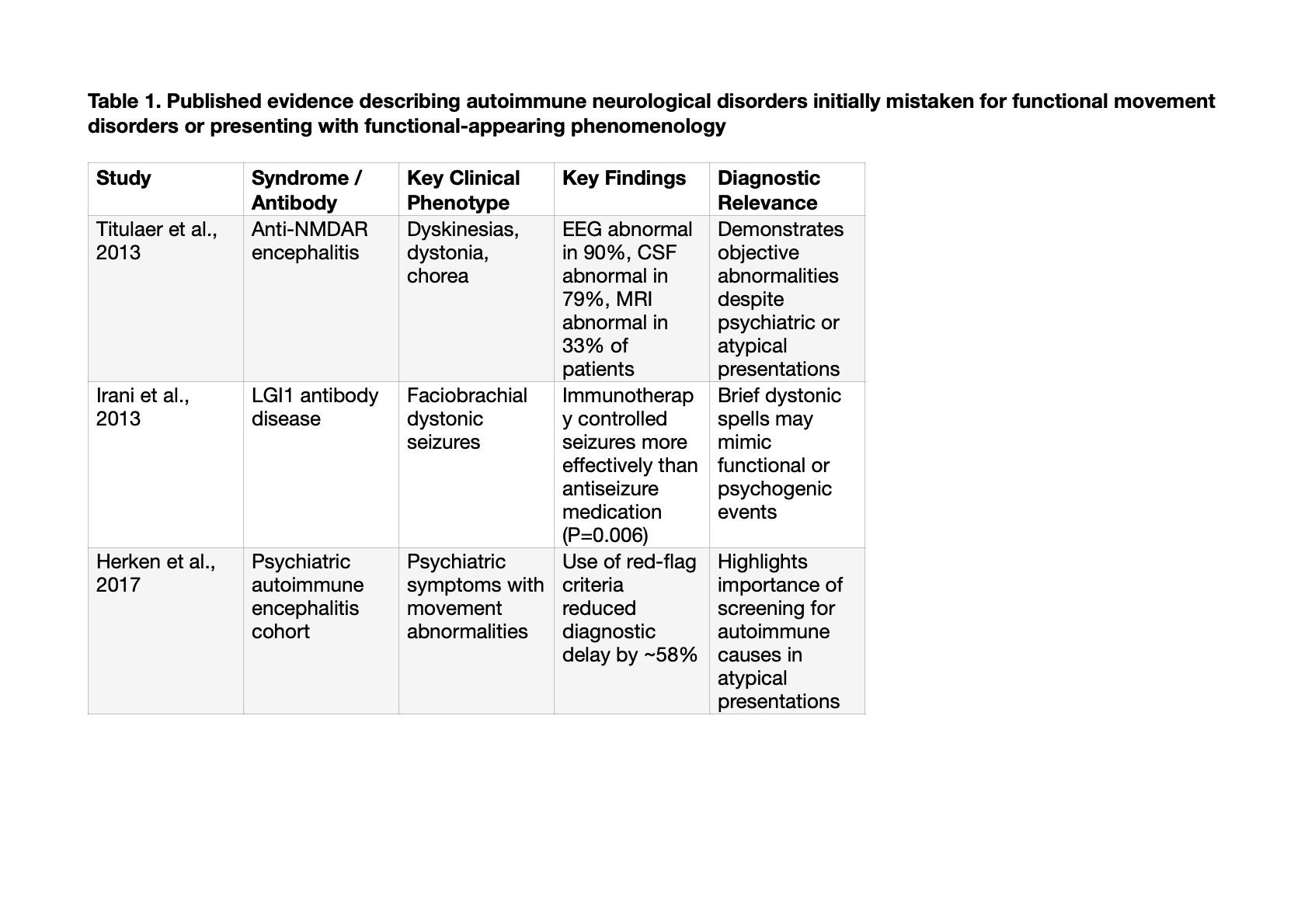
Table 1.1
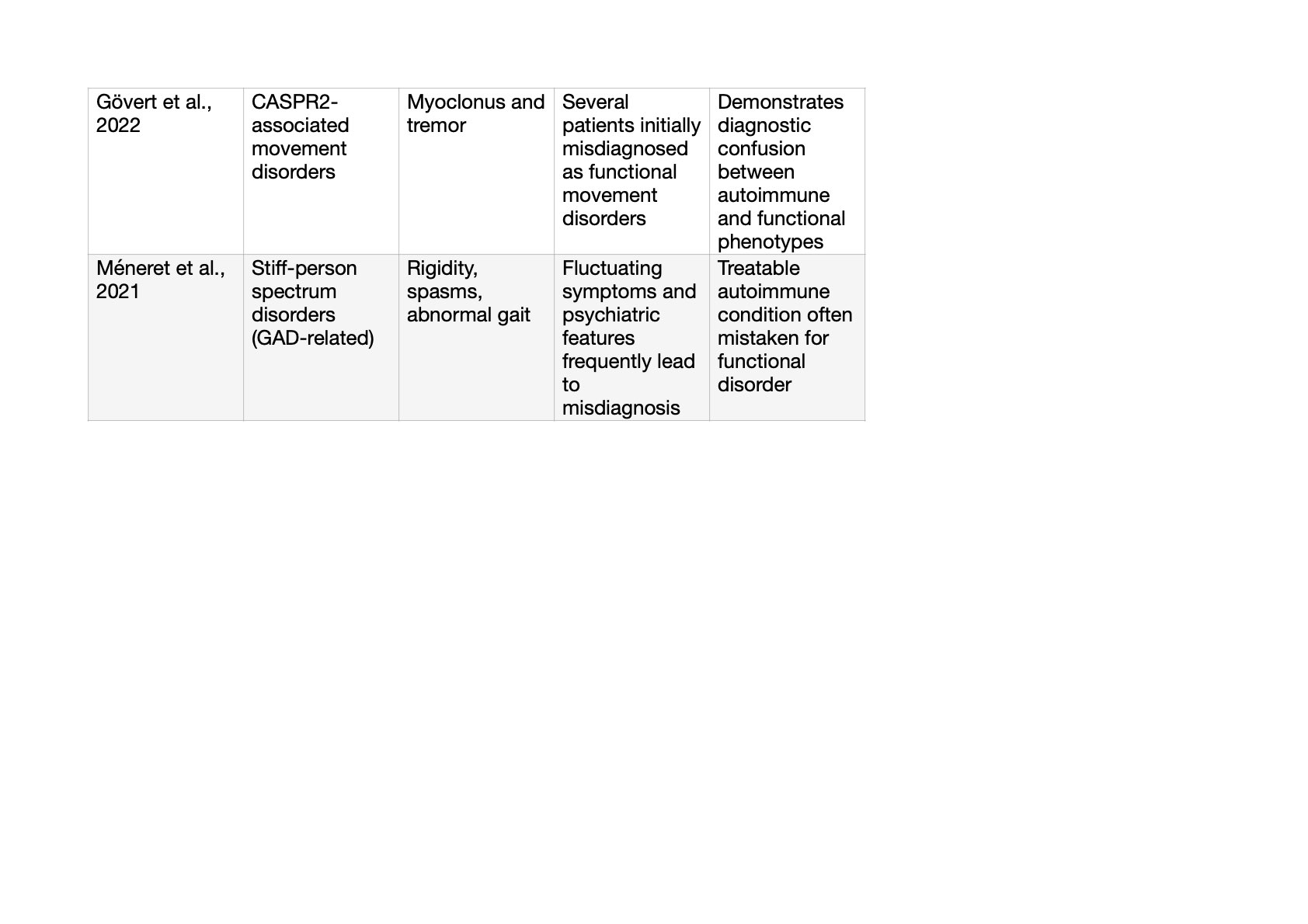
Table 1.2
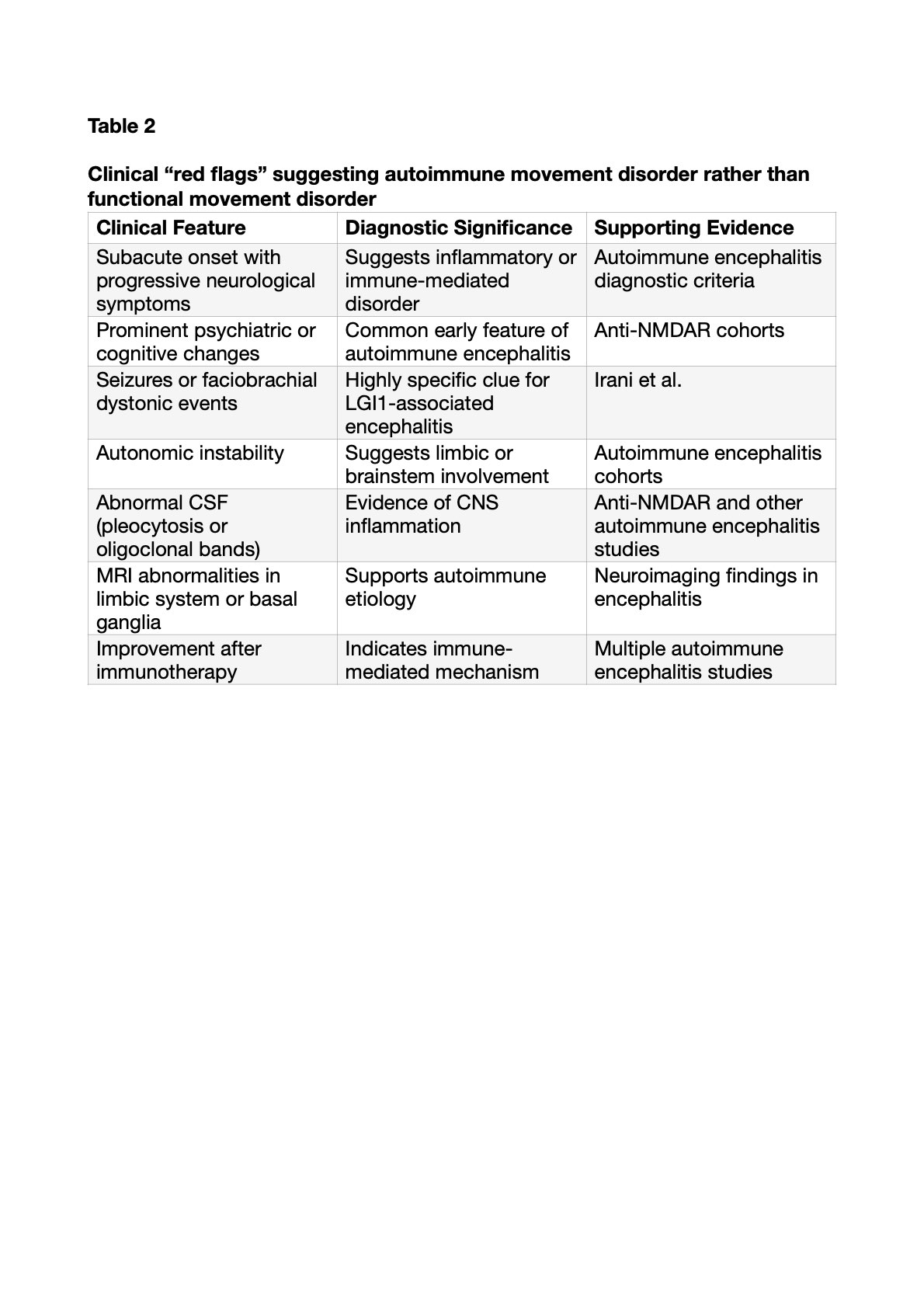
Table 2
To cite this abstract in AMA style:
M. Kakde, S. Kakde, S. Kakade. Autoimmune Movement Disorders Presenting With Functional Phenotypes Diagnostic Pitfalls and Red Flags [abstract]. Mov Disord. 2026; 41 (suppl 1). https://www.mdsabstracts.org/abstract/autoimmune-movement-disorders-presenting-with-functional-phenotypes-diagnostic-pitfalls-and-red-flags/. Accessed October 1, 2026.« Back to 2026 International Congress
MDS Abstracts - https://www.mdsabstracts.org/abstract/autoimmune-movement-disorders-presenting-with-functional-phenotypes-diagnostic-pitfalls-and-red-flags/