
Category: Parkinson's disease: Neuroimaging
Objective: To investigate longitudinal changes in resting-state (rs) functional connectivity following a multimodal lifestyle intervention in individuals with Parkinson’s disease (PD).
Background: PD is associated with disruption of large-scale functional brain networks beyond basal ganglia motor circuits. Multidomain lifestyle interventions combining exercise, mindfulness, and dietary modification may promote neuroplasticity; however, their effects on network organization remain incompletely characterized.
Method: Participants with mild to moderate PD underwent rs-fMRI at baseline and after a 6-month combined lifestyle intervention, including structured exercise, mindfulness training, and adherence to the Mediterranean-DASH diet. Data was preprocessed using a standardized pipeline. Functional connectivity matrices were generated from cortical and subcortical atlas-derived regional time series, and network-level metrics were calculated across canonical large-scale networks.
Results: Fifteen participants completed imaging; two were excluded for excessive motion, yielding 13 paired datasets. No effects survived false discovery rate correction; however, consistent directional modulation was observed. Within basal ganglia circuits, connectivity increased between the substantia nigra–thalamus, putamen–globus pallidus internus, and globus pallidus internus–thalamus, while connectivity decreased between the red nucleus–globus pallidus internus and the substantia nigra–putamen. (figure 1.) Cortical–subcortical coupling decreased between the somatomotor network and the midbrain nuclei, while connectivity increased between the visual cortex and the basal ganglia structures (figure 2). Network analyses showed greater integration of somatomotor with default mode and limbic networks, alongside reduced coupling with salience/ventral attention and executive networks. (figure 3.) (Table 1.)
Conclusion: Preliminary longitudinal analyses suggest that a multimodal lifestyle intervention may modulate basal ganglia–thalamo-cortical connectivity and large-scale motor–cognitive network organization in PD. The ongoing full cohort study, including larger PD and healthy control samples, is expected to provide substantially greater statistical power to clarify the specificity and clinical relevance of lifestyle-associated functional network reorganization.
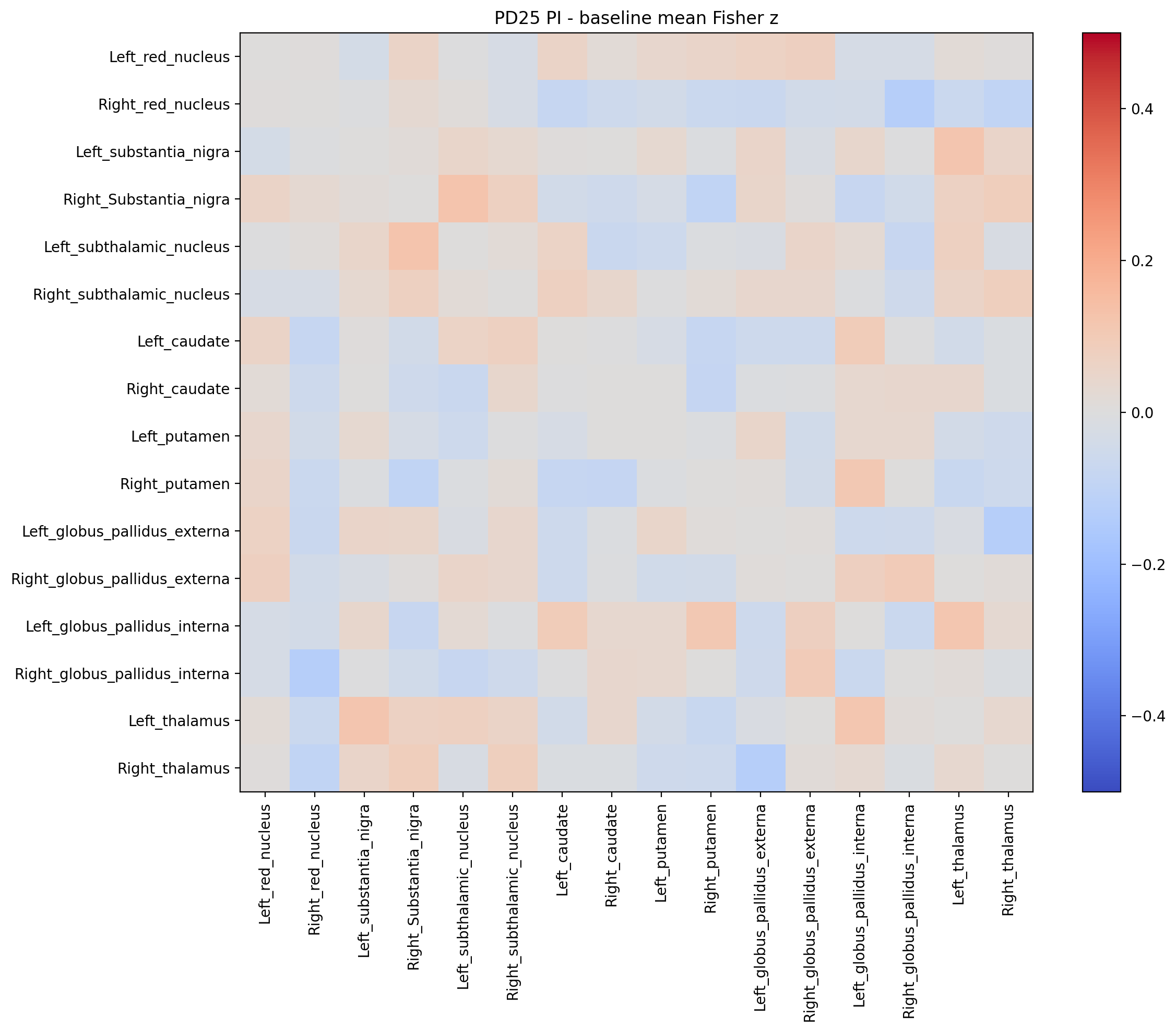
fc change within subcortical nuclei
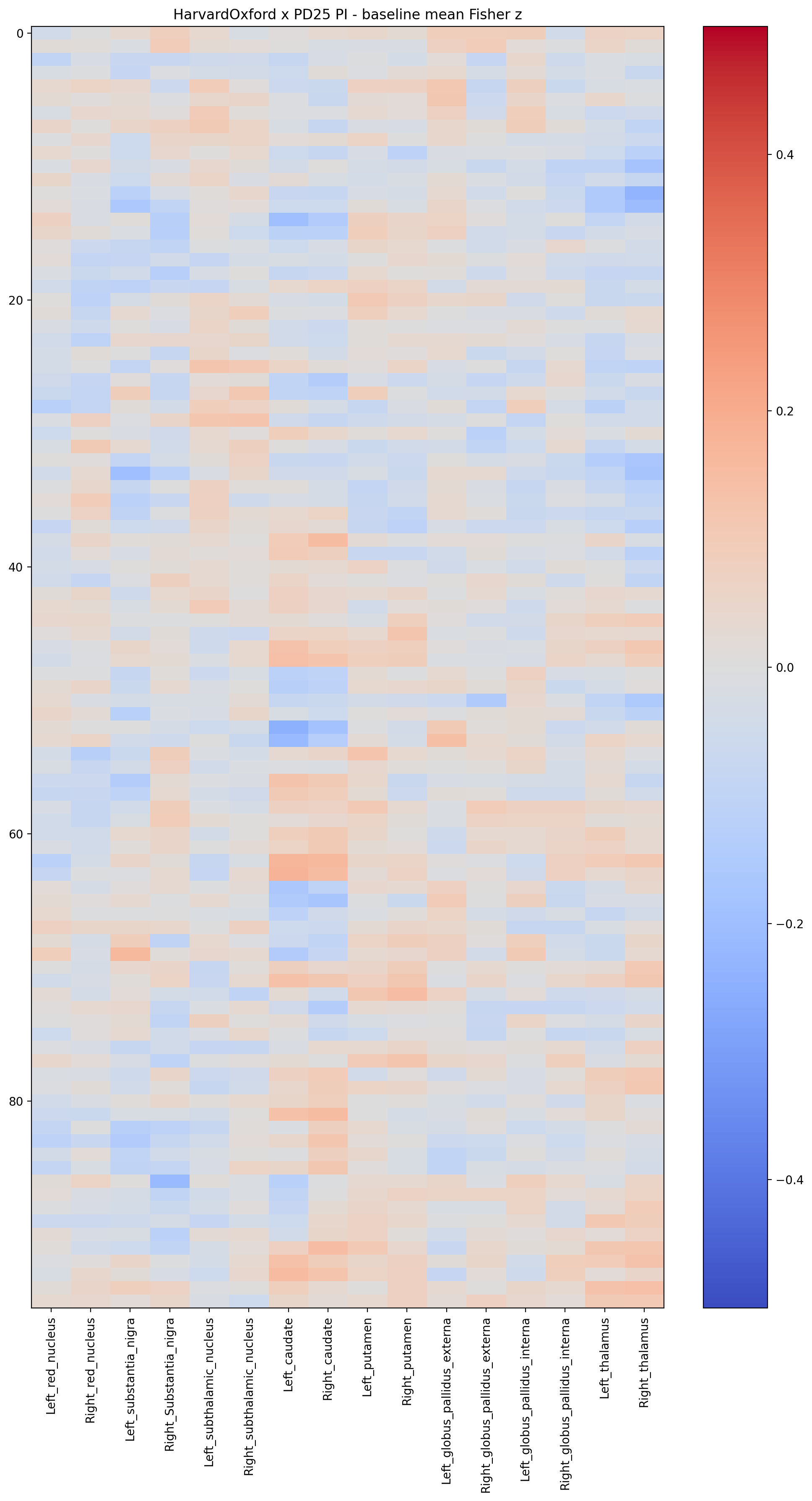
fc change between cortical and subcortical ROIs
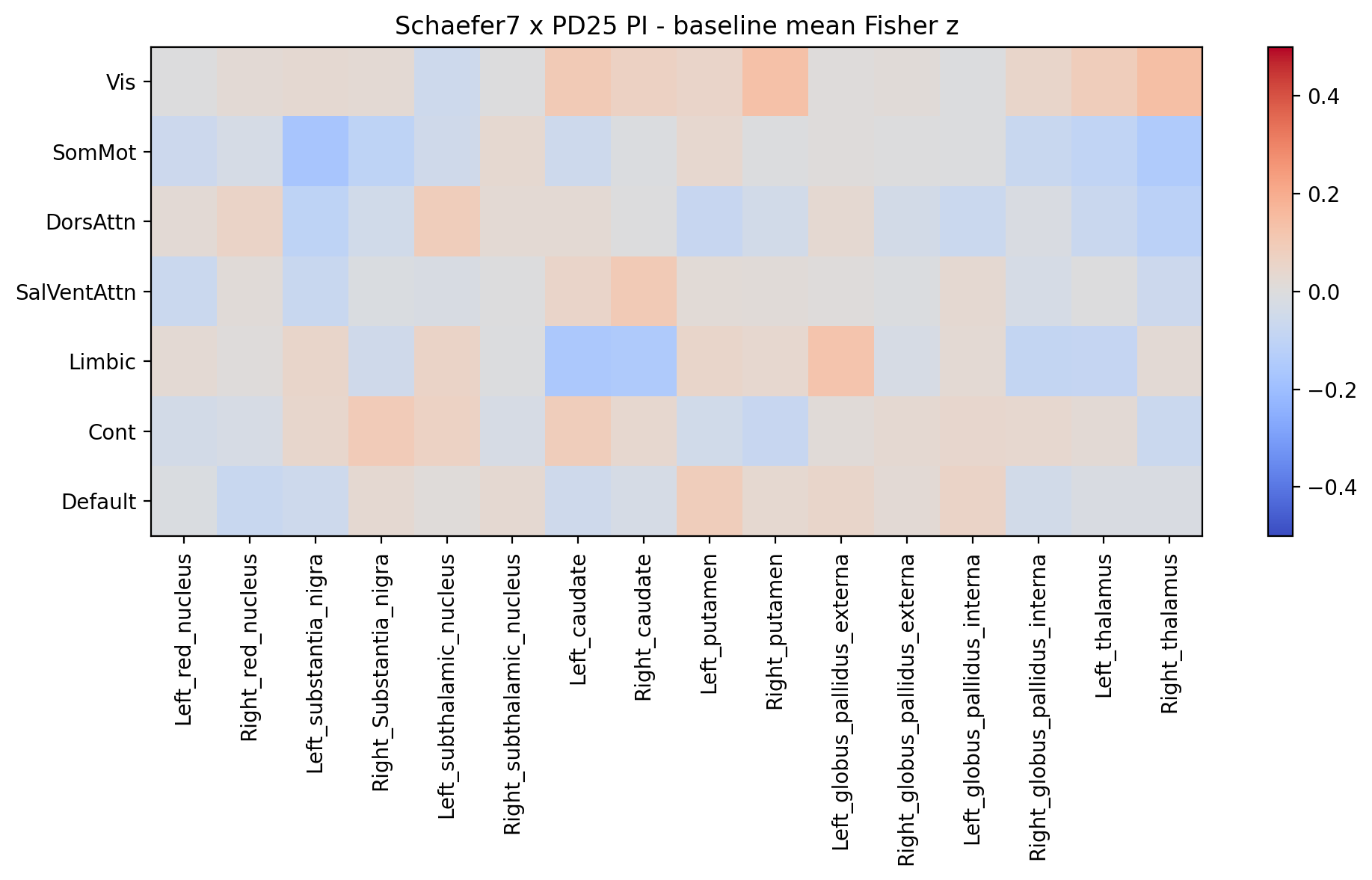
fc change between cortical ROIs and networks
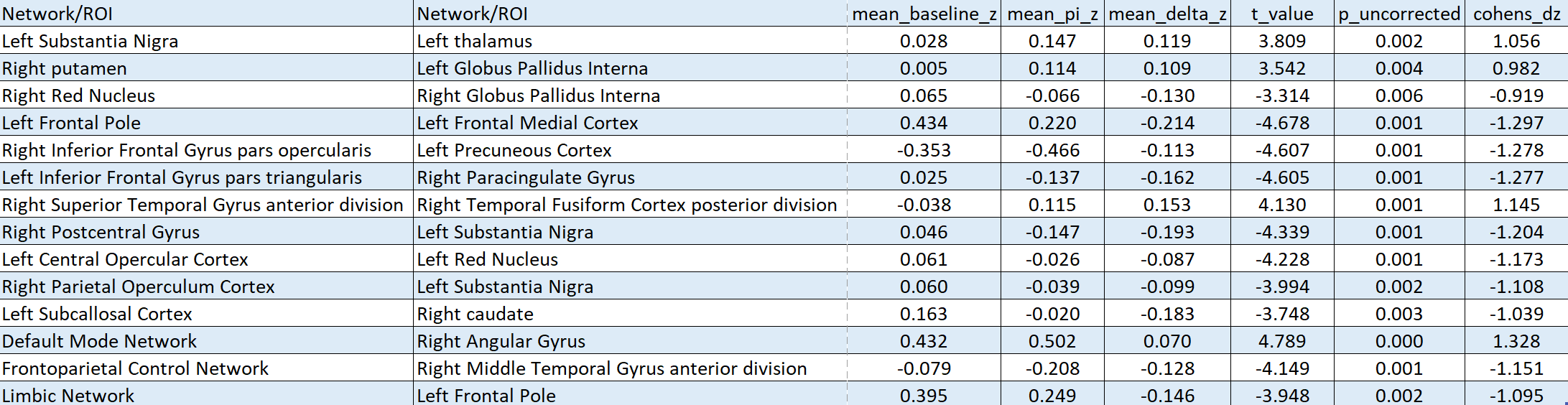
Summary of largest observed changes
To cite this abstract in AMA style:
A. Aali, J. Kelly, M. Powell, R. Cloke, A. Hashimoto, Y. Wang, A. Kuan, D. Darabi, T. Watson, J. Yu, S. Dhaliwal, K. Pressman-Cyna, M. Williams, M. Paventi, R. Hassen, O. Brigden, J. Stoessl, V. Sossi, M. Mckeown, S. Appel-Cresswell. Resting-state network reorganization following multimodal lifestyle intervention in Parkinson’s disease [abstract]. Mov Disord. 2026; 41 (suppl 1). https://www.mdsabstracts.org/abstract/resting-state-network-reorganization-following-multimodal-lifestyle-intervention-in-parkinsons-disease/. Accessed October 1, 2026.« Back to 2026 International Congress
MDS Abstracts - https://www.mdsabstracts.org/abstract/resting-state-network-reorganization-following-multimodal-lifestyle-intervention-in-parkinsons-disease/