
Objective: We implemented an unbiased proximity extension proteomics assay to identify novel plasma PSP biomarkers.
Background: Blood-based biomarkers can help to support non-invasive early diagnosis and disease monitoring in progressive supranuclear palsy (PSP).
Method: This is a cross-sectional study of a Southeast Asian cohort of 17 clinically diagnosed PSP patients, 50 healthy controls (HC) and 65 clinically diagnosed Parkinson disease (PD) patients. The Olink Explore HT was used to identify differentially expressed proteins which were then subjected to gene set enrichment analysis (GSEA) using gene ontology (GO) pathway implemented through DAVID database. Protein levels were considered statistically and biologically significant if they met the thresholds of |log₂(fold change)|≥ 2 and p<0.05. Protein–protein interaction (PPI) networks were examined using the STRING database (v11.5).
Results: There were 273 of 5287 (5.2%) and 310 (5.9%) proteins of significantly different abundance levels in PSP compared with HC and PD respectively. Amongst top dysregulated proteins, 10 targets overlapped in both groups, of which 5 were upregulated (FBXO31, PNMA5, ANXA5, EIF5AL1, BICDL1) and 5 were downregulated (CYSRT1, CBLN1, AQP1, LCTL, PFDN6). Implicated pathways were evaluated with GSEA. When PSP was compared to HC, the microtubule cytoskeleton organization regulation pathway was found to be enriched with the most significance, followed by RNA polymerase II transcription regulation and steroid metabolic pathways (Fig 1A). When compared to PD, vesicle-mediated transport pathway was found to be enriched with most significance, followed by response to cocaine and xenobiotic metabolic pathways (Fig 1B). In PPI analysis for PSP vs HC, hub proteins were identified and compared with proteins found within the enriched GO pathways. CHUK was found to be a hub protein clustered with 6 other proteins, FOXO1 with 4 and SNCA and STAT5B with 3 each (Fig 2). These 4 proteins are involved in the 3 most enriched pathways identified earlier.
Conclusion: Overlapping differentially expressed proteins suggest that PSP is a highly distinctive disease entity with specific pathomechanisms. Dysregulated proteins include those involved in translation, protein folding and clearance, cell repair and death, dynein motor activation and synaptic organisation. PPI analyses support the relevance of microtubule cytoskeleton organisation regulation, RNA polymerase transcription regulation and steroid metabolism pathways in PSP.
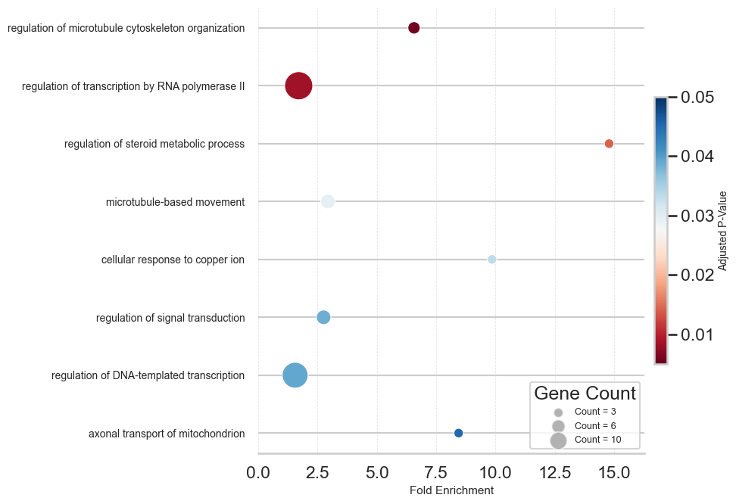
Figure 1. Gene ontology pathways. A. PSP vs HC
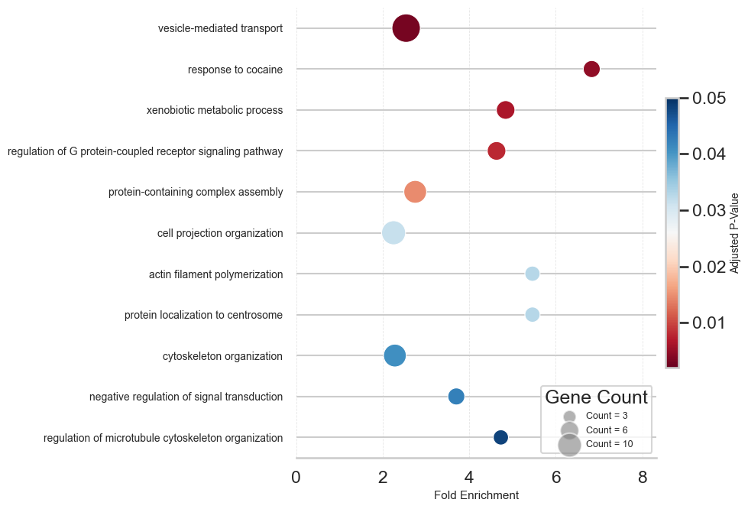
Figure 1. Gene ontology pathways. B. PSP vs PD
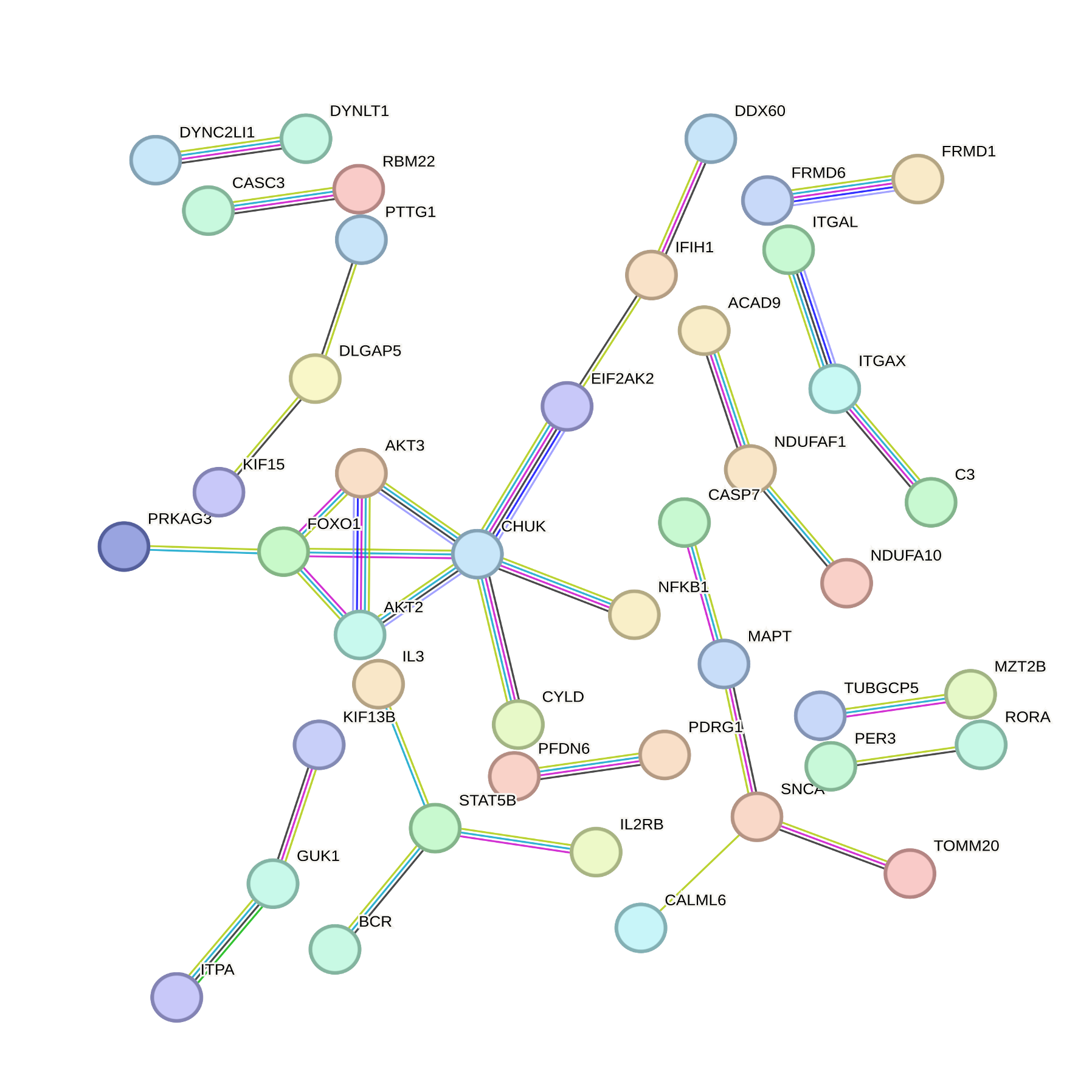
Figure 2. PPI in PSP vs HC
To cite this abstract in AMA style:
S. Neo, S. Chia, J. Tan, T. Leong, Z. Xu, KY. Tay, WL. Au, LCS. Tan, A. Ng. Plasma Proteomics in PSP [abstract]. Mov Disord. 2026; 41 (suppl 1). https://www.mdsabstracts.org/abstract/plasma-proteomics-in-psp/. Accessed October 1, 2026.« Back to 2026 International Congress
MDS Abstracts - https://www.mdsabstracts.org/abstract/plasma-proteomics-in-psp/