
Category: Myoclonus/Tics/Stereotypies
Objective: To evaluate the efficacy of deutetrabenazine in patients with Tourette syndrome (TS).
Background: Deutetrabenazine is a selective vesicular monoamine transporter 2 (VMAT2) inhibitor. While showing promise in managing tics, clinical trial results vary regarding efficacy. This meta-analysis synthesizes evidence to evaluate deutetrabenazine efficacy across multiple time points and global impression scales to better define its clinical utility.
Method: A literature search was conducted through PubMed, Scopus, and Web of Science to identify Randomized Controlled Trials evaluating deutetrabenazine. Outcomes included Total Tic Score (TTS), Clinician Global Impression (CGI), and Patient Global Impression of Impact (PGII). Meta-analyses were performed using RevMan 5 software, utilizing a random-effects model for both continuous outcomes (Mean Difference, MD) and responder proportions (Risk Difference, RD), with 95% CIs. Responder rate was defined as a >20% reduction in TTS from baseline. Subgroup analyses were performed at Weeks 2, 4, 8–9, and 12.
Results: Data from three trials were included. In double-arm comparisons, deutetrabenazine demonstrated a significant reduction in TTS versus placebo at Week 4 (MD=-2.42, 95% CI [-4.27 to -0.58], p =0.01). Single-arm analysis revealed a progressive reduction in tic severity from baseline throughout the study: MD of -6.73 (95% CI [-7.81 to -5.65]) at Week 4, -8.07 (95% CI [-11.07 to -5.06]) at Week 8, and -9.09 (95% CI [-11.65 to -6.53]) by Week 12. Clinician-rated improvement was significant at Week 4 (MD=-0.23, p =0.02), while patient-rated improvement did not reach significance (MD=-0.25, p =0.06). Regarding responder rates, deutetrabenazine was associated with a significantly higher risk difference at Week 4 (RD=0.16, 95% CI [0.01 to 0.30], p =0.03), though this effect was not maintained at Week 8–9 (p =0.17).
Conclusion: Deutetrabenazine reduces tic severity and increases the proportion of clinical responders compared to placebo; however, comparative efficacy was most robust at Week 4 and lacked statistical significance at later time points. While single-arm data highlights an increasing therapeutic effect over time, the lack of comparative significance in later weeks suggests that further long-term clinical trials are essential to confirm sustained efficacy and clinical utility.
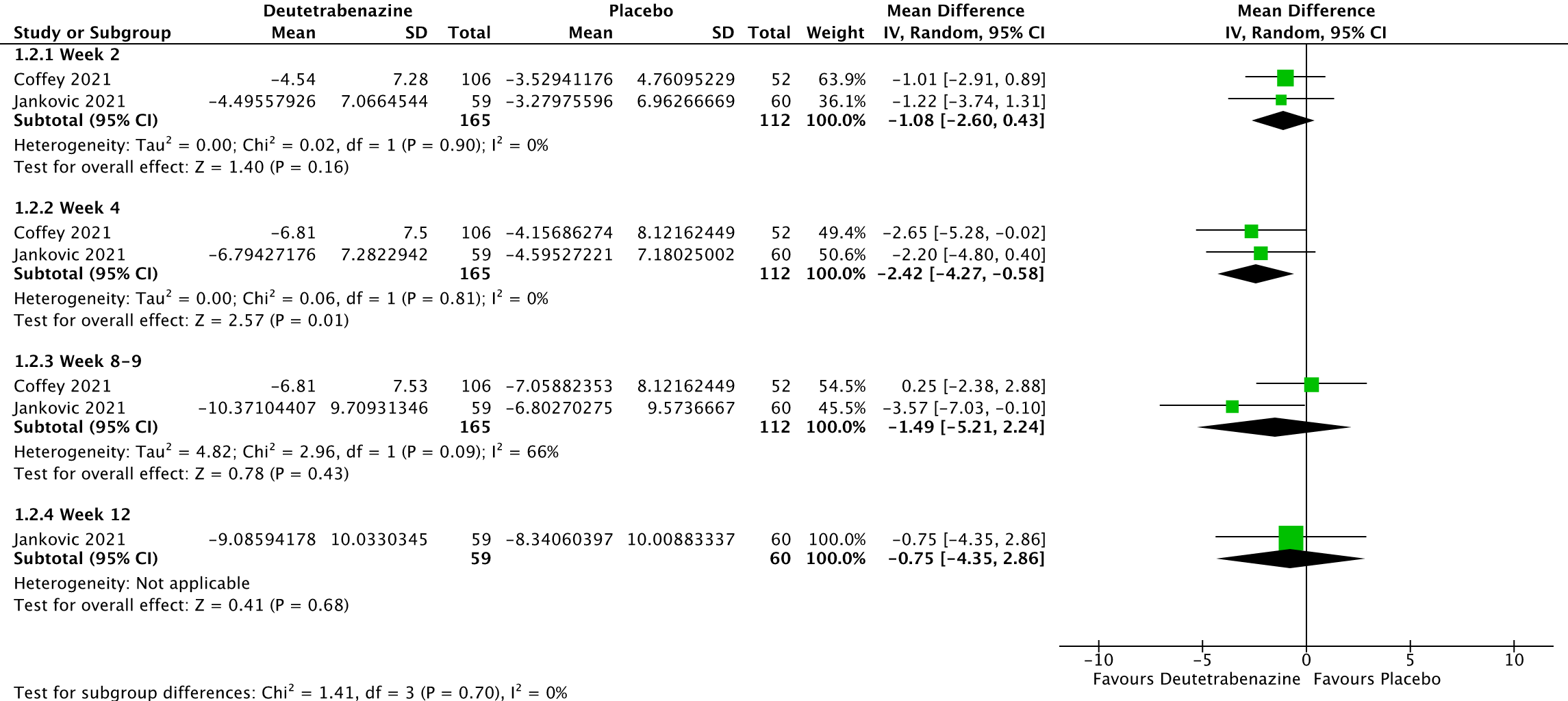
Double-arm meta-analysis of the TTS
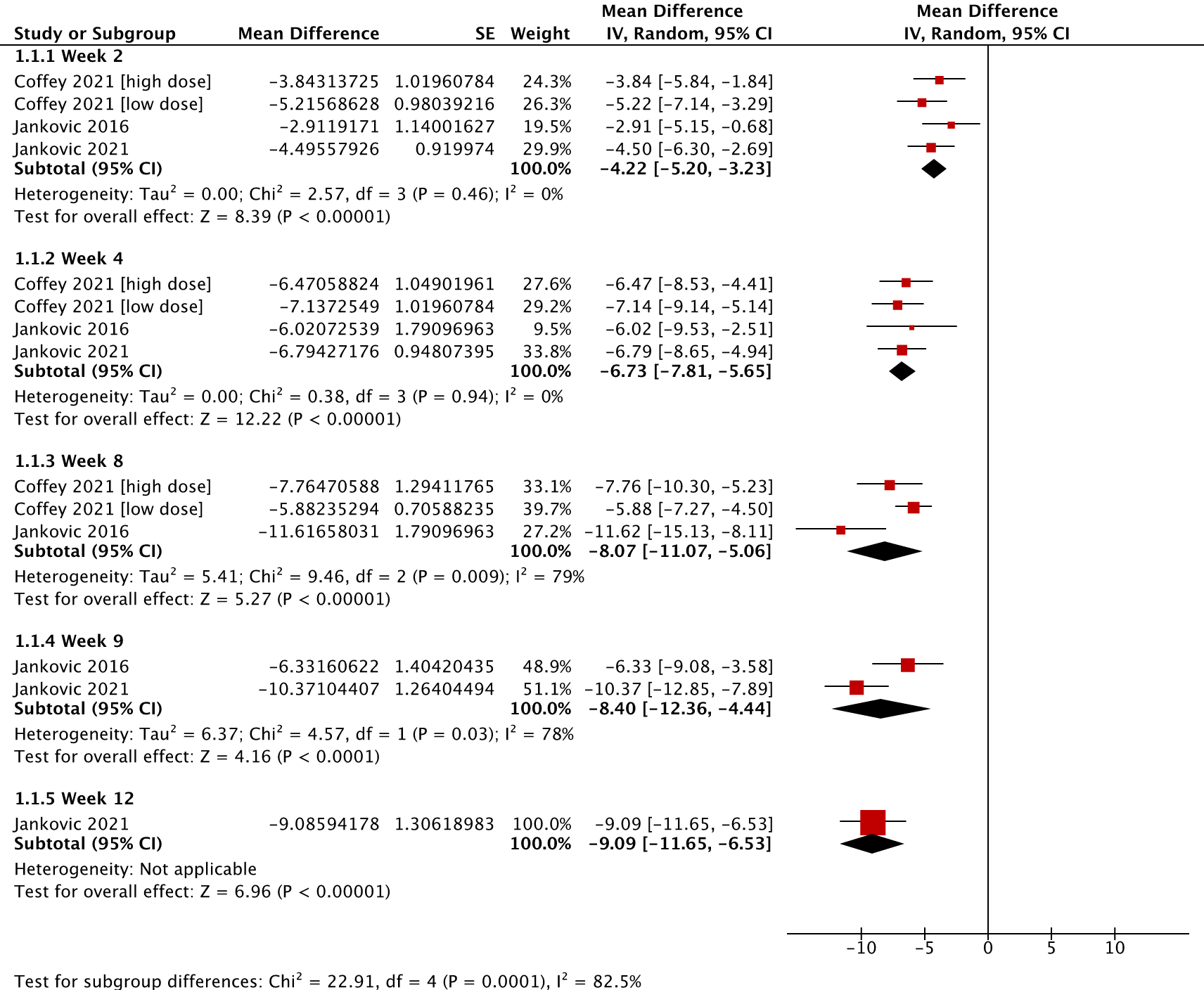
Single-arm meta-analysis of the TTS reduction.
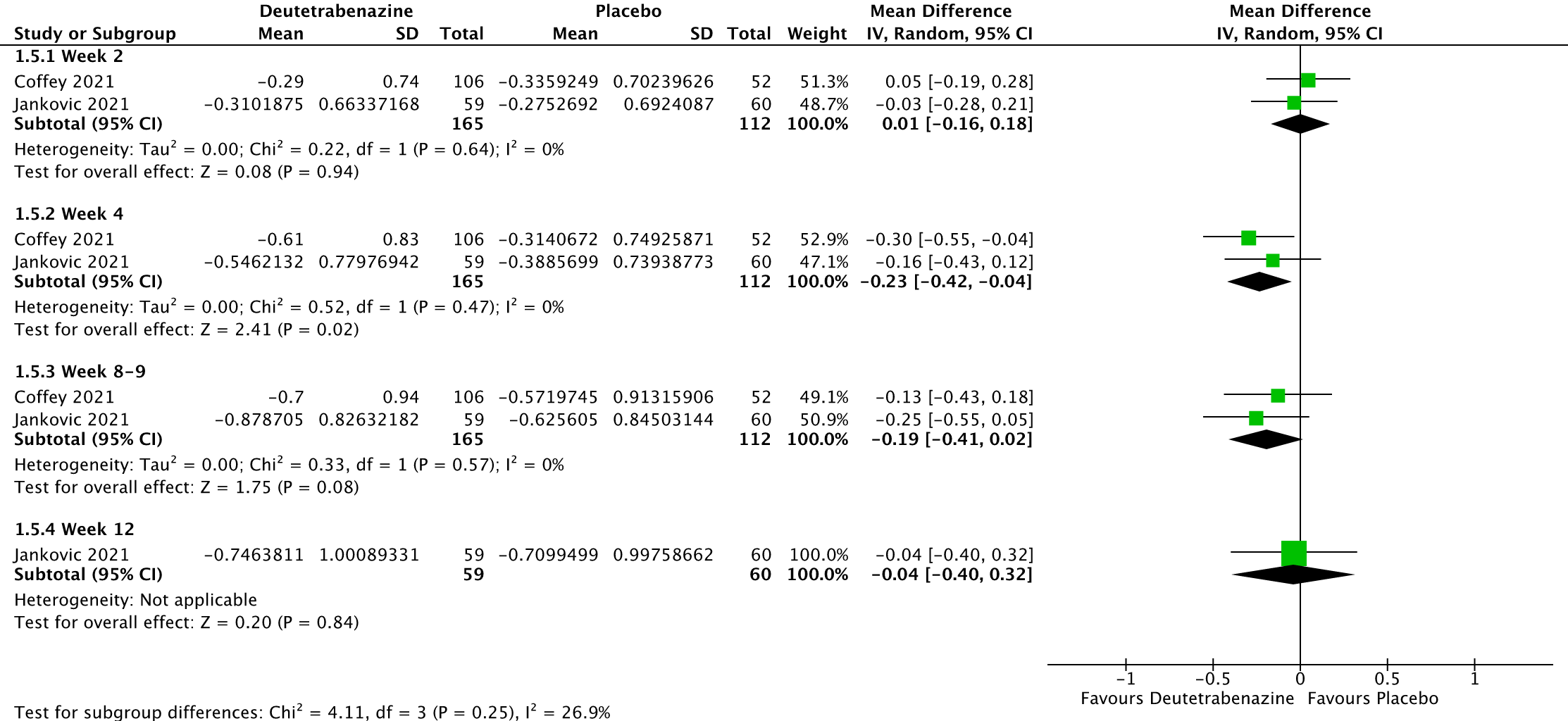
CGI of improvement compared to placebo
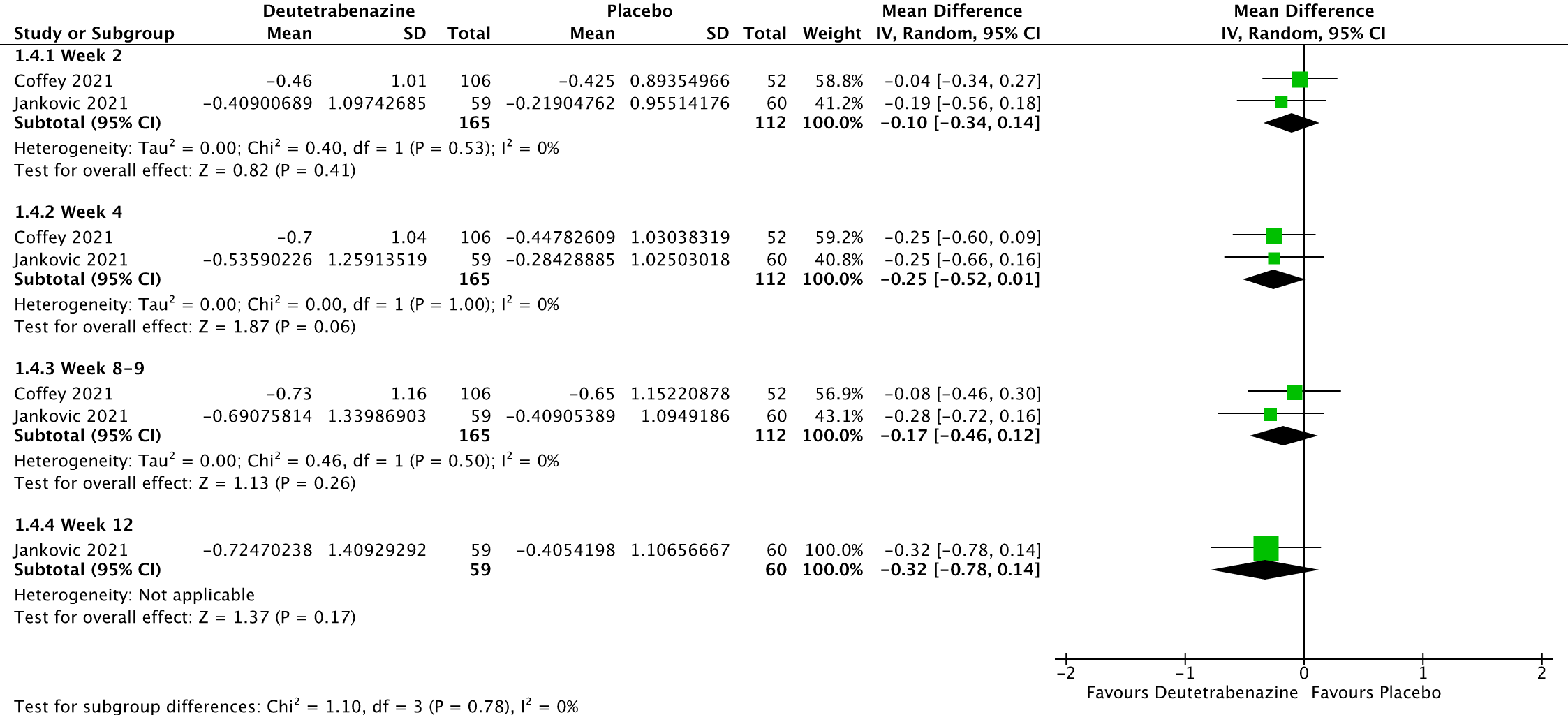
Patient Global Impression of Impact
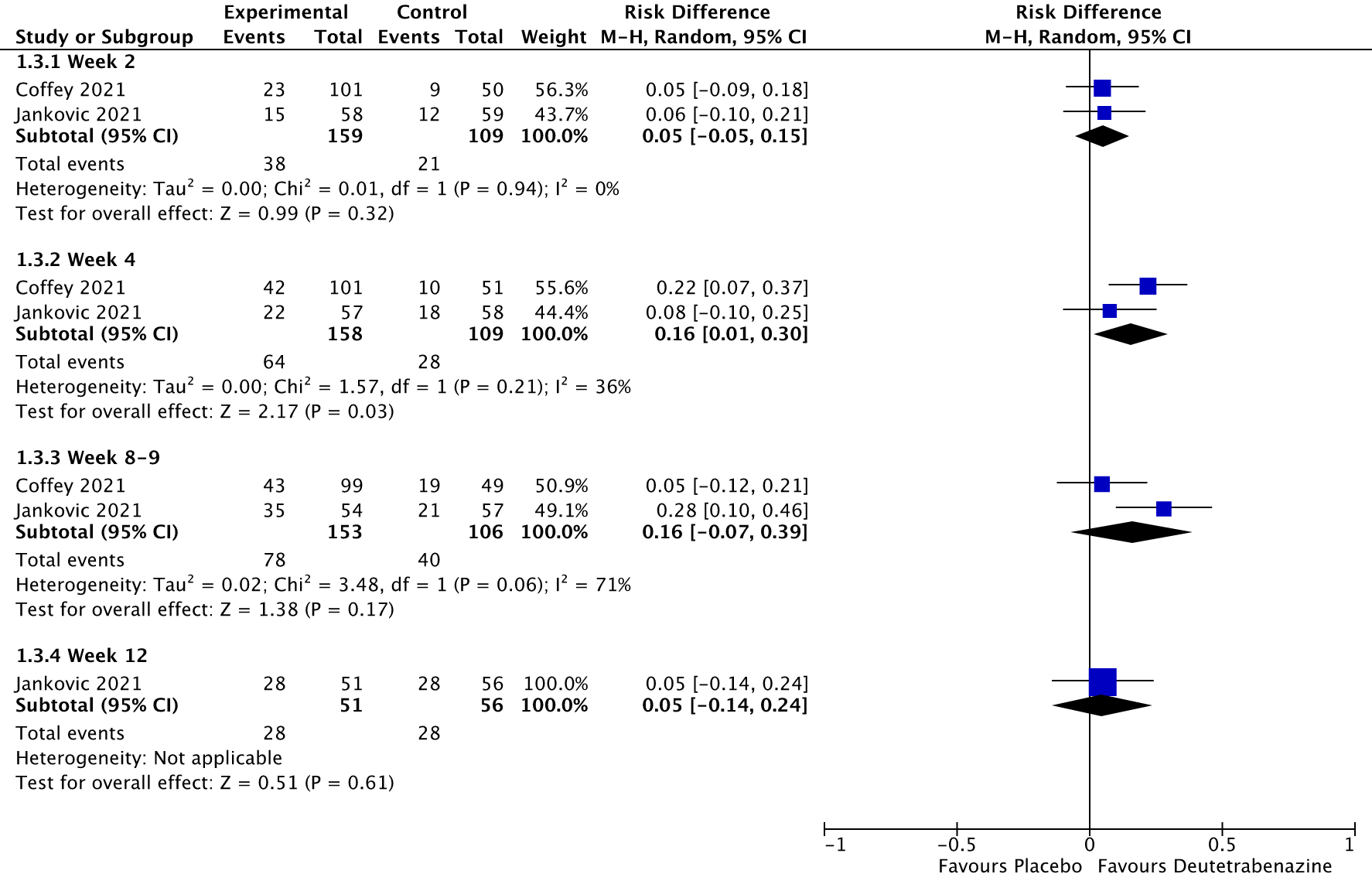
Risk Difference for clinical responder rates
To cite this abstract in AMA style:
M. Zanaty, H. Sabet. Efficacy of Deutetrabenazine in Patients with Tourette Syndrome: A Meta-Analysis of Randomized Controlled Trials [abstract]. Mov Disord. 2026; 41 (suppl 1). https://www.mdsabstracts.org/abstract/efficacy-of-deutetrabenazine-in-patients-with-tourette-syndrome-a-meta-analysis-of-randomized-controlled-trials/. Accessed October 1, 2026.« Back to 2026 International Congress
MDS Abstracts - https://www.mdsabstracts.org/abstract/efficacy-of-deutetrabenazine-in-patients-with-tourette-syndrome-a-meta-analysis-of-randomized-controlled-trials/