
Category: Parkinson's Disease: Genetics
Objective: To identify sex-specific causal proteins and biological pathways underlying the sexual dimorphism of Parkinson’s disease (PD) through an integrative multi-omics framework.
Background: PD exhibits well-established sex differences in prevalence and clinical phenotypes, yet the underlying molecular mechanisms remain largely elusive. Prior studies have been generally limited to single-omics approaches, necessitating integrative multi-omic strategies to comprehensively explore sex-specific pathology.
Method: We conducted sex-stratified and combined multi-omic analyses using GWAS summary statistics from the IPDGC (12,054 male cases/11,999 controls; 7,384 female cases/12,389 controls) and GP2 consortia (for sex-combined analysis, 34,933 cases/31,009 controls). Our framework integrated gene-based association analysis (MAGMA), transcriptome-wide association studies (TWAS), and proteome-wide Mendelian randomization (PWMR) with colocalization analysis. Candidate proteins were validated using proteomic data from the Global Neurodegeneration Proteomics Consortium (GNPC; 677 PD cases, 3,723 controls). Pathway enrichment analysis (Reactome) and stratified LD-score regression (s-LDSC) were additionally performed.
Results: Multi-omic integration prioritized 99 molecular candidates, with nine genes showing a robust consensus across all three analytical layers. While SNCA, LRRC37A2, and CTSB represented a shared core pathogenic axis, clear sexual dimorphism emerged: MAPT/GPNMB and PRSS53/STX4 showed male- and female-specific predominance, respectively. Notably, SNCA protein levels exhibited opposite risk tendencies by sex in GNPC validation (Female OR=1.17, p=0.028; Male OR=0.91, p=0.114). These signals converged on divergent mechanisms: male-specific PD was driven by SUMOylation and immune signaling, whereas female PD was characterized by WDR5-mediated chromatin remodeling and PI3K/AKT signaling. s-LDSC further revealed significant PD heritability enrichment in brain tissues predominantly in males, with no tissue reaching significance in females.
Conclusion: Our integrative multi-omic approach uncovers sex-specific molecular drivers of PD pathogenesis, highlighting the divergent role of SNCA and distinct regulatory pathways. These findings emphasize the need for sex-stratified strategies in developing precision diagnostics and therapeutics for PD.
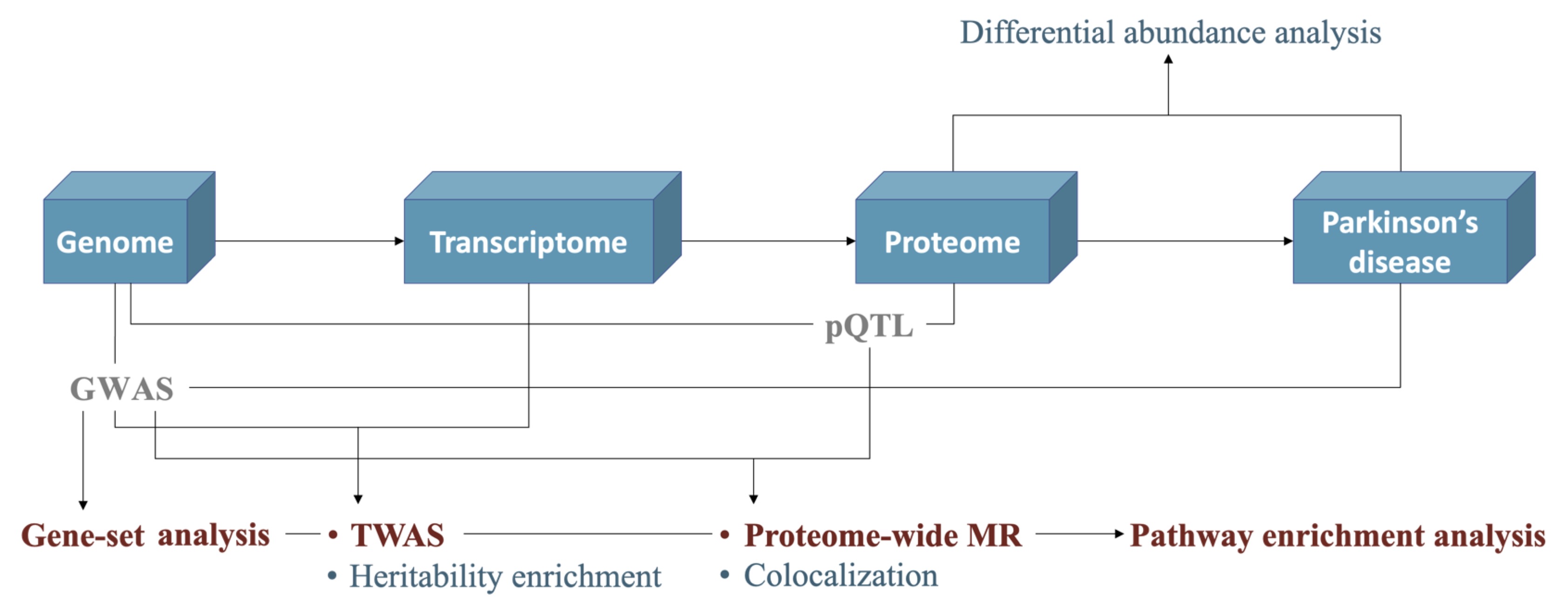
Fig 1. Integrative Multi-omics Framework
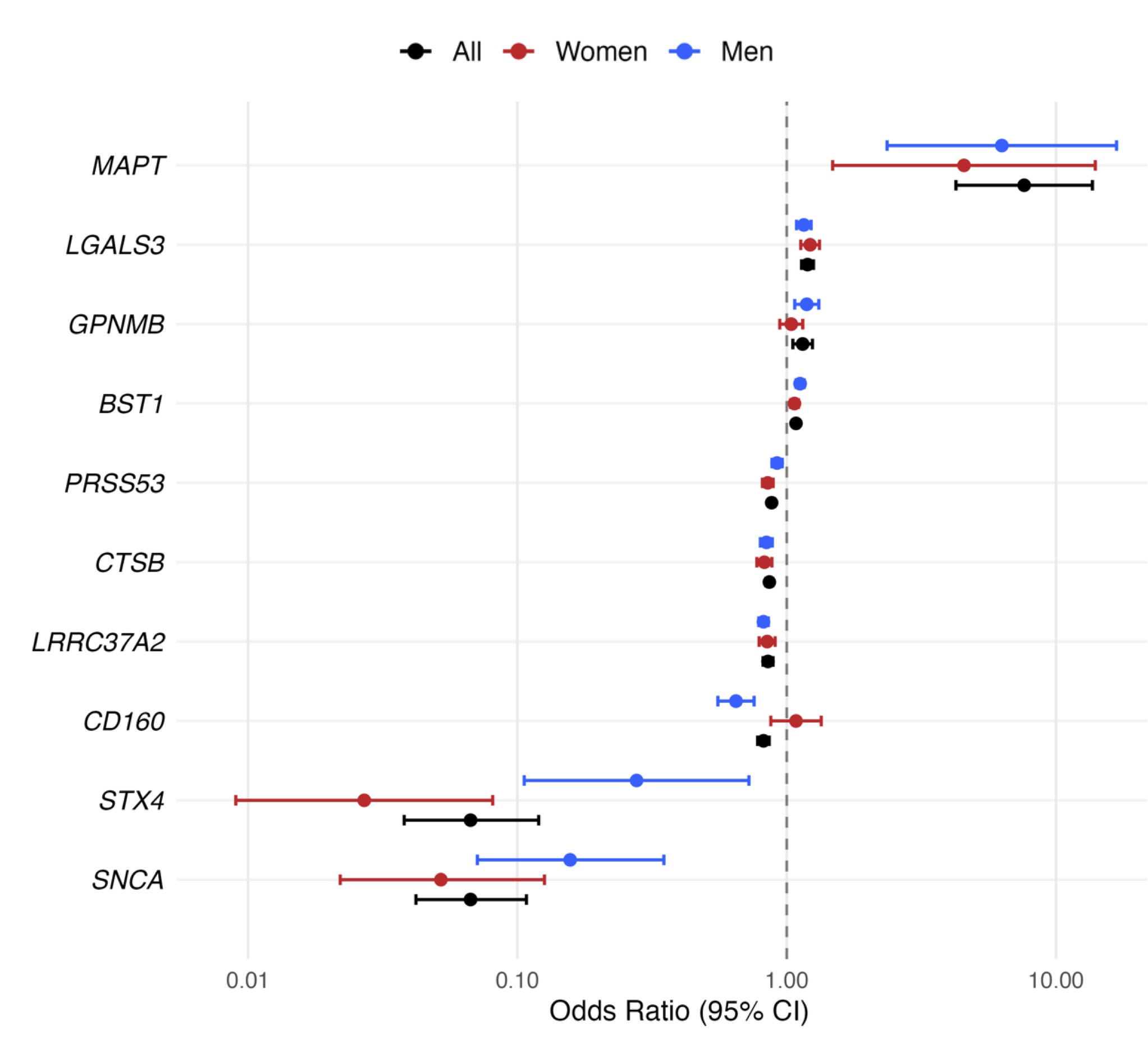
Fig 2. PWMR to Identify Causal Proteins
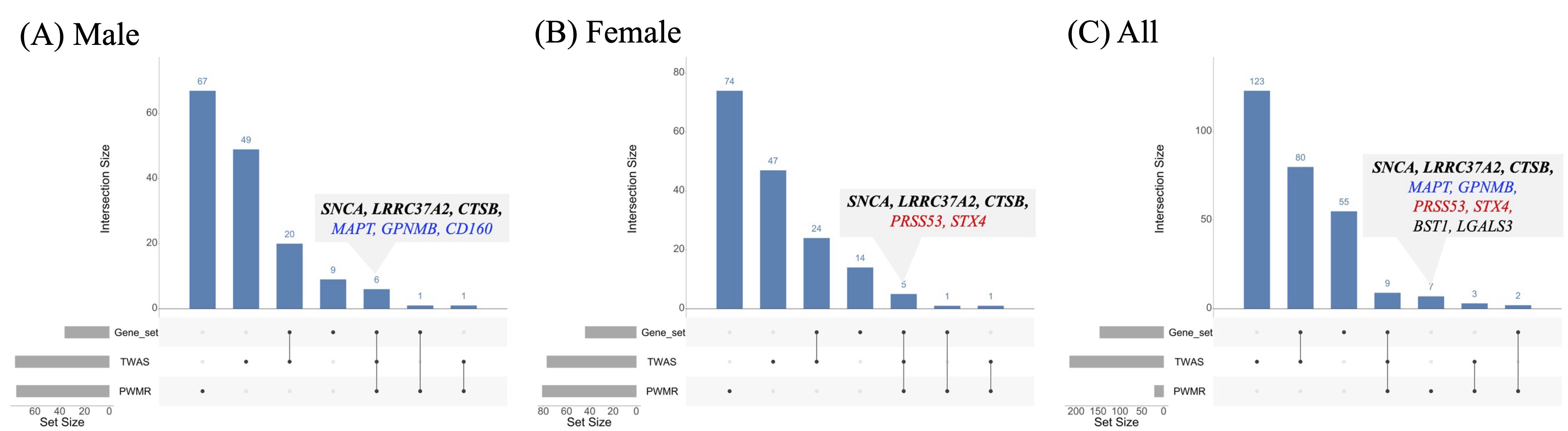
Fig 3. Sex-stratified Multi-omics Integration
To cite this abstract in AMA style:
J-Y. Lee, J. Lee, S. Lee, JH. Yoon, DG. Park, J. Sung. Sex-Stratified Multi-Omic Integration Identifies Sexually Dimorphic Molecular Targets in Parkinson’s Disease [abstract]. Mov Disord. 2026; 41 (suppl 1). https://www.mdsabstracts.org/abstract/sex-stratified-multi-omic-integration-identifies-sexually-dimorphic-molecular-targets-in-parkinsons-disease/. Accessed October 1, 2026.« Back to 2026 International Congress
MDS Abstracts - https://www.mdsabstracts.org/abstract/sex-stratified-multi-omic-integration-identifies-sexually-dimorphic-molecular-targets-in-parkinsons-disease/