
Category: Parkinson's disease: Neuroimaging
Objective: To determine how acute dopaminergic treatment reshapes large-scale brain network organization in Parkinson’s disease (PD).
Background: Dopamine replacement reliably improves motor symptoms in PD, but the systems-level mechanisms linking focal nigrostriatal restoration to whole-brain functional reorganization remain unclear.
Method: We analyzed resting-state fMRI from 337 patients with PD and 141 healthy controls, including 237 patients with paired OFF/ON acute levodopa scans. A multi-scale connectomic framework integrated graph-theoretical topology, basal ganglia-centered functional connectivity, and dynamic functional connectivity.
Results: In the OFF state, PD showed an inverted network hierarchy characterized by reduced efficiency and centrality of sensorimotor and visuospatial cortical hubs, alongside increased red nucleus centrality associated with motor severity. Acute levodopa reversed this pattern by restoring cortical hub topology, strengthening fronto-striatal executive-premotor connectivity, and reducing putamen-cerebellar coupling. Dynamic analyses further demonstrated reduced occupancy of a thalamo-sensorimotor state and increased occupancy and dwell time of a more integrative salience-frontal executive state after levodopa. Ventral tegmental area-prefrontal connectivity was selectively attenuated in the ON state.
Conclusion: Dopaminergic responsiveness in PD is associated with state-dependent reconfiguration of large-scale subcortical-cortical networks across both static and dynamic domains. These features may represent imaging markers of dopaminergic responsiveness in PD.
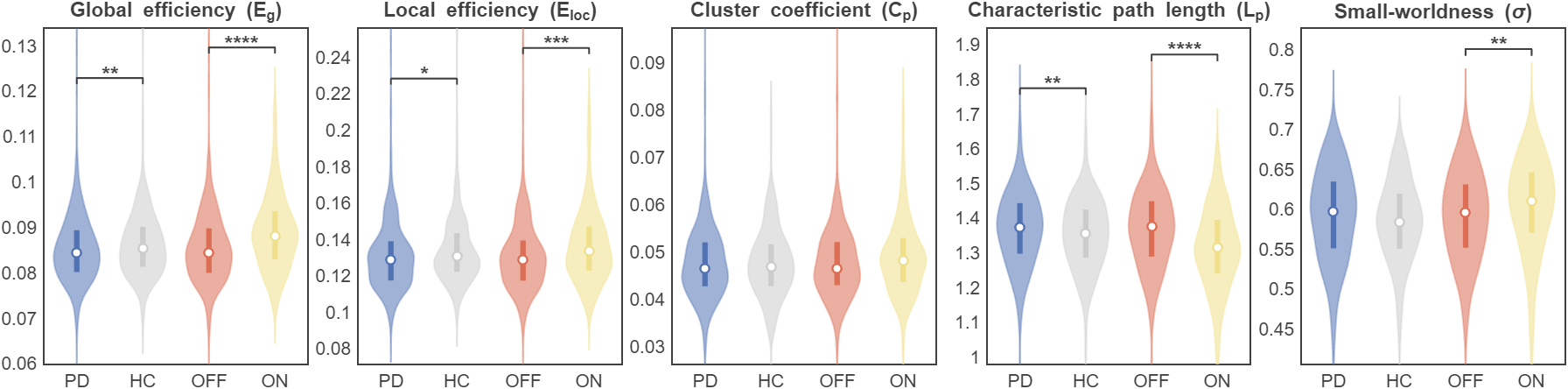
Figure 1. Global network topology
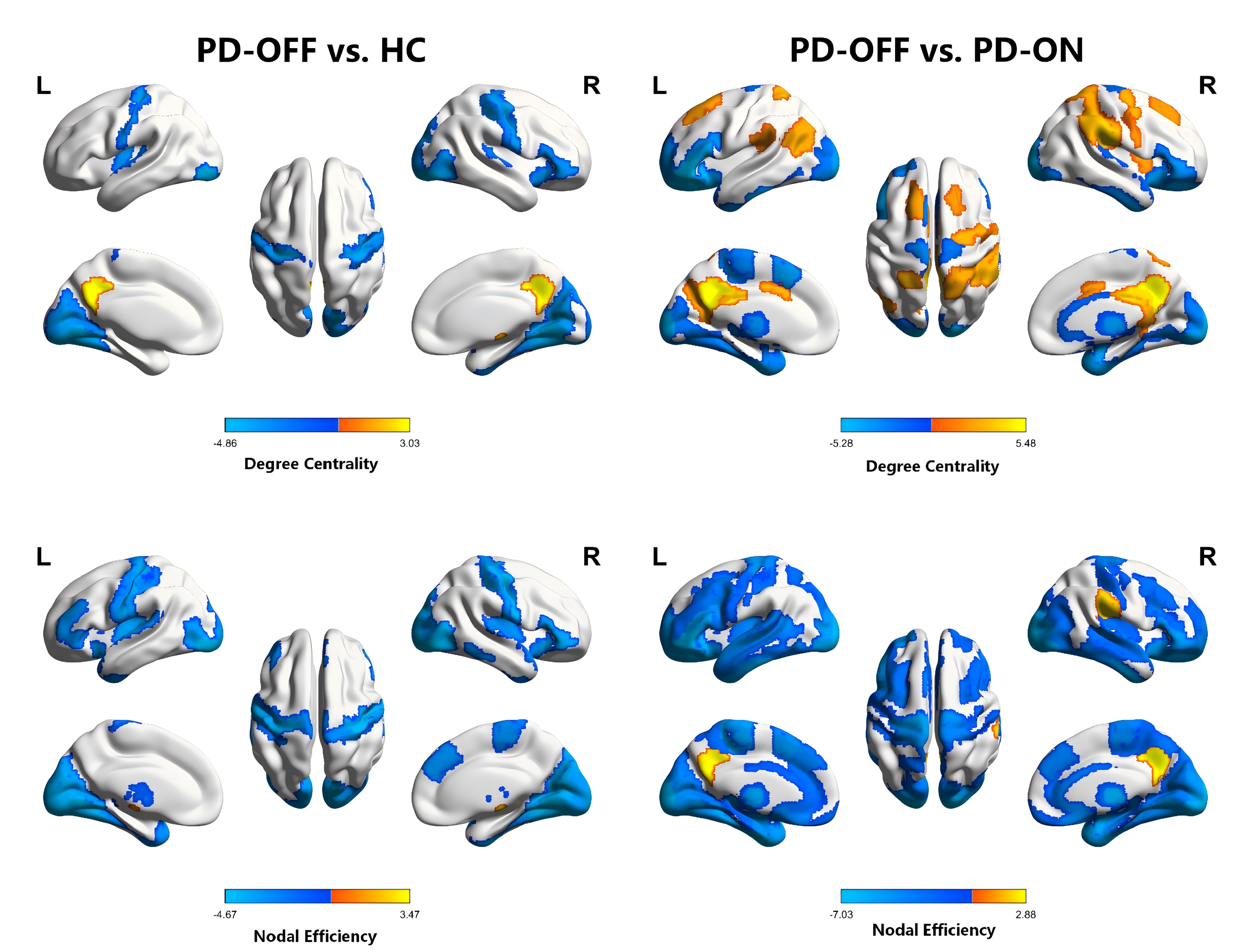
Figure 2. Nodal topological alterations
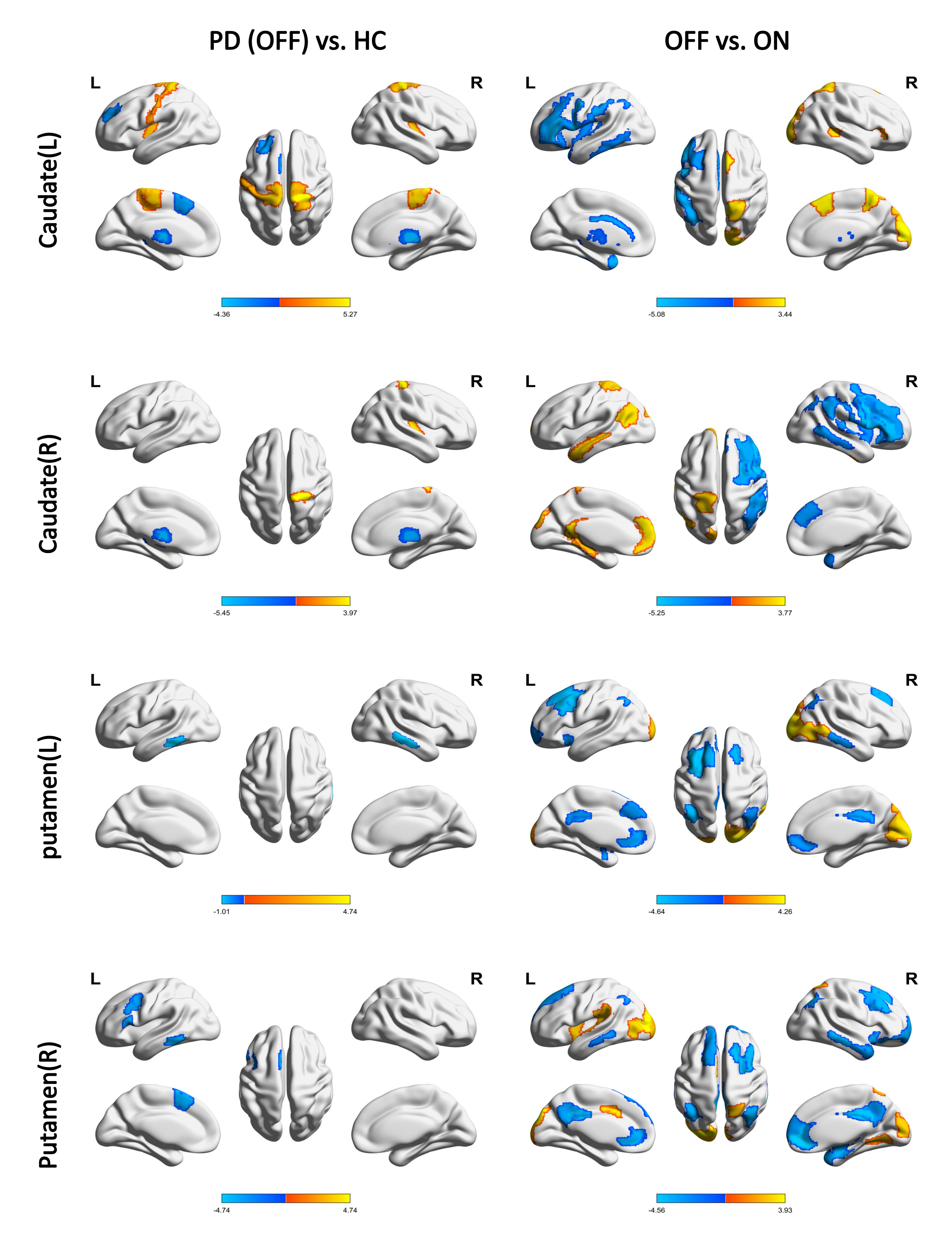
Figure 3. Seed-based connectivity changes
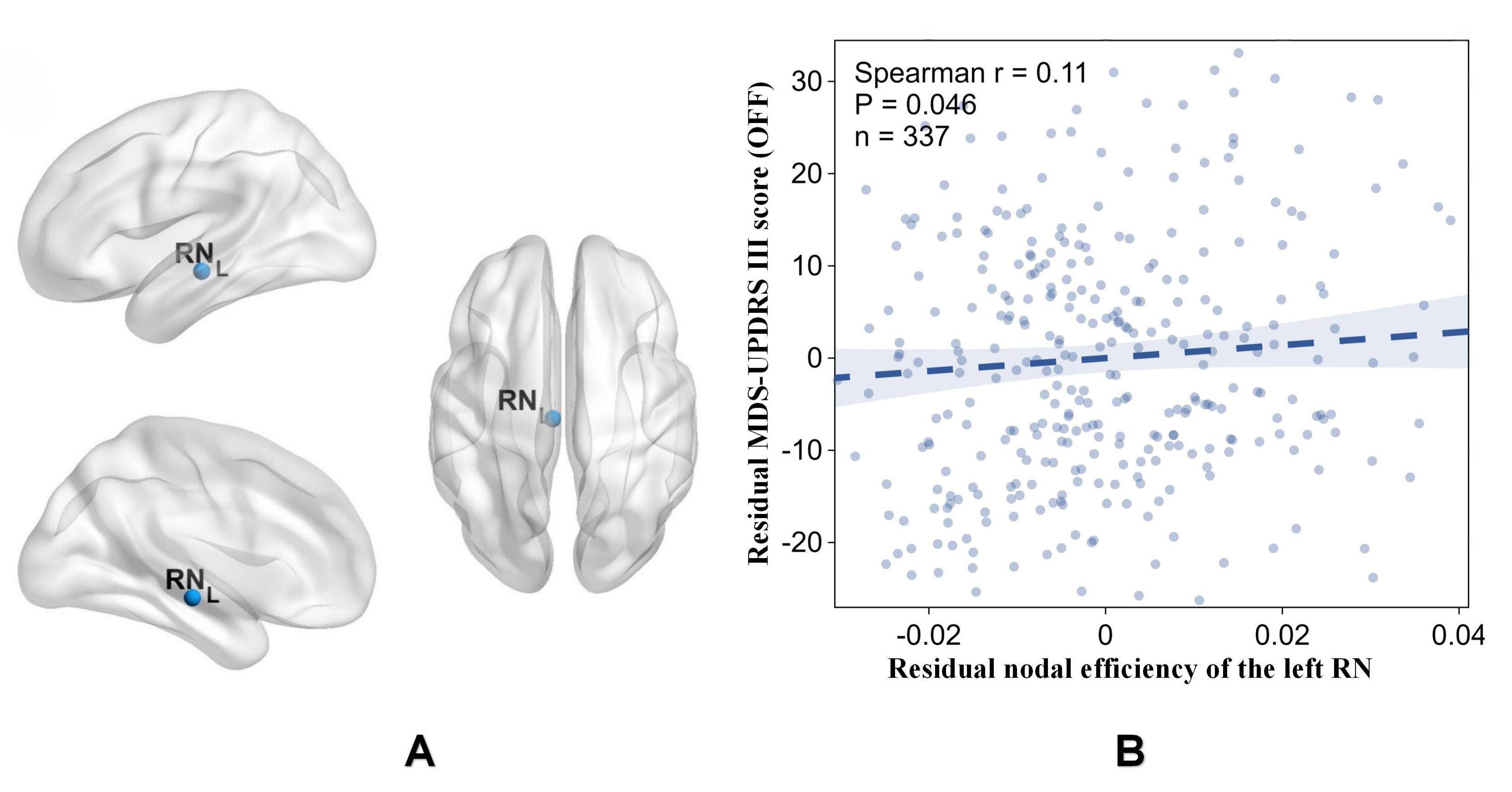
Figure 4. Red nucleus and motor severity
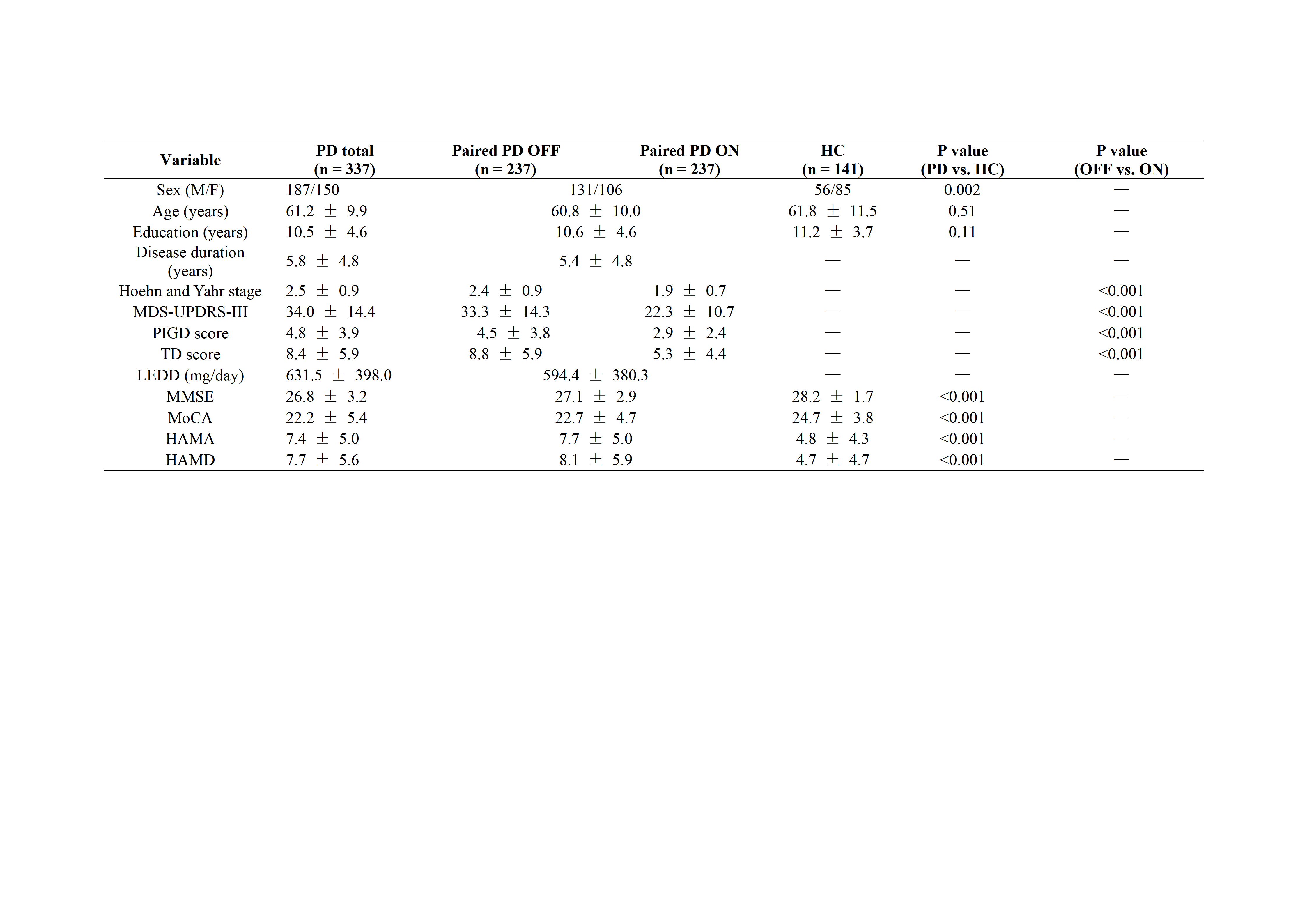
Table 1. Demographic and clinical characteristics.
To cite this abstract in AMA style:
Z. Zhang, T. Feng. Dopaminergic reconfiguration of an inverted network hierarchy in Parkinson’s disease [abstract]. Mov Disord. 2026; 41 (suppl 1). https://www.mdsabstracts.org/abstract/dopaminergic-reconfiguration-of-an-inverted-network-hierarchy-in-parkinsons-disease/. Accessed October 1, 2026.« Back to 2026 International Congress
MDS Abstracts - https://www.mdsabstracts.org/abstract/dopaminergic-reconfiguration-of-an-inverted-network-hierarchy-in-parkinsons-disease/