
Objective: Evaluate the effect of a structured Mediterranean-style high fiber diet as the cornerstone of treatment with additional therapies layered when needed (FIBER-MED), using a pragmatic phenotype-guided constipation management algorithm (Fig 1).
Background: Though dietary modification is widely recommended for gastrointestinal (GI) symptoms in Parkinson’s Disease (PD), limited data exist on its real-world effectiveness and on quality of life (QOL) across the spectrum of PD-related GI dysfunction.
Method: We retrospectively reviewed 110 patients with PD and moderate-to-severe GI symptoms evaluated in our PRISM clinic (Table 1) [1]. All received individualized recommendations based on the FIBER-MED approach. All patients received dietary therapy as baseline treatment and were allowed rescue over-the-counter stimulant laxatives if no bowel movement occurred for more than three consecutive days. Patients were then managed according to a phenotype-guided algorithm with step-up therapies consisting of pharmacologic monotherapy for slow-transit constipation (dietary optimization+secretagogue), escalation therapy for refractory slow-transit constipation (diet+secretagogue+prokinetic), and multidisciplinary therapy for dyssynergic phenotype (diet+pelvic floor physical therapy/biofeedback). GI symptoms and QOL were assessed using the Gainesville Gastrointestinal Symptom Inventory (GGSI) at baseline, 6 months, and 1 year. The primary analysis focused on constipation and stomach upset symptom domains as measures of phenotype-targeted treatment response.
Results: Most patients required step-up therapies, including phenotype-targeted pharmacologic and/or multidisciplinary treatment layered onto baseline dietary therapy. Across the cohort, GGSI total scores improved significantly at 6 months and 1 year (29.2±12.4 vs. 15.7±13.1, p < 0.001), paralleled by improvements in QOL (7.6±3.5 vs. 3.4±2.6, p < 0.001, Table 2). Improvements extended across constipation, nausea, abdominal pain, and diarrhea (Table 3).
Conclusion: The FIBER-MED approach was associated with robust, durable improvements in GI symptoms and QOL in PD, supporting diet as a universal foundation complemented by pharmacologic and multidisciplinary care. By anchoring treatment selection to pragmatic objective triage rather than arbitrary treatment groupings, this framework provides a reproducible phenotype-guided model that may be implemented outside tertiary motility centers.
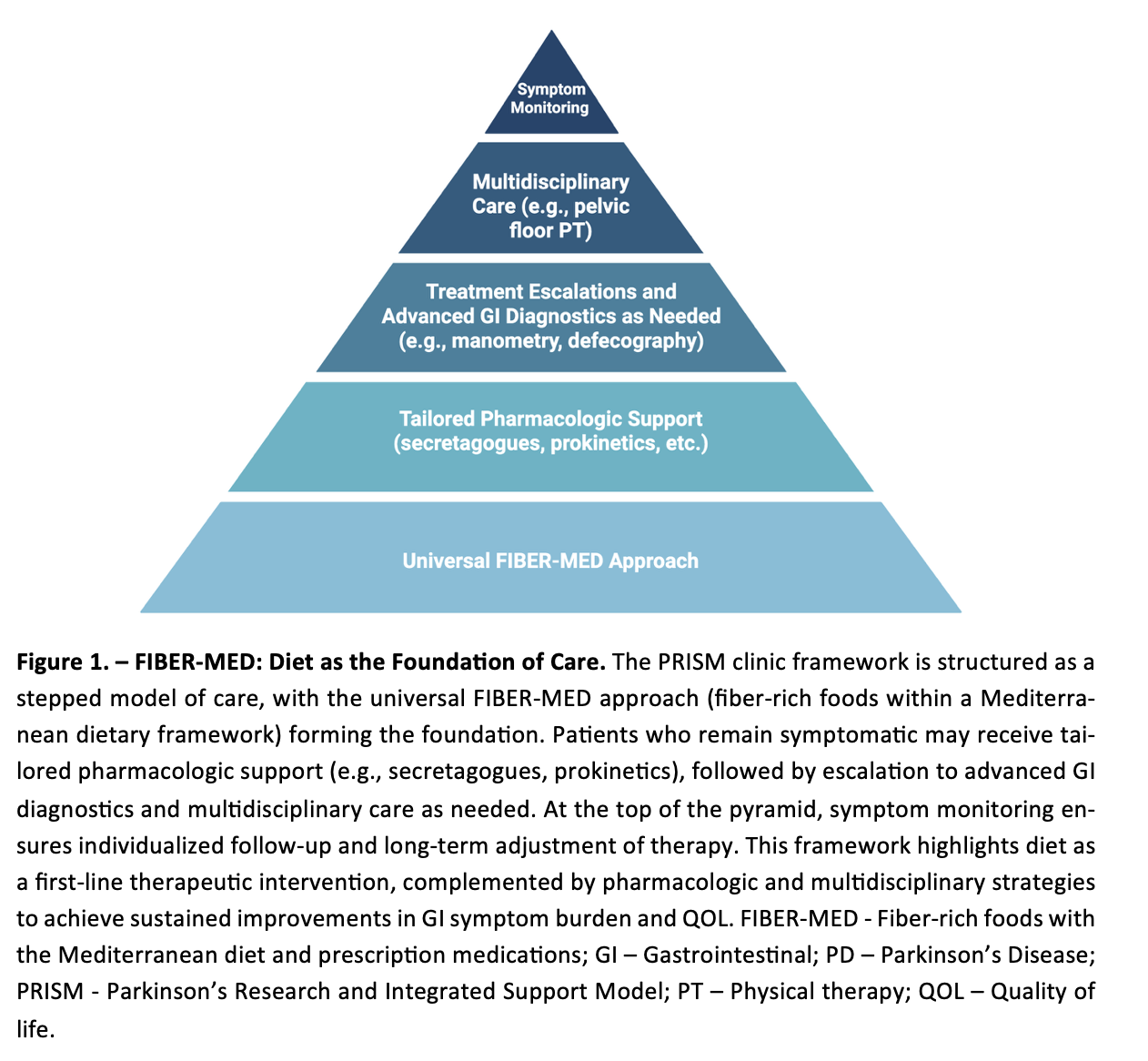
Figure 1
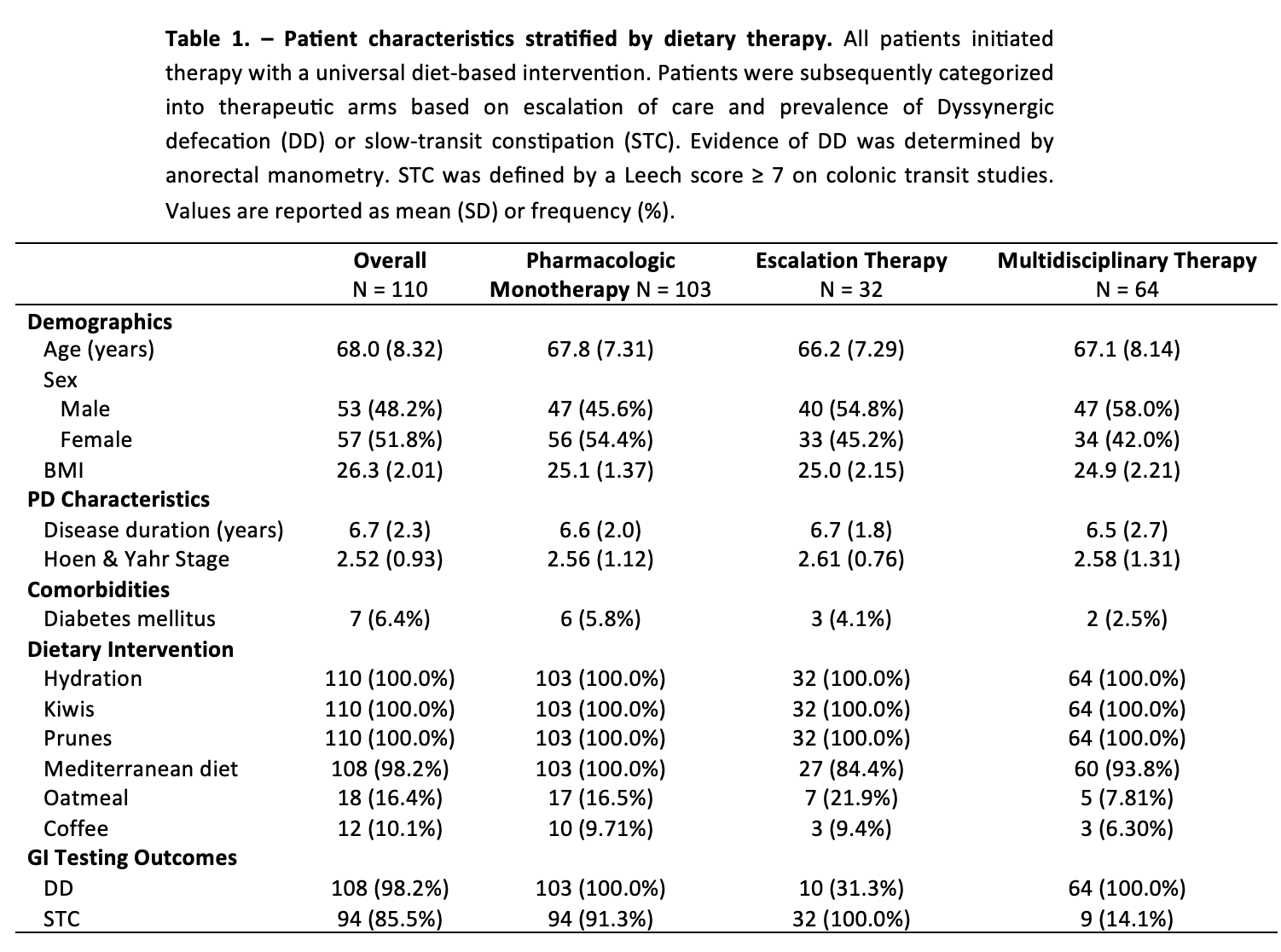
Table 1
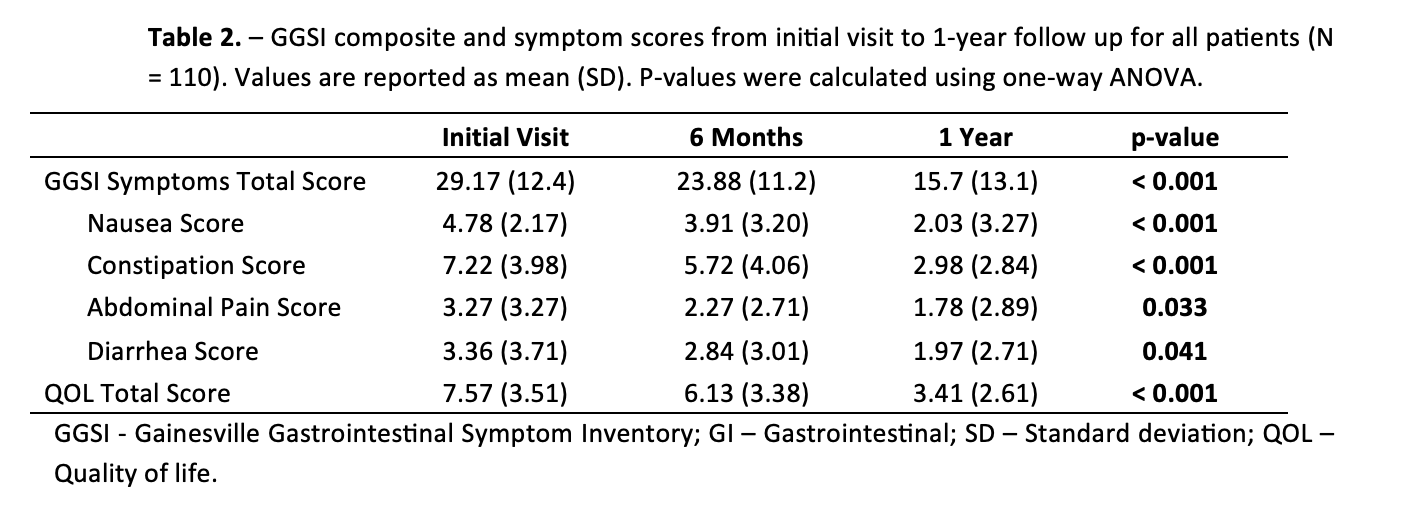
Table 2
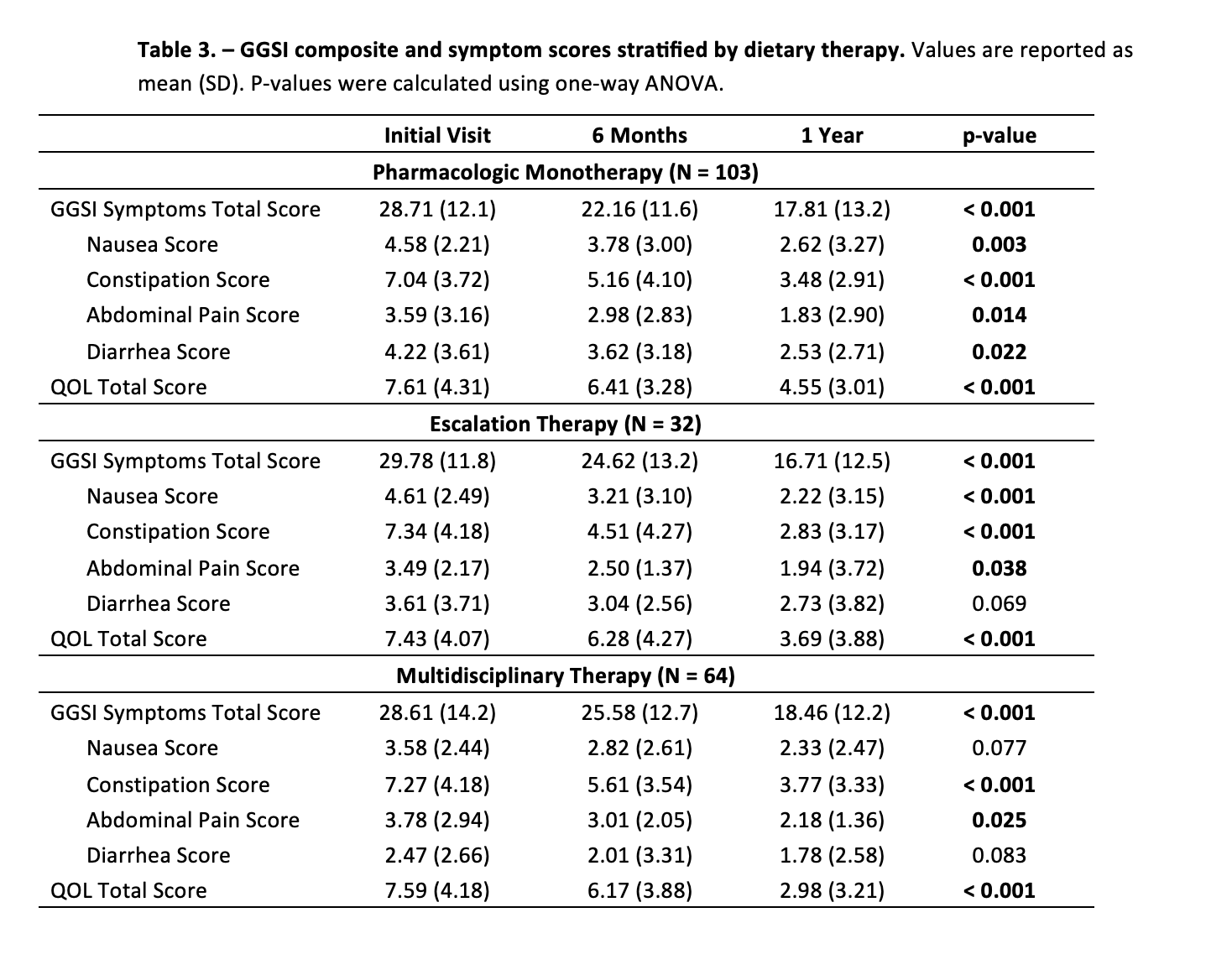
Table 3
References: 1. Hey G, Amaris M, Beke M, et al. The fixel GI Parkinson’s research and integrated support model (PRISM). J Parkinsons Dis. 2025;15(3):573-584. doi:10.1177/1877718X251335047
To cite this abstract in AMA style:
G. Hey, M. Beke, C. Rogers, A. Ramirez-Zamora, M. Amaris. A Pragmatic Phenotype-Guided Algorithm for Constipation in Parkinson’s Disease [abstract]. Mov Disord. 2026; 41 (suppl 1). https://www.mdsabstracts.org/abstract/a-pragmatic-phenotype-guided-algorithm-for-constipation-in-parkinsons-disease/. Accessed October 1, 2026.« Back to 2026 International Congress
MDS Abstracts - https://www.mdsabstracts.org/abstract/a-pragmatic-phenotype-guided-algorithm-for-constipation-in-parkinsons-disease/