
Objective: To investigate whether longitudinal trajectories of medication responsiveness and motor complications differ based on cerebrospinal fluid α-synuclein seed amplification assay (CSF SAA) status in Parkinson’s disease (PD).
Background: CSF SAA status has been linked to differences in motor severity and progression in PD. While levodopa remains the gold standard treatment for motor symptoms, whether underlying α-synuclein pathology influences responsiveness to dopaminergic therapy remains unknown.
Method: From the Parkinson’s Progression Markers Initiative (PPMI), we included confirmed PD participants who had initiated levodopa medication and had CSF SAA testing. 83 SAA- patients were matched to 341 SAA+ patients based on sex, age, and time since diagnosis. MDS-UPDRS Part III scores in ON and OFF states were used to derive proportional and absolute medication responsiveness. Motor complications were assessed using MDS-UPDRS Part IV. Linear mixed-effects models were used to examine whether medication responsiveness and motor complication trajectories differed by SAA status over time.
Results: SAA+ patients showed higher proportional medication responsiveness at treatment initiation compared to SAA- patients (27.2% vs. 20.6%; p=0.017) which remained consistent over time [figure1]. Absolute medication responsiveness increased at a 2.1-fold faster rate in SAA+ patients over time [figure2]. While OFF-state motor progression was comparable between groups (SAA+: 1.69 vs. SAA-: 1.63 points/year; p=0.89), SAA+ patients progressed significantly slower in the ON state (0.93 vs. 1.56 points/year), reflecting a levodopa-induced reduction in annual motor progression by 45.0% in SAA+ compared to 4.3% in SAA- patients (three-way interaction p=0.006) [figure3]. Considering motor complications, SAA+ patients showed lower MDS-UPDRS Part IV scores at treatment initiation but developed complications at a faster rate over time, particularly in the motor fluctuations domain (p≤0.001).
Conclusion: All patients demonstrated clear levodopa responsiveness consistent with a PD phenotype regardless of their SAA status. However, SAA+ patients showed greater and more sustained levodopa responsiveness over time compared to SAA- patients despite comparable disease progression in the OFF state. These findings highlight α-synuclein pathology as a potential predictor of long-term levodopa treatment efficacy.
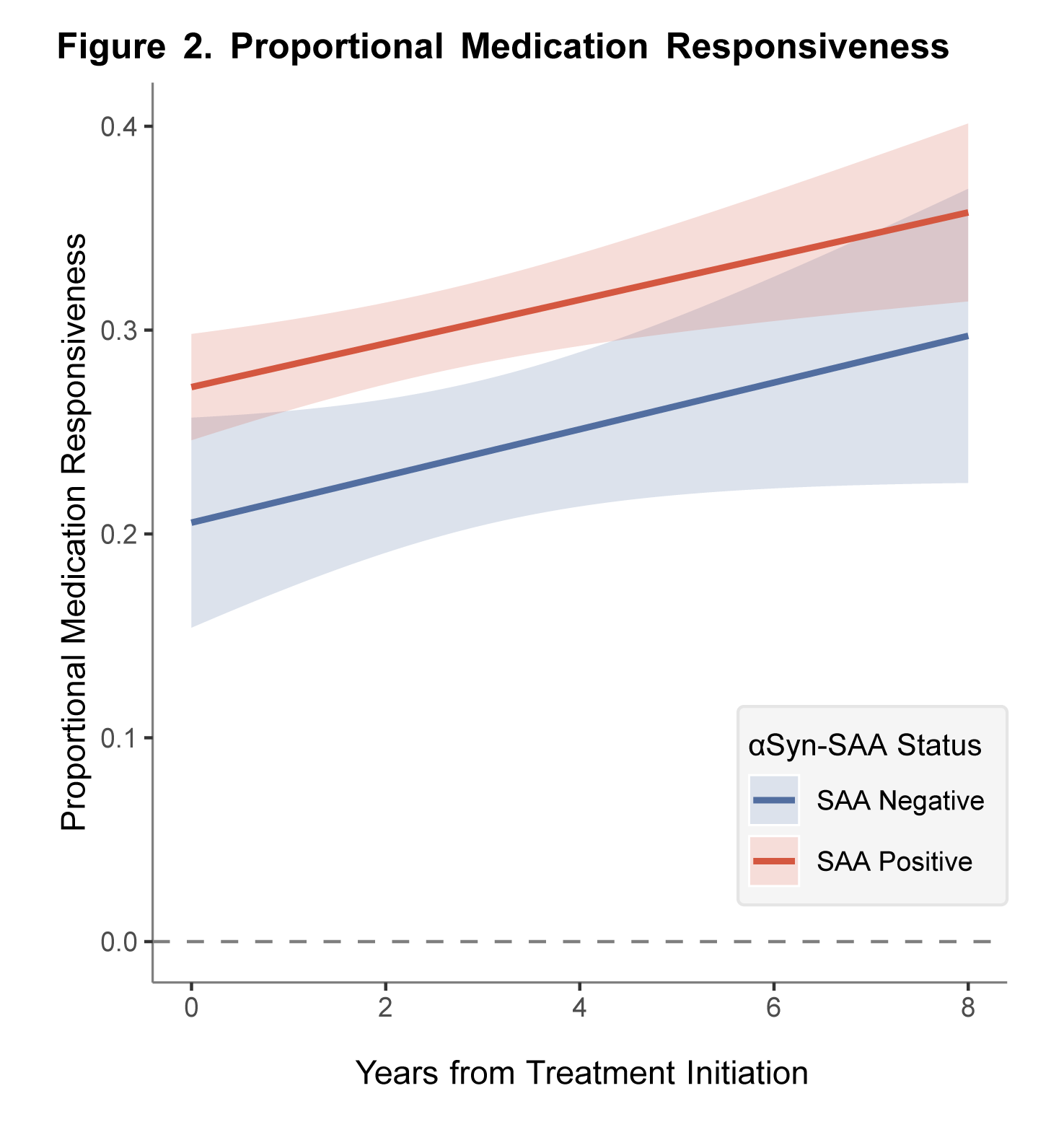
Figure1. Proportional Medication Responsiveness
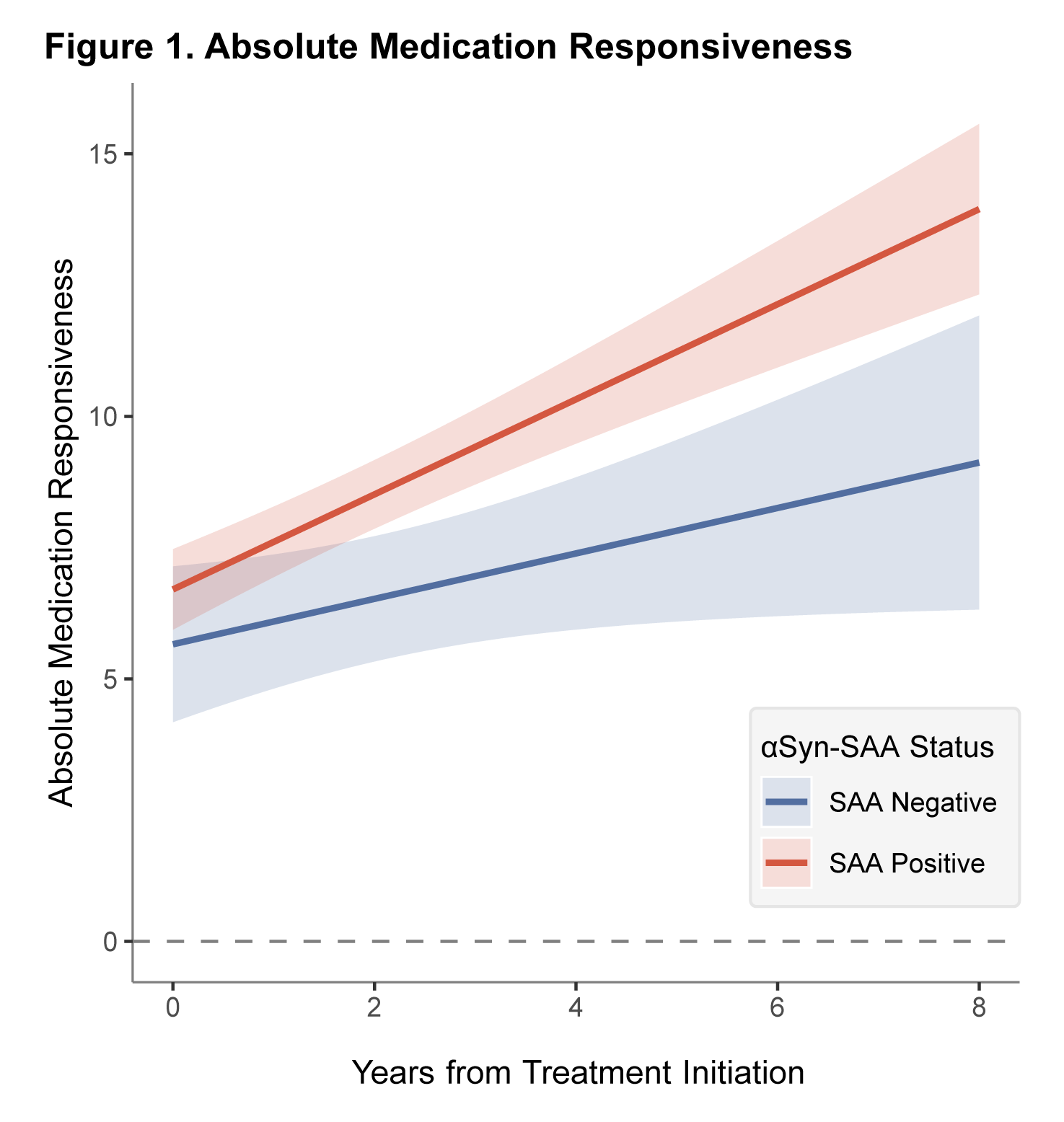
Figure1. Absolute Medication Responsiveness
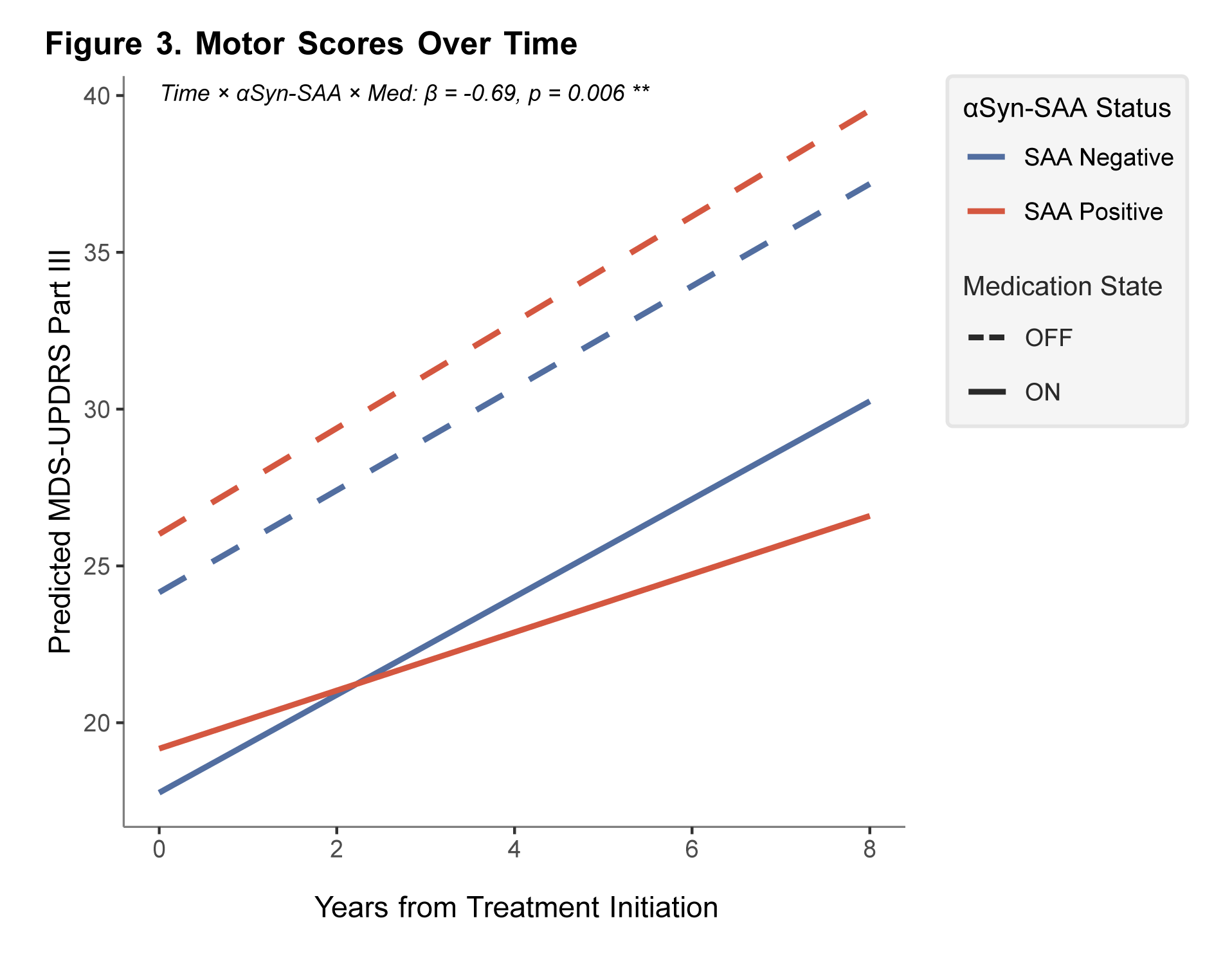
Figure1. Motor Scores Over Time
To cite this abstract in AMA style:
H. Azizi, SM. Fereshtehnejad, R. Moqadam, M. Dadar, A. Siderowf, A. Dagher, Y. Zeighami. Levodopa Responsiveness and Motor Complication Trajectories in Parkinson’s Disease by α-Synuclein Seed Amplification Assay Status [abstract]. Mov Disord. 2026; 41 (suppl 1). https://www.mdsabstracts.org/abstract/levodopa-responsiveness-and-motor-complication-trajectories-in-parkinsons-disease-by-%ce%b1-synuclein-seed-amplification-assay-status/. Accessed October 1, 2026.« Back to 2026 International Congress
MDS Abstracts - https://www.mdsabstracts.org/abstract/levodopa-responsiveness-and-motor-complication-trajectories-in-parkinsons-disease-by-%ce%b1-synuclein-seed-amplification-assay-status/