
Objective: To evaluate the diagnostic utility of serum α-synuclein (α-Syn) seed amplification assay (SAA) for early PD detection using preformed fibril (PFF)-induced mouse models and a prodromal human cohort.
Background: Early diagnosis of Parkinson’s disease (PD) before extensive neurodegeneration is a critical unmet need, largely due to the absence of sensitive, minimally invasive biomarkers for the prodromal stage. Whether circulating α-Syn seeds in blood faithfully reflect CNS pathology during the prodromal phase and the mechanisms driving peripheral dissemination remain unclear.
Method: α-Syn PFFs were injected into the striatum of young and middle-aged mice. Brain and blood SAA levels and motor behavior were monitored. Mechanistic studies included microglial activity, cytokines, BBB integrity, proteomics, and single-cell RNA sequencing. In humans, serum α-Syn SAA and S100B were measured in iRBD patients and healthy controls.
Results: In the PFF model, misfolded α-Syn propagated broadly throughout the CNS and periphery well before motor symptom onset, with middle-aged mice exhibiting exacerbated and earlier pathology. Serum α-Syn seeds appeared at 6 months post-injection (mpi) in young adult mice and as early as 1 mpi in middle-aged mice, strongly correlating with brain α-Syn burden. Proteomic profiling linked α-Syn–induced neurodegeneration to neuroinflammatory signaling, while single-cell RNA sequencing revealed microglial activation and endothelial pro-inflammatory responses. Microglial depletion with PLX5622 significantly reduced both central α-Syn accumulation and peripheral spread, along with decreased serum S100B levels, implicating microglial activation as a key contributor driving BBB disruption and peripheral dissemination. Clinically, serum α-Syn SAA alone achieved 64% sensitivity and 92% specificity for iRBD. When combined with S100B using an AND rule, diagnostic performance improved markedly, achieving 64% sensitivity and 100% specificity for early PD risk stratification.
Conclusion: Our findings support serum α-Syn SAA, especially in combination with the BBB biomarker S100B, as a promising, minimally invasive, and mechanistically grounded strategy for early PD detection.
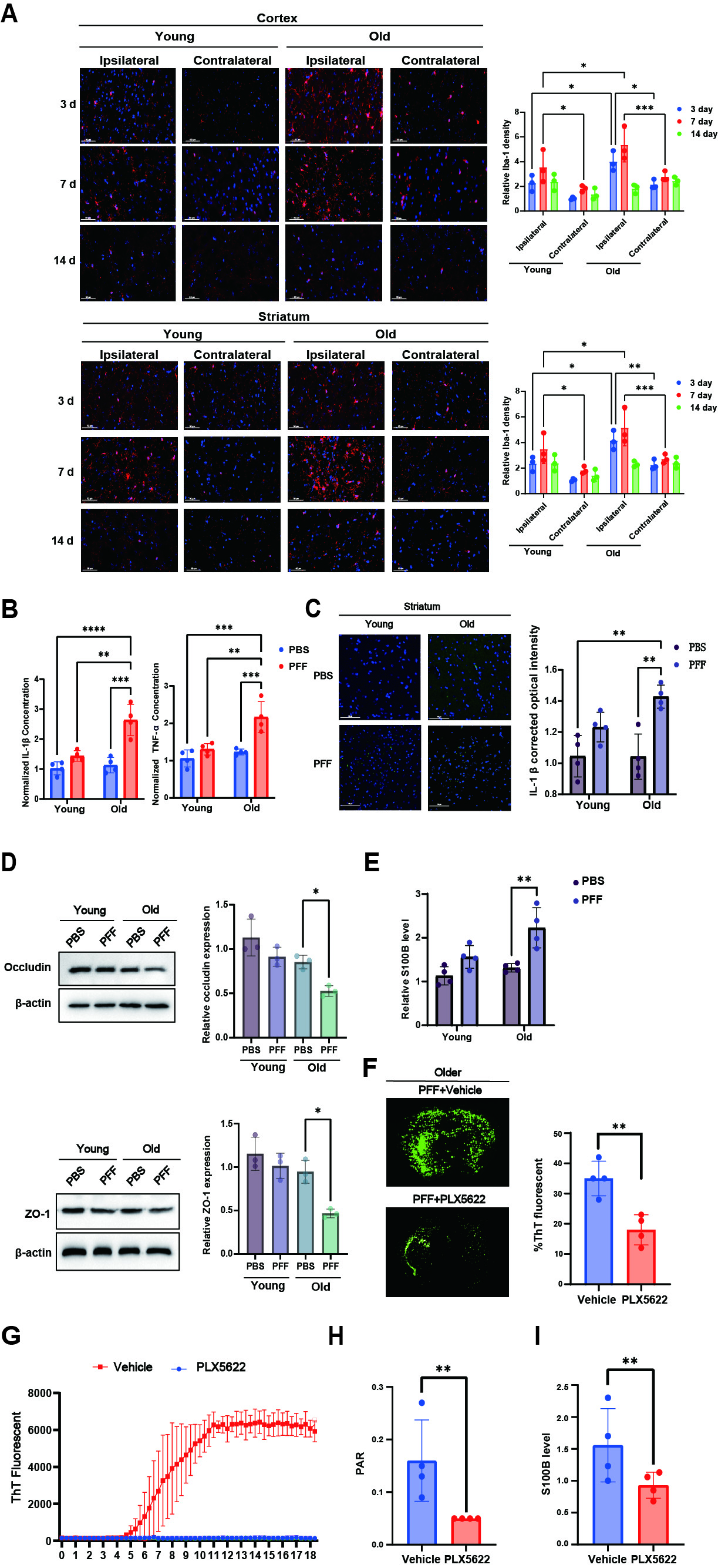
Microglial activation amplifies α Syn pathology
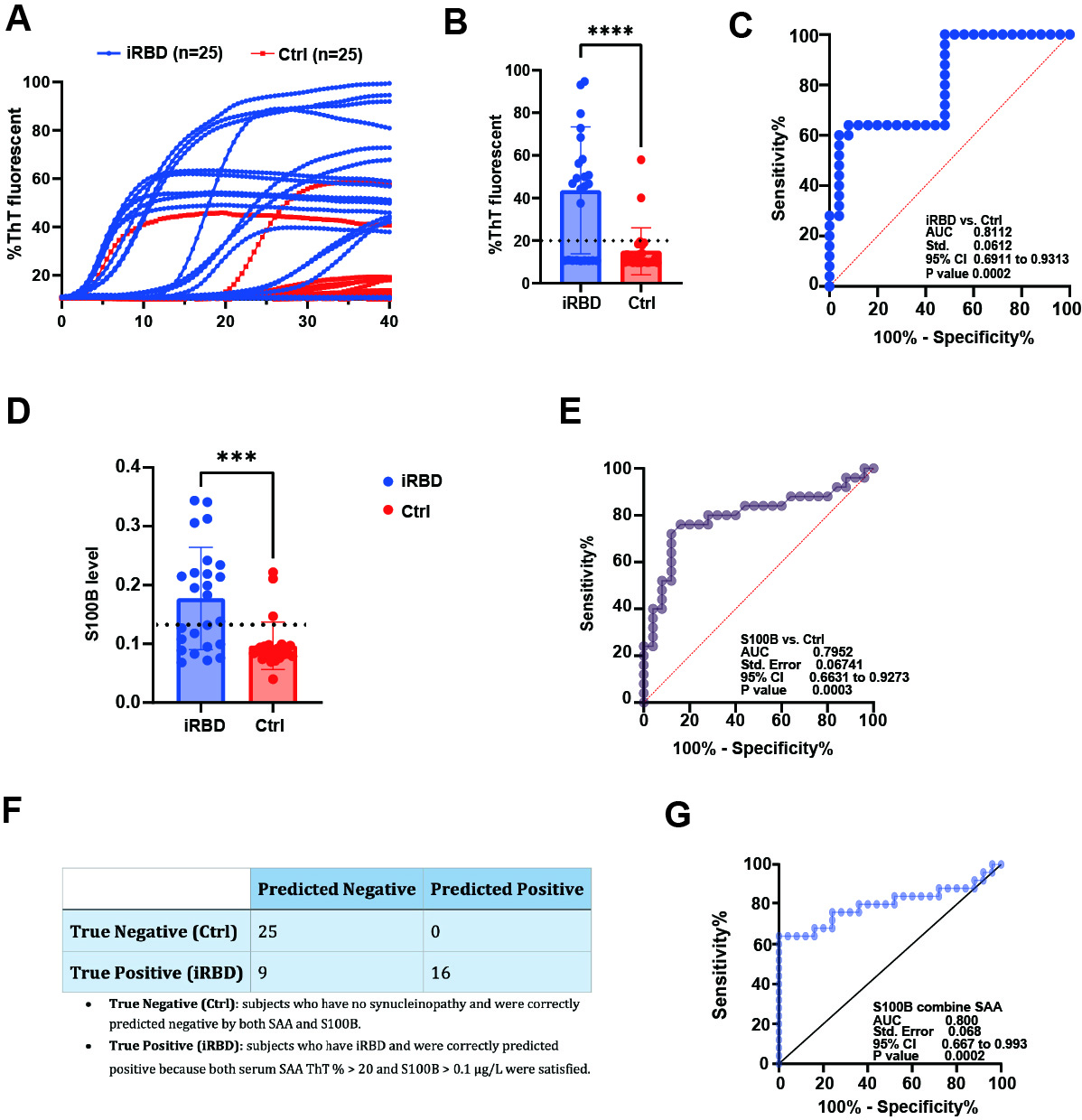
Combined serum α-Syn-SAA and S100B
To cite this abstract in AMA style:
K. Kuang. Age-Dependent Peripheral Dissemination of α-Synuclein Seeds: Mechanistic Basis for Blood-Based Early Detection of Parkinson’s Disease [abstract]. Mov Disord. 2026; 41 (suppl 1). https://www.mdsabstracts.org/abstract/age-dependent-peripheral-dissemination-of-%ce%b1-synuclein-seeds-mechanistic-basis-for-blood-based-early-detection-of-parkinsons-disease/. Accessed October 1, 2026.« Back to 2026 International Congress
MDS Abstracts - https://www.mdsabstracts.org/abstract/age-dependent-peripheral-dissemination-of-%ce%b1-synuclein-seeds-mechanistic-basis-for-blood-based-early-detection-of-parkinsons-disease/