
Objective: To determine whether transmembrane protein 106B (TMEM106B) fibrils promote α-synuclein (α-syn) aggregation and to elucidate the molecular basis of this interaction in Parkinson’s disease (PD).
Background: Coexisting amyloid pathologies are common in neurodegenerative diseases1. TMEM106B fibrils have been identified in aged and PD brains and exhibit increased burden in PD2-4. Whether TMEM106B fibrils influence α-syn aggregation and contribute to synucleinopathy progression remains unknown.
Method: Transcriptomic datasets and postmortem brain tissue were analyzed to assess TMEM106B expression in PD. TMEM106B monomers were purified and reconstituted into fibrils in vitro. Brain-derived TMEM106B fibrils were extracted from human brain tissues. Primary neurons from A53T transgenic mice were treated with recombinant or brain-derived preformed fibrils (PFFs), and phosphorylated α-syn (p-α-syn) pathology was assessed by immunofluorescence and immunoblotting. Thioflavin T (ThT) assay evaluated α-syn aggregation kinetics. Binding interactions were examined using bio-layer interferometry (BLI), nuclear magnetic resonance (NMR), and immunogold electron microscopy.
Results: Both the brain TMEM106B mRNA expression and protein level in PD patients were higher than in age-matched normal controls (NC). The mRNA expression of TMEM106B showed a significant positive correlation with that of SNCA (Figure 1). In primary A53T neurons, brain-derived TMEM106B PFFs stably induced p-α-syn pathology. Recombinant TMEM106B PFFs demonstrated the same effects as brain-derived TMEM106B, and its effects occurred in a dose-dependent manner (Figure 2). Mechanistically, both brain-derived and recombinant TMEM106B PFFs accelerated α-syn aggregation in ThT assay (Figure 3). BLI demonstrated stronger binding affinity of α-syn monomers to recombinant TMEM106B fibrils than to TMEM106B monomers. Immunogold electron microscopy further confirmed the direct binding of α-syn monomers and TMEM106B fibrils (Figure 4), and NMR identified the α-syn residues involved in the interaction between α-syn and TMEM106B.
Conclusion: TMEM106B fibrils promote α-syn pathological aggregation through a heterologous seeding effect supported by direct molecular interaction. These findings provide mechanistic insight into cross-amyloid interactions in synucleinopathies and suggest that targeting TMEM106B fibrillization may represent a potential therapeutic strategy in PD.
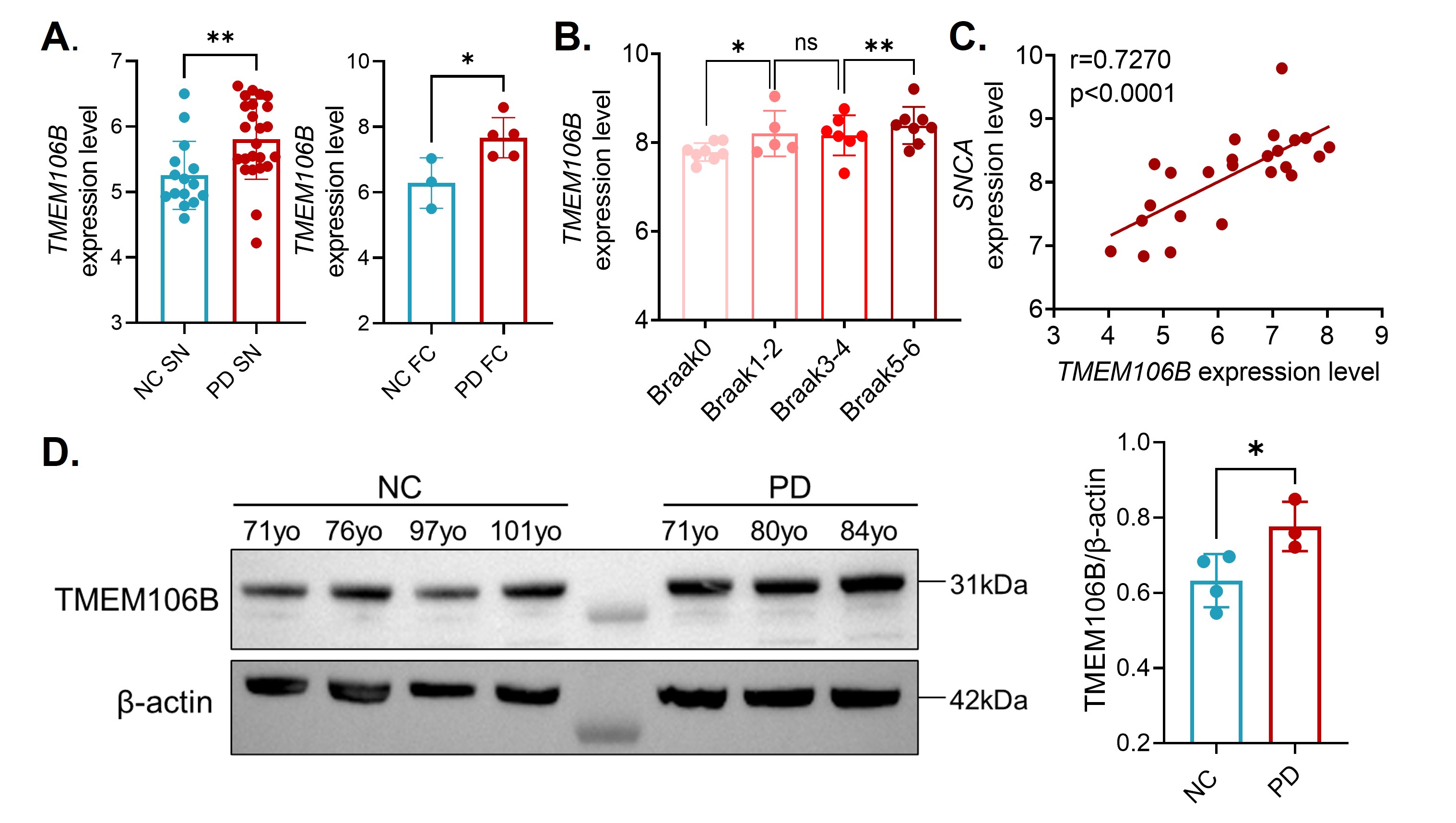
Figure 1
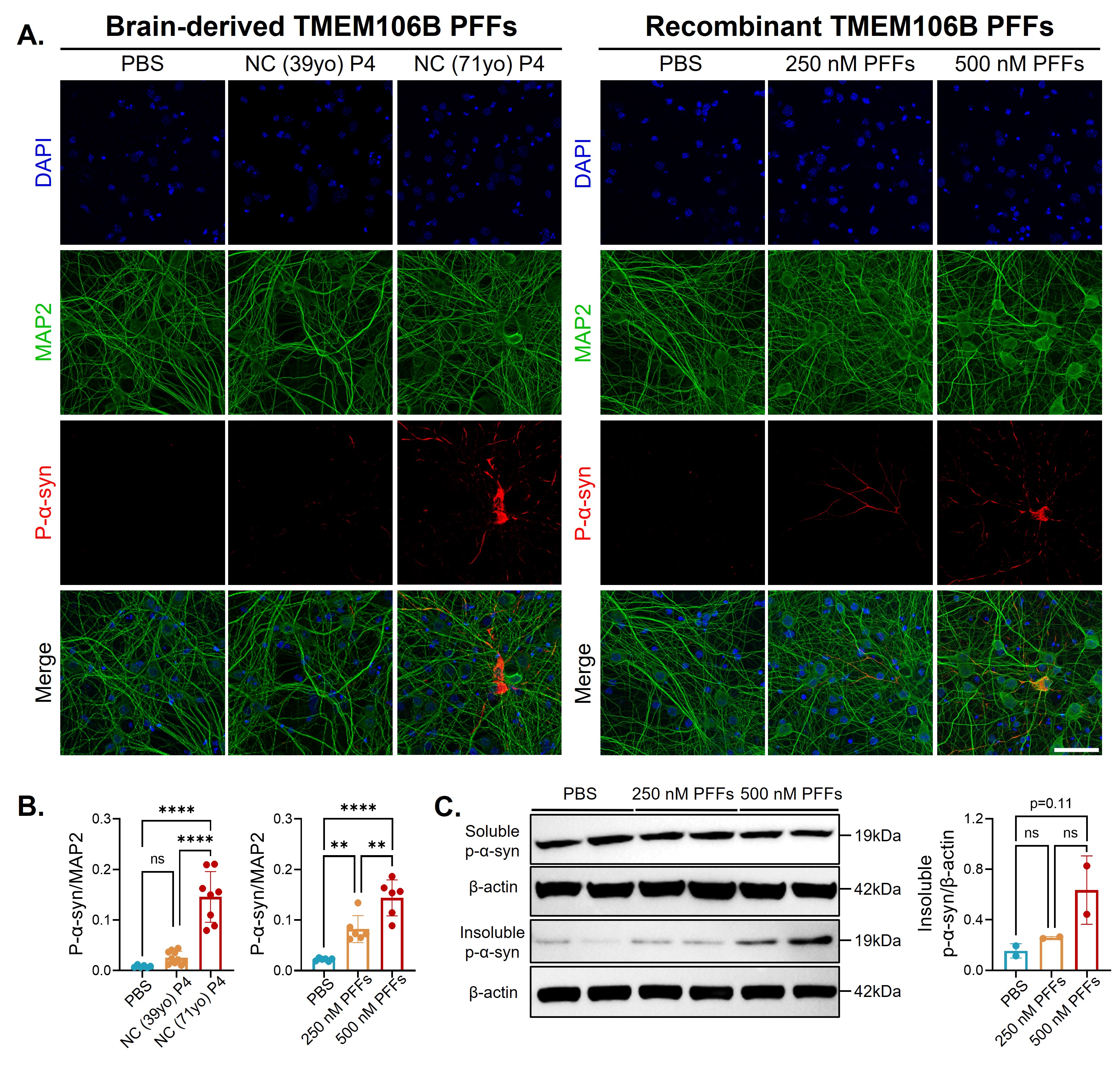
Figure 2
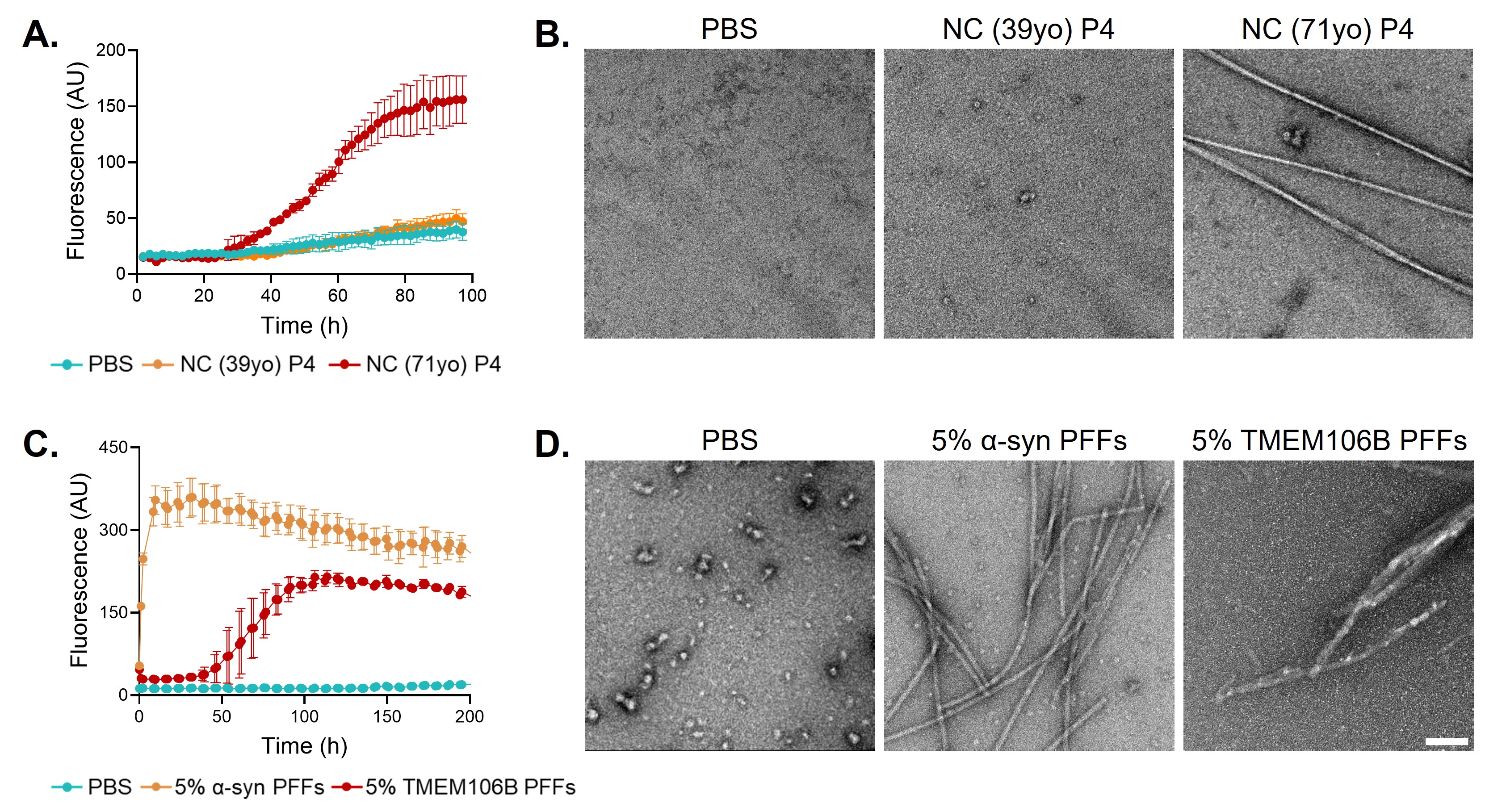
Figure 3
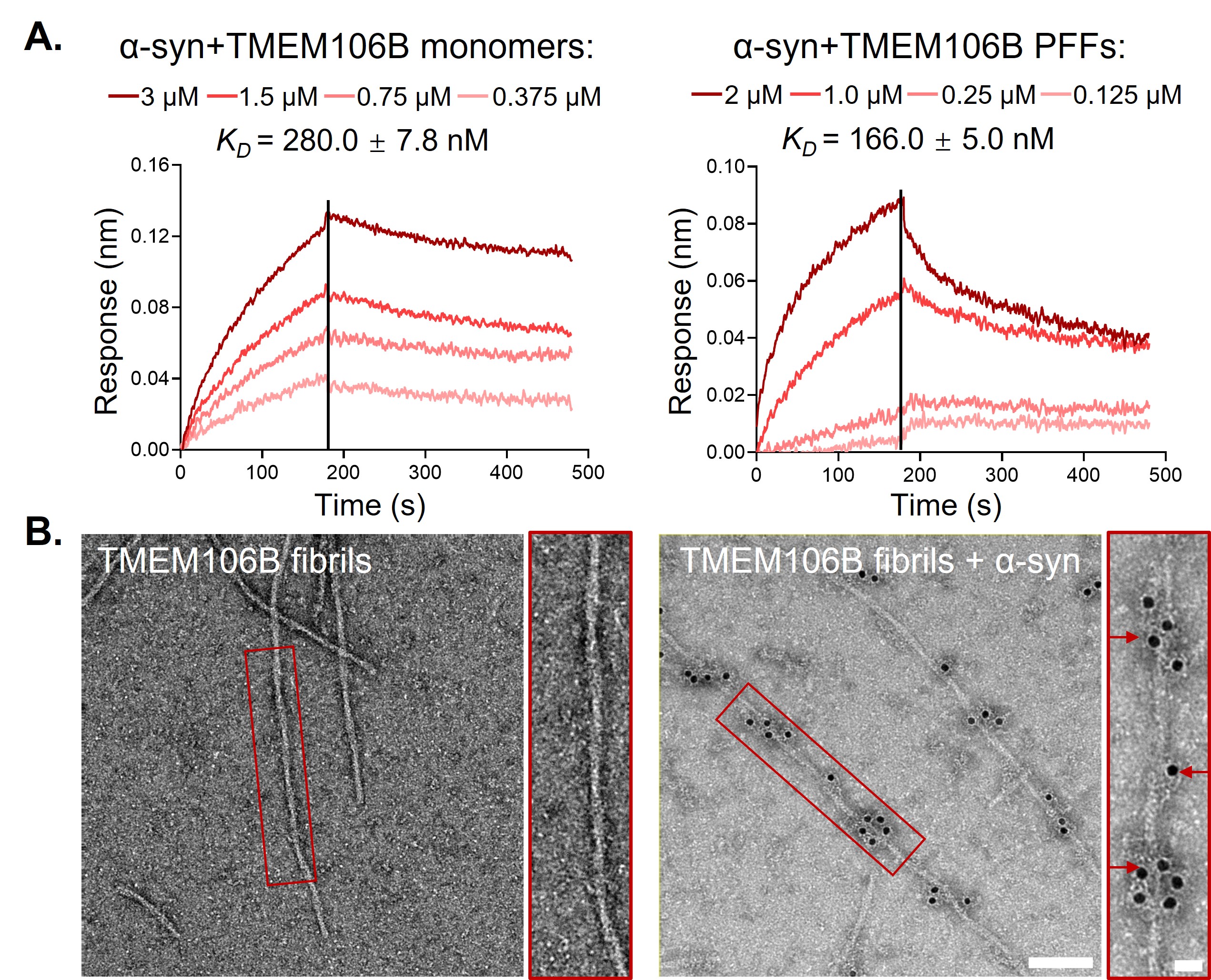
Figure 4
References: 1. Zhang, Y.P., Kedia, S., and Klenerman, D. (2025). Rethinking neurodegeneration through a co-proteinopathy lens. Trends Neurosci 48, 952-963. 10.1016/j.tins.2025.10.006.
2. Fan, Y., Zhao, Q., Xia, W., Tao, Y., Yu, W., Chen, M., Liu, Y., Zhao, J., Shen, Y., Sun, Y., et al. (2022). Generic amyloid fibrillation of TMEM106B in patient with Parkinson’s disease dementia and normal elders. Cell Res 32, 585-588. 10.1038/s41422-022-00665-3.
3. Schweighauser, M., Arseni, D., Bacioglu, M., Huang, M., Lövestam, S., Shi, Y., Yang, Y., Zhang, W., Kotecha, A., Garringer, H.J., et al. (2022). Age-dependent formation of TMEM106B amyloid filaments in human brains. Nature 605, 310-314. 10.1038/s41586-022-04650-z.
4. Zhao, W., Fan, Y., Zhao, Q., Fan, Z., Zhao, J., Yu, W., Li, W., Li, D., Liu, C., and Wang, J. (2024). Tracing TMEM106B fibril deposition in aging and Parkinson’s disease with dementia brains. Life Med 3, lnae011. 10.1093/lifemedi/lnae011.
To cite this abstract in AMA style:
WB. Zhao, WB. Yu, C. Liu, J. Wang, Y. Fan. TMEM106B Fibrils Potentiate Pathological α-Synuclein Aggregation in Parkinson’s Disease [abstract]. Mov Disord. 2026; 41 (suppl 1). https://www.mdsabstracts.org/abstract/tmem106b-fibrils-potentiate-pathological-%ce%b1-synuclein-aggregation-in-parkinsons-disease/. Accessed October 1, 2026.« Back to 2026 International Congress
MDS Abstracts - https://www.mdsabstracts.org/abstract/tmem106b-fibrils-potentiate-pathological-%ce%b1-synuclein-aggregation-in-parkinsons-disease/