
Objective: To evaluate the efficacy and safety of Tonic Motor Activation (TOMAC) therapy for adults with restless legs syndrome (RLS).
Background: TOMAC is a novel, wearable neuromodulation therapy designed to activate peripheral motor pathways and reduce sensorimotor symptoms in RLS. Individual trials have reported symptomatic improvement, particularly in treatment‑refractory patients, yet a comprehensive quantitative synthesis has been lacking.
Method: A meta‑analysis was performed using data extracted from PubMed‑indexed TOMAC randomized controlled trials. Primary outcomes included change in International RLS Rating Scale (IRLS) scores and responder rates on the Clinical Global Impression–Improvement (CGI‑I) and Patient Global Impression–Improvement (PGI‑I). Secondary outcomes included MOS‑I/MOS‑II sleep scales and adverse events. Analyses used inverse‑variance fixed and random‑effects models.
Results: IRLS comparisons (n=345; TOMAC=166, control=179) demonstrated significant improvement with TOMAC versus control (MD −4.06, 95% CI −4.68 to −3.44; p<0.001) with no observed heterogeneity (I²=0%) [Figure 1]. Subgroup analyses showed consistent benefit in both treatment‑naive (MD −4.57) and treatment‑refractory (MD −3.83) cohorts. Sleep outcomes (MOS‑I and MOS‑II) also favored TOMAC [MD −9.50 (95% CI −13.04 to −5.95) and MD −10.26 (95% CI −13.77 to −6.74), respectively] [Figure 2] [Figure 3]. TOMAC significantly increased clinical responder rates on CGI‑I (RR 3.89, CI 2.59–5.86) and PGI‑I (RR 3.28, CI 2.25–4.80). Adverse events were more common with TOMAC (RR 1.93, CI 1.45–2.57), predominantly mild device‑related sensations like discomfort (RR 2.11, CI 1.17–3.82); while skin changes (RR 0.99, CI 0.36–2.72) occurred at similar rates in TOMAC and sham. Discontinuation rates remained low and comparable to control (RR 2.50, CI 0.80–7.83), regardless of whether events were considered device‑related (RR 3.00, CI 0.32–28.10).
Conclusion: TOMAC therapy demonstrates clinically meaningful improvements in RLS symptom severity, sleep quality, and patient‑reported outcomes, with consistent effects across naive and refractory populations. Although mild device‑related adverse events are more frequent, overall tolerability is favorable.
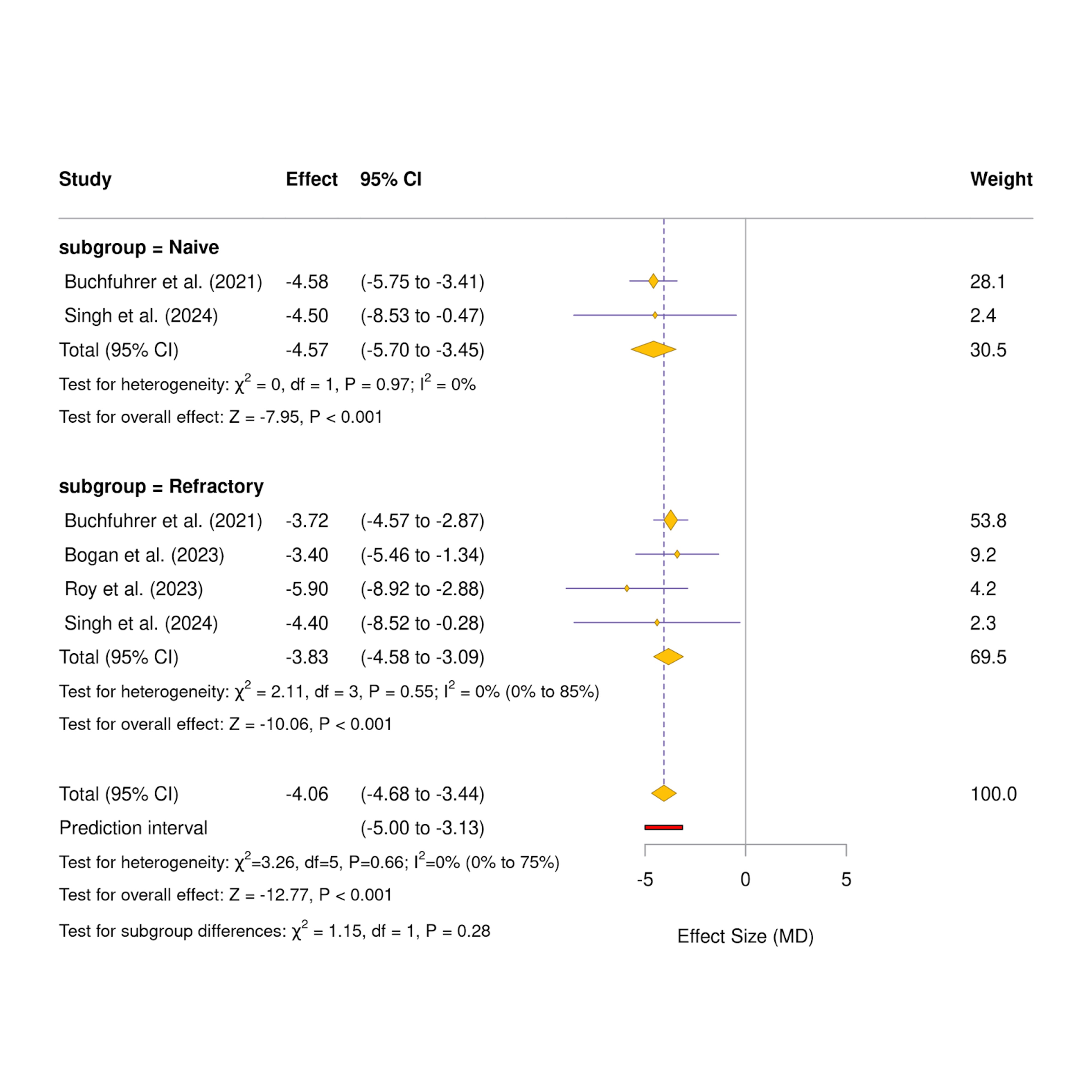
Figure 1. Pooled MD of IRLS.
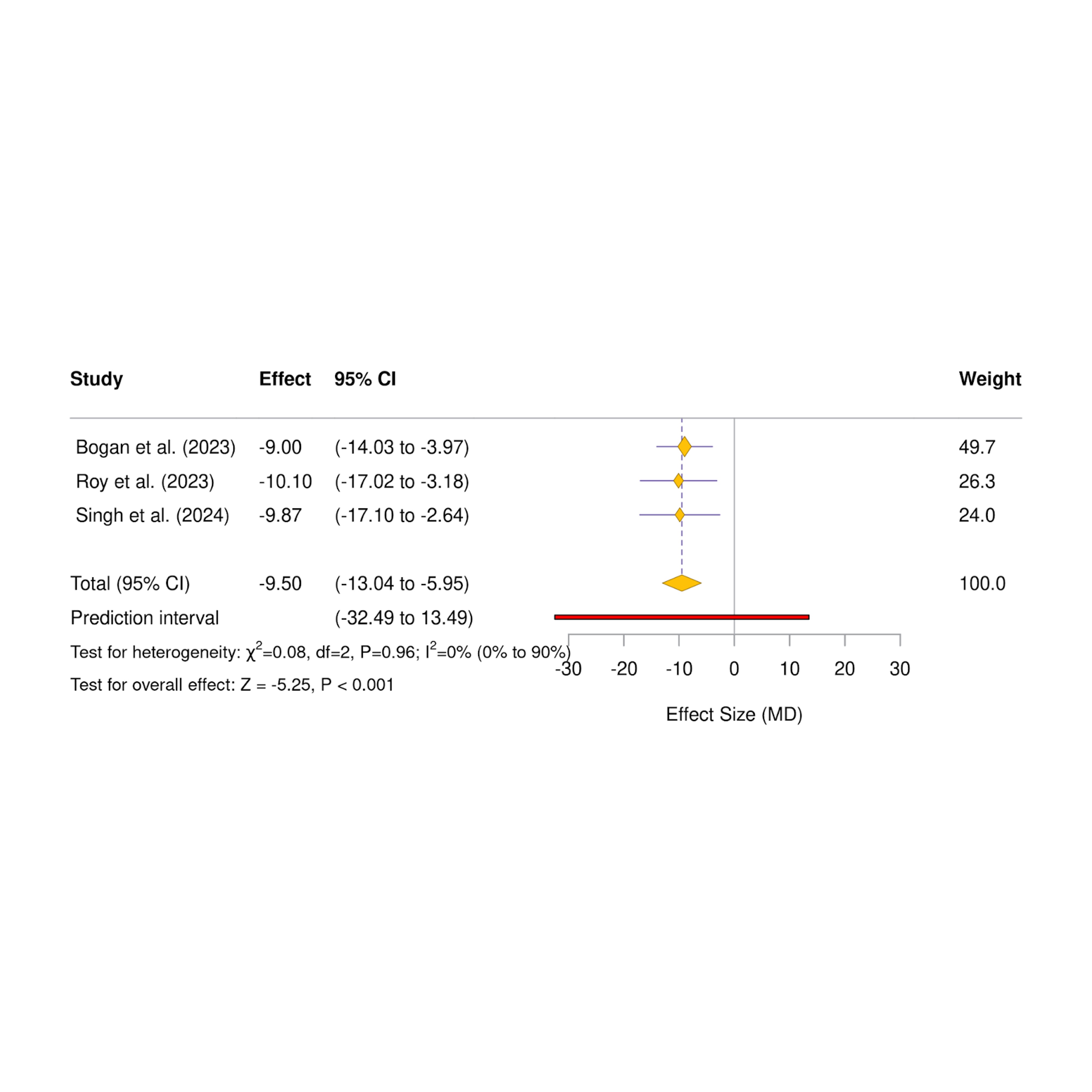
Figure 2. Pooled MD of MOS-I.
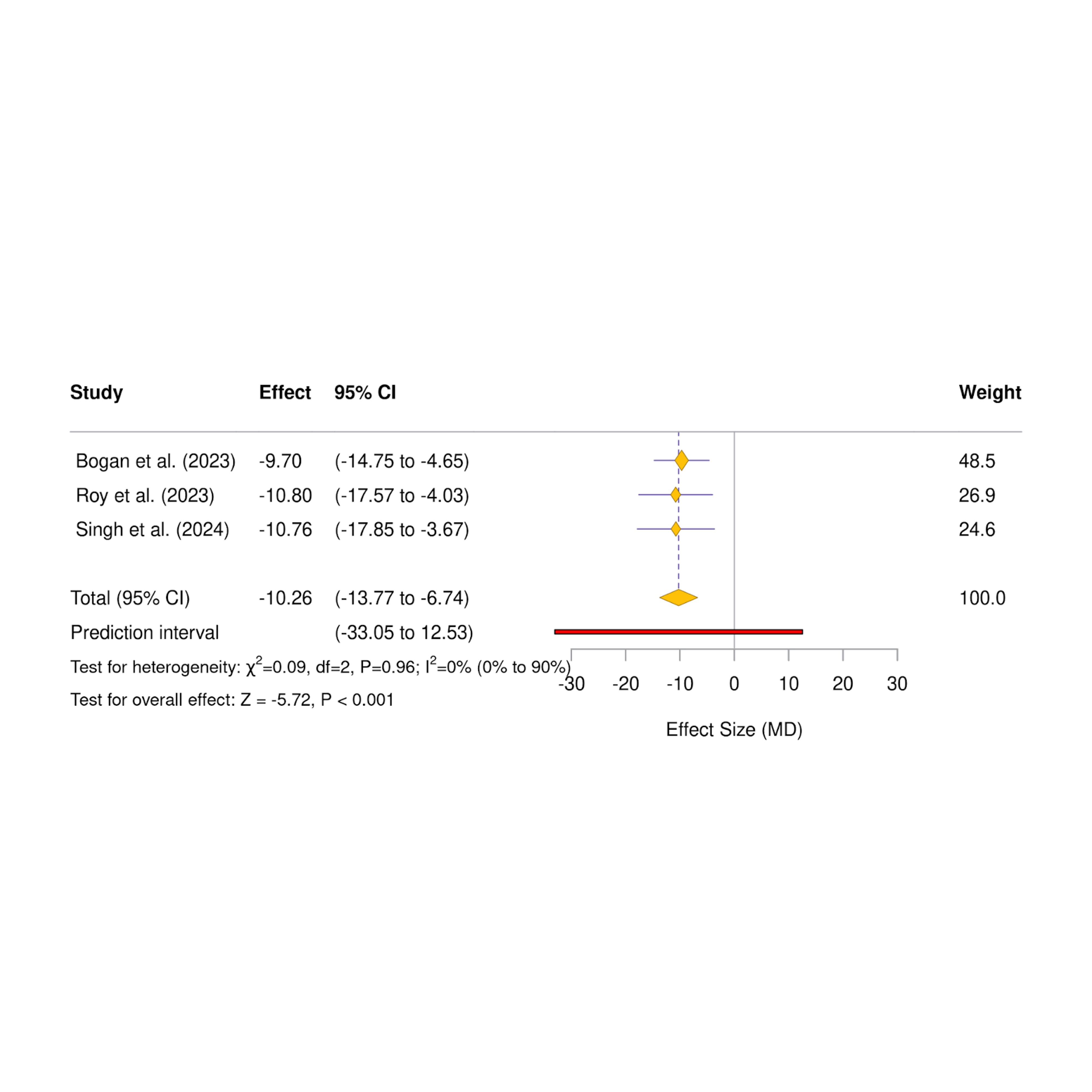
Figure 3. Pooled MD of MOS-II.
To cite this abstract in AMA style:
J. Pitton Rissardo, J. Patino, A. Fornari Caprara, A. Mcgarry, I. Walker. A Meta-analysis of Tonic Motor Activation (TOMAC) Therapy for Restless Legs Syndrome [abstract]. Mov Disord. 2026; 41 (suppl 1). https://www.mdsabstracts.org/abstract/a-meta-analysis-of-tonic-motor-activation-tomac-therapy-for-restless-legs-syndrome/. Accessed October 1, 2026.« Back to 2026 International Congress
MDS Abstracts - https://www.mdsabstracts.org/abstract/a-meta-analysis-of-tonic-motor-activation-tomac-therapy-for-restless-legs-syndrome/