
Category: Parkinson's Disease: Surgical Therapy
Objective: To longitudinally assess the risk of ischemic cerebrovascular events in patients undergoing DBS
Background: Longitudinal data on the potential impact of DBS on long-term ischemic cerebrovascular risk are lacking, and it remains unclear whether chronic stimulation may induce microcirculatory alterations or affect vascular compensatory mechanisms, potentially contributing to event development.
Method: A retrospective cohort was established including all patients with Parkinson’s disease who were referred to and followed at the Movement Disorders Clinic for Advanced Therapies at the University Hospital of Ferrara between 2000 and 2025. DBS implantation was considered as the exposure, and the primary outcome was the occurrence of ischemic cerebrovascular events occurring at least one year after DBS implantation.
Results: Of the 194 patients included in the cohort, 128 underwent DBS implantation, while 66 received no DBS or another advanced therapy (Levodopa Carbidopa Intestinal Gel) (Table 1). In the DBS group, 5 ischemic events occurred (IR 4.85 per 1,000 person-years) compared with 2 events in the non-DBS/LCIG group (IR 4.13 per 1,000 person-years), yielding an incidence rate ratio of 1.18 (95% CI 0.23–6.06) and a risk ratio of 1.29 (95% CI 0.26–6.45). No significant difference was observed in the propensity score–matched cohort adjusted for age, sex, disease severity, and baseline 5-year cardiovascular risk estimated using the QStroke Risk Calculator (Fisher’s exact test, p = 0.620) (Table 2, Figure 1). Baseline 5- and 10-year cardiovascular risk were independent predictors of ischemic events (Table 3).
Conclusion: DBS does not appear to be associated with an increased postoperative risk of ischemic cerebrovascular events. Events occurring in this population seem to be primarily related to pre-existing long-term cardiovascular risk, independent of the device, highlighting the importance of primary prevention in this patient population.
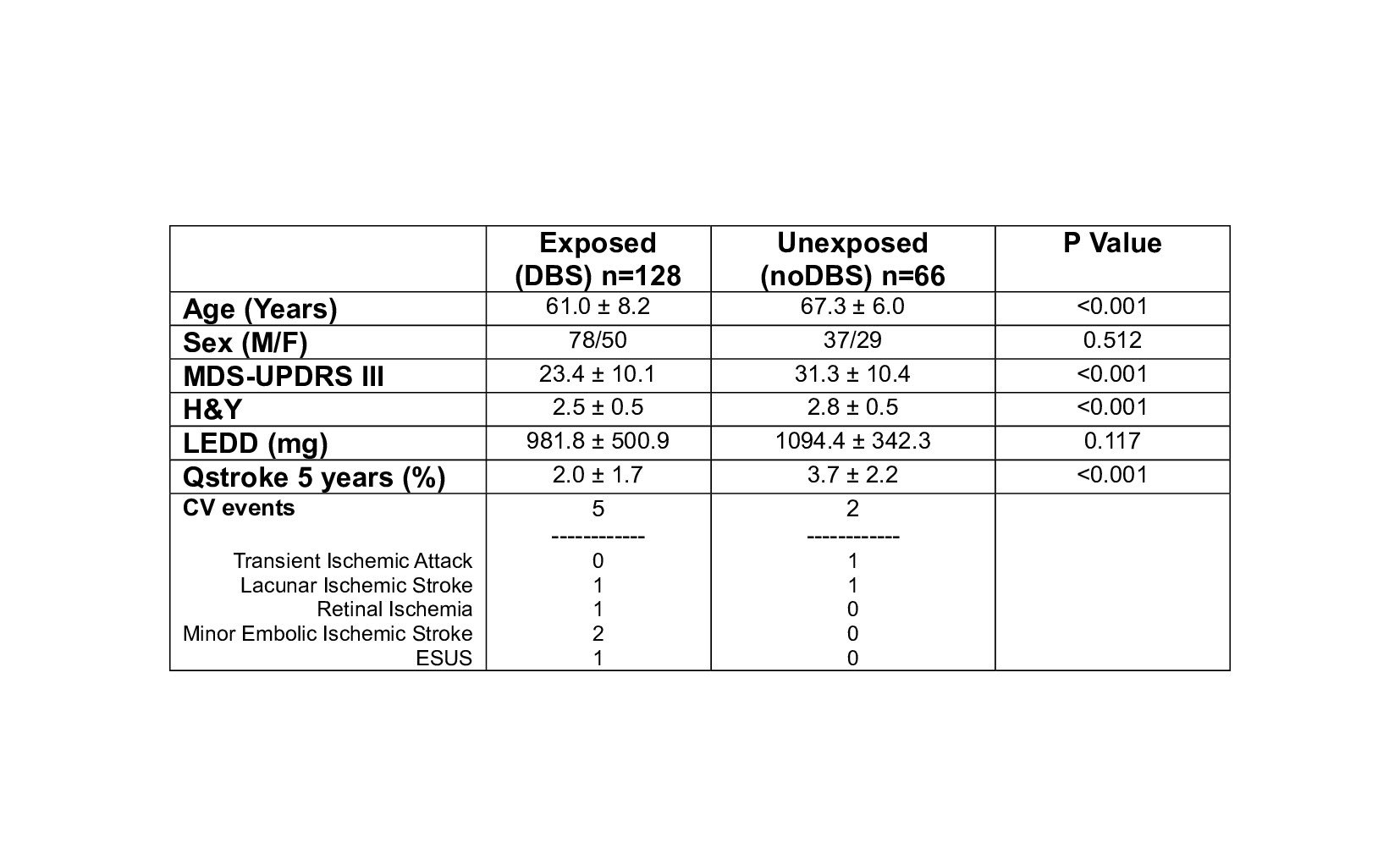
Cohort characteristics by exposure status.
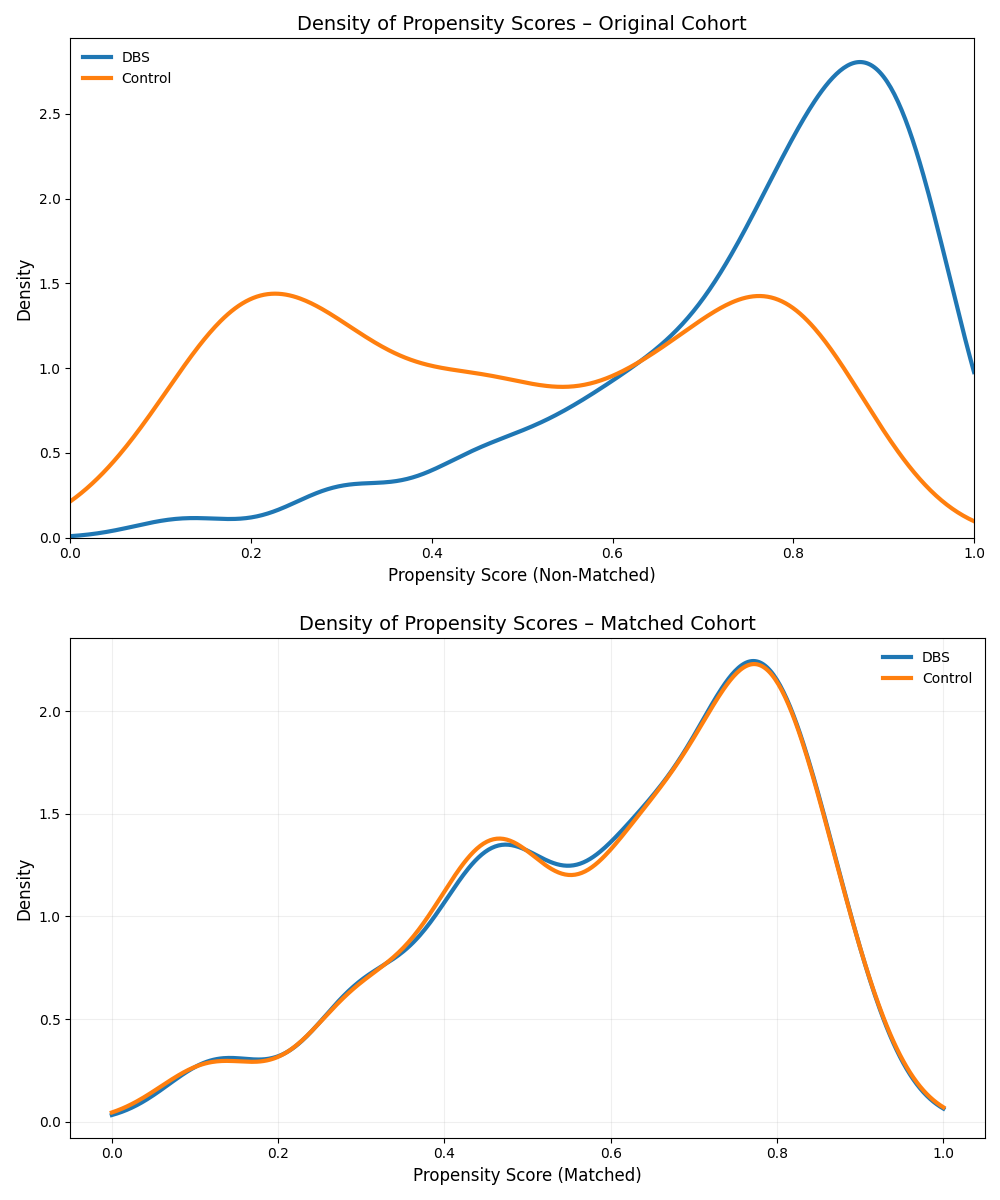
Cohort before and after propensity score matching
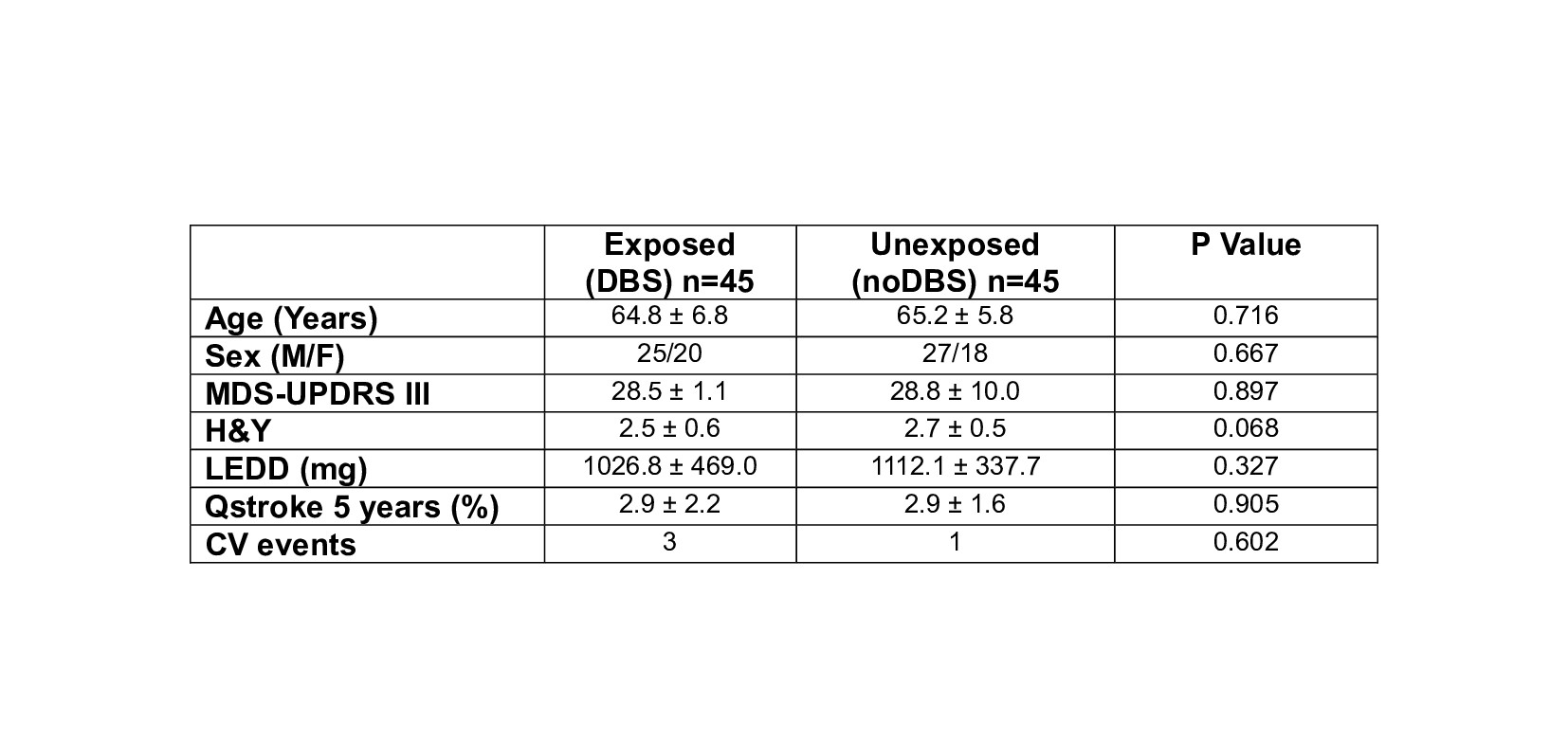
Cohort after 1:1 propensity score matching
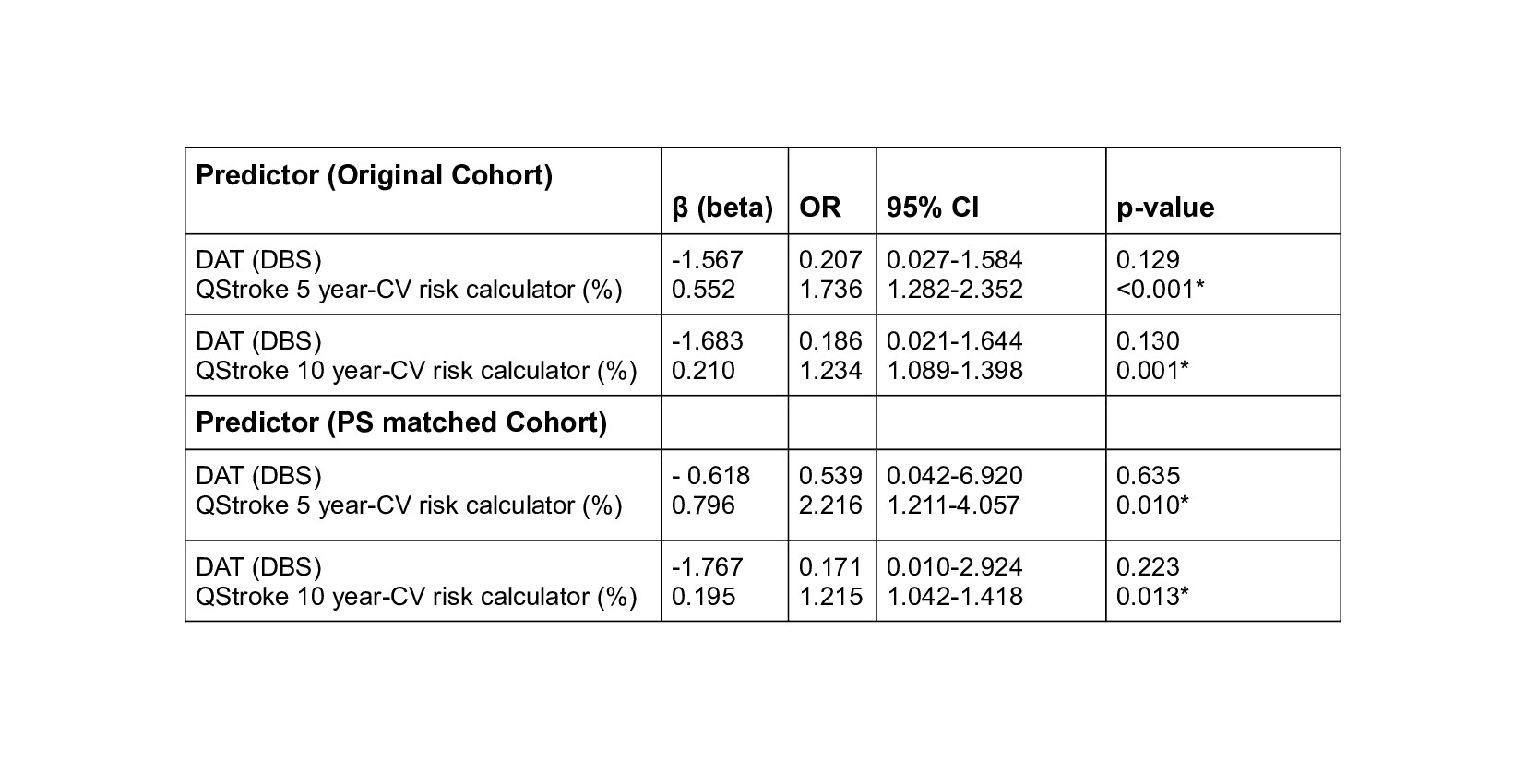
Logistic regression analysis for outcome
References: 1) Zarate-Calderon, C., Castillo-Rangel, C., Viveros-Martínez, I., Castro-Castro, E., García, L. I., & Marín, G. (2025). Risk of Cerebrovascular Events in Deep Brain Stimulation for Parkinson’s Disease Focused on STN and GPi: Systematic Review and Meta-Analysis. Brain sciences, 15(4), 413. https://doi.org/10.3390/brainsci15040413
2)Mubeen, A. M., Ardekani, B., Tagliati, M., Alterman, R., Dhawan, V., Eidelberg, D., & Sidtis, J. J. (2018). Global and multi-focal changes in cerebral blood flow during subthalamic nucleus stimulation in Parkinson’s disease. Journal of cerebral blood flow and metabolism : official journal of the International Society of Cerebral Blood Flow and Metabolism, 38(4),
3) Meyne, J., Domschikowski, M., Hensler, J., Helmers, A. K., Berg, D., Deuschl, G., & Paschen, S. (2023). Intravenous thrombolysis and mechanical recanalization for acute ischemic stroke in deep brain stimulation patients: a case series. Journal of neurology, 270(9), 4354–4359. https://doi.org/10.1007/s00415-023-11765-4
4) Chowdhury, T., Wilkinson, M., & Cappellani, R. B. (2017). Hemodynamic Perturbations in Deep Brain Stimulation Surgery: First Detailed Description. Frontiers in neuroscience, 11, 477. https://doi.org/10.3389/fnins.2017.00477
5)Downes, A. E., Pezeshkian, P., Behnke, E., Bordelon, Y., Tagliati, M., Mamelak, A., & Pouratian, N. (2016). Acute Ischemic Stroke During Deep Brain Stimulation Surgery of Globus Pallidus Internus: Report of 5 Cases. Operative neurosurgery (Hagerstown, Md.), 12(4), 383–390. https://doi.org/10.1227/NEU.0000000000001359
To cite this abstract in AMA style:
P. Antenucci, M. Paciaroni, A. Gozzi, A. Mechelli, M. Pugliatti, D. Gragnaniello, M. Sensi. Risk of Ischemic Cerebrovascular Events in Patients with Deep Brain Stimulation for Parkinson’s Disease: A Cohort Study [abstract]. Mov Disord. 2026; 41 (suppl 1). https://www.mdsabstracts.org/abstract/risk-of-ischemic-cerebrovascular-events-in-patients-with-deep-brain-stimulation-for-parkinsons-disease-a-cohort-study/. Accessed October 1, 2026.« Back to 2026 International Congress
MDS Abstracts - https://www.mdsabstracts.org/abstract/risk-of-ischemic-cerebrovascular-events-in-patients-with-deep-brain-stimulation-for-parkinsons-disease-a-cohort-study/