
Objective: To determine whether plasma exosomal cytokines can serve as stable biomarkers of disease progression in Parkinson’s disease (PD) and to evaluate their utility in predicting short-term motor deterioration using a longitudinal machine learning framework.
Background: Chronic inflammation has been implicated in the pathogenesis and progression of PD, yet circulating cytokines are often biologically unstable and therefore difficult to use as reliable biomarkers. Exosomes are extracellular vesicles that protect molecular cargo from degradation and may provide a more stable representation of inflammatory activity. However, the longitudinal behavior of plasma exosomal cytokines and their relationship with clinical progression in PD remain insufficiently characterized.
Method: We conducted a longitudinal cohort study including 62 patients with early- to mid-stage PD and 25 healthy controls. Participants underwent up to five annual evaluations.. Plasma exosomes were isolated and 15 inflammatory cytokines were quantified using multiplex assays. Longitudinal associations between cytokines and clinical outcomes were analyzed using generalized estimating equation (GEE) models. A supervised machine learning framework was implemented to predict year-to-year motor progression (≥3-point increase in UPDRS Part III) using cytokine and clinical features.
Results: Across longitudinal visits, increases in multiple exosomal cytokines paralleled worsening clinical severity (Fig 1). Within-patient elevations of IL-1α, IL-1β, IL-2, IL-5, IL-15, IL-17, and TNF-α were associated with motor deterioration, whereas IL-4 showed the strongest association with cognitive decline. Machine learning models integrating cytokine and clinical variables achieved strong predictive performance for 1-year motor progression (Fig 2). The support vector machine model achieved an AUC of 0.812 in internal validation and 0.722 in temporal external validation. Important predictors included IL-5, IL-1 family cytokines, IL-13, IL-17, baseline UPDRS III scores, and baseline MoCA scores (Fig 3).
Conclusion: Plasma exosomal cytokines reflect biologically relevant inflammatory activity associated with PD progression. Integrating exosomal cytokine profiles with clinical assessments enables effective prediction of short-term motor decline and may support individualized risk stratification and the development of anti-inflammatory therapeutic strategies in PD.
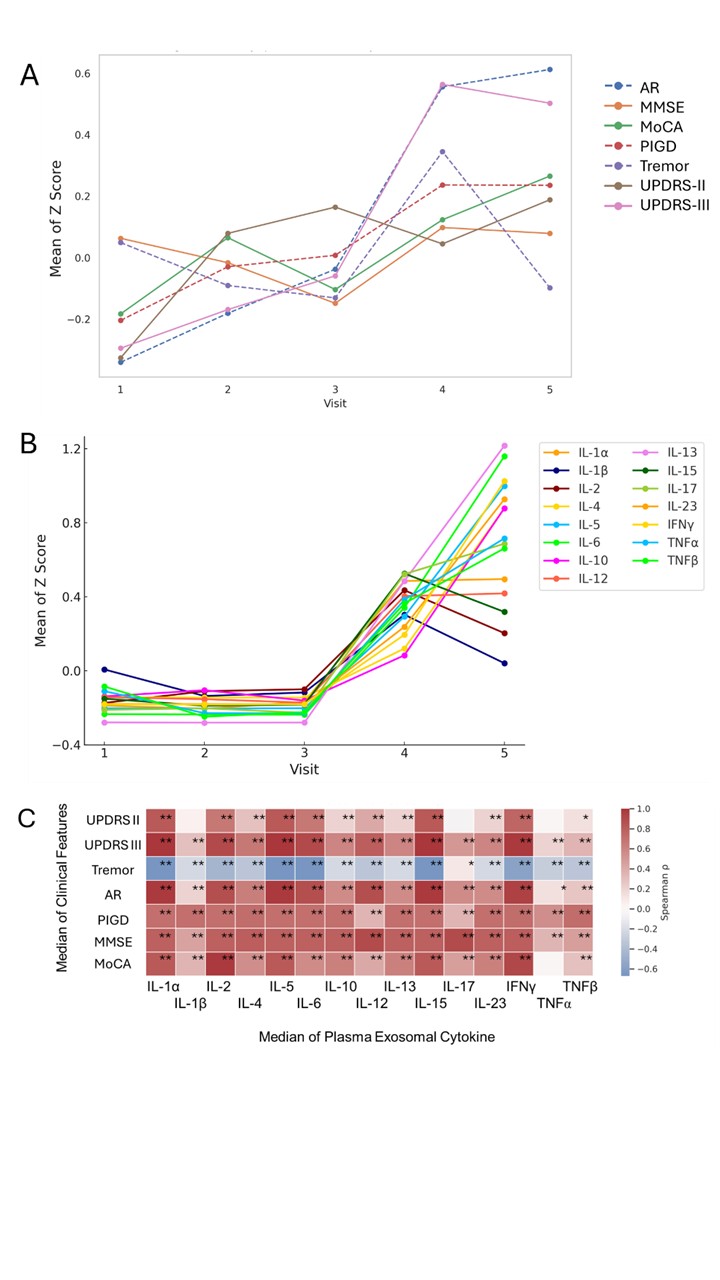
Changes in clinical and plasma exosomal cytokine
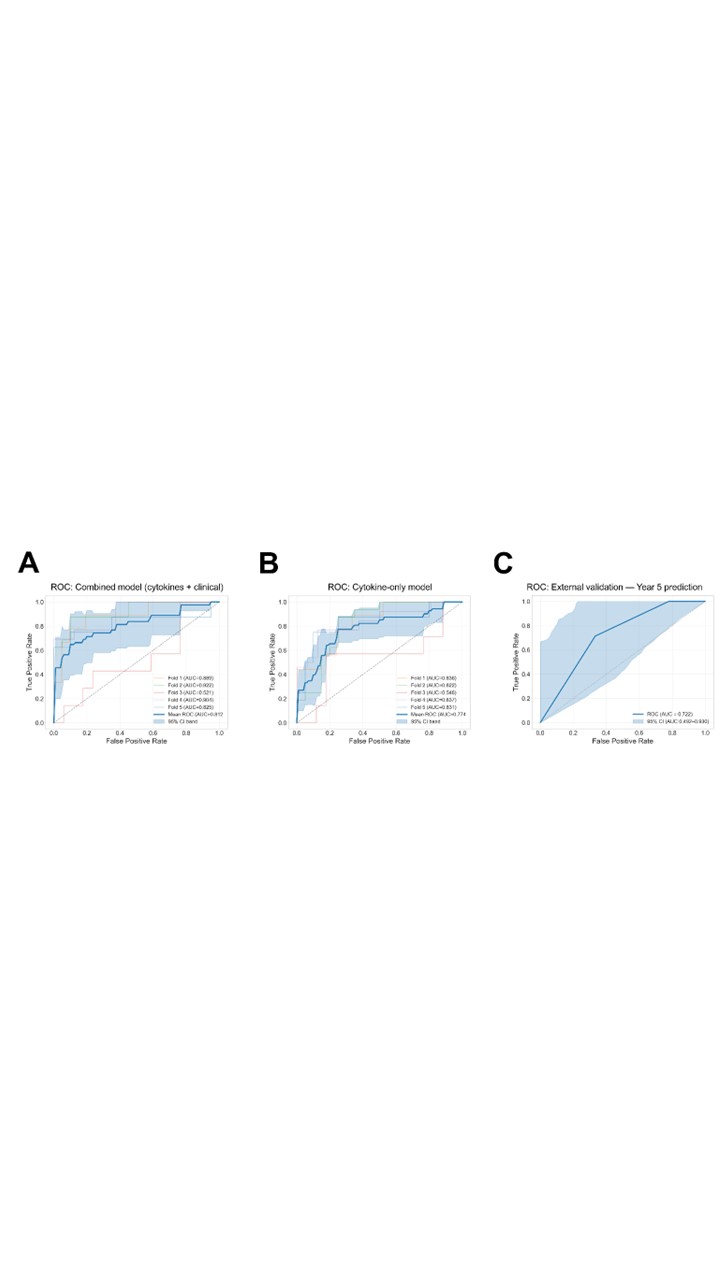
ROC curves for SVM based prediction
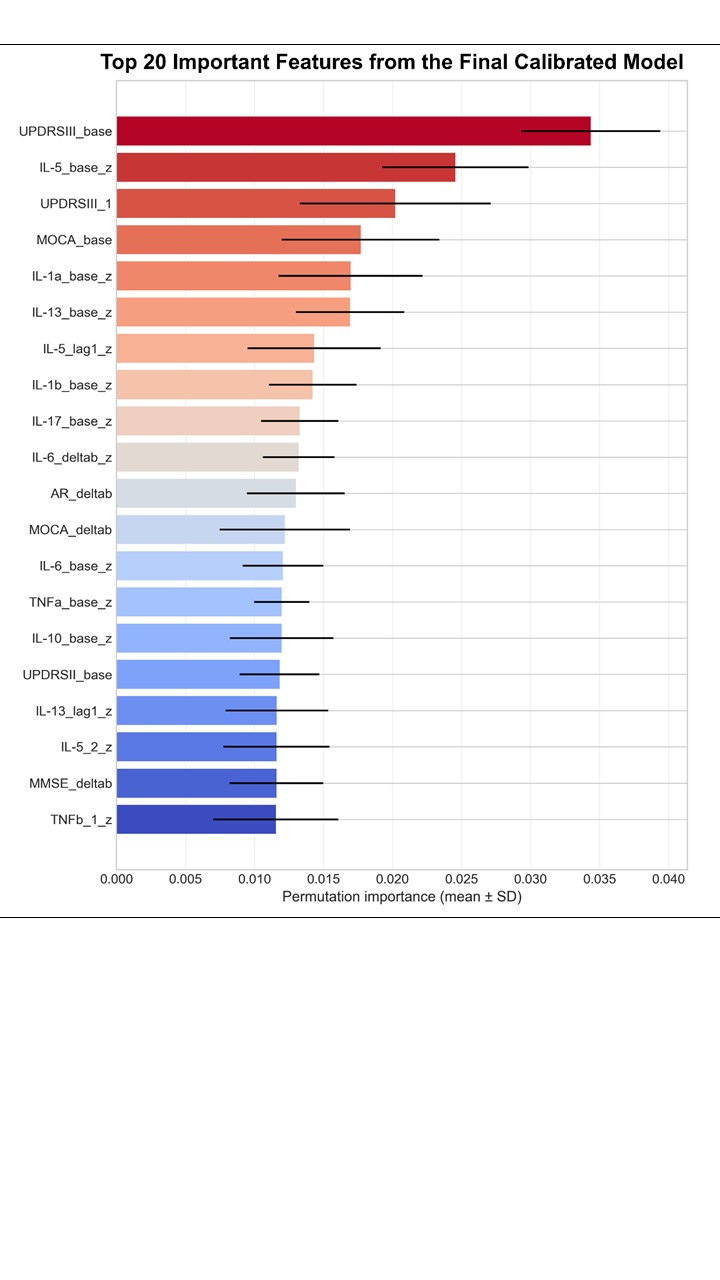
Factors for predicting motor progression.
To cite this abstract in AMA style:
CT. Hong, CC. Chung. Plasma Exosomal Cytokines as Longitudinal Biomarkers and Predictors of Parkinson’s Disease Progression [abstract]. Mov Disord. 2026; 41 (suppl 1). https://www.mdsabstracts.org/abstract/plasma-exosomal-cytokines-as-longitudinal-biomarkers-and-predictors-of-parkinsons-disease-progression/. Accessed October 1, 2026.« Back to 2026 International Congress
MDS Abstracts - https://www.mdsabstracts.org/abstract/plasma-exosomal-cytokines-as-longitudinal-biomarkers-and-predictors-of-parkinsons-disease-progression/