
Category: Parkinsonism (Other)
Objective: To present a patient with parkinsonism resulting from an ischemic lesion in the midbrain that exhibited a favorable response to dopaminergic therapy, with anatomical considerations discussed.
Background: Vascular parkinsonism is typically caused by ischemic lesions in the striatum or periventricular white matter and usually shows poor response to dopaminergic agents. However, parkinsonism due to ischemic lesions in the midbrain is rare.
Method: A case report.
Results: A 70-year-old woman presented with a one-year history of a right-hand tremor, which worsened with anxiety. She also developed right leg tremor and mild slowness in right limb movements, accompanied by mild rigidity and slight bradykinesia. Non-motor features such as REM sleep behavior disorder, hyposmia, and depression were absent, except for mild constipation. FP-CIT PET revealed decreased DAT binding in the left striatum but not the right. (Figure 1) Brain MRI showed an old ischemic lesion in the left midbrain without basal ganglia involvement. (Figure 1 and Figure 2) Treatment with rasagiline and amantadine improved her mild slowness. Over 18 months of follow-up, no symptom progression was observed.
Conclusion: Parkinson’s disease is characterized by degeneration of dopaminergic neurons in the substantia nigra with preserved postsynaptic systems, leading to good response to dopaminergic agents. In contrast, most cases of vascular parkinsonism are due to striatal or white matter involvement, resulting in poor response. This case uniquely demonstrates that a midbrain ischemic lesion affecting presynaptic dopaminergic neurons can cause parkinsonism that is responsive to dopaminergic therapy, consistent with the anatomical basis of presynaptic dopamine depletion. (This abstract was presented at the International Conference of Korean Movement Disorder Society on 31 October 2025.)
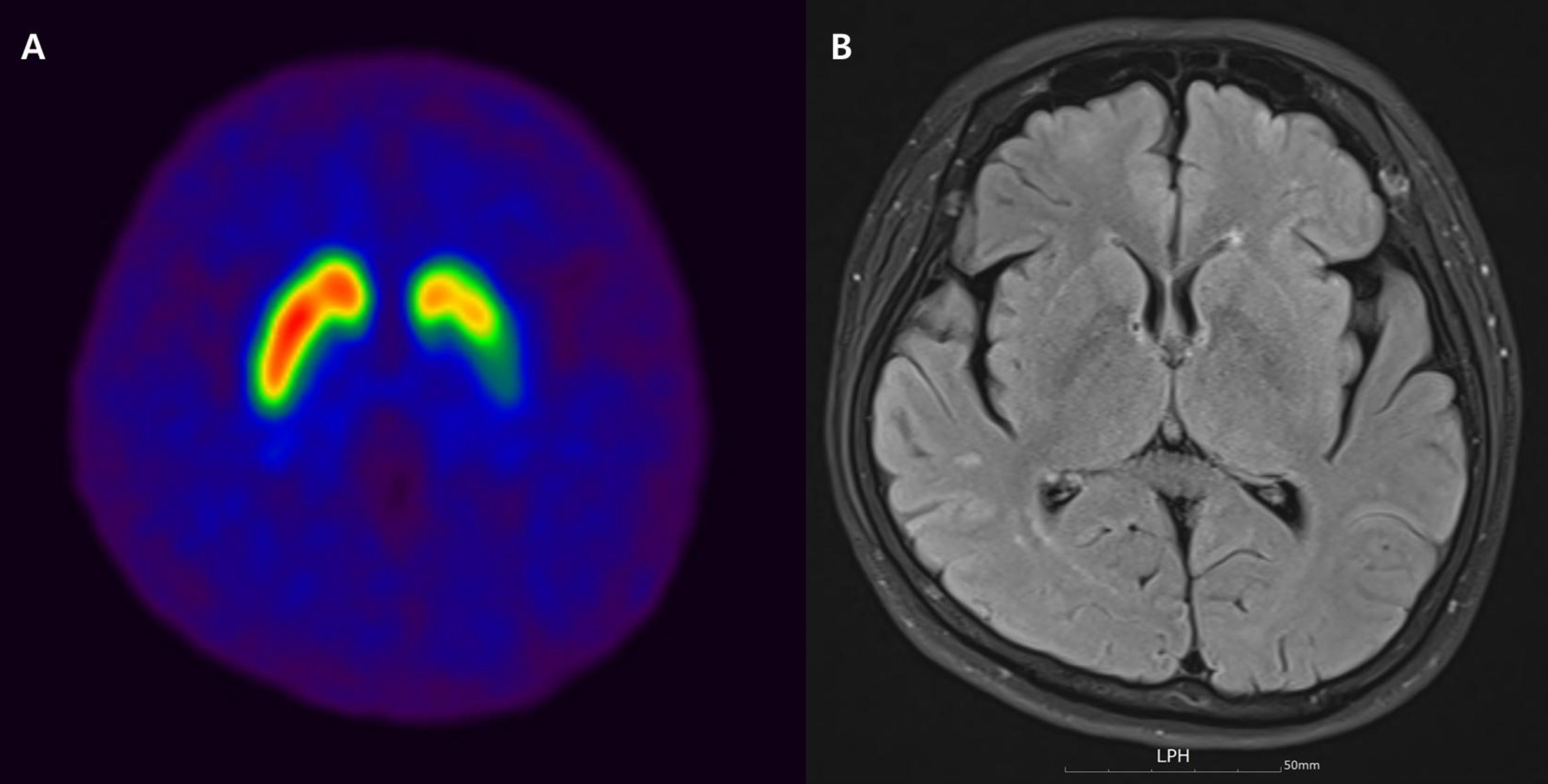
Figure 1. FP-CIT PET and T2 FLAIR images
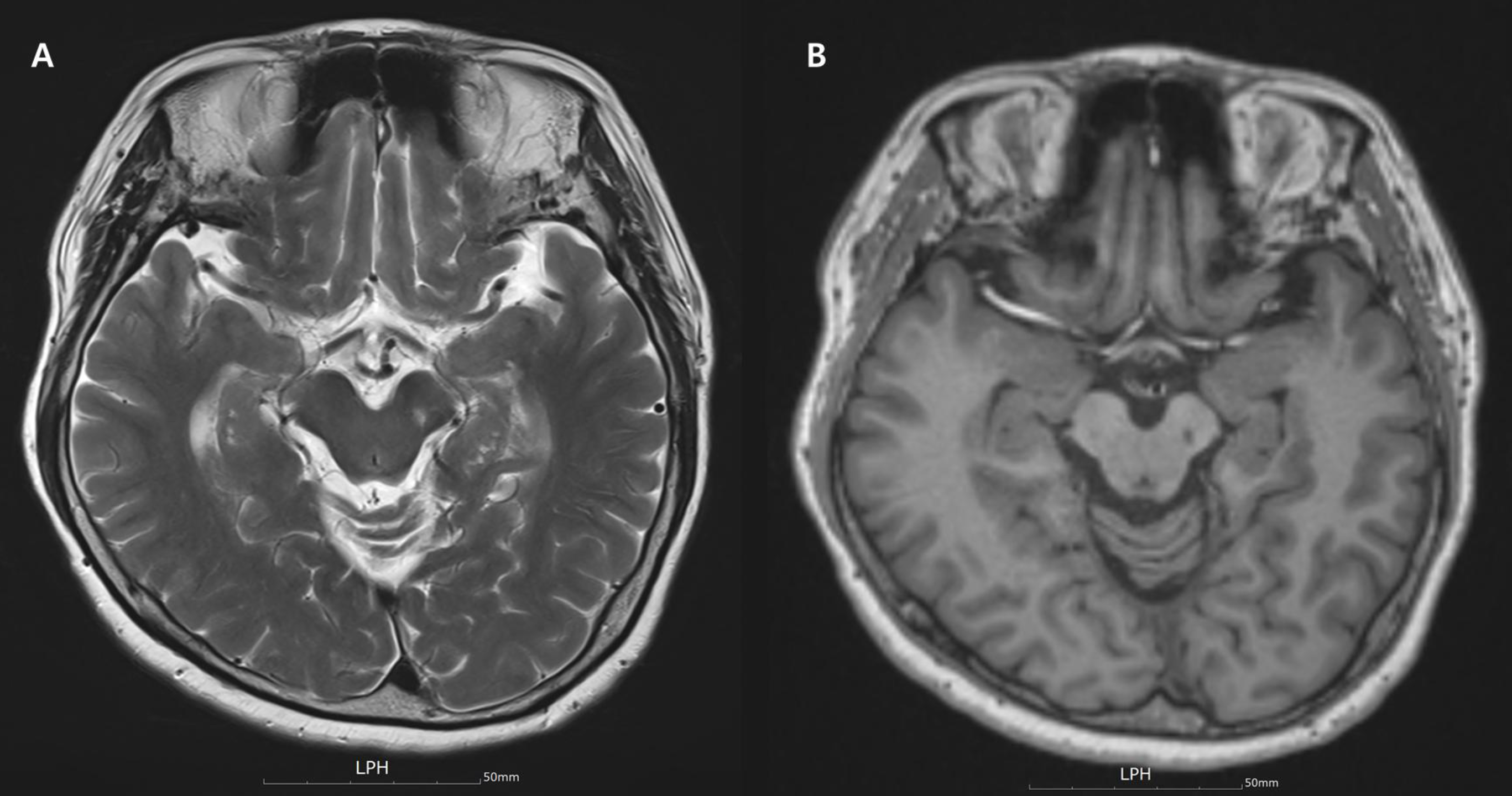
Figure 2. T2- andT1-weighted brain MRIs
To cite this abstract in AMA style:
WW. Lee. Atypical vascular parkinsonism from a midbrain lesion with excellent dopaminergic response [abstract]. Mov Disord. 2026; 41 (suppl 1). https://www.mdsabstracts.org/abstract/atypical-vascular-parkinsonism-from-a-midbrain-lesion-with-excellent-dopaminergic-response/. Accessed October 1, 2026.« Back to 2026 International Congress
MDS Abstracts - https://www.mdsabstracts.org/abstract/atypical-vascular-parkinsonism-from-a-midbrain-lesion-with-excellent-dopaminergic-response/