
Category: Parkinson's disease: Neuroimaging
Objective: This study aimed to evaluate the diagnostic efficacy of DAT-FDG united PET imaging in differentiating PD from other parkinsonian disorders in real-world clinical settings and to determine the optimal sequential application of DAT-PET and FDG-PET in the diagnostic workup of PD.
Background: Parkinsonism is characterized by bradykinesia, rigidity, and resting tremor. Among the various disorders presenting with parkinsonism, Parkinson’s disease (PD) is the most prevalent recognized. Positron emission tomography (PET) imaging provides a crucial tool for the in vivo visualization of pathological and functional alterations in brains. The dopaminergic (DAT) PET imaging is currently a key diagnostic modality for PD, limited by its low specificity. The 18F-fluorodeoxyglucose (FDG) offer the potential for further differential diagnosis.
Method: 4,468 patients presenting with parkinsonism were retrospectively recruited from movement disorder clinic at Huashan Hospital, Fudan University, between January 2010 and August 2024. Following an initial pre-PET diagnosis at the outpatient clinic, all patients underwent DAT and FDG PET examination. A comprehensive final diagnosis was established after visual interpretation of the dual-tracer PET images and complete clinical assessment. Longitudinal follow-up (≥1 year) was available for 61.7% (n=2,755) of the patients.
Results:
The cohort comprised 56.4% males (n=2,520) and 43.6% females (n=1,948), with a mean age of 61.0 years (±12.2). The DAT-FDG PET imaging demonstrated high diagnostic accuracy for PD, yielding a sensitivity of 95.1% and a specificity of 96.6%. Integration of dual-tracer PET findings into the standard diagnostic workup led to diagnostic revisions in 30% of patients. Decision-tree analysis indicated that performing DAT-PET followed by FDG-PET represented the most clinically efficient. A PD-like metabolic pattern significantly increased clinician-rated diagnostic confidence from 45% to 80% (p < 0.001) and resulted in more prescriptions of motor symptom medications.
Conclusion:
This large-scale real-world study highlights the substantial clinical utility of DAT-FDG united PET in enhancing diagnostic accuracy and optimizing therapeutic strategies for differentiating PD from other diseases, supporting its integration into routine clinical practice.
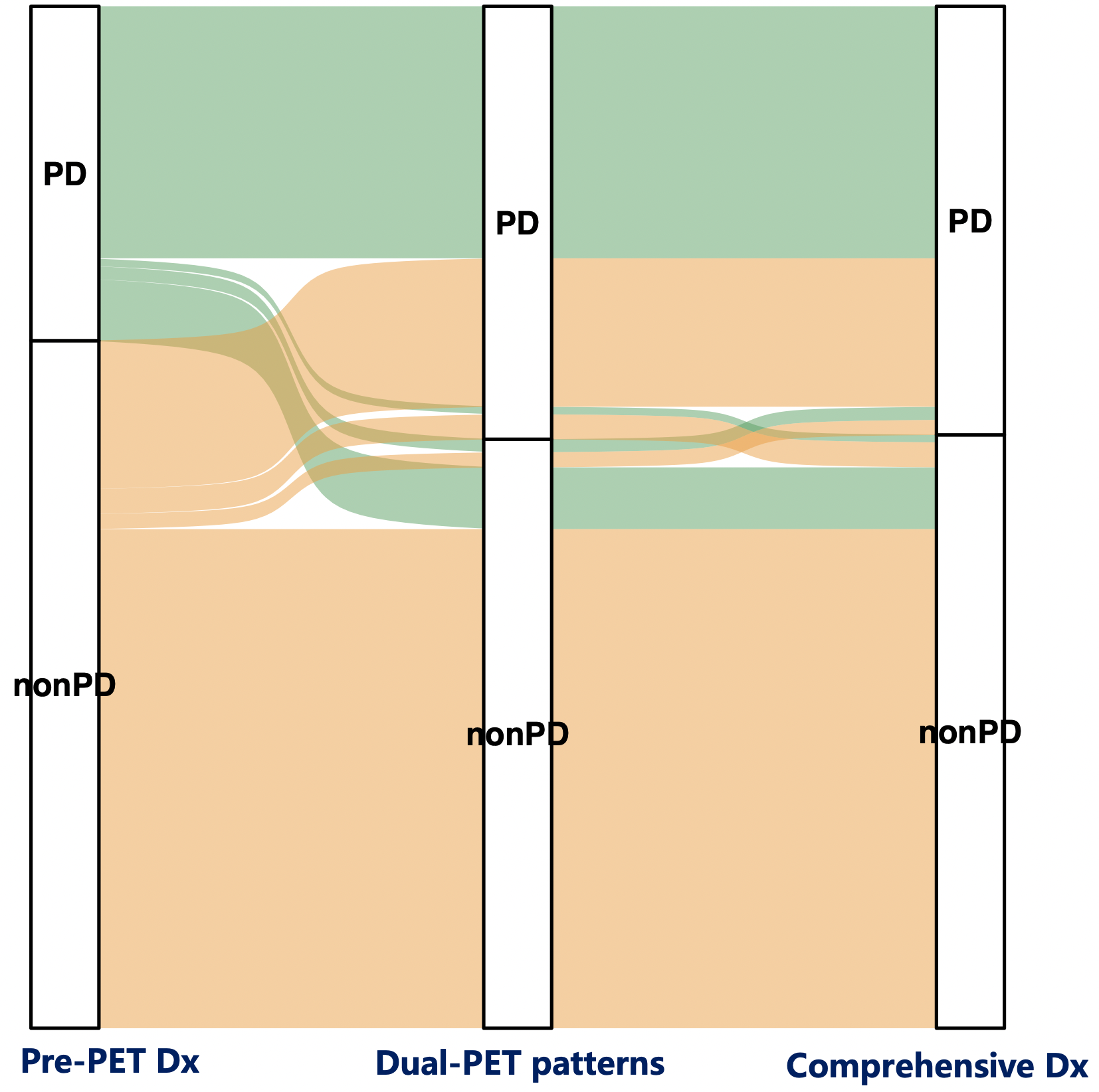
Figure 1. Diagnosis changes
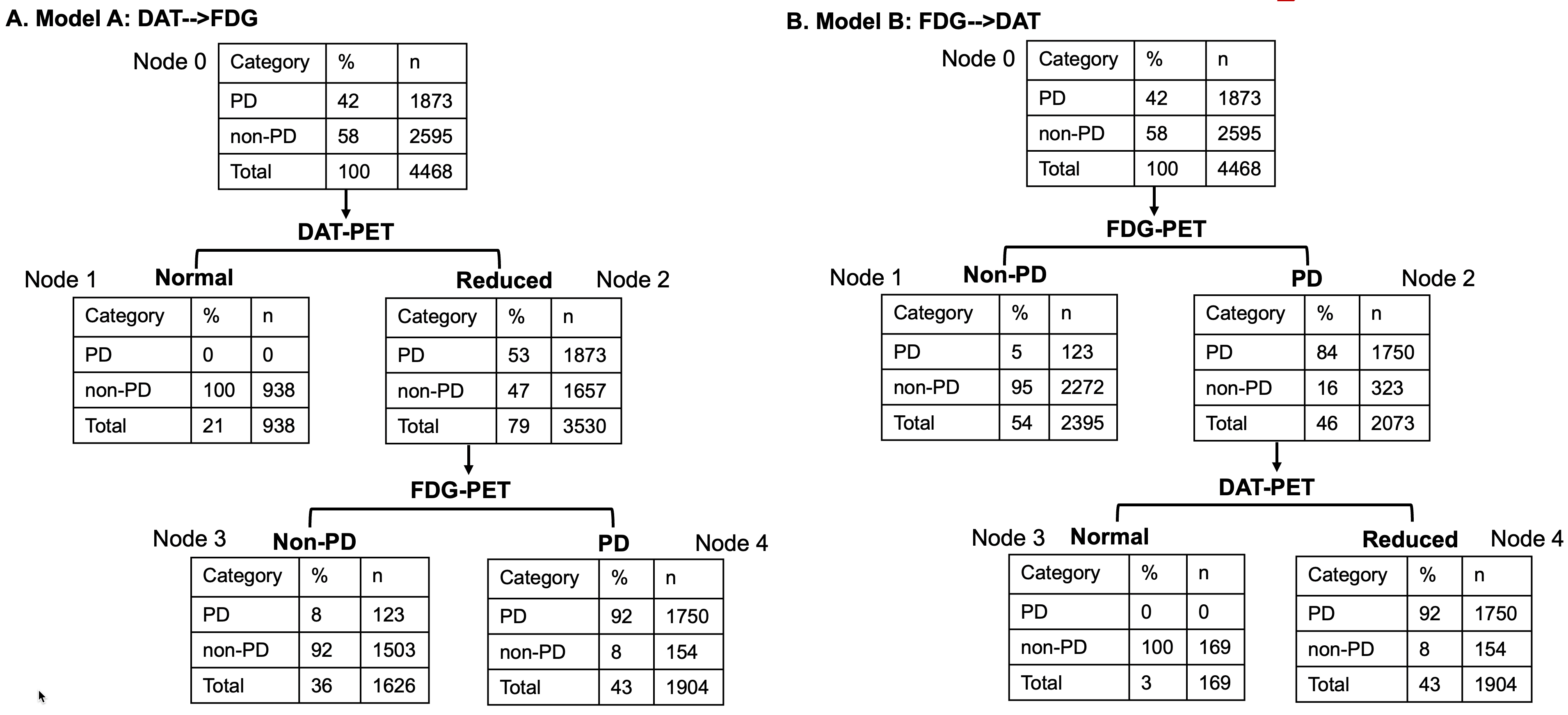
Figure 2. Decision-tree based analysis
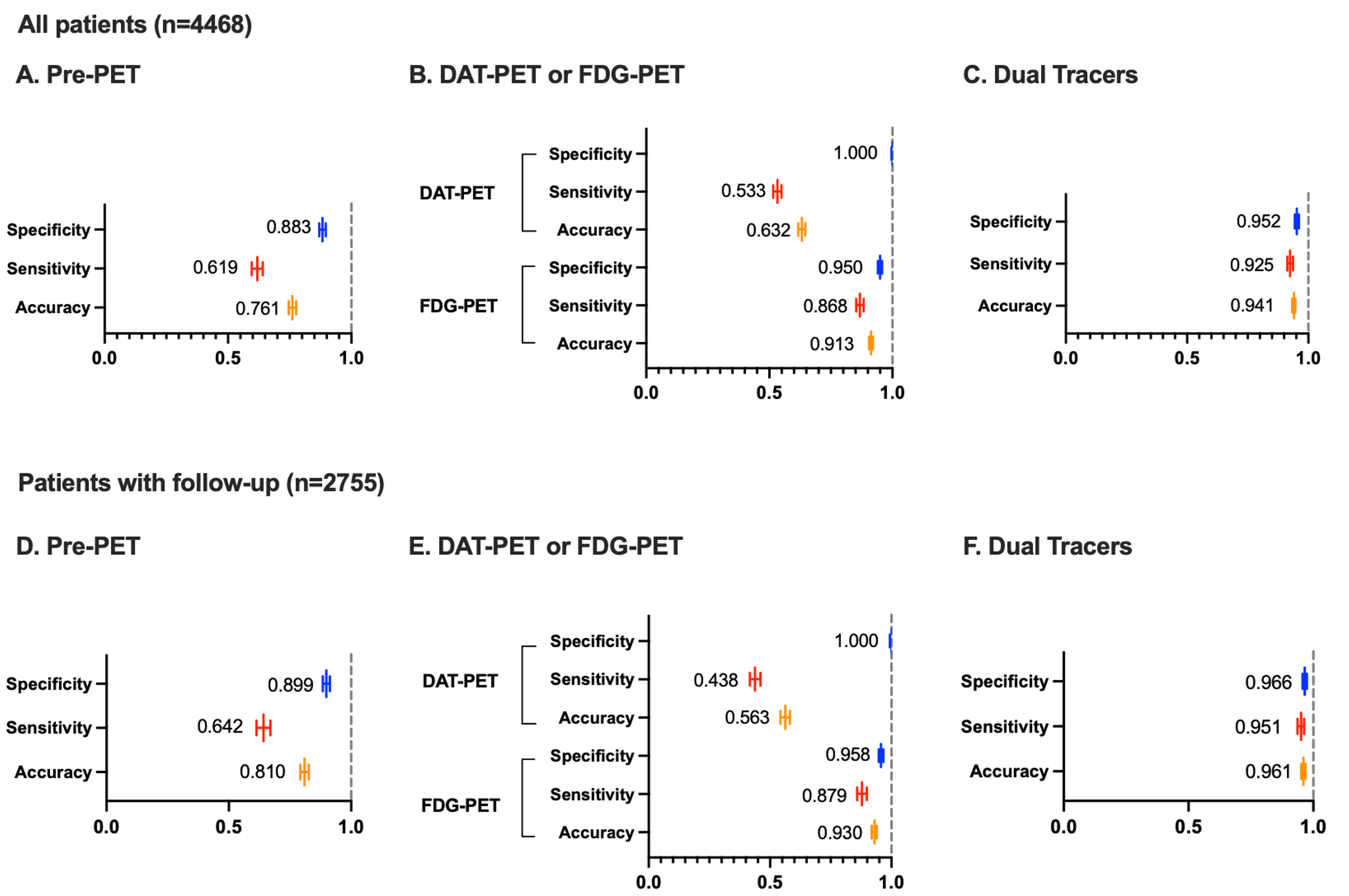
Figure 3. Diagnostic performance
To cite this abstract in AMA style:
XY. Li, JY. Lu, FT. Liu, CT. Zuo, JW. Wang. The Diagnostic Value of Dopaminergic-Glucose United PET Imaging in Parkinson’s disease [abstract]. Mov Disord. 2026; 41 (suppl 1). https://www.mdsabstracts.org/abstract/the-diagnostic-value-of-dopaminergic-glucose-united-pet-imaging-in-parkinsons-disease/. Accessed October 1, 2026.« Back to 2026 International Congress
MDS Abstracts - https://www.mdsabstracts.org/abstract/the-diagnostic-value-of-dopaminergic-glucose-united-pet-imaging-in-parkinsons-disease/