
Objective: To evaluate the contemporary clinical role of central nervous system (CNS) lesioning procedures for dystonia in the deep brain stimulation (DBS) era, when DBS is widely regarded as the first-line surgical therapy, and to analyze geographical and temporal publication trends and clinical outcomes.
Background: DBS is widely considered the first-line surgical therapy for medically refractory dystonia when available [1,2]. However, ablative CNS procedures continue to be performed worldwide and may reflect differences in access to DBS, healthcare resources, surgical expertise and more [1–4]. Emerging technologies such as MR-guided focused ultrasound (MRgFUS) are also being explored as incisionless lesioning alternatives [5–6]. The global role of these procedures in the DBS era remains incompletely characterized.
Method: Following PRISMA guidelines, we searched PubMed in November 2025 for studies reporting CNS lesioning procedures for dystonia, excluding DBS and peripheral surgical procedures. Sixty-nine eligible studies were identified, these included original clinical reports in humans without time restrictions, published in English, Spanish or Italian. Extracted data included clinical and geographical variables, surgical strategy, DBS context, outcomes and safety.
Results: Key study and cohort characteristics were extracted [table1]. Publication trends over time revealed marked geographical variability across decades, with a variation in recent years toward a predominance from Asia [figure 1].
Across all procedures, radiofrequency (RF) accounted for the majority of procedures and showed high reported rates of clinical improvement. MRgFUS demonstrated lower improvement rates, although the number of treated patients was substantially smaller [figure 2]. Complication rates were comparable across procedures [table 2].
When reported, the most frequently cited reasons for performing lesioning procedures instead of DBS were historical context and limited resources availability [figure 3].
Conclusion: CNS lesioning procedures for dystonia continue to be reported, with marked geographical differences in publication patterns. RF remains the most frequent technique and is associated with high rates of clinical improvement, while MRgFUS represents an emerging but still limited therapeutic strategy [3–6]. Ablative procedures may still play a role in selected clinical contexts when DBS is not feasible [1,4].
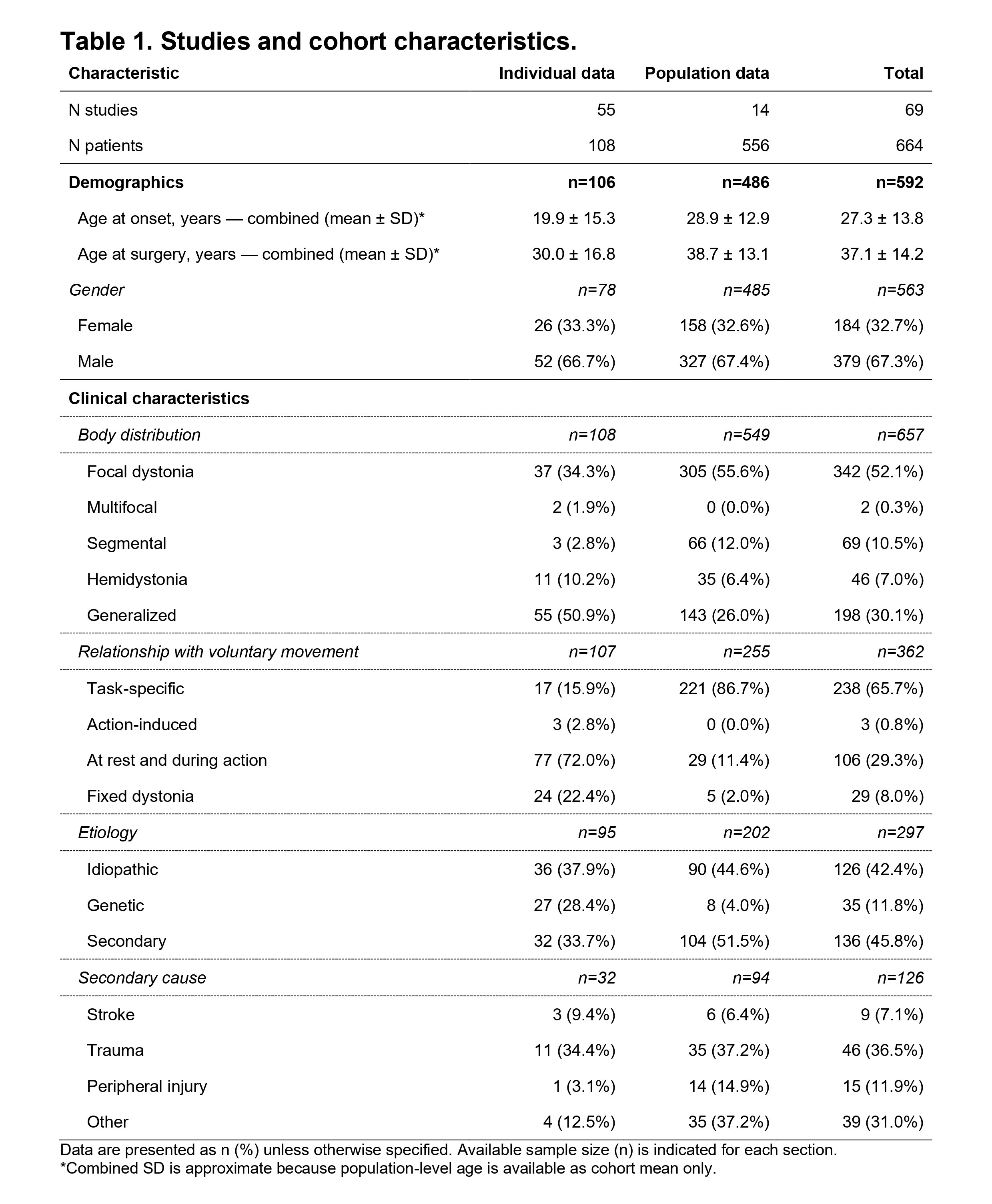
Table 1
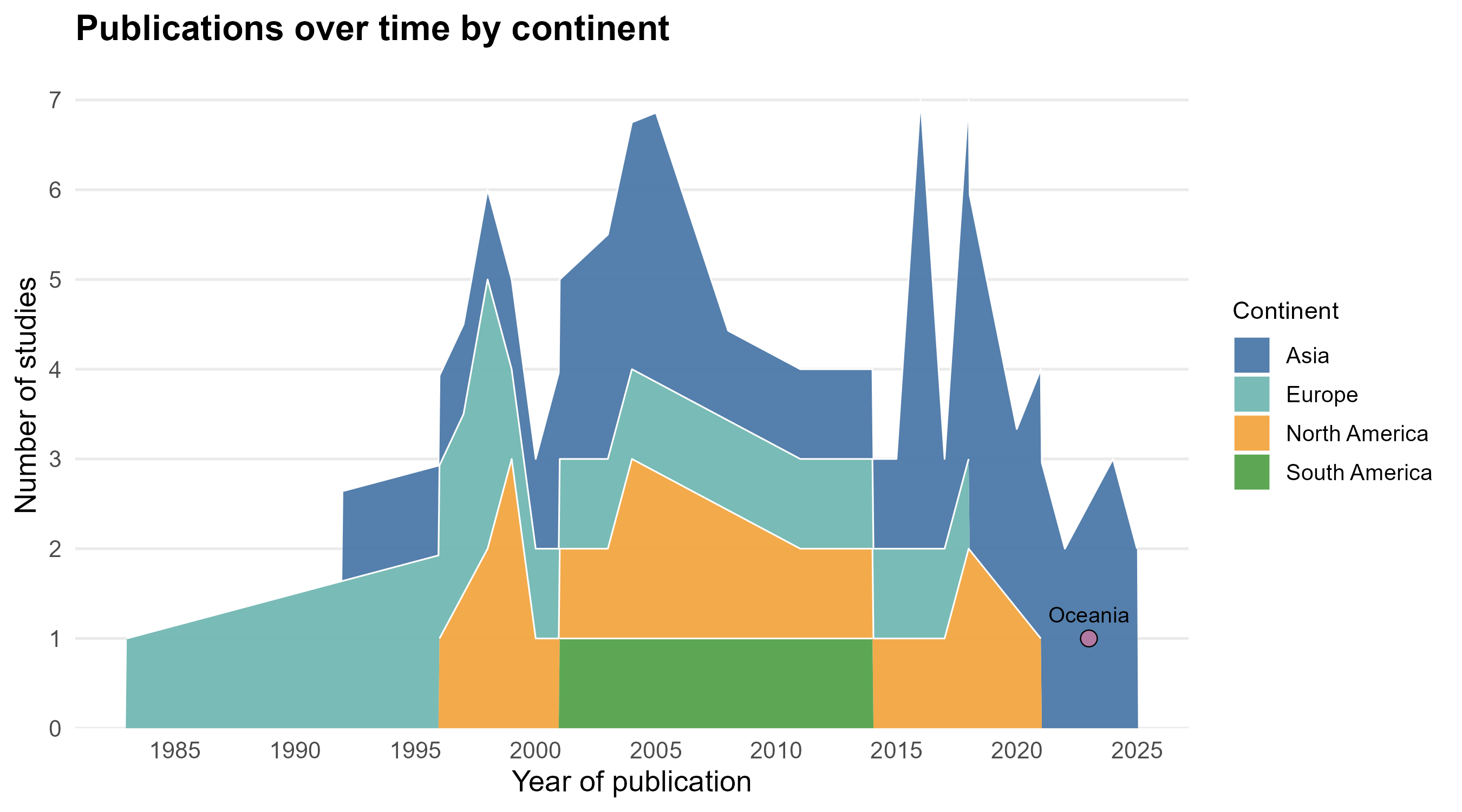
Figure 1
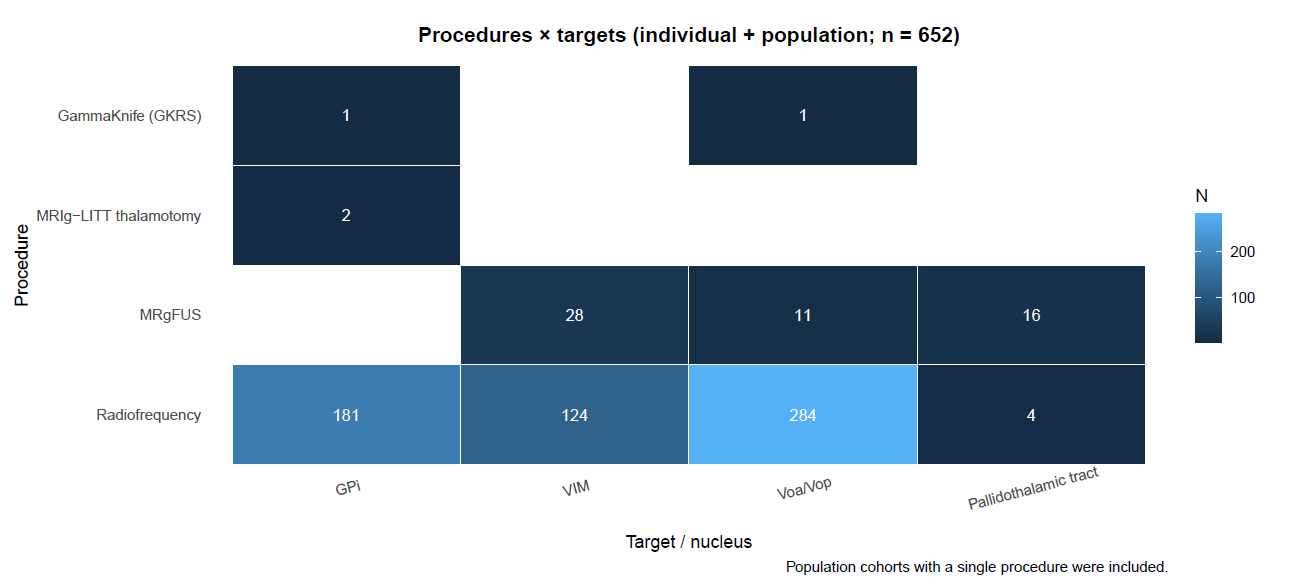
Figure 2
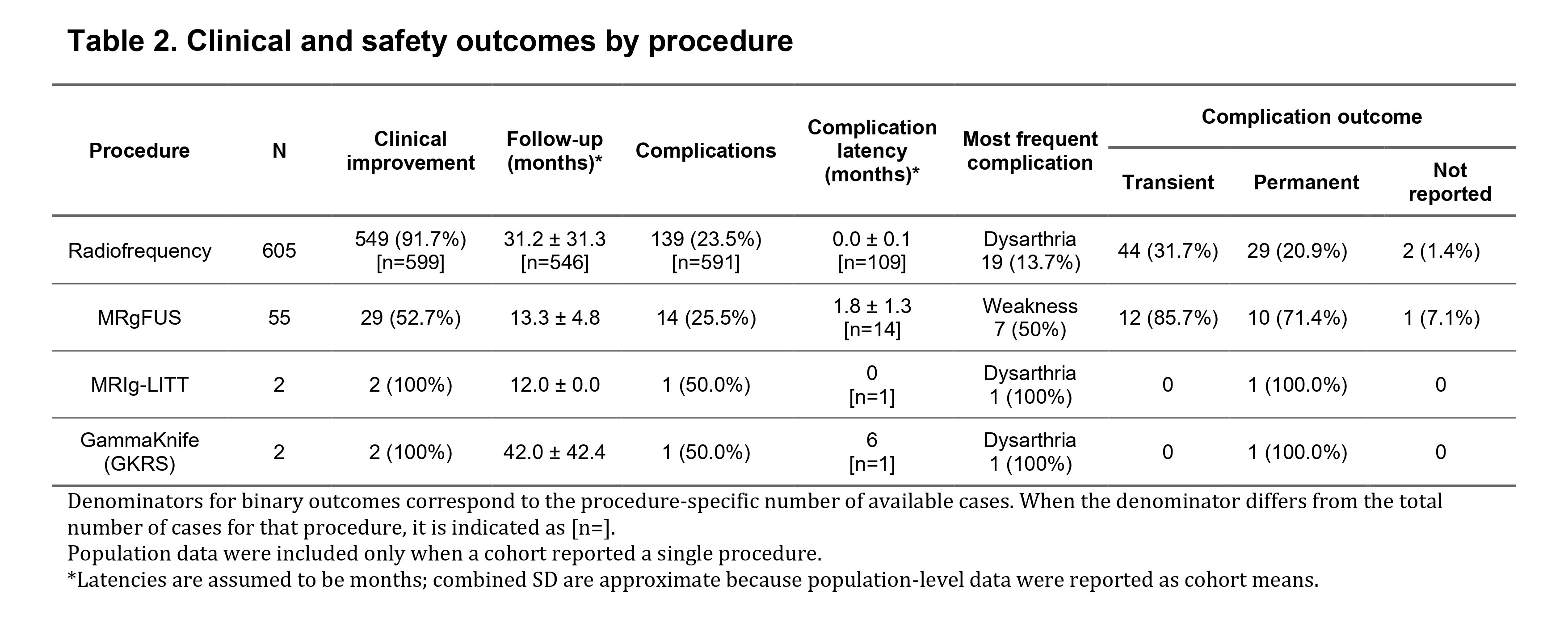
Table 2
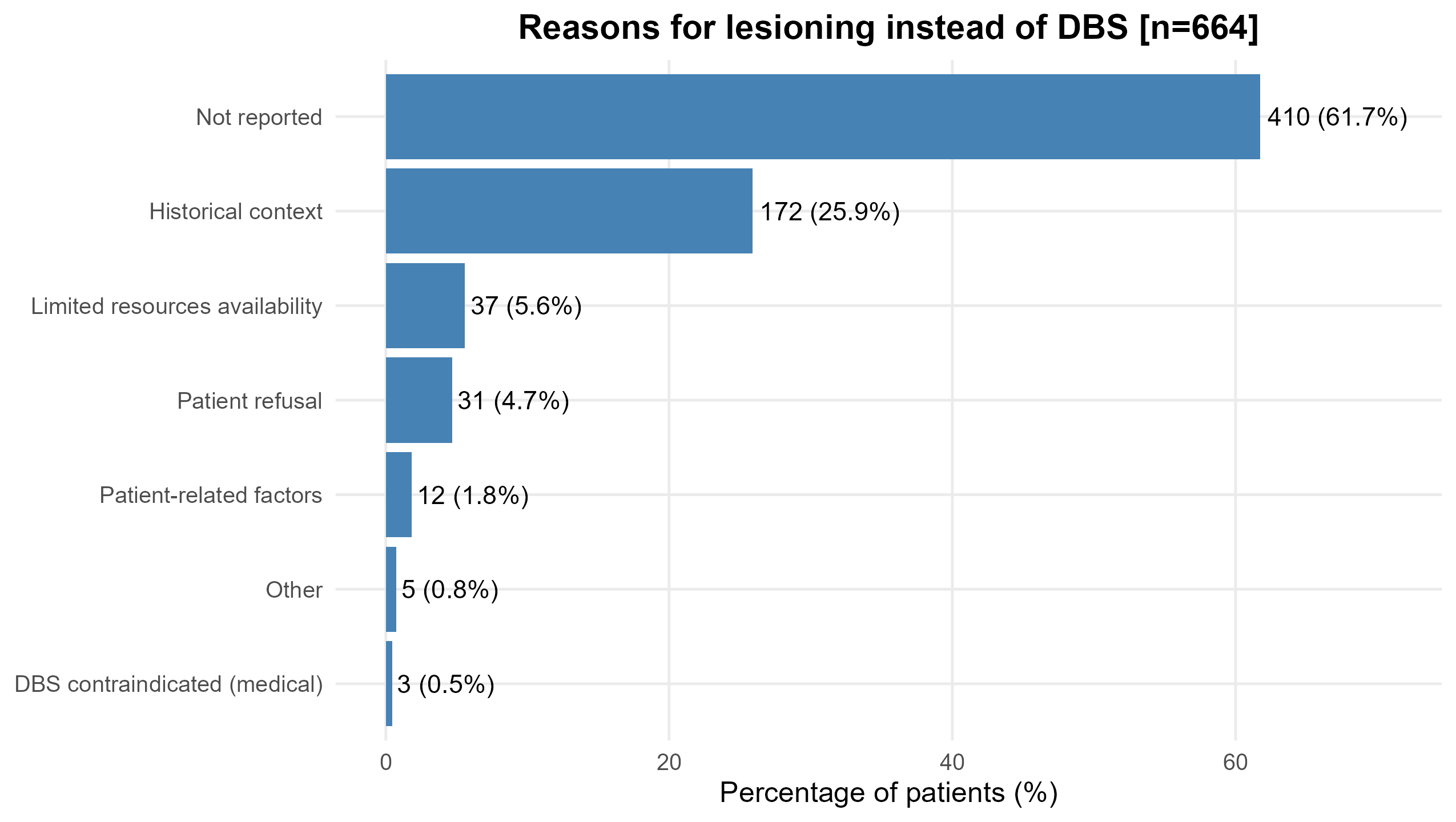
Figure 3
References: 1. Centen LM, Oterdoom DLM, Tijssen MAJ, Lesman‐Leegte I, Van Egmond ME, Van Dijk JMC. Bilateral Pallidotomy for Dystonia: A Systematic Review. Movement Disorders. 2021 Mar;36(3):547–57. doi:10.1002/mds.28384
2. Volkmann J, Wolters A, Kupsch A, Müller J, Kühn AA, Schneider GH, et al. Pallidal deep brain stimulation in patients with primary generalised or segmental dystonia: 5-year follow-up of a randomised trial. The Lancet Neurology. 2012 Dec;11(12):1029–38. doi:10.1016/S1474-4422(12)70257-0
3. Horisawa S, Ochiai T, Goto S, Nakajima T, Takeda N, Fukui A, et al. Safety and long-term efficacy of ventro-oral thalamotomy for focal hand dystonia: A retrospective study of 171 patients. Neurology. 2019 Jan 22;92(4). doi:10.1212/WNL.0000000000006818
4. Tripathi M, Sharan S, Mehta S, Deora H, Yagnick NS, Kumar N, et al. Gamma Knife Radiosurgical Pallidotomy for Dystonia: Not a Fallen Angel. Neurol India. 2019 Dec;67(6):1515–8. doi:10.4103/0028-3886.273644 PubMed PMID: 31857549.
5. Horisawa S, Yamaguchi T, Abe K, Hori H, Fukui A, Iijima M, et al. Magnetic Resonance‐Guided Focused Ultrasound Thalamotomy for Focal Hand Dystonia: A Pilot Study. Movement Disorders. 2021 Aug;36(8):1955–9. doi:10.1002/mds.28613
6. Guinal SM, Jamora RDG, Khu KJO, Aguilar JA. Magnetic resonance-guided focused ultrasound in dystonia: a scoping review. Neurol Sci. 2025 Mar;46(3):1121–30. doi:10.1007/s10072-024-07882-1 PubMed PMID: 39562491.
To cite this abstract in AMA style:
L. Santos, I. Lera, C. Ordás-Bandera, H. Canfield, A. Querejeta-Coma. Central Nervous System Lesioning Procedures For Dystonia In The Deep Brain Stimulation Era: A Systematic Review [abstract]. Mov Disord. 2026; 41 (suppl 1). https://www.mdsabstracts.org/abstract/central-nervous-system-lesioning-procedures-for-dystonia-in-the-deep-brain-stimulation-era-a-systematic-review/. Accessed October 1, 2026.« Back to 2026 International Congress
MDS Abstracts - https://www.mdsabstracts.org/abstract/central-nervous-system-lesioning-procedures-for-dystonia-in-the-deep-brain-stimulation-era-a-systematic-review/