
Objective: To clarify the clinical significance of amyloid positron emission tomography (PET) in patients presenting with corticobasal syndrome (CBS) and to describe the potential therapeutic implications of identifying underlying Alzheimer’s disease (AD) pathology.
Background: CBS is a heterogeneous clinical syndrome classically associated with corticobasal degeneration, but a substantial proportion of cases are attributable to AD pathology. Although amyloid PET enables in vivo detection of AD in atypical phenotypes, reports describing its direct contribution to treatment decision-making in CBS remain limited. Identifying CBS cases with underlying AD is clinically important because such patients may be candidates for disease-modifying anti-amyloid therapy.
Method: We retrospectively reviewed two patients from tertiary referral centers who fulfilled the clinical phenotype of probable corticobasal degeneration but showed features suggestive of atypical underlying pathology. Clinical manifestations, neuropsychological findings, structural magnetic resonance imaging, electrophysiological and laboratory data, and molecular imaging findings were systematically assessed. Amyloid PET using [18F] flutemetamol was performed to evaluate underlying AD pathology, and subsequent treatment courses were reviewed.
Results: Two patients with CBS demonstrated clinical features atypical for corticobasal degeneration, particularly early episodic memory impairment and language dysfunction. In both cases, amyloid PET revealed widespread cortical and subcortical amyloid deposition consistent with AD pathology. One patient also showed preserved striatal uptake on dopamine transporter imaging despite parkinsonian features. Based on these findings, anti-amyloid therapy was initiated in both patients. After treatment, both patients showed clinical improvement, including amelioration of apraxia, myoclonus, speech dysfunction, reading difficulty, and impaired manual tasks.
Conclusion: CBS may represent an atypical clinical presentation of AD. Careful phenotyping combined with amyloid PET can facilitate in vivo etiological diagnosis and may expand access to disease-modifying therapy in selected patients with CBS. These findings highlight the importance of considering underlying AD in the differential diagnosis of CBS, especially when cognitive symptoms are prominent early in the disease course.
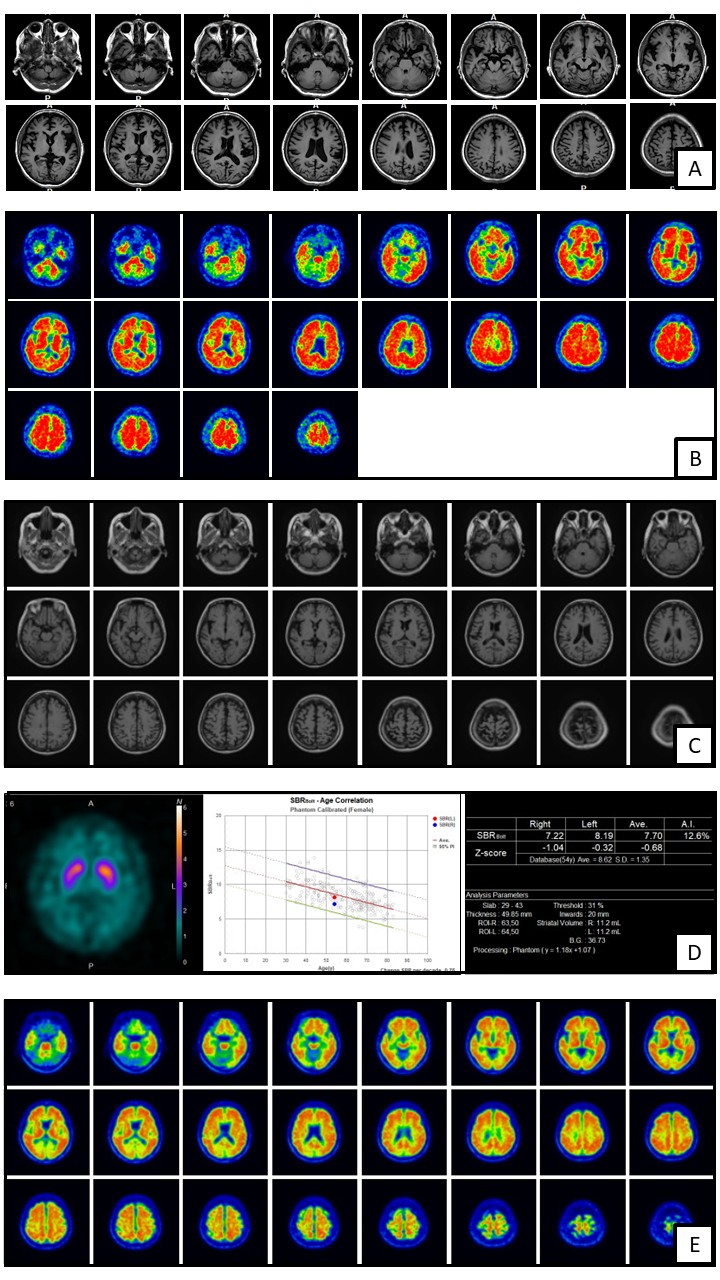
Figure 1
To cite this abstract in AMA style:
S. Fujioka, Y. Nagaishi, T. Imamura, H. Minagawa, K. Uwatoko, M. Yukitake, J. Kira, Y. Tsuboi. Amyloid PET–Guided Anti-amyloid Therapy in Corticobasal Syndrome Associated with Clinical Improvement [abstract]. Mov Disord. 2026; 41 (suppl 1). https://www.mdsabstracts.org/abstract/amyloid-pet-guided-anti-amyloid-therapy-in-corticobasal-syndrome-associated-with-clinical-improvement/. Accessed October 1, 2026.« Back to 2026 International Congress
MDS Abstracts - https://www.mdsabstracts.org/abstract/amyloid-pet-guided-anti-amyloid-therapy-in-corticobasal-syndrome-associated-with-clinical-improvement/