
Category: Parkinson's disease: Neuroimaging
Objective: This cross-sectional and longitudinal study aimed to elucidate the pattern of cholinergic white matter pathway degeneration underlying the phenoconversion trajectories in iRBD patients.
Background: Individuals with idiopathic REM sleep behavior disorder (iRBD) are at a high risk of developing Parkinson’s disease (PD) and dementia with Lewy bodies (DLB). However, objective markers that can reliably distinguish iRBD patients destined to phenoconvert to DLB or PD remain elusive.
Method: Free-water (FW) imaging was utilized to investigate the integrity of nucleus basalis of Meynert (NBM)-cortical and pedunculopontine nucleus (PPN)-thalamus cholinergic white matter pathways in 326 iRBD patients, 163 PD patients, 40 DLB patients, and 144 healthy controls from 4 cohorts (Figure 1). The risk of phenoconversion was analyzed using logistic regression and Cox proportional hazards regression models.
Results: Compared to controls, FW values were elevated in the cholinergic pathways of DLB, PD and iRBD patients, although the elevation patterns differed distinctly among the three groups (Figure 2). Among 224 iRBD patients who underwent follow-up, baseline FW values in the NBM-medial pathway predicted cognitive decline, whereas baseline FW values in the NBM-lateral pathway predicted the development of depression. FW values in the cholinergic pathways were progressively elevated over time. During the follow-up period, 24 iRBD patients converted to DLB and 38 converted to PD. Increased FW values in the cholinergic pathways were associated with a higher risk of phenoconversion (Figure 3). Notably, increased FW values in the NBM-medial pathway were specifically associated with DLB conversion, whereas elevated FW values in the PPN-thalamus pathway were uniquely linked to PD conversion (Table 1 and 2).
Conclusion: This study illustrates the pattern of cholinergic pathway degeneration across the synucleinopathy spectrum and along the phenoconversion trajectories of iRBD. Elevated FW in distinct cholinergic pathways differentially predicts PD and DLB conversion. FW imaging of cholinergic pathways is a potential biomarker for identifying individuals at high risk of phenoconversion, thereby facilitating the stratification of prodromal PD and DLB for neuroprotective trials targeting specific cholinergic pathways.
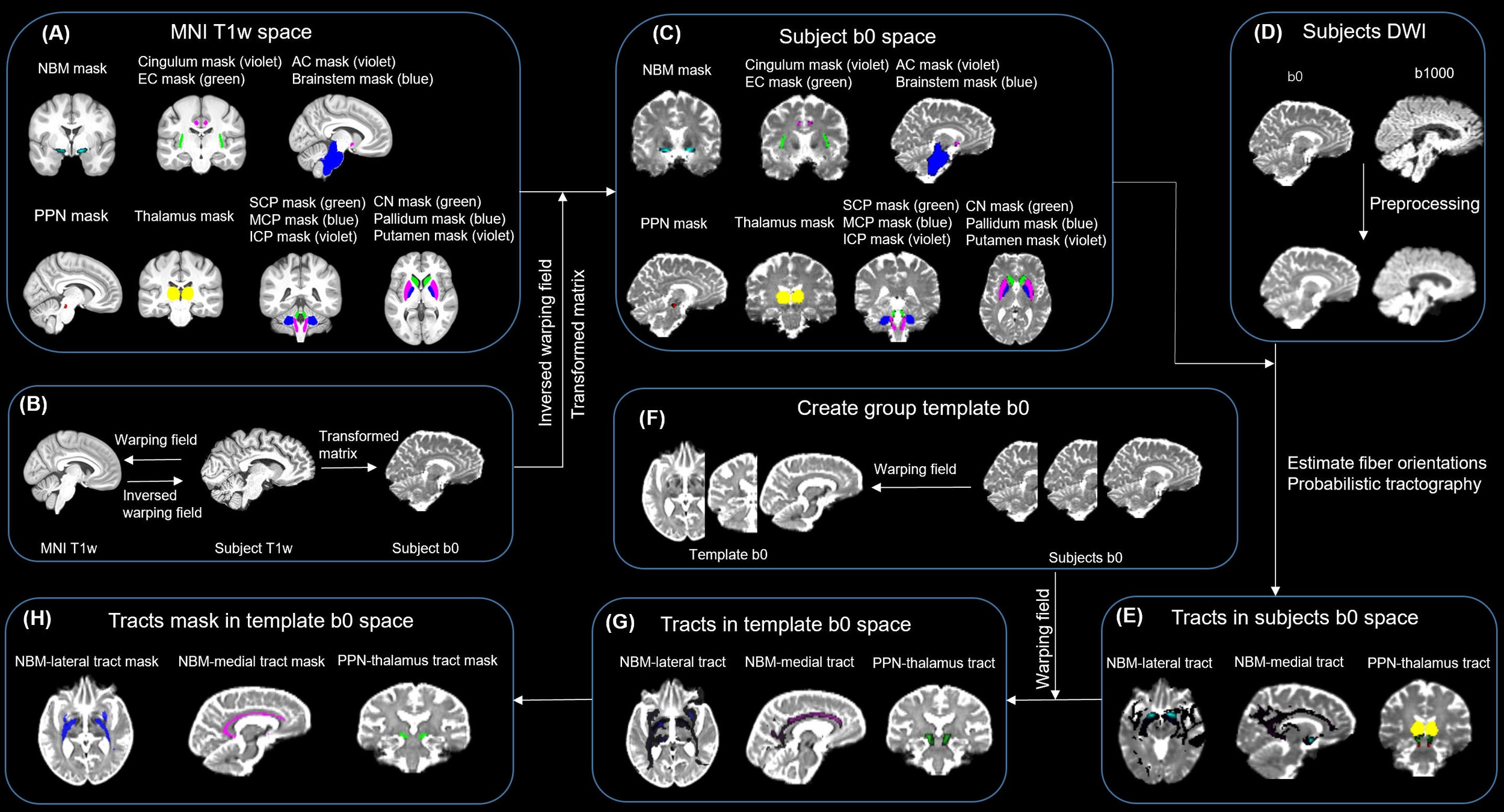
Figure1
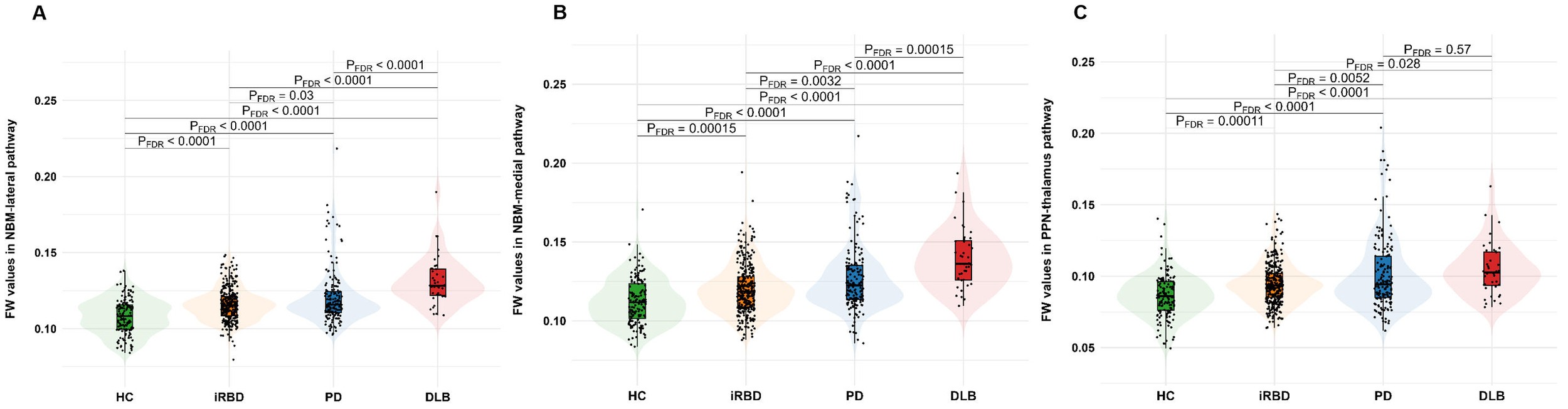
Figure 2
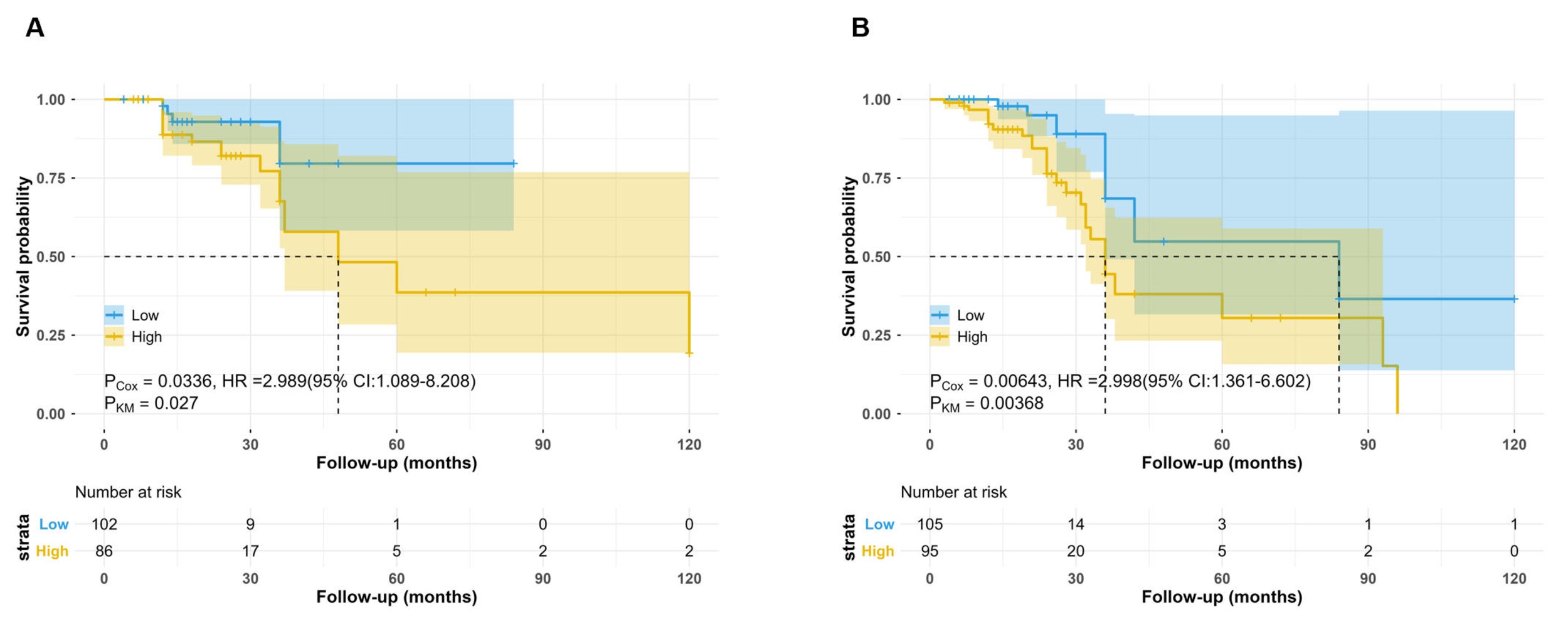
Figure 3
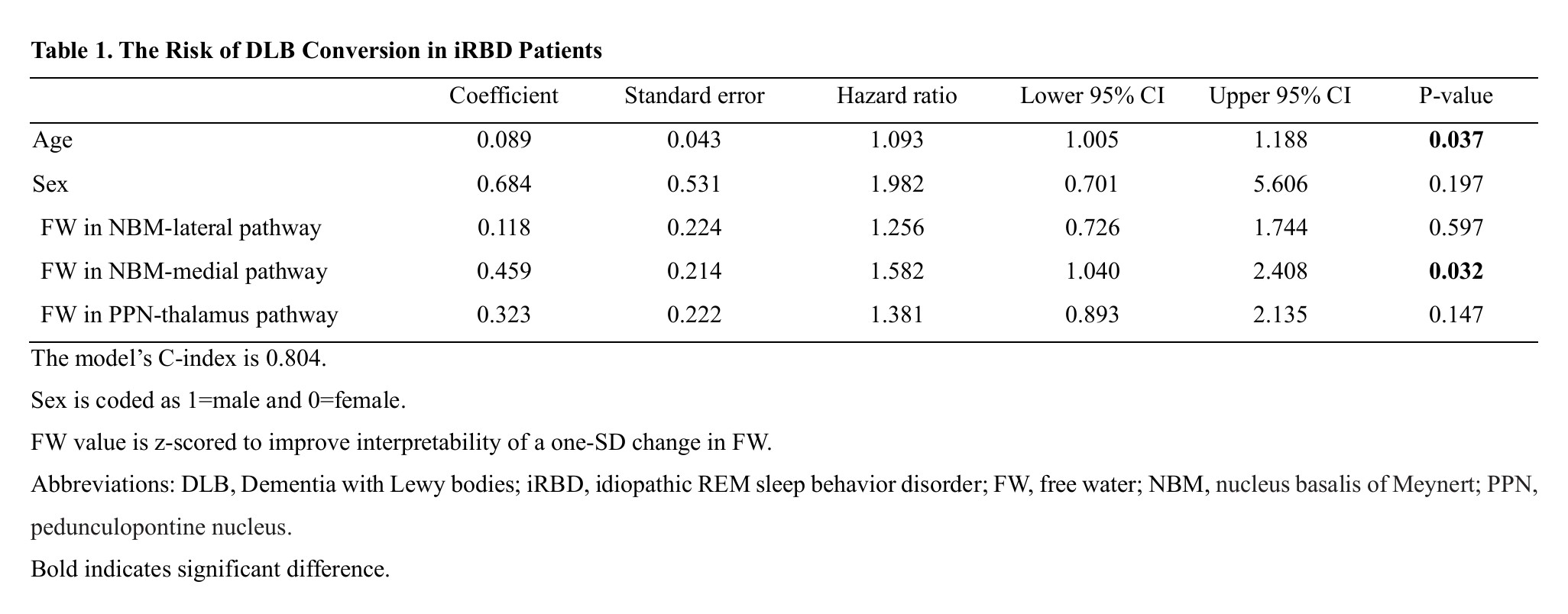
Table 1
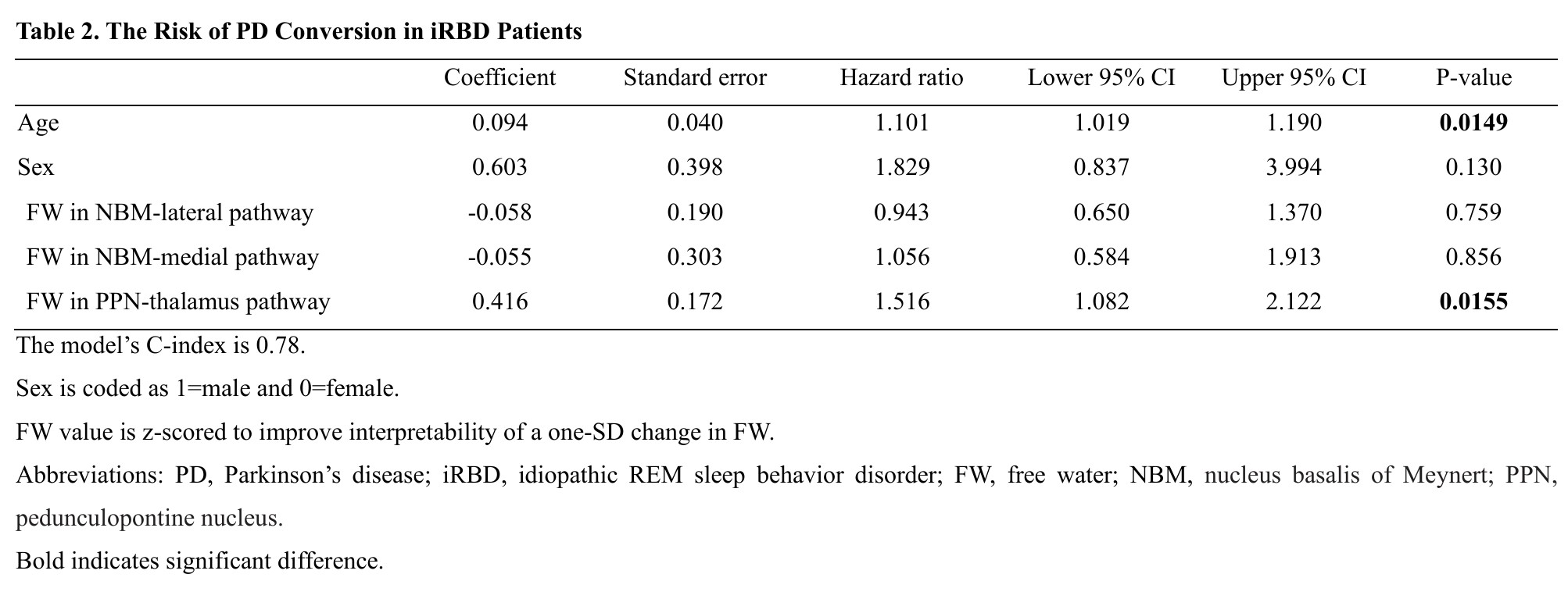
Table 2
To cite this abstract in AMA style:
D. Zhang, T. Wu. Cholinergic Pathway Degeneration Predicts Differential Phenoconversion to Synucleinopathies in Idiopathic REM Sleep Behavior Disorder [abstract]. Mov Disord. 2026; 41 (suppl 1). https://www.mdsabstracts.org/abstract/cholinergic-pathway-degeneration-predicts-differential-phenoconversion-to-synucleinopathies-in-idiopathic-rem-sleep-behavior-disorder/. Accessed October 1, 2026.« Back to 2026 International Congress
MDS Abstracts - https://www.mdsabstracts.org/abstract/cholinergic-pathway-degeneration-predicts-differential-phenoconversion-to-synucleinopathies-in-idiopathic-rem-sleep-behavior-disorder/