
Objective: To determine clinical predictors of Parkinson’s disease (PD) phenoconversion in a prodromal LRRK2 carrier cohort.
Background: Non-manifesting carriers of LRRK2 mutations represent an important PD prodromal cohort with potential for early intervention. These carriers have unique clinical characteristics that differ from healthy controls. However, it remains challenging to study how the clinical characteristics affect prodromal conversion to PD due to a paucity of large longitudinal cohort studies.
Method: Longitudinal data of prodromal LRRK2 carriers were retrieved from the Parkinson’s Progression Markers Initiative (PPMI) database. Baseline clinical predictors of phenoconversion were identified and narrowed down from 18 clinical variables using the Least Absolute Shrinkage and Selection Operator (LASSO) penalized Cox regression approach. By adopting a multivariable Cox proportional hazards model, we developed a nomogram to estimate the risk of PD phenoconversion using minimal and accessible clinical characteristics.
Results: A total of 206 non-manifesting LRRK2 carriers, with a mean follow-up duration of 6.33 years (SD = 3.12), were included in the study [Table 1 & 2]. Of these carriers, 19 (9.2%) converted to PD during the course of follow-up and had a mean time-to-event of 4.42 years (SD = 2.99). Broad LASSO analysis identified MDS-UPDRS Part II score as a significant predictor of phenoconversion (HR = 1.27; 95% CI: 1.13–1.43; p < 0.001) [Figure 1]. We further identified two key predictive components within the MDS-UPDRS Part II score- difficulty rising from a chair (HR = 2.77, p = 0.01) and subjective tremor (HR = 2.34, p = 0.05), after adjusting for age and gender [Figure 2]. A nomogram to predict the 5 year phenoconversion risk was developed based on age and the two components of MDS-UPDRS Part II (rising from chair and subjective tremor) [Figure 3].
Conclusion: This study shows that self-reported functional assessment based on the MDS-UPDRS Part II aids in risk stratification and prognostication of non-manifesting LRRK2 carriers and provides an accessible and simple clinical tool to aid with prediction of phenoconversion in LRRK2 carriers.
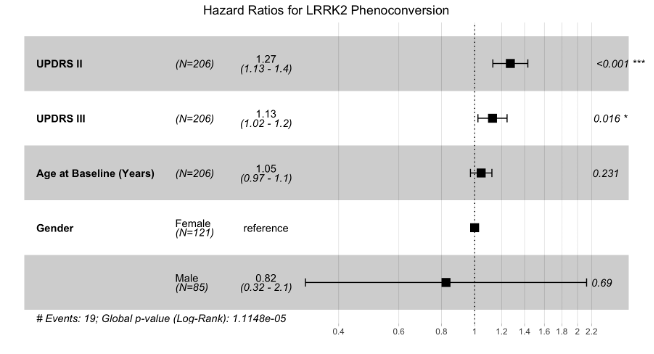
Hazard Ratio for Predictors of Phenoconversion
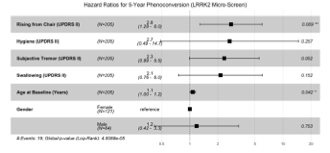
Hazard Ratio for MDS-UPDRS II Components
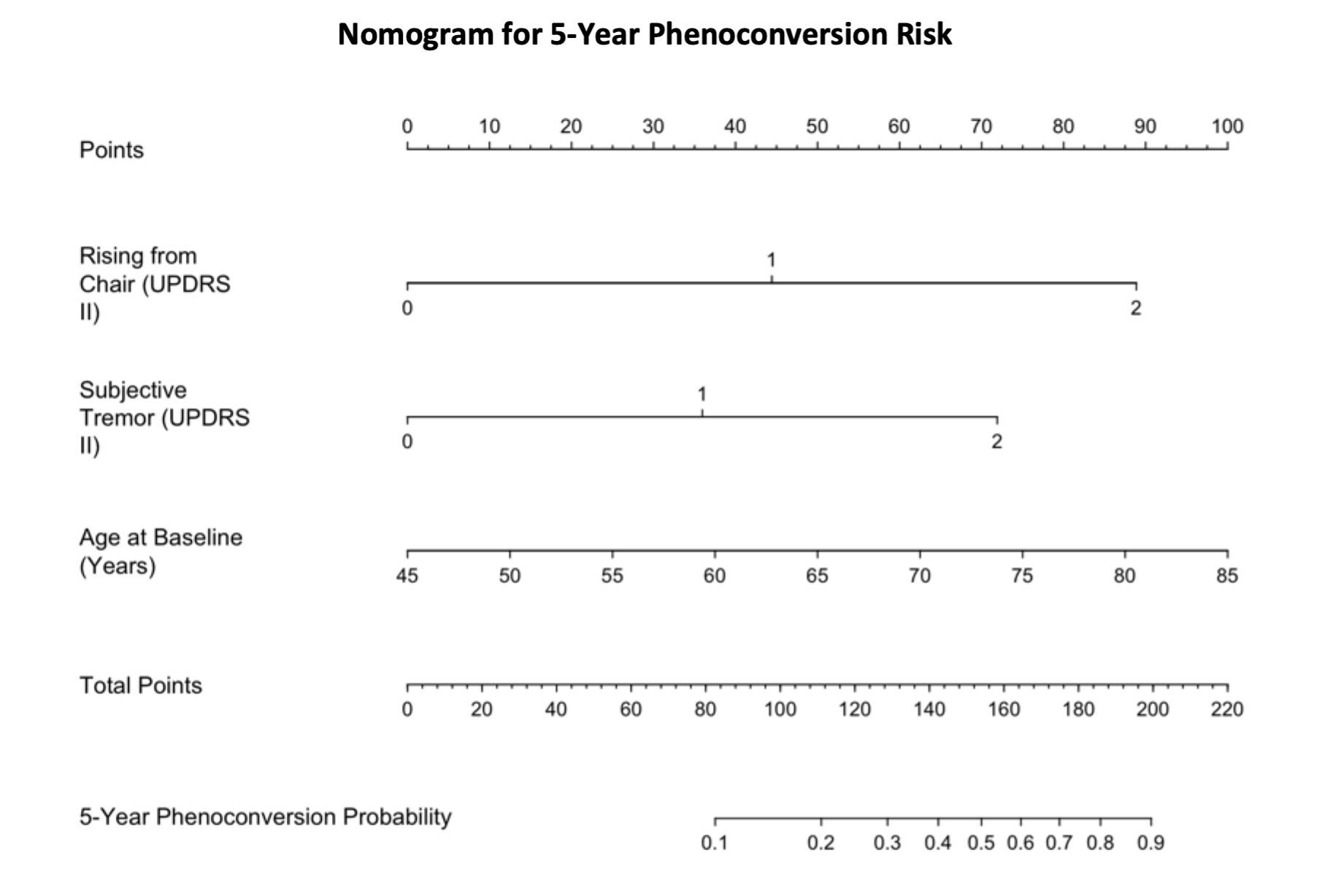
Nomogram for 5-Year Phenoconversion Risk
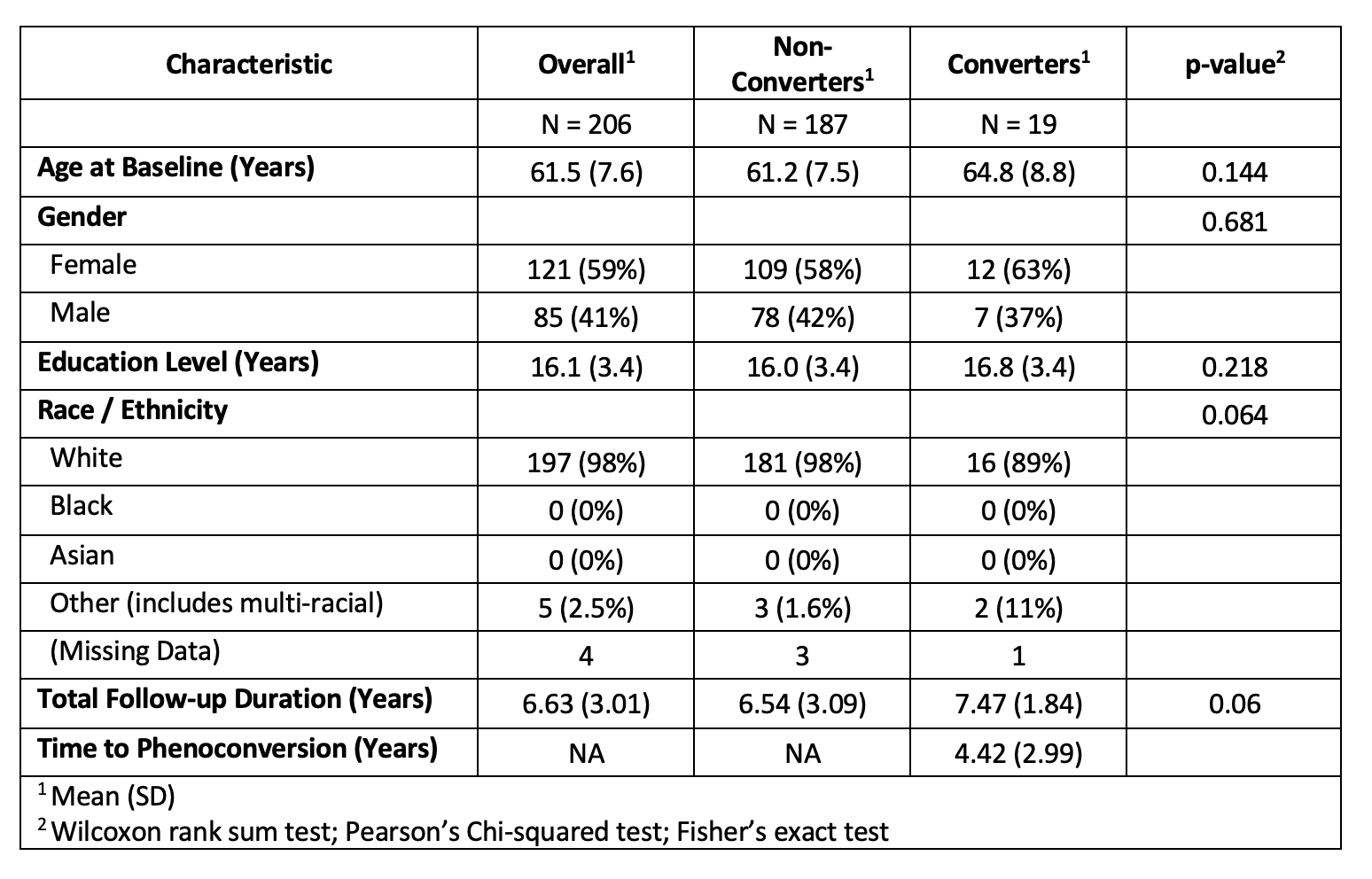
Baseline Demographics of Prodromal LRRK2 Cohort

Clinical Characteristics by Conversion Status
To cite this abstract in AMA style:
JH. Ng, X. Deng, EK. Tan. Predictors of Parkinson’s Disease Phenoconversion in Non-manifesting LRRK2 Carriers [abstract]. Mov Disord. 2026; 41 (suppl 1). https://www.mdsabstracts.org/abstract/predictors-of-parkinsons-disease-phenoconversion-in-non-manifesting-lrrk2-carriers/. Accessed October 1, 2026.« Back to 2026 International Congress
MDS Abstracts - https://www.mdsabstracts.org/abstract/predictors-of-parkinsons-disease-phenoconversion-in-non-manifesting-lrrk2-carriers/