
Objective: To determine the phenomenology and clinical features of FMD and to identify specific signs which may increase the diagnostic certainty.
Background: Functional movement disorders are frequently misdiagnosed, often inadequately treated and dismissed as “psychogenic” disorders. Identification of definite signs may help in accurate diagnosis and appropriate treatment. Routine emphasis on elicitation of these signs in clinical practice is now helping to shift the paradigm of FMD from a diagnosis of “exclusion” to a diagnosis of “inclusion”.
Method: This is a retrospective video based review of patients with FMDs attending the movement disorders clinic at a tertiary care institute in Mumbai, India.
Results: A total of 51 patients were identified with complete records and videos in database. The male-to-female ratio was 1.22:1 and most common age of presentation was in fourth decade (14/51) (Table 1). The duration of symptoms ranged from 4 days to 10 years. Tremor was the most common presenting symptom (29.4%) followed by involuntary facial movements (10/51) (Figure 1). Over 43% patients had >1 presenting movement disorder. However, on video based examination, dystonia was most common sign, seen in 17 patients (33.3%) closely followed by tremors (n=16). Triggers to these movements disorders were seen in majority of patients (36/51) (Table 2). Distractibility of movement disorder was the most frequent sign seen in 68.6% patients followed by motor inconsistency, emphasizing the importance of Fahn and William diagnostic criteria; which was Clinically Definite in 54.9% in our cohort. These signs were more frequently seen with tremors, dystonia, myoclonus and gait disorder. (Figure 2). In our cohort, 62% of patients were lost to follow up. Of those who followed up only 6 (31%) were relapse free at 3 months indicating significant challenges in management of these patients.
Conclusion: Functional movement disorders in this cohort predominantly manifested with tremor and motor inconsistency in the fourth decade of life, with identifiable psychosocial triggers in most patients and two-thirds fulfilling criteria for clinically definite diagnosis.
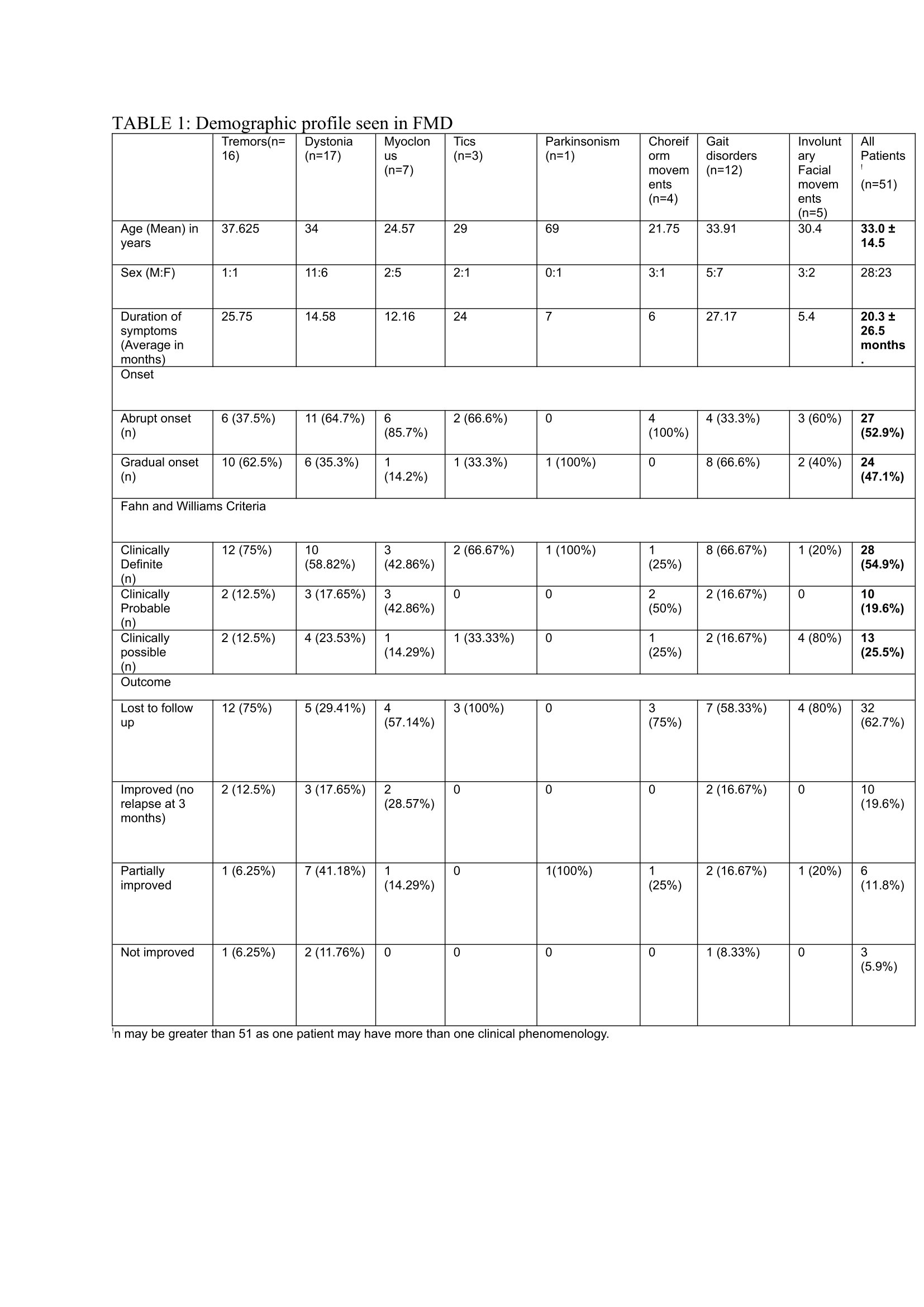
Table 1:Demographic profile seen in FMD

Figure 1: Distribution of Presenting symptoms
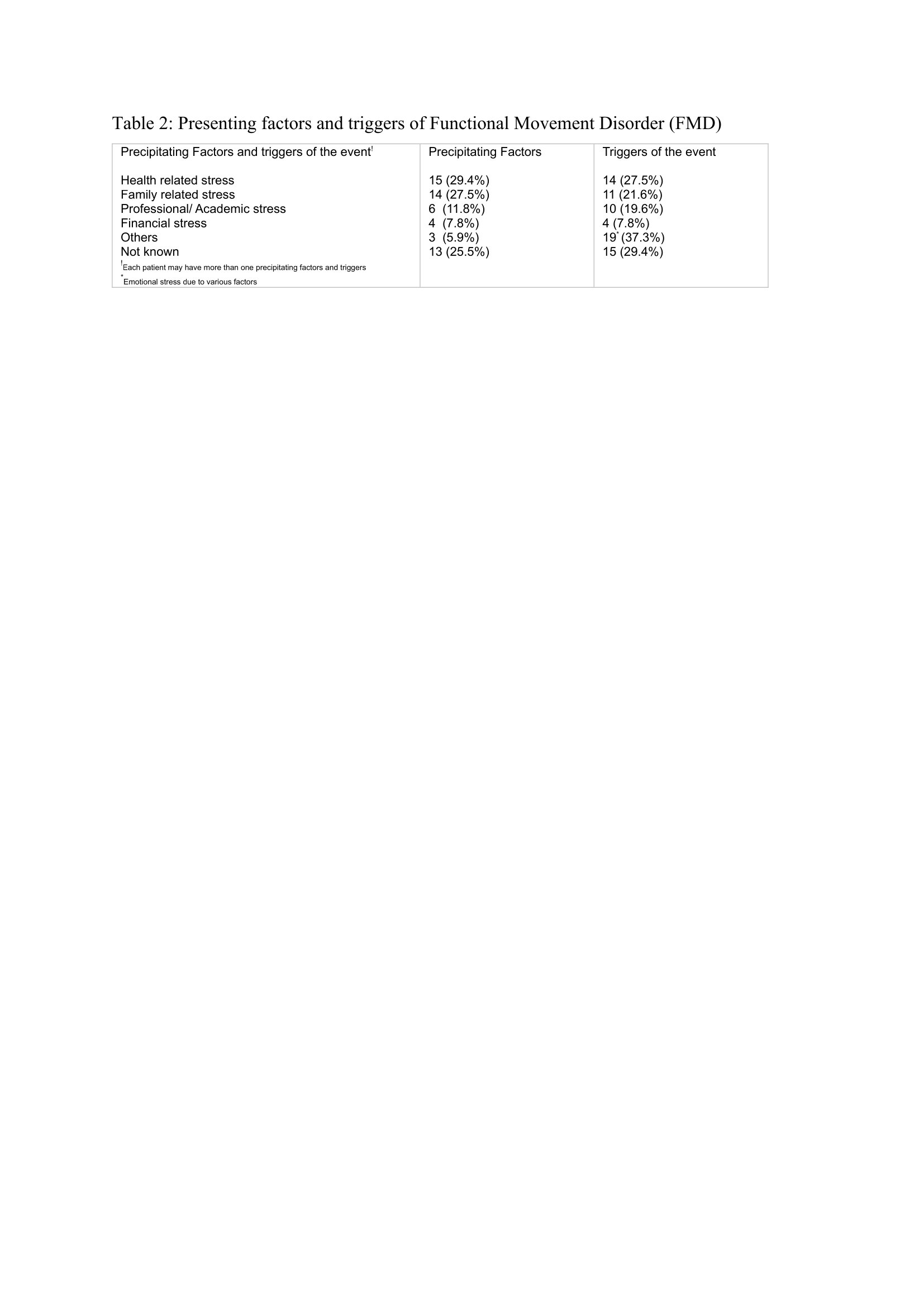
Table 2: Presenting factors and triggers of FMD
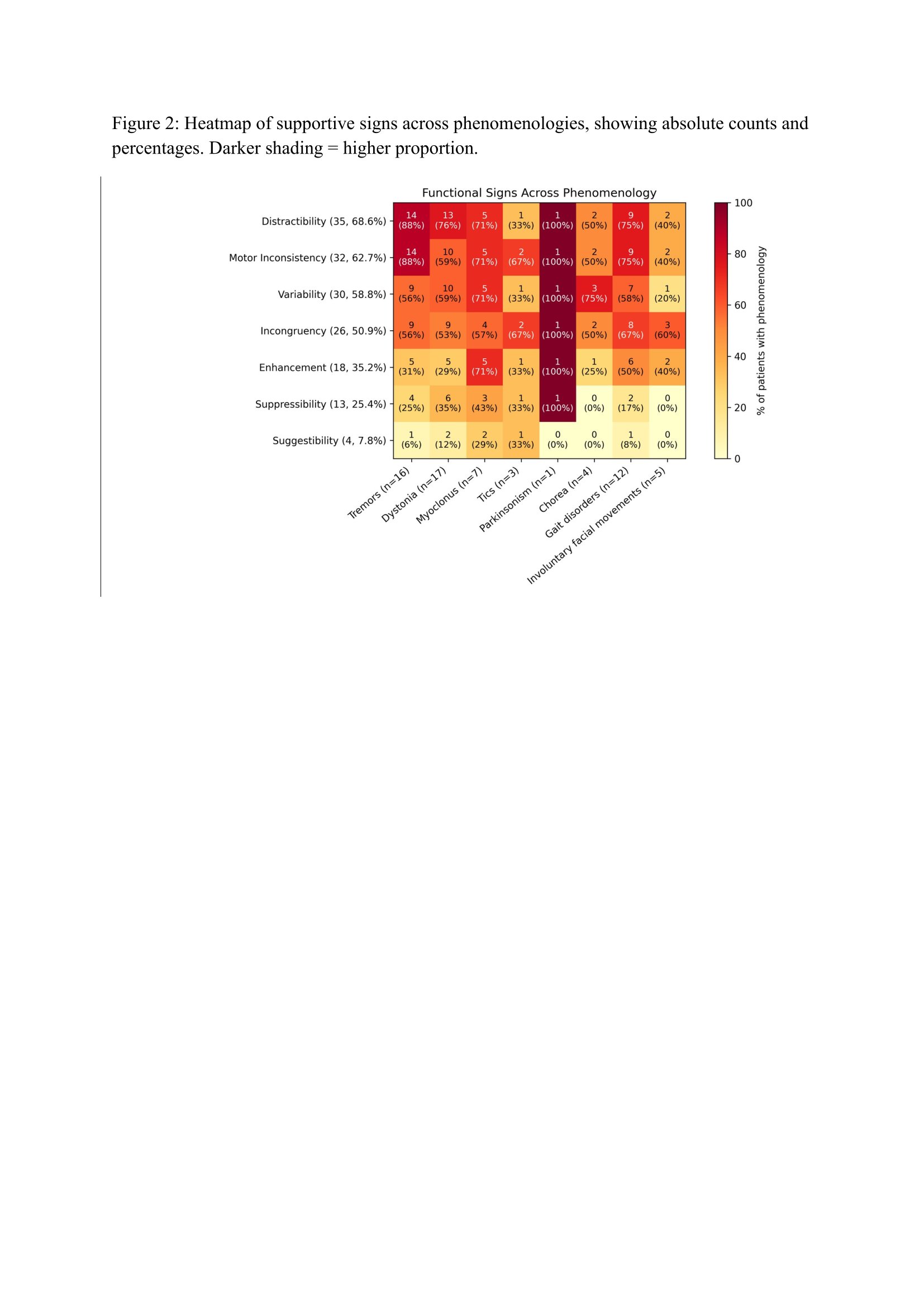
Figure 2: Heatmap of supportive signs.
To cite this abstract in AMA style:
I. Goyal, P M. Wadia. A Retrospective Video Review Of Functional Movement Disorders (FMD) [abstract]. Mov Disord. 2026; 41 (suppl 1). https://www.mdsabstracts.org/abstract/a-retrospective-video-review-of-functional-movement-disorders-fmd/. Accessed October 1, 2026.« Back to 2026 International Congress
MDS Abstracts - https://www.mdsabstracts.org/abstract/a-retrospective-video-review-of-functional-movement-disorders-fmd/