
Objective: This study aims to compare EEG band power and its relationship to fatigue severity in PD patients with and without chronic pain.
Background: Fatigue is one of the most prevalent and debilitating non-motor symptoms in PD, yet its neurophysiological correlates are poorly understood. Previous studies have reported significant associations between pain and fatigue severity in PD, though whether pain modulates the neurophysiology of fatigue has not been explored.
Method: 29 non-demented PD patients were divided into two groups with (n=14) and without pain (n=15), assessed using the KPPS. Groups were homogeneous in age, LEDD, disease duration, H&Y stage, and FSS scores (Table 1). Resting-state EEG was recorded in ON-state, in eyes-open (EO) and eyes-closed (EC) conditions (5 min each) using a 64-electrode qEEG system, with 2-second epoch segmentation and filtering between 0.5-60Hz (50Hz notch). ICA was performed to remove artifacts, and spectral band power was extracted for delta, theta, alpha and beta bands. Group differences in band power were tested, and beta regressions were fit per-group, to assess the relationship between band power and FSS scores.
Results: Beta regression analyses revealed beta band power as the only predictor of FSS scores in both groups. In the pain group, beta inversely predicted fatigue in EO (β=-0.57, p<0.001), with a tendency in EC (Figure 1). In the no-pain group, beta directly predicted fatigue in both EO (β=0.55, p=0.003) and EC (β=0.60, p=0.003) conditions (Figure 2). This divergence reflects a qualitative difference in the beta-fatigue relationship rather than a difference in overall beta power levels, which were homogeneous between groups (p=0.78, Table 2).
Conclusion: The present findings suggest that pain alters the relationship between beta oscillations and fatigue in PD. Despite comparable beta power and fatigue severity between groups, the direction of this relationship was inverted in the pain group, pointing to a qualitative reorganization of neural dynamics underlying fatigue. This dissociation highlights the importance of considering pain as a modifying factor in the neurophysiology of fatigue in PD, as its presence may obscure relevant neural correlates. The specificity of this effect to the beta band underscores its potential role as a neural marker of fatigue in PD, consistent with the well-established involvement of beta rhythms in motor and cognitive processing.
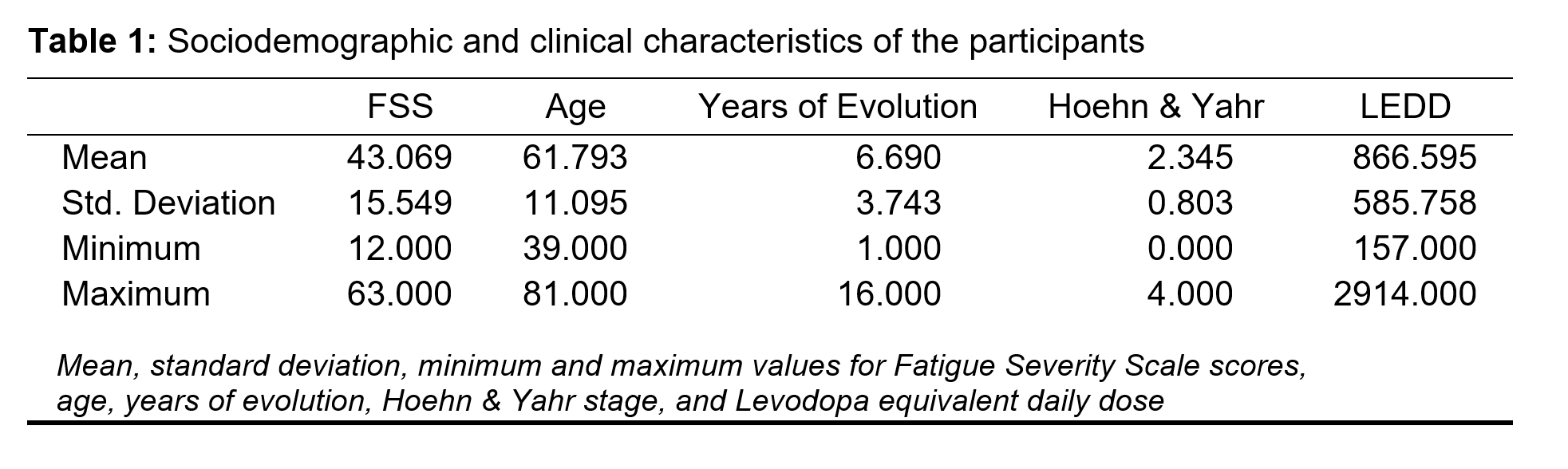
Table 1
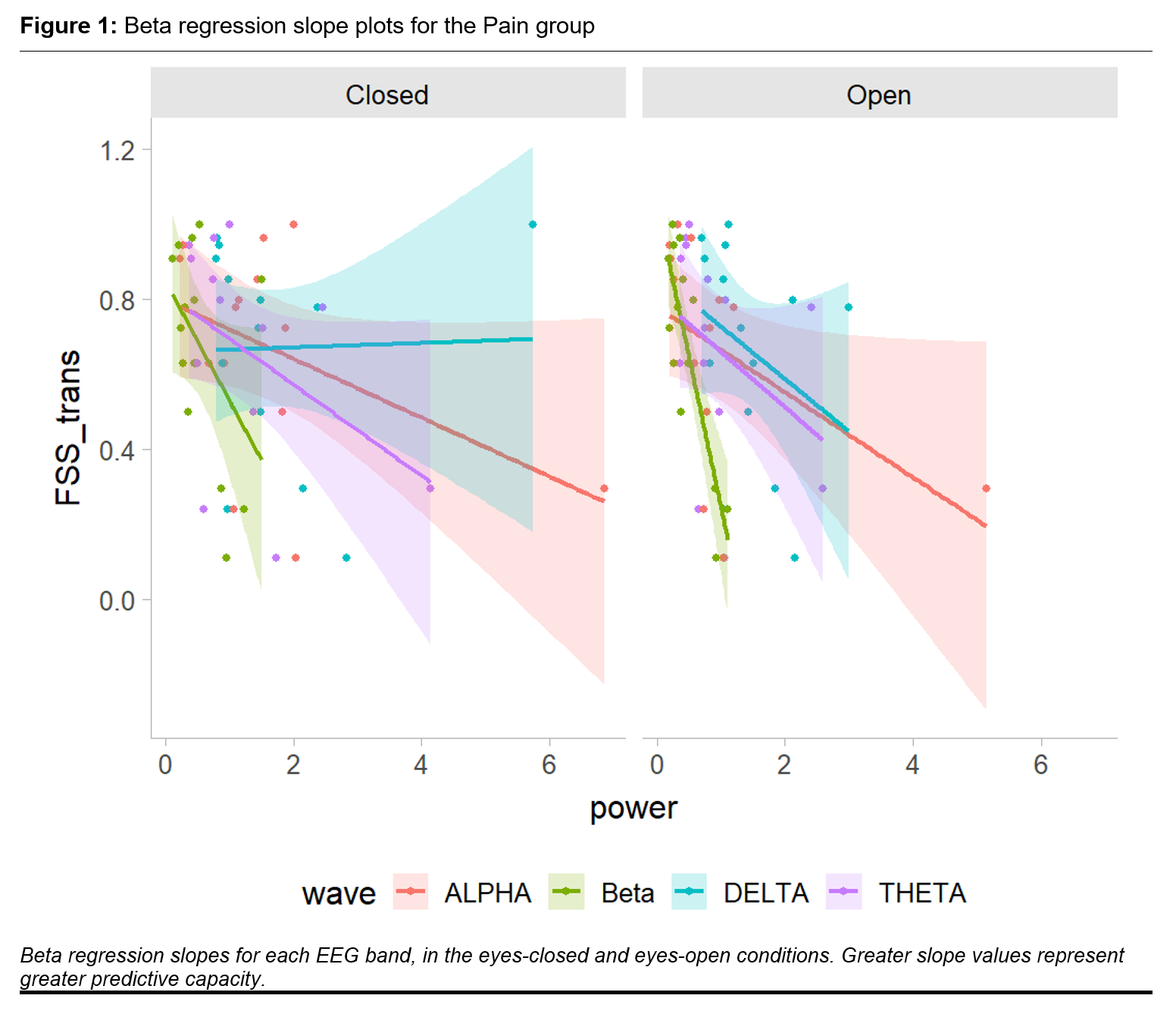
Figure 1
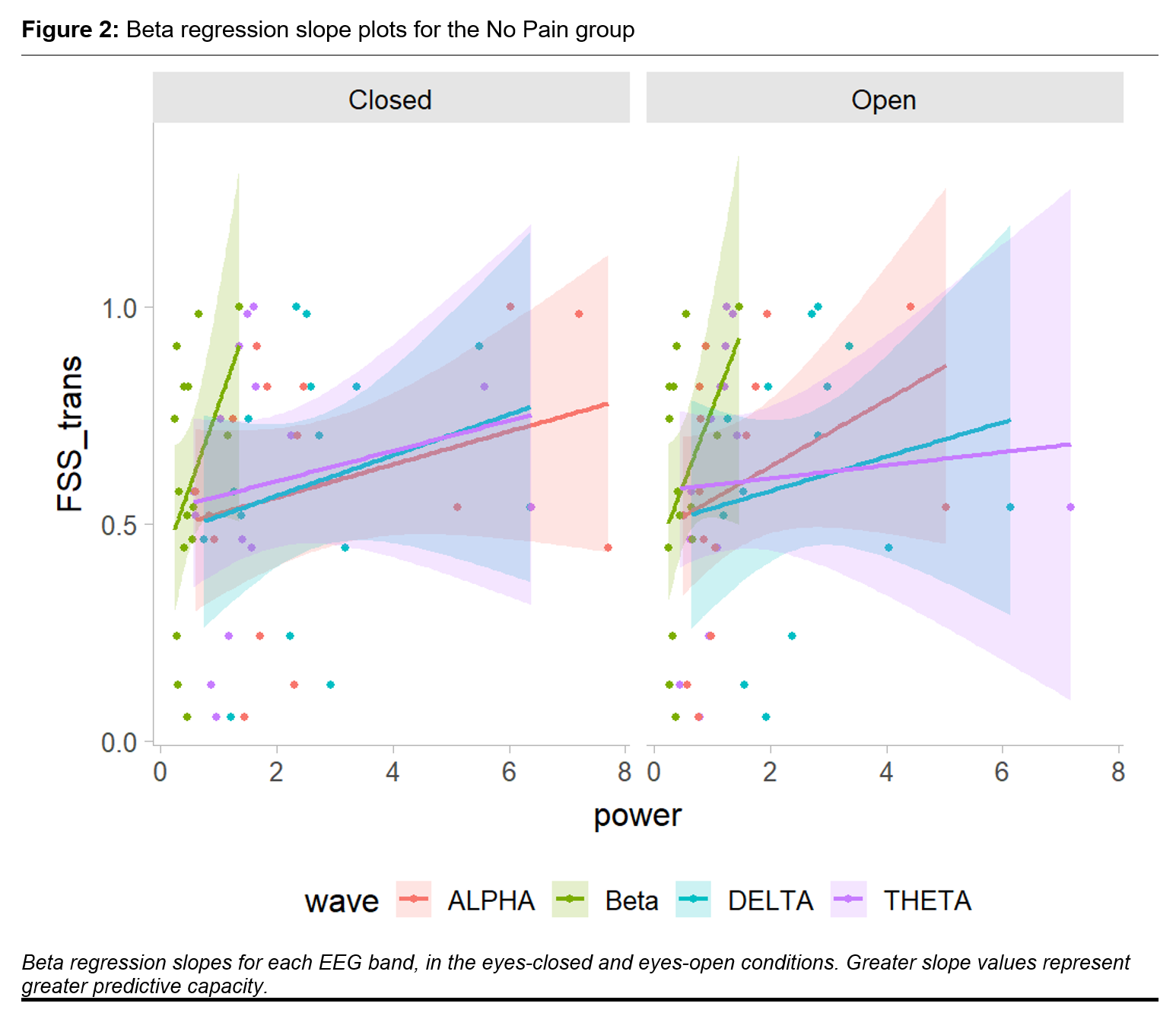
Figure 2
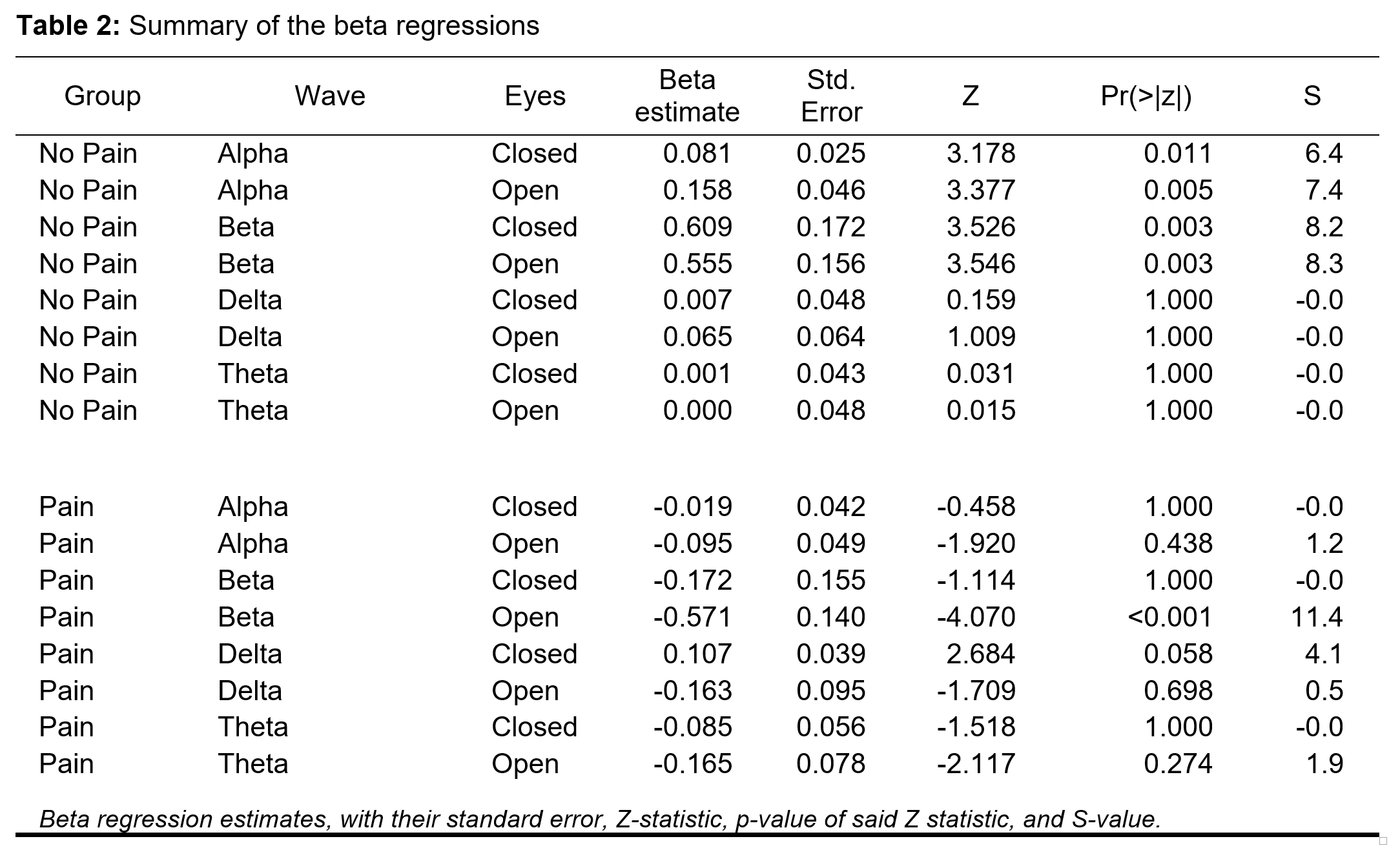
Table 2
To cite this abstract in AMA style:
A. Hurtado-Martínez, M. Martín-Buro García-Dionisio, Y. González-Zamorano, M. Moreno-Verdú, F. Sánchez-Cuesta, JP. Romero-Muñoz. Pain Inverts the Relationship Between Beta-band Power and Fatigue Severity in PD: an EEG Study [abstract]. Mov Disord. 2026; 41 (suppl 1). https://www.mdsabstracts.org/abstract/pain-inverts-the-relationship-between-beta-band-power-and-fatigue-severity-in-pd-an-eeg-study/. Accessed October 1, 2026.« Back to 2026 International Congress
MDS Abstracts - https://www.mdsabstracts.org/abstract/pain-inverts-the-relationship-between-beta-band-power-and-fatigue-severity-in-pd-an-eeg-study/