
Category: Parkinson’s Disease: Clinical Trials
Objective: To investigate whether dual-site [DS, primary motor cortex (M1) + supplementary motor area (SMA)] repetitive transcranial magnetic stimulation (rTMS) could attain superior efficacy compared to M1 single-site (SS) and sham stimulation, and to elucidate the underlying neural mechanisms using multimodal assessments.
Background: M1 and SMA are central to the pathophysiology of freezing of gait (FOG) in Parkinson’s disease (PD). rTMS targeting M1 or SMA has shown promise in alleviating FOG symptoms.
Method: We performed a double-blind randomized and sham-controlled trial to compare DS protocol to SS and sham rTMS. Multimodal approaches, including TMS-based excitation index, cortical plasticity, and white matter (WM) microstructure, were utilized to elucidate whether neural changes corresponded with improvement in gait performance.
Results: DS and SS protocols significantly improved FOG, gait performance, and motor function compared with the sham protocol. Notably, DS-rTMS demonstrated superior efficacy to SS-rTMS, with sustained improvements in motor outcomes and objective gait measures persisting for up to one month after the intervention. Importantly, the therapeutic benefits were not limited to straight walking, but also extended to turning, with significant improvements observed in turning-related gait parameters. rTMS alleviated FOG through synergistic mechanisms: rebalancing cortical excitatory-inhibitory equilibrium, enhancing LTP-like plasticity, and modulating WM microstructure. Compared with the SS group, the DS group exhibited more robust neuromodulatory effects, characterized by greater recovery of impaired cortical inhibition and more extensive WM tract remodeling. Notably, only the DS group showed increased fractional anisotropy (FA) in tracts originating from the SMA and left M1 after rTMS, and greater FA increases were significantly associated with greater gait improvement. Moreover, in the DS group, changes in the excitation index (EI) ratio were negatively correlated with improvements in average angular velocity.
Conclusion: The combined stimulation of SMA and M1 offered a novel and promising approach for FOG. Our findings unveiled DS-rTMS neuromodulation mechanisms, including rebalancing excitatory-inhibitory equilibrium, restoring plasticity and remodeling WM microstructure.
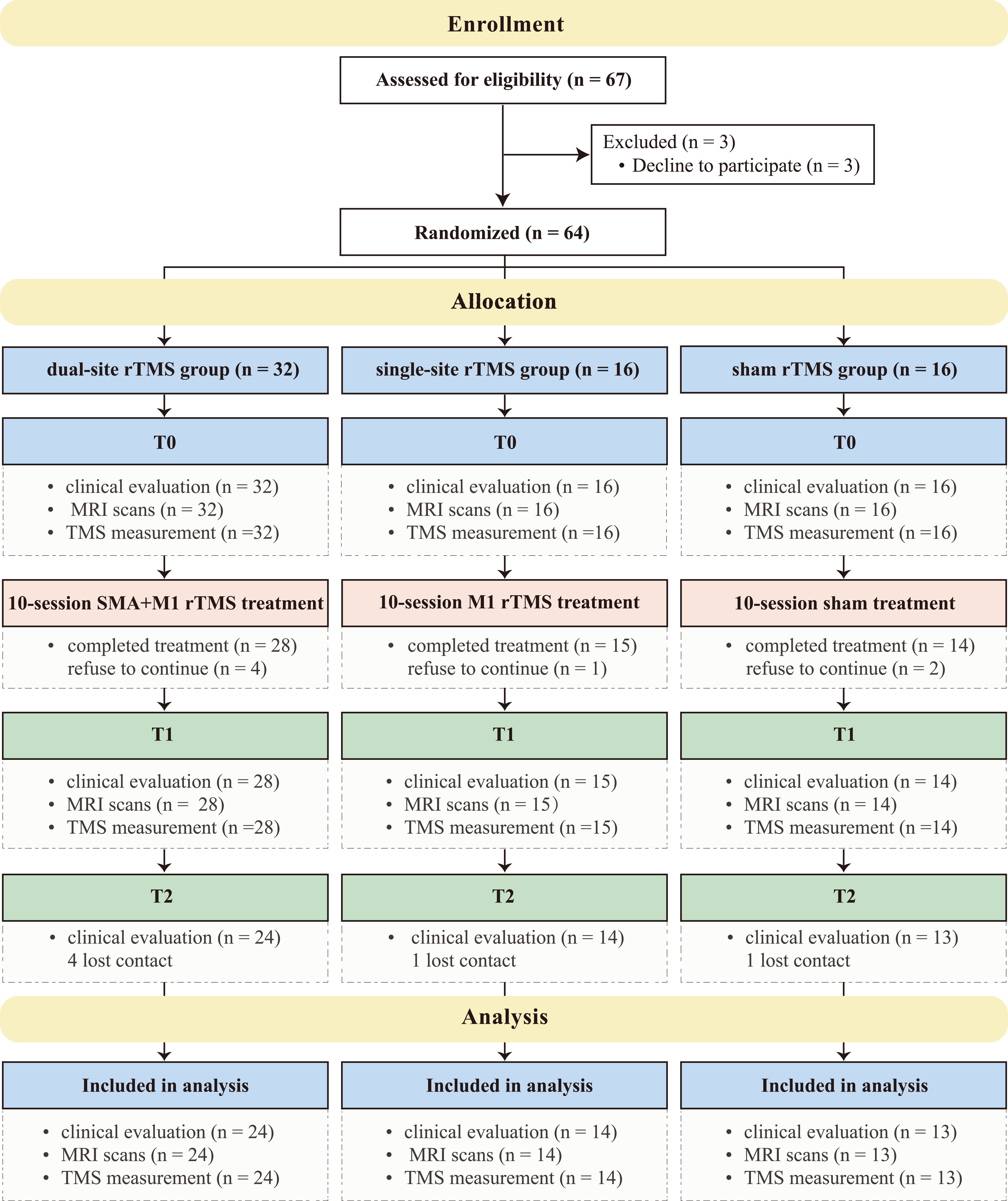
Figure 1
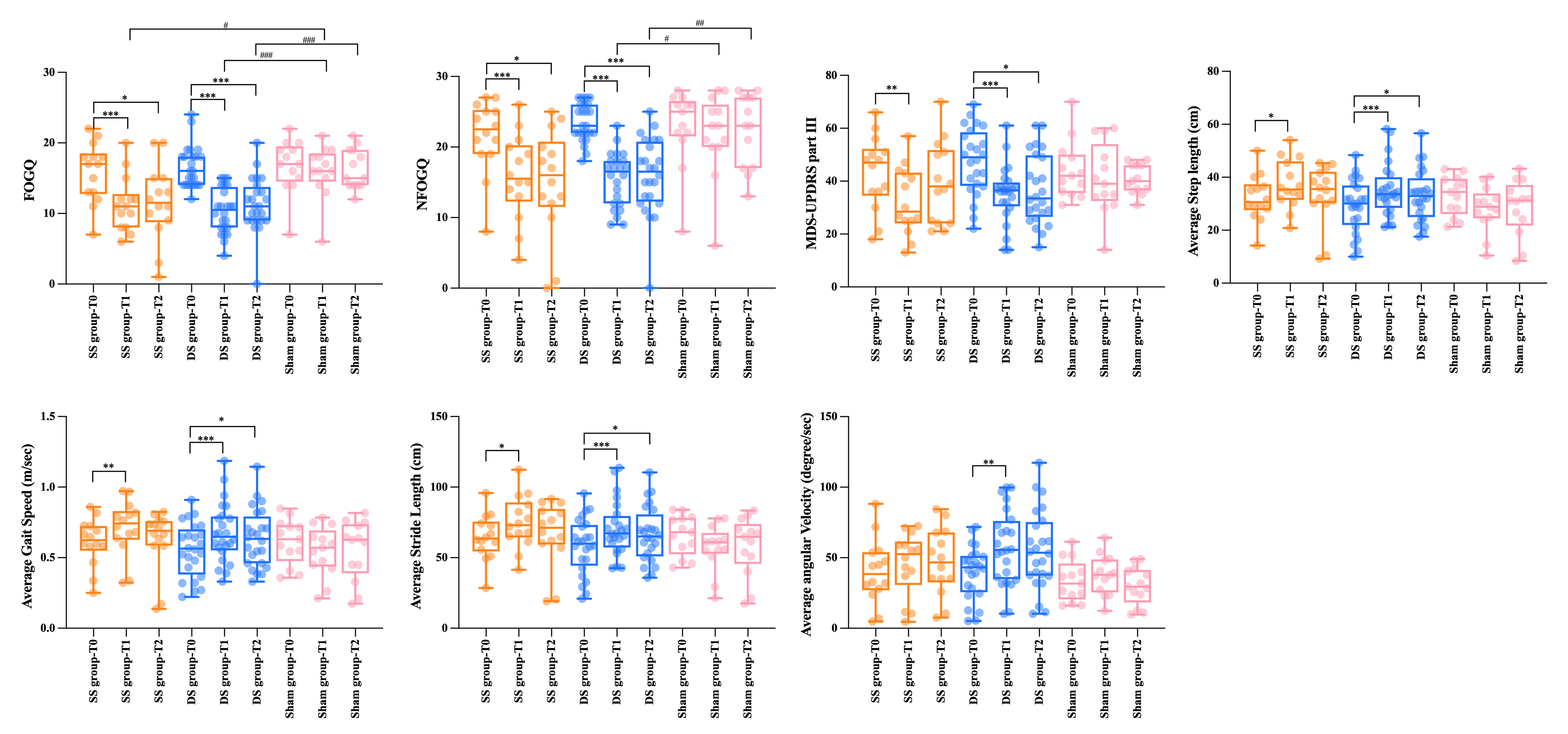
Figure 2
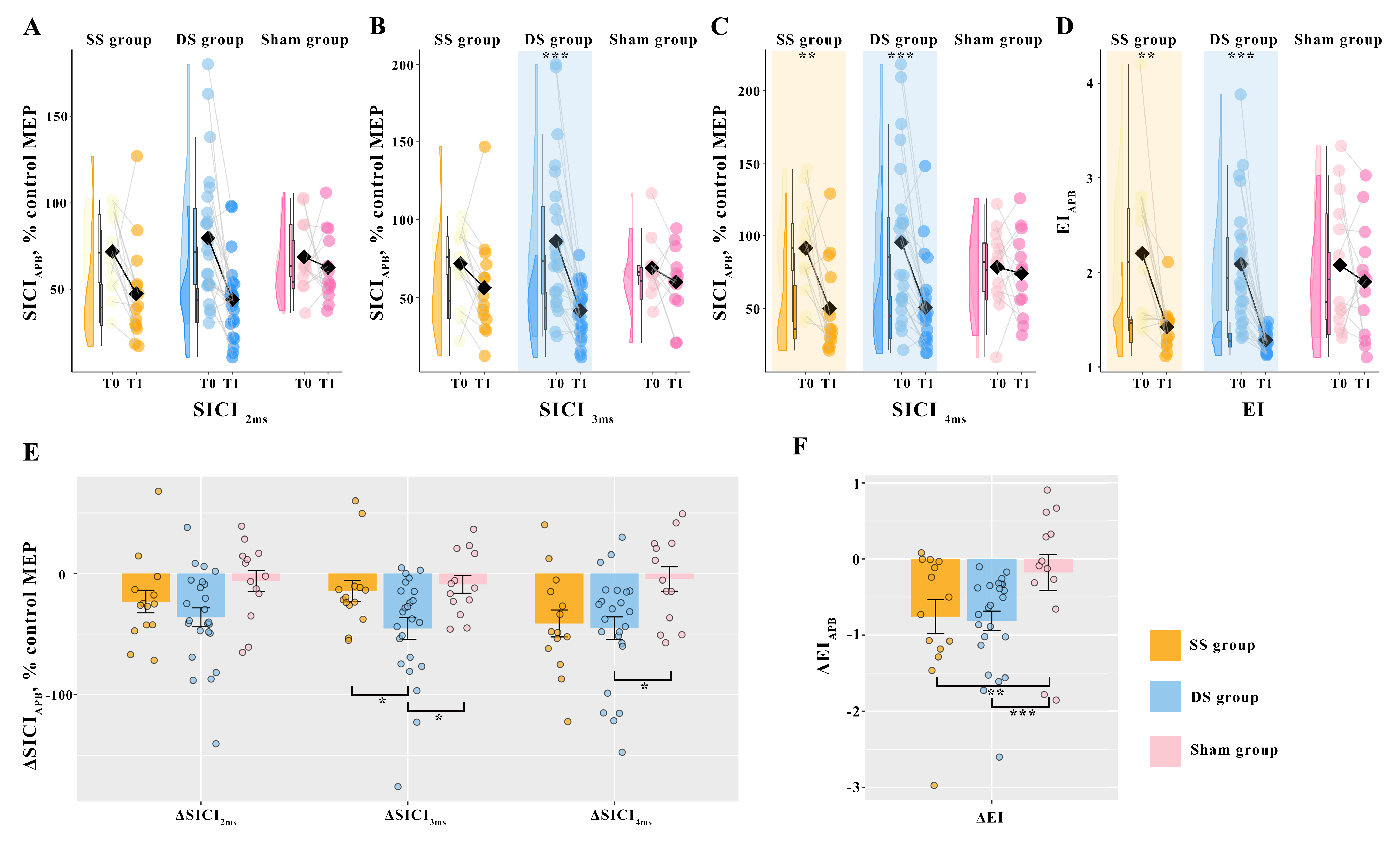
Figure 3
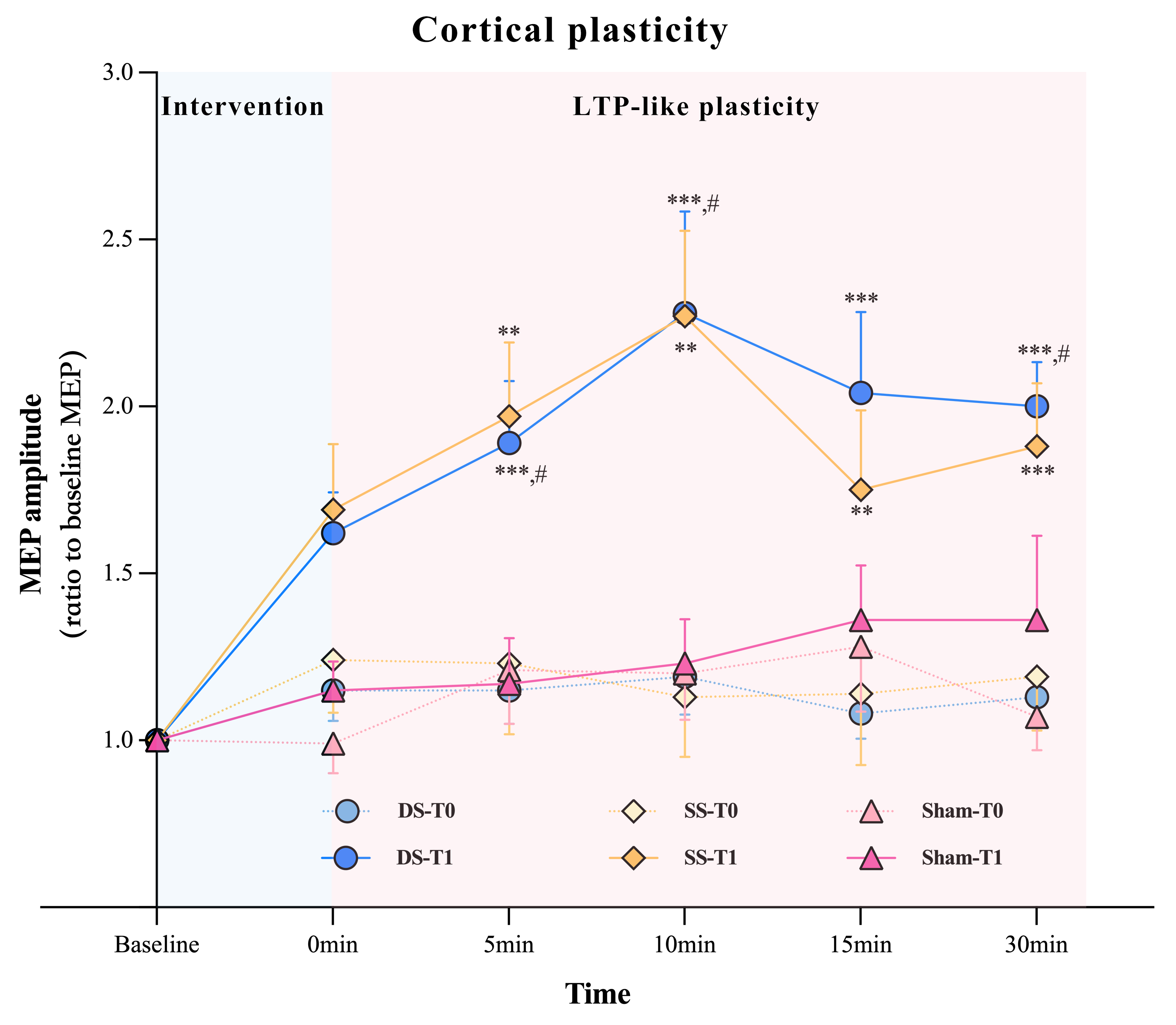
Figure 4
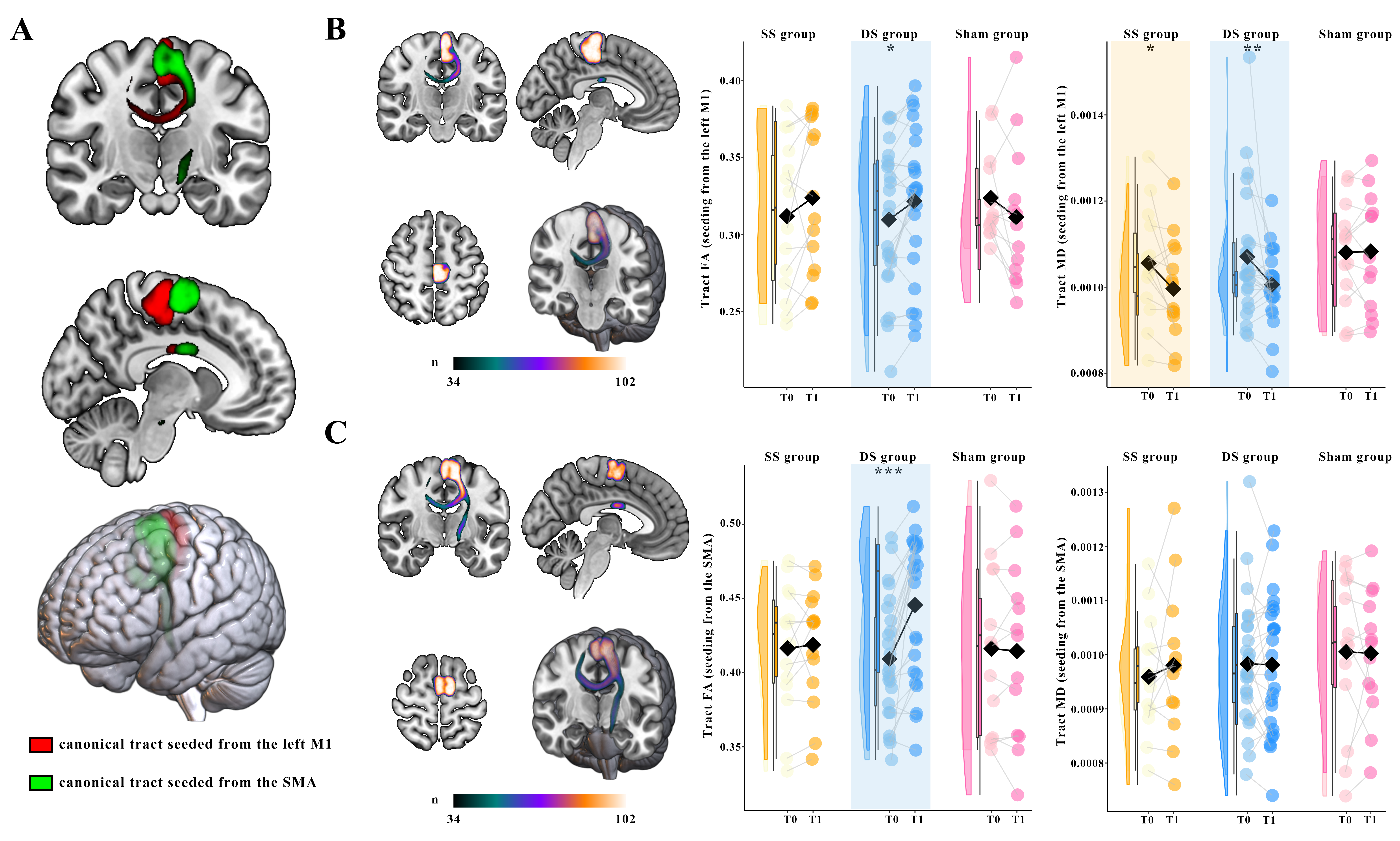
Figure 5
To cite this abstract in AMA style:
C. Gan, K. Zhang. Dual-Site Transcranial Magnetic Stimulation Ameliorates Freezing of Gait in Parkinson’s Disease by Remodeling Cortical Excitatory-Inhibitory Balance and White Matter Microstructure: A Randomized Controlled Trial [abstract]. Mov Disord. 2026; 41 (suppl 1). https://www.mdsabstracts.org/abstract/dual-site-transcranial-magnetic-stimulation-ameliorates-freezing-of-gait-in-parkinsons-disease-by-remodeling-cortical-excitatory-inhibitory-balance-and-white-matter-microstructure-a-randomiz/. Accessed October 1, 2026.« Back to 2026 International Congress
MDS Abstracts - https://www.mdsabstracts.org/abstract/dual-site-transcranial-magnetic-stimulation-ameliorates-freezing-of-gait-in-parkinsons-disease-by-remodeling-cortical-excitatory-inhibitory-balance-and-white-matter-microstructure-a-randomiz/