
Objective: To assess the clinical validity of an Android-based application for remote, objective quantification of tremor and hand bradykinesia (2D) in Parkinson’s disease against reference-standard instruments and clinical measures.
Background: Parkinson’s disease is a chronic, progressive neurodegenerative disorder requiring reliable motor monitoring for effective management, yet access to specialist clinical assessment and instrumented testing is constrained by visit dependency, inter-rater variability, particularly in resource-constrained healthcare environments. Modern smartphones provide a platform for sensing and camera-based assessment, but integrated clinical validation of multimodal mobile tools is scarce.
Method: A cohort of 65 individuals with PD was enrolled. The multilingual smartphone application was evaluated against reference-standard instruments. For tremor assessment, the smartphone was affixed to the dorsum of the outstretched hand with a co-mounted reference accelerometer, minimising motion artefacts. Peak dominant frequency, amplitude and tremor stability index were derived from both devices. Bradykinesia of each hand was recorded during 30-second repetitive open-close tasks with palms facing the camera at approximately 30 cm. Movement duration, amplitude, and velocity were computed using computer vision and were compared across severity strata of PD based on MDS-UPDRS Part III scores.
Results: Mean participant age was 66 years, with 84% males. Reaction time testing demonstrated shorter response latency in healthy controls (n=10; mean 475 ms) versus PD patients (n=20; mean 595 ms). Smartphone tremor dominant frequency (n=18) demonstrated high agreement with gold-standard reference accelerometer recordings (intraclass correlation coefficient [ICC]=0.933; p<0.001; CI:95%). Bradykinesia analysis (n=45) revealed significantly reduced movement velocity and prolonged non-dominant hand opening duration in moderate versus mild PD participants.
Conclusion: This smartphone-based application yields good measurement accuracy for both tremor and bradykinesia, with standardised tools and clinical ratings, indicating its potential for scalable remote objective assessment and neurological monitoring of motor function in PD. Prospective multicentric trials are needed to confirm clinical generalisability and utility across diverse populations.
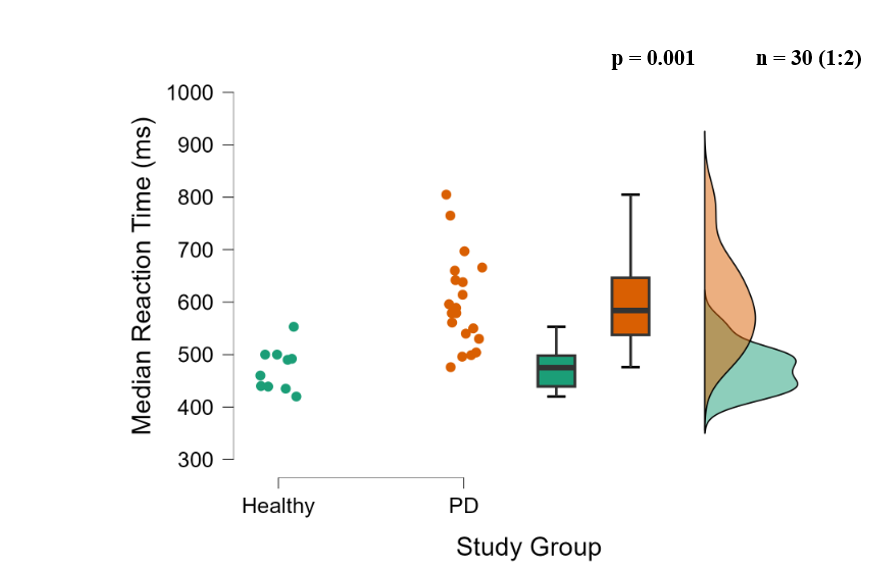
Reaction Time Analysis
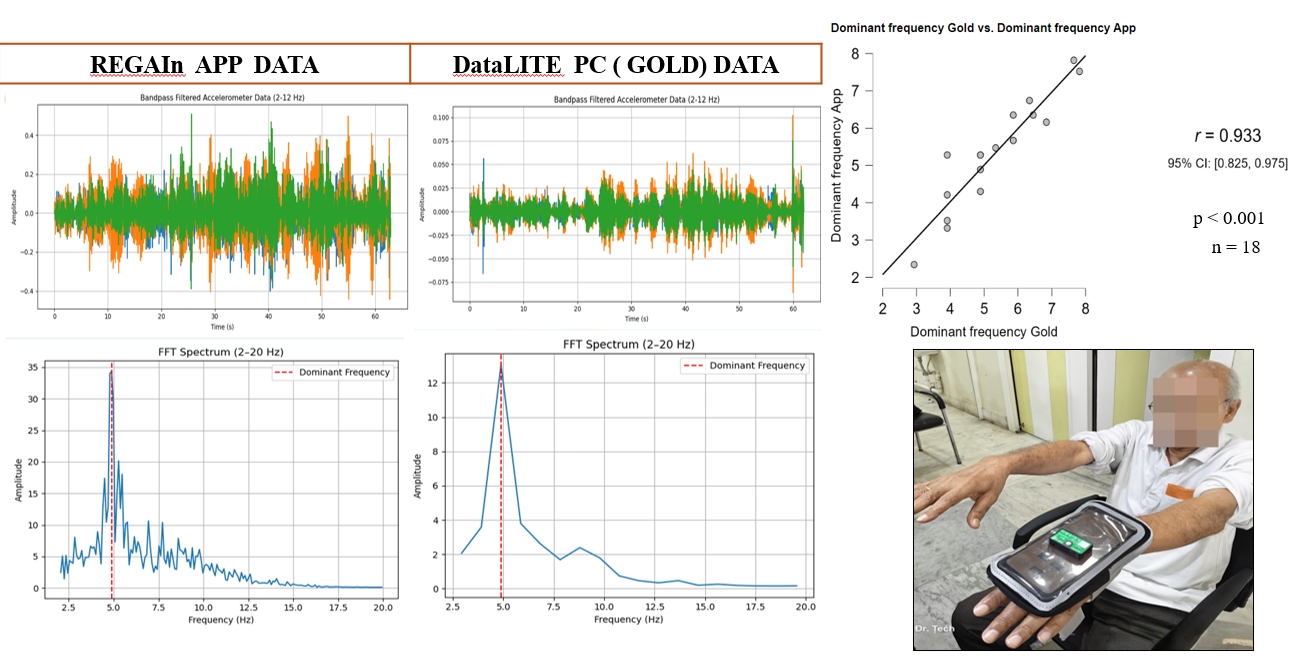
Tremor evaluation
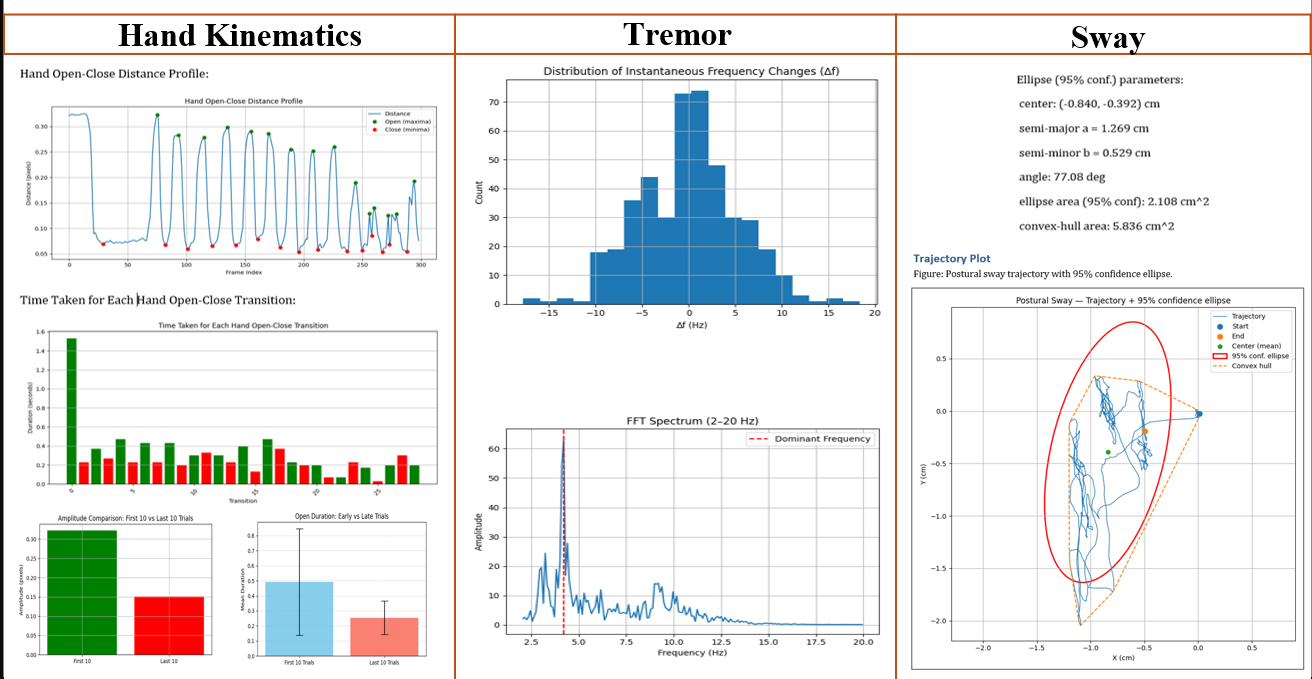
Reports compared
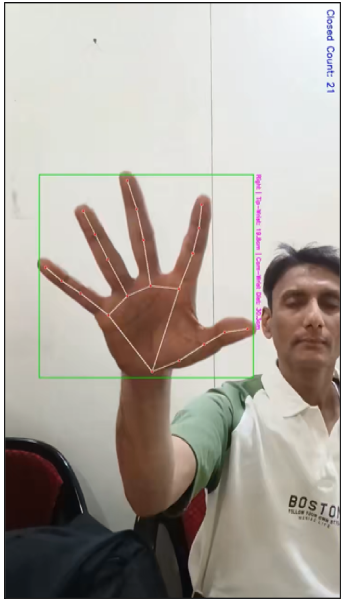
Bradykinesia analysis
To cite this abstract in AMA style:
B. Biswas, S. Pal, K. Das, D. Santra, D. Mukherjee, R. Gayen, H. Kumar, S. Choudhury. Multilingual Smartphone Application for Objective Motor Assessment in Parkinson Disease: Cross-Sectional Clinical Validation Study [abstract]. Mov Disord. 2026; 41 (suppl 1). https://www.mdsabstracts.org/abstract/multilingual-smartphone-application-for-objective-motor-assessment-in-parkinson-disease-cross-sectional-clinical-validation-study/. Accessed October 1, 2026.« Back to 2026 International Congress
MDS Abstracts - https://www.mdsabstracts.org/abstract/multilingual-smartphone-application-for-objective-motor-assessment-in-parkinson-disease-cross-sectional-clinical-validation-study/