
Objective: To characterize the clinico-demographic features of multiple system atrophy (MSA) patients in a multiethnic Malaysian cohort.
Background: MSA is a rare and rapidly progressive neurodegenerative disorder. Most epidemiological and clinical data on MSA originate from European and East Asian populations, while data from Southeast Asia remain scarce. Understanding the phenotypic spectrum of MSA across diverse populations is important for improving recognition, diagnosis, and clinical management.
Method: Patient records from two tertiary Malaysian hospitals were retrospectively reviewed. Demographic data, age at onset, family history, clinical diagnostic and supportive features for MSA (based on the 2023 MDS Diagnostic Criteria for MSA) were systematically extracted.1
Results: A total of 124 MSA patients were identified, comprising 71% Chinese, 19.4% Malays, and 4% Indians (Table 1). The MSA-parkinsonian type (MSA-P) was more common (n=77, 62.1%) than the MSA-cerebellar type (MSA-C) (n=47, 37.9%), however, by diagnostic certainty level, there were significantly more patients with clinically established MSA-C (72.3%) than MSA-P (29.9%; p=<0.001). Interestingly, 14 MSA-P patients (20.3%) reported a family history of Parkinson’s disease, compared to only 1 MSA-C patient (2.6%) (p=0.026). There were no significant differences between subtypes in mean age at motor onset (overall 58.6±8.4 years; range: 38-78), age at diagnosis (61.2±8.4 years; range: 42-81), or median diagnosis latency (2.0 years [IQR:1.0-4.0]). Notably, one-third were diagnosed >3 years after onset. Among the characteristics, constipation (91.7% vs. 75.6%, p=0.033), dysphagia within 3 years of motor onset (69.4% vs. 46.7%, p=0.024) and jerky myoclonic postural tremor (46.3% vs. 30.8%, p=0.018) were more common in MSA-P compared to MSA-C. Available mortality data in 26 patients revealed a mean survival from onset of 6.0±2.3 years (range:3-11), with no subtype differences.
Conclusion: The predominance of the MSA-P subtype in our Malaysian cohort is comparable to that reported in European cohorts.2 The markedly lower representation of Indian patients may suggest potential ethnic differences in disease occurrence, as seen also in other parkinsonian disorders.3,4 The observed diagnostic delay highlights the ongoing challenges in recognizing MSA in routine clinical practice. This study contributes to the very limited literature on MSA in Southeast Asia.
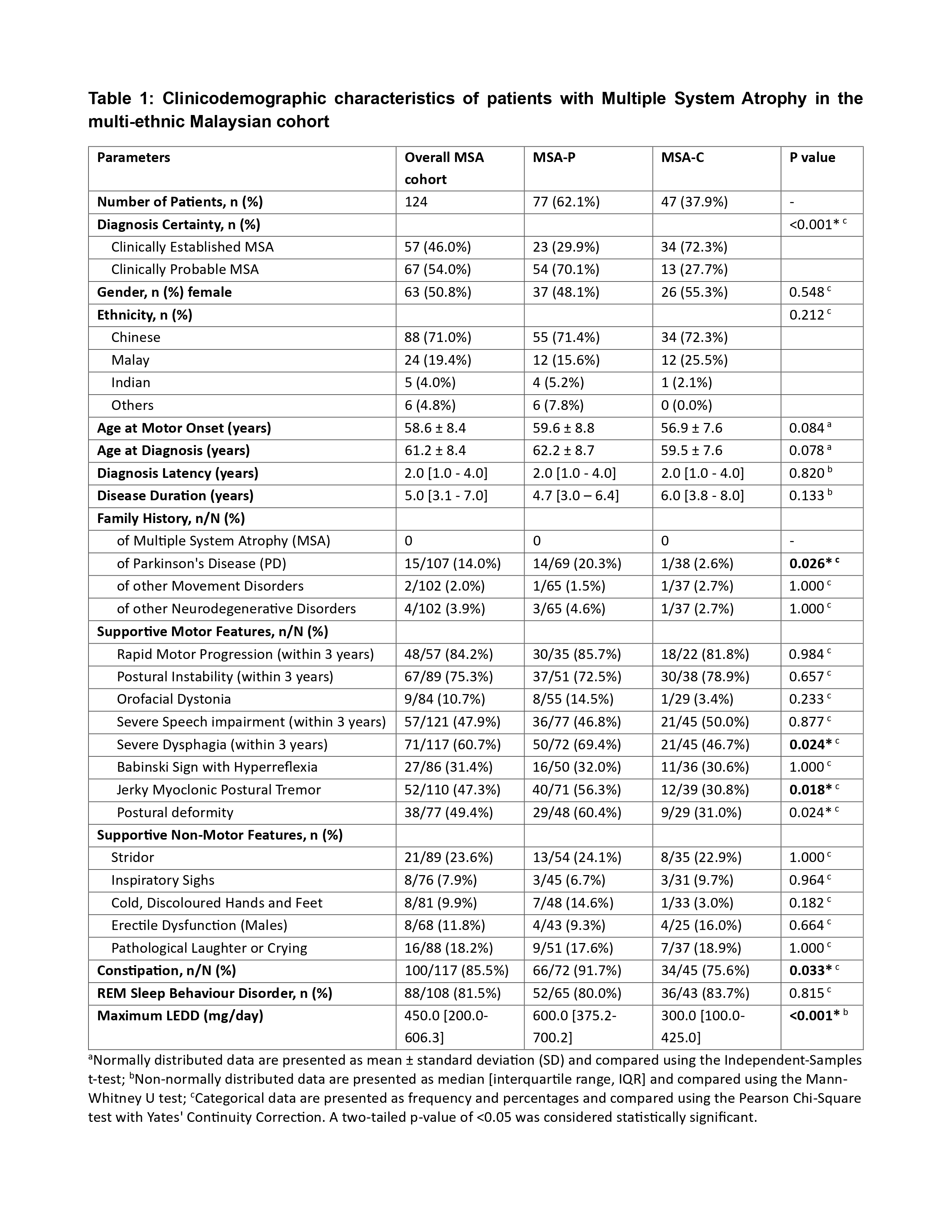
Table 1: Clinicodemograohic Characteristic
References: 1. Wenning GK, Stankovic I, Vignatelli L, et al. The Movement Disorder Society Criteria for the Diagnosis of Multiple System Atrophy. Mov Disord. 2022 Jun;37(6):1131-1148. doi: 10.1002/mds.29005.
2. Goh YY, Saunders E, Pavey S, Rushton E, Quinn N, Houlden H, Chelban V. Multiple system atrophy. Pract Neurol. 2023 Jun;23(3):208-221. doi: 10.1136/pn-2020-002797.
3. Lim SY, Dy Closas AMF, Tan AH, et al. New insights from a multi-ethnic Asian progressive supranuclear palsy cohort. Parkinsonism Relat Disord. 2023 Mar;108:105296. doi: 10.1016/j.parkreldis.2023.105296.
4. Lim SY, Tan AH, Ahmad-Annuar A, et al. Parkinson’s disease in the Western Pacific Region. Lancet Neurol. 2019 Sep;18(9):865-879. doi: 10.1016/S1474-4422(19)30195-4.
To cite this abstract in AMA style:
JWY. Tee, AMF. Dy Closas, RJ. Neo, AL. Lee, AM. Abdul Sahak, YY. Beh, JP. Schee, P. Gengadharan, YW. Tay, TS. Toh, SH. Mat Desa, SY. Lim, N. Mohammad Ibrahim, AH. Tan. Clinicodemographic characterization of Multiple System Atrophy in a multi-ethnic Malaysian cohort [abstract]. Mov Disord. 2026; 41 (suppl 1). https://www.mdsabstracts.org/abstract/clinicodemographic-characterization-of-multiple-system-atrophy-in-a-multi-ethnic-malaysian-cohort/. Accessed October 1, 2026.« Back to 2026 International Congress
MDS Abstracts - https://www.mdsabstracts.org/abstract/clinicodemographic-characterization-of-multiple-system-atrophy-in-a-multi-ethnic-malaysian-cohort/