
Objective: Chronic treatment of L-DOPA causes dyskinesia (LID) in PD patients. We aim to understand LID from a lipid-metabolism perspective and identify novel therapeutic targets.
Background: Prosaposin (PSAP) modulates sphingolipid metabolism. Sphingolipid-related changes have been found in LID patients and the rat LID model. Sensitized striatal D1 neurons are suspected to induce LID. Lipid rafts are critical for dopamine receptor signaling. The sensitization of the D1 receptor may rely on lipid metabolism.
Method: PSAP levels in L-DOPA-chronically treated 6-OHDA-induced hemiparkinsonian rats were determined. PSAP was conditionally deleted in D1-expressing neurons in mice (cPSAPD1). Striatal and non-striatal molecular and functional changes of these mice were examined. MALDI-MSI was adopted to spatially map the lipidome in the striatum. We investigated the susceptibility of cPSAPD1 mice to LID by performing a MFB lesion and then administering chronic L-DOPA treatment. We examined lipid metabolism in the striatum of these mouse LID models.
Results: PSAP levels were upregulated in the lesioned striatum of the rat LID model. The cPSAPD1 mouse line was generated, and PSAP conditional knockout was confirmed in the striatal and non-striatal D1-expressing regions (Fig.1). cPSAPD1 mice showed unaltered levels of striatal markers and neuropeptides, as well as responses to psychostimulants (Fig.2). cPSAPD1 mice show unchanged GABA levels but increased dopamine, 3-MT, and tyramine in the striatum and cortex (Fig.2). cPSAPD1 mice displayed lipofuscin accumulation composed of gangliosides and phospholipids only in the non-striatal D1-expressing regions (Fig.3). cPSAPD1 mice showed mildly changed levels of claustrum-enriched genes and significantly reduced evoked glutamate release in the cortex (Fig.4). cPSAPD1 mice were less susceptible to LID (Fig.4). MALDI-MSI further revealed fewer lipid alterations in the striatum of cPSAPD1 mice, compared to WT mice (Fig.5).
Conclusion: PSAP is upregulated in the striatum of the LID model. PSAP deletion in D1 neurons disrupts function and lipid metabolism in non-striatal regions but not in the striatum. Instead, this strategy counteracts LID, probably by counteracting L-DOPA-induced lipid changes in PD. Thus, PSAP in striatal D1 neurons provides a therapeutic target for LID in PD.
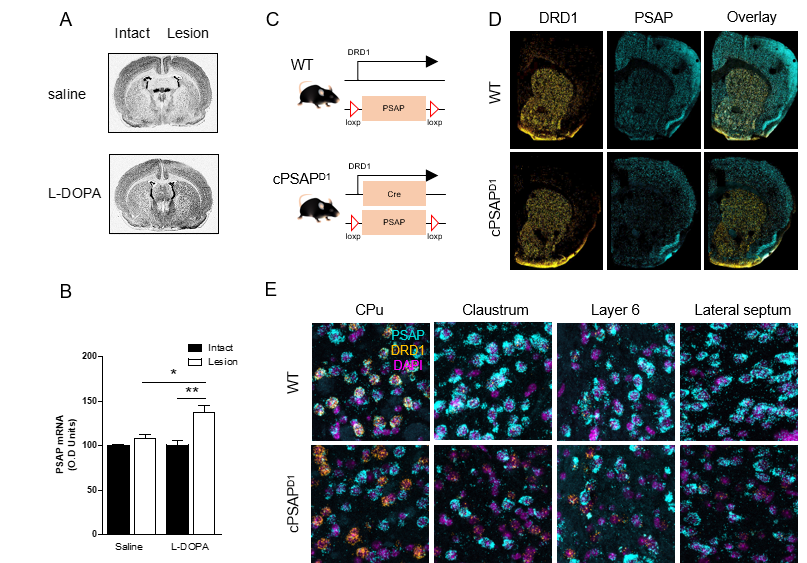
PSAP elevation in LID rat model and PSAP deletion
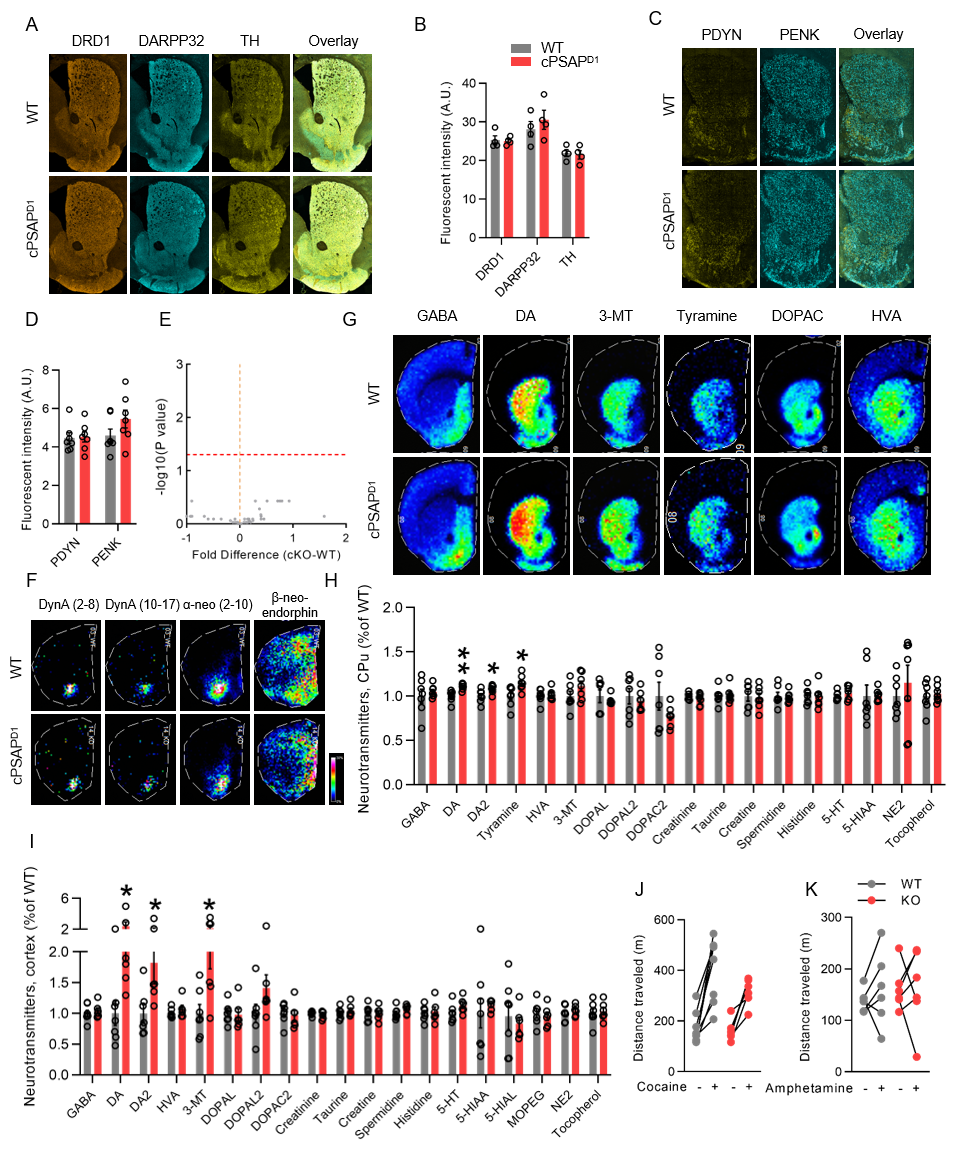
Reserved levels of striatal markers and functions
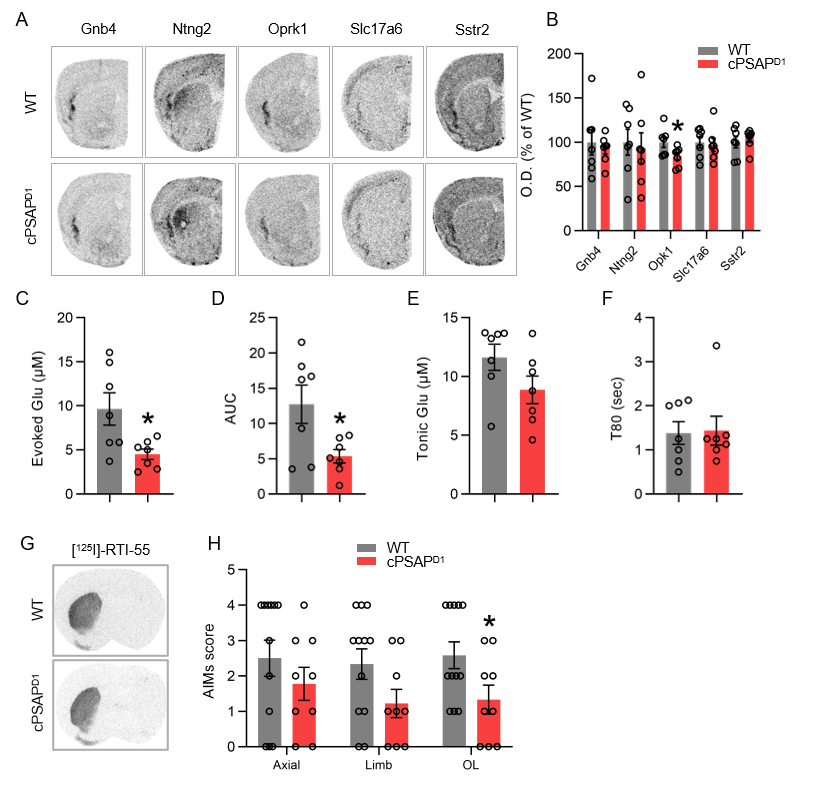
Damaged non-striatal features and LID resistance
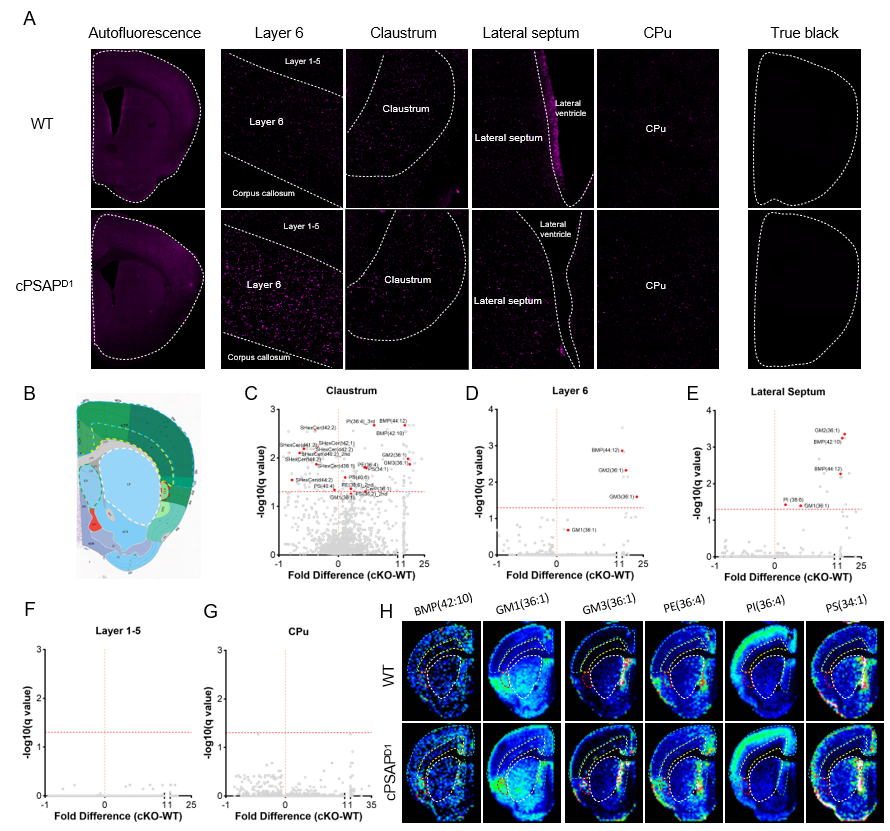
Disrupted lipid metabolism of cPSAPD1 mice
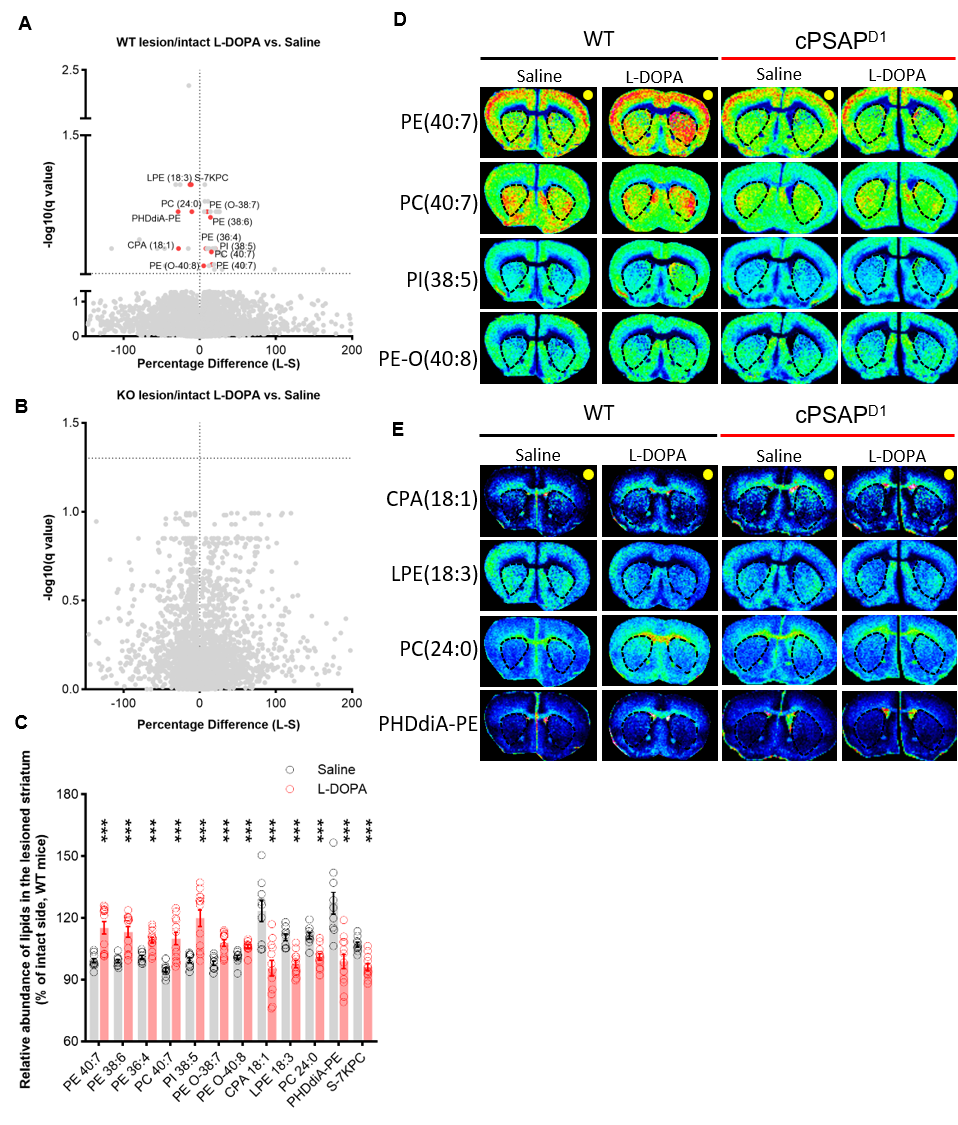
Lipid metabolism of WT and cPSAPD1 LID mice
To cite this abstract in AMA style:
Y. He, I. Kaya, Y. Yang, A. Nilsson, R. Shariatgorji, I. Mantas, X. Zhang, P. Andren, P. Svenningsson. Prosaposin differentially modulates lipid metabolism of striatal and non-striatal dopamine D1 receptor-expressing neurons and regulates L-DOPA-induced dyskinesia [abstract]. Mov Disord. 2026; 41 (suppl 1). https://www.mdsabstracts.org/abstract/prosaposin-differentially-modulates-lipid-metabolism-of-striatal-and-non-striatal-dopamine-d1-receptor-expressing-neurons-and-regulates-l-dopa-induced-dyskinesia/. Accessed October 1, 2026.« Back to 2026 International Congress
MDS Abstracts - https://www.mdsabstracts.org/abstract/prosaposin-differentially-modulates-lipid-metabolism-of-striatal-and-non-striatal-dopamine-d1-receptor-expressing-neurons-and-regulates-l-dopa-induced-dyskinesia/