
Objective: To investigate whether inflammatory and lipid-related biomarkers (IL-6 and Lipoprotein(a) [Lp(a)]) are associated with the risk of developing Parkinson’s disease (PD) and motor severity after stroke, and to examine if sleep quality mediates these associations.
Background: Recent studies have shown that inflammation and lipid substances are closely associated with the onset and progression of Parkinson’s disease and stroke, respectively(1,2). However, their role in the risk of developing Parkinson’s disease in stroke patients remains unclear.
Method: A prospective multicenter cohort study was conducted with 8228 stroke survivors. Baseline levels of IL-6 and Lp(a) were measured, and sleep quality was assessed using the Pittsburgh Sleep Quality Index (PSQI). Cox proportional hazards and linear regression models were applied to analyze the relationship between these biomarkers and the risk of PD, as well as motor severity (measured by UPDRS-III). Time-dependent ROC, calibration, and decision curve analyses were used to evaluate the predictive power of IL-6 and Lp(a) for post-stroke PD. Mediation analysis was conducted to examine if sleep quality mediates these associations.
Results: After adjusting for covariates, each unit increase in IL-6 and Lp(a) was associated with a 22% (HR = 1.22, 95% CI, 1.10-1.40, P < 0.001) and 36% (HR = 1.36, 95% CI, 1.16-1.60, P < 0.001) higher risk of incident PD, respectively. The combined effect of elevated IL-6 and Lp(a) was associated with a significantly higher risk of PD and worse motor severity [figure1, figure2]. The combination of IL-6 and Lp(a) demonstrated a moderate predictive ability for post-stroke PD risk (AUC = 0.72, 95% CI: 0.69-0.76) [figure3]. Mediation analysis showed that poor sleep quality mediated 16% to 25% of these associations [figure4]. Sensitivity analyses confirmed the robustness of the results across subgroups.
Conclusion: IL-6 and Lp(a) are independently and linearly associated with increased risk of incidental PD and greater motor severity after stroke. The combined effect of both biomarkers improves predictive accuracy for post-stroke PD. Sleep quality partially mediates these associations, suggesting that targeting inflammatory and lipid pathways, along with improving sleep quality, may help mitigate PD risk in stroke survivors.
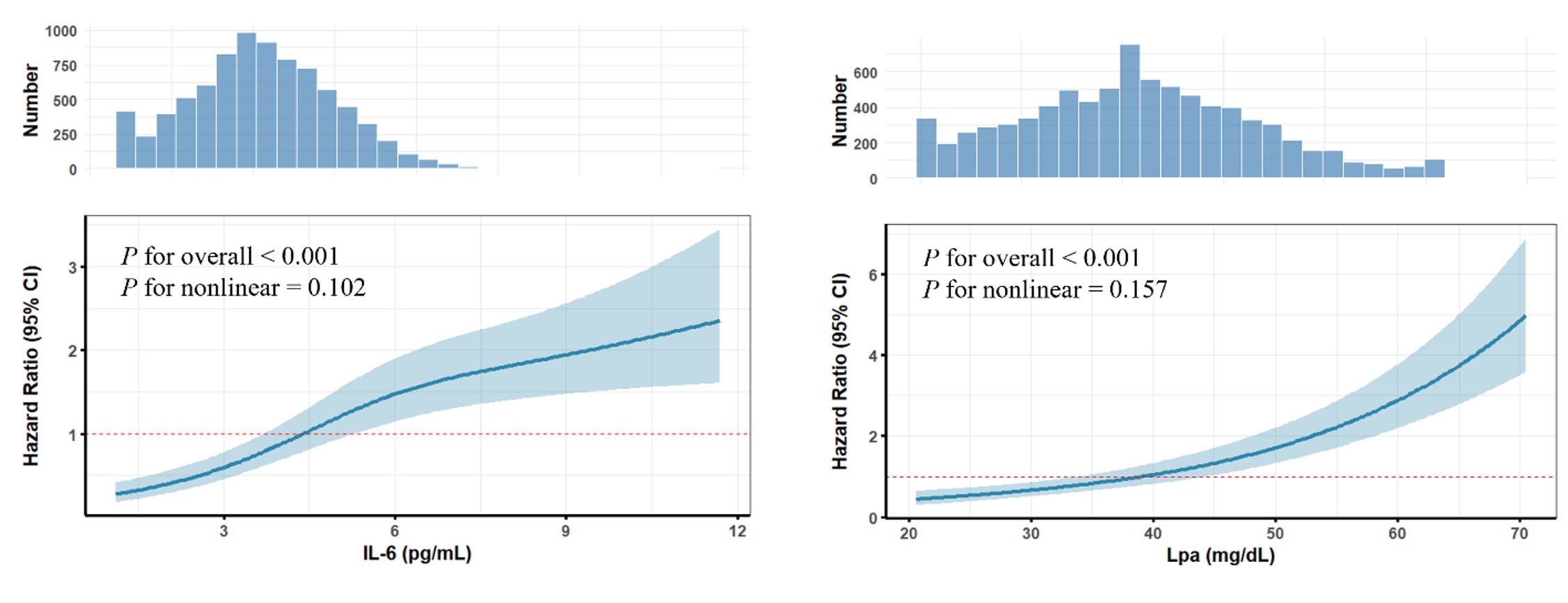
IL-6 and Lp(a) Dose-Response with PD Risk
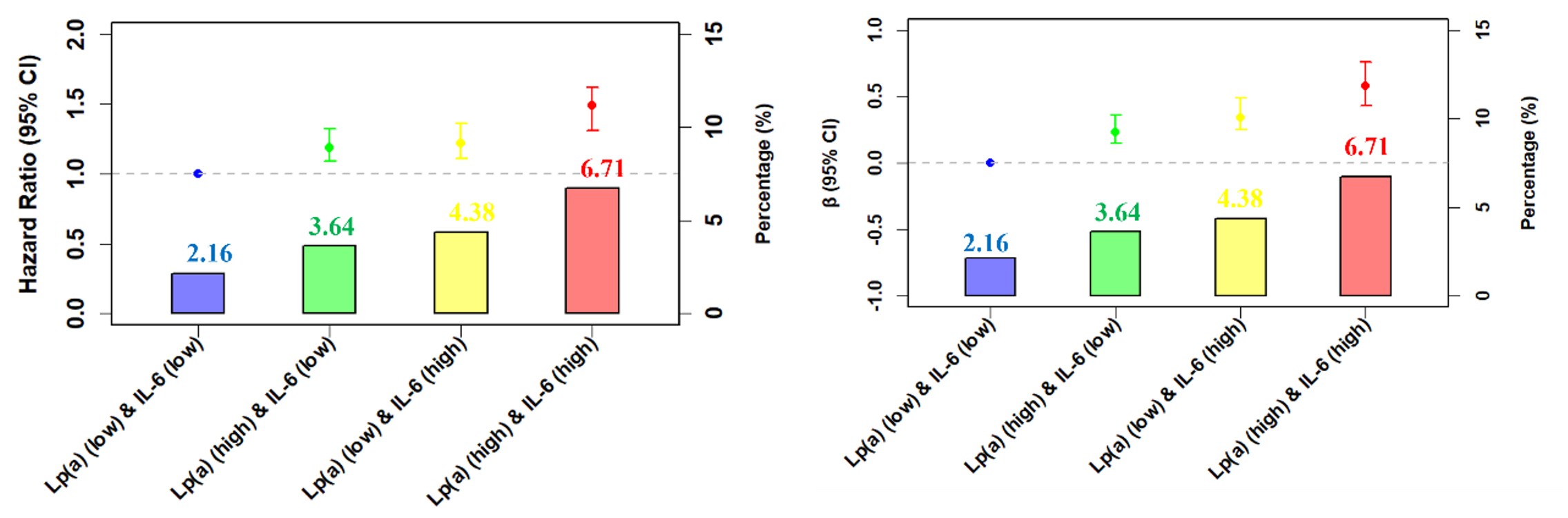
Combined IL-6 and Lp(a) Effect on PD Risk/Severity
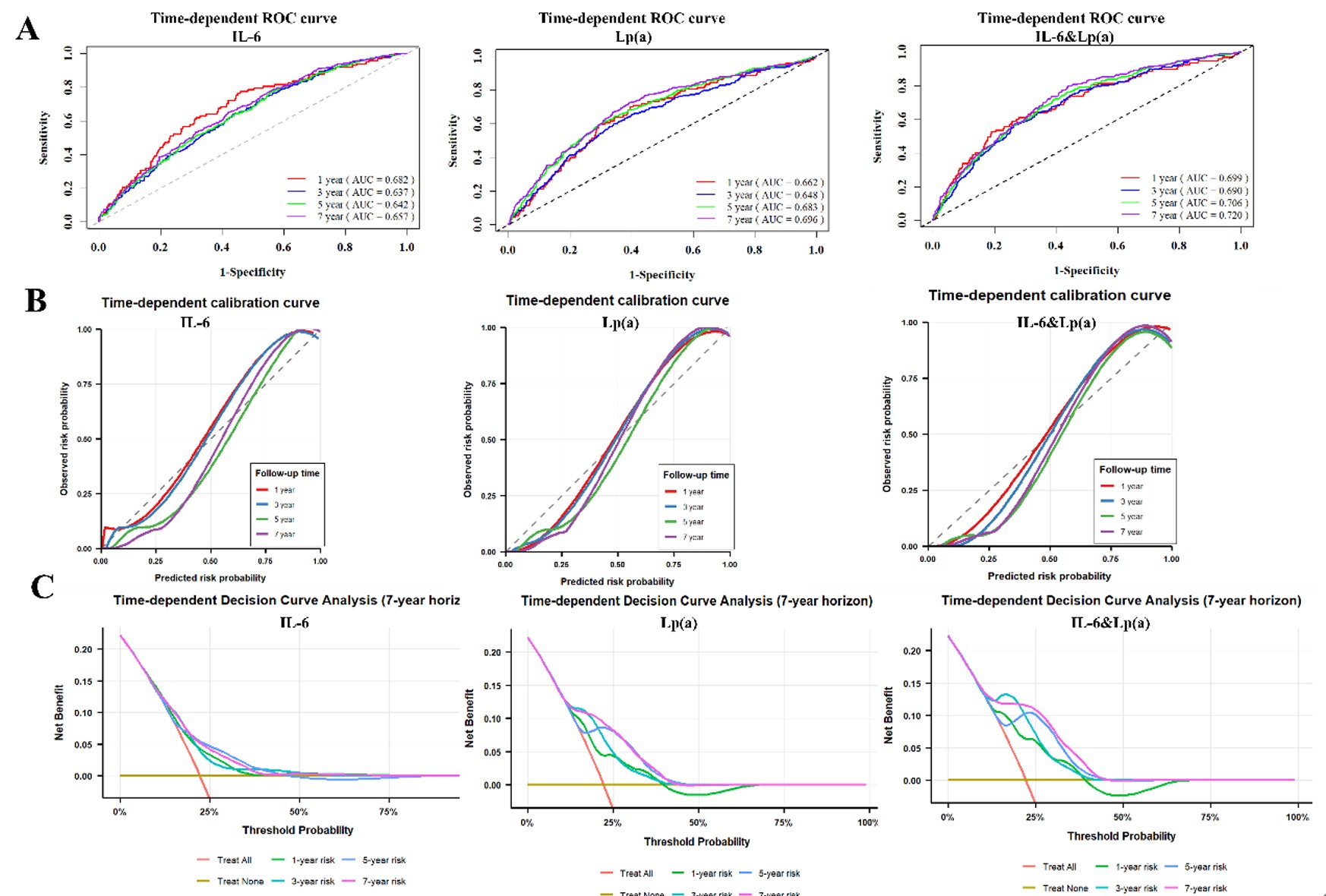
IL-6 and Lp(a) Predictive Power for Post-Stroke PD
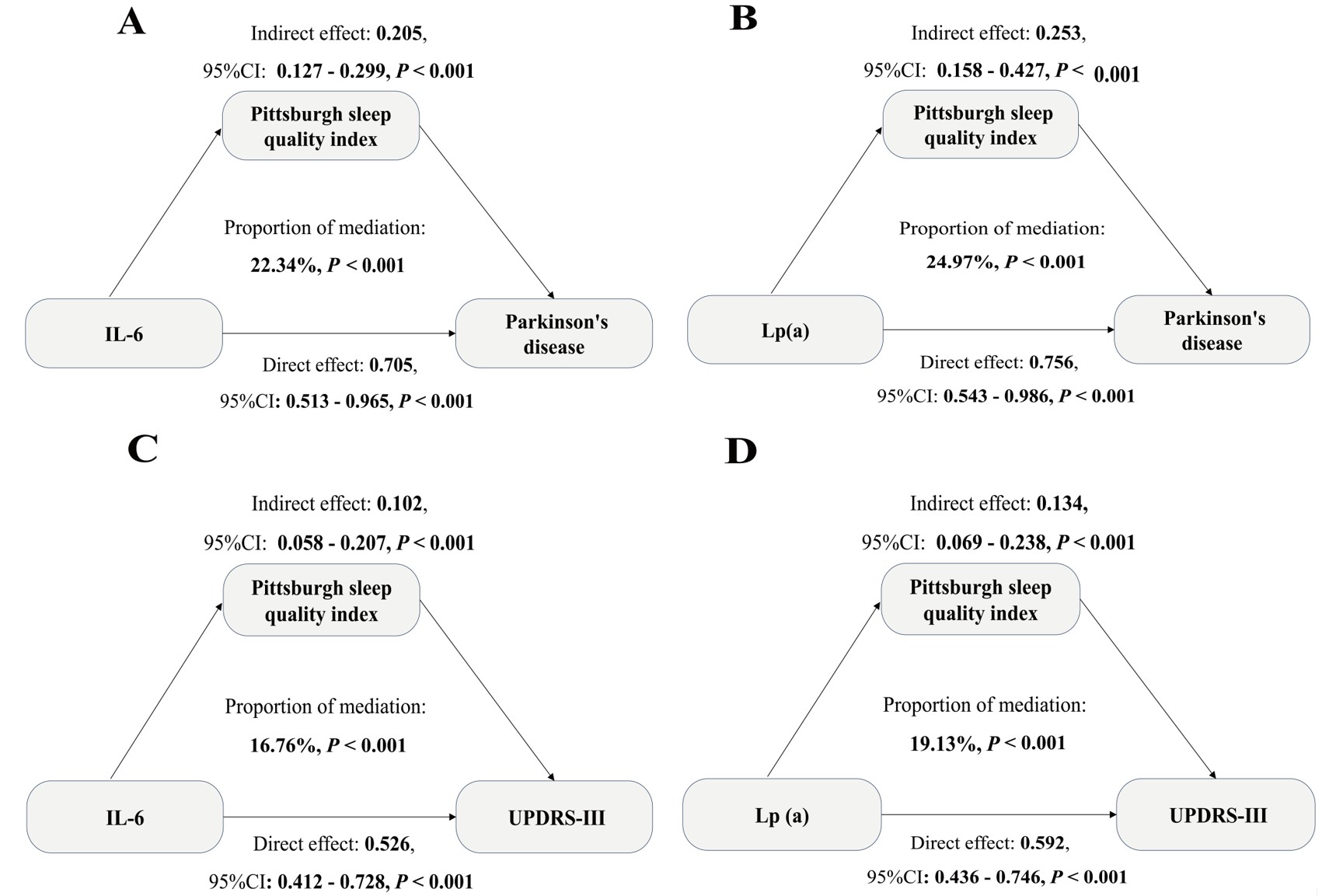
Sleep Quality Mediation in IL-6, Lp(a), and PD
References: 1. Cásedas G, Rojas-Márquez H, Ventura L, et al. Involvement of Keap1/Nrf2 and the antioxidant defense in cytoprotective effects induced by cannabis polyphenols in SH-SY5Y neuronal cells. Biomed Pharmacother 2026;196:119048. https://doi.org/10.1016/j.biopha.2026.119048
2. Thornton BT, Hardinger AG, Pence L, et al. Progressive neuroinflammation and deficits in motor function in a mouse model with an Epg5 pathogenic variant of Vici syndrome. Exp Mol Med 2026;58(1):284–295. https://doi.org/10.1038/s12276-026-01644-z
To cite this abstract in AMA style:
Z. Zhu, H. Wang, Y. Geng, Z. Yin, Y. Xu, M. Xu, J. Shi, Y. Yuan, K. Yi, D. Geng, K. Zhang. Association of IL-6 and Lp(a) with Incidental Parkinson’s Disease Risk and Motor Severity After Stroke: A Prospective Cohort Study [abstract]. Mov Disord. 2026; 41 (suppl 1). https://www.mdsabstracts.org/abstract/association-of-il-6-and-lpa-with-incidental-parkinsons-disease-risk-and-motor-severity-after-stroke-a-prospective-cohort-study/. Accessed October 1, 2026.« Back to 2026 International Congress
MDS Abstracts - https://www.mdsabstracts.org/abstract/association-of-il-6-and-lpa-with-incidental-parkinsons-disease-risk-and-motor-severity-after-stroke-a-prospective-cohort-study/