
Objective: To investigate causes of death and the impact of clinical predictors on mortality among patients with Parkinson’s disease (PD) and parkinsonism in a population-based incident cohort in southeastern Minnesota and western Wisconsin.
Background: PD is the fastest-growing neurodegenerative disease, with its global burden nearly tripling over 30 years. Although PD and parkinsonism are linked to increased mortality, epidemiological data on comorbidities and acute medical events determining cause-specific mortality remain inconsistent.
Method: Patients with incident parkinsonism from 1991 to 2020 were identified using the Rochester Epidemiology Project. A movement disorder specialist adjudicated causes of death and identified acute medical events and comorbidities through comprehensive retrospective review of medical records and death certificates. Cox proportional hazards regression adjusted for age and sex assessed the impact of clinical features on mortality.
Results: A total of 1,336 patients were included; 848 (63.5%) were male. The median age at death was 83 years (IQR: 77-88). Infection was the leading cause of death (37.7%), with urinary tract infections (UTIs) comprising 59.0% of all infectious-related deaths. Falls were the most frequent acute contributing events (28.4%), often preceding death but more rarely being the primary cause. In PD, infection had a mortality rate of 2.23 deaths per 100 person-years (95% CI: 1.9-2.54). Compared with PD, both atypical parkinsonism (HR = 2.78, 95% CI: 1.98-3.91) and Lewy body dementia (HR = 1.47, 95% CI: 1.02-2.02) showed higher mortality risk for infection. Atypical parkinsonism also had the highest cardiovascular mortality risk (HR: 2.82, 95% CI: 1.43-5.60).
Conclusion: Infections, particularly UTIs, were leading drivers of mortality, especially in parkinsonism subtypes characterized by a more complex clinical profile. Notably, urinary symptom severity has been linked to greater nigrostriatal dopaminergic degeneration, and cognitive decline has been associated with increased likelihood of urinary catheterization, thereby raising UTI risk. Falls contributed substantially to morbidity, confirming their role as key risk factors for hospitalization-related complications, immobilization, and reduced survival. These findings suggest a complex interplay between neurodegeneration, susceptibility to acute medical events, and poorer prognosis.
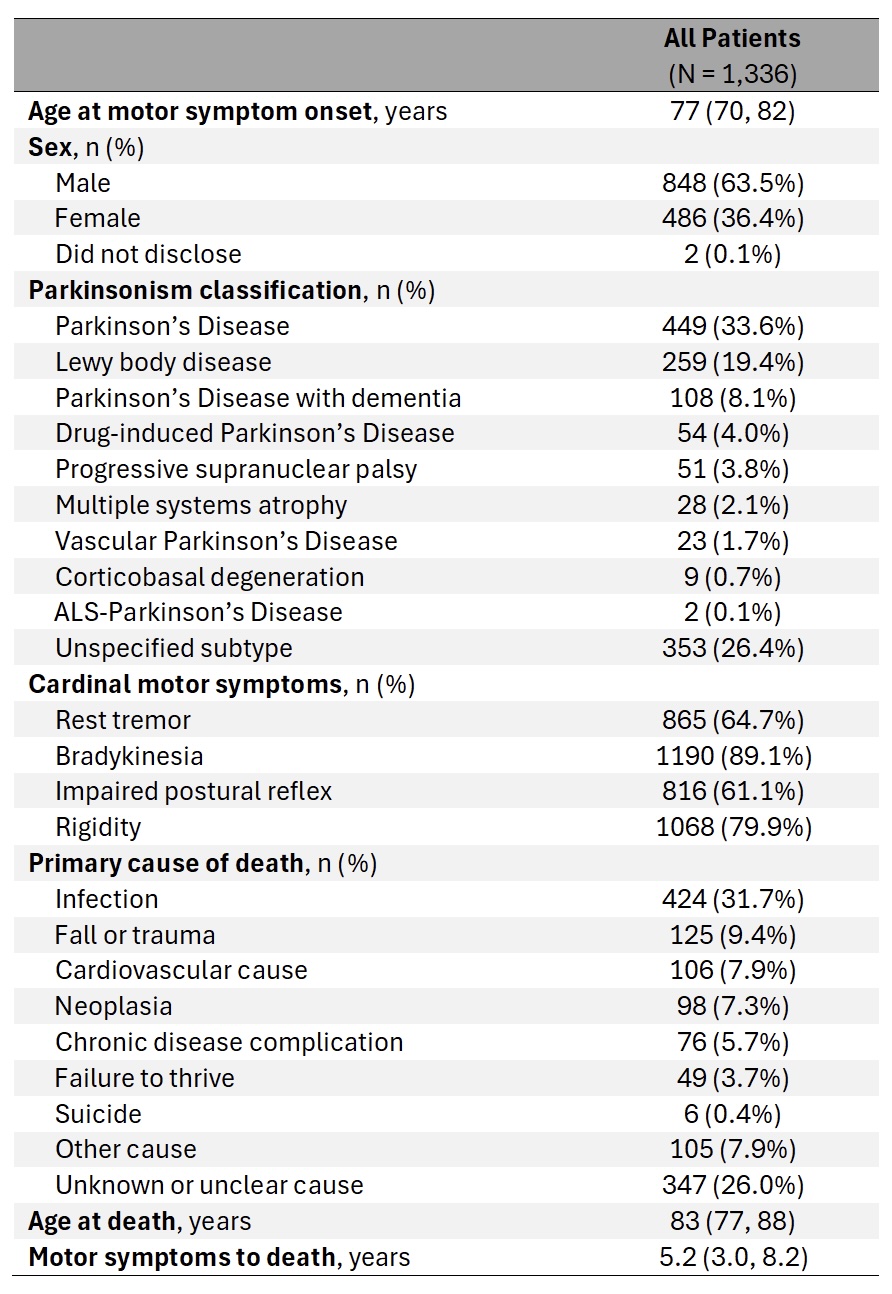
Table 1
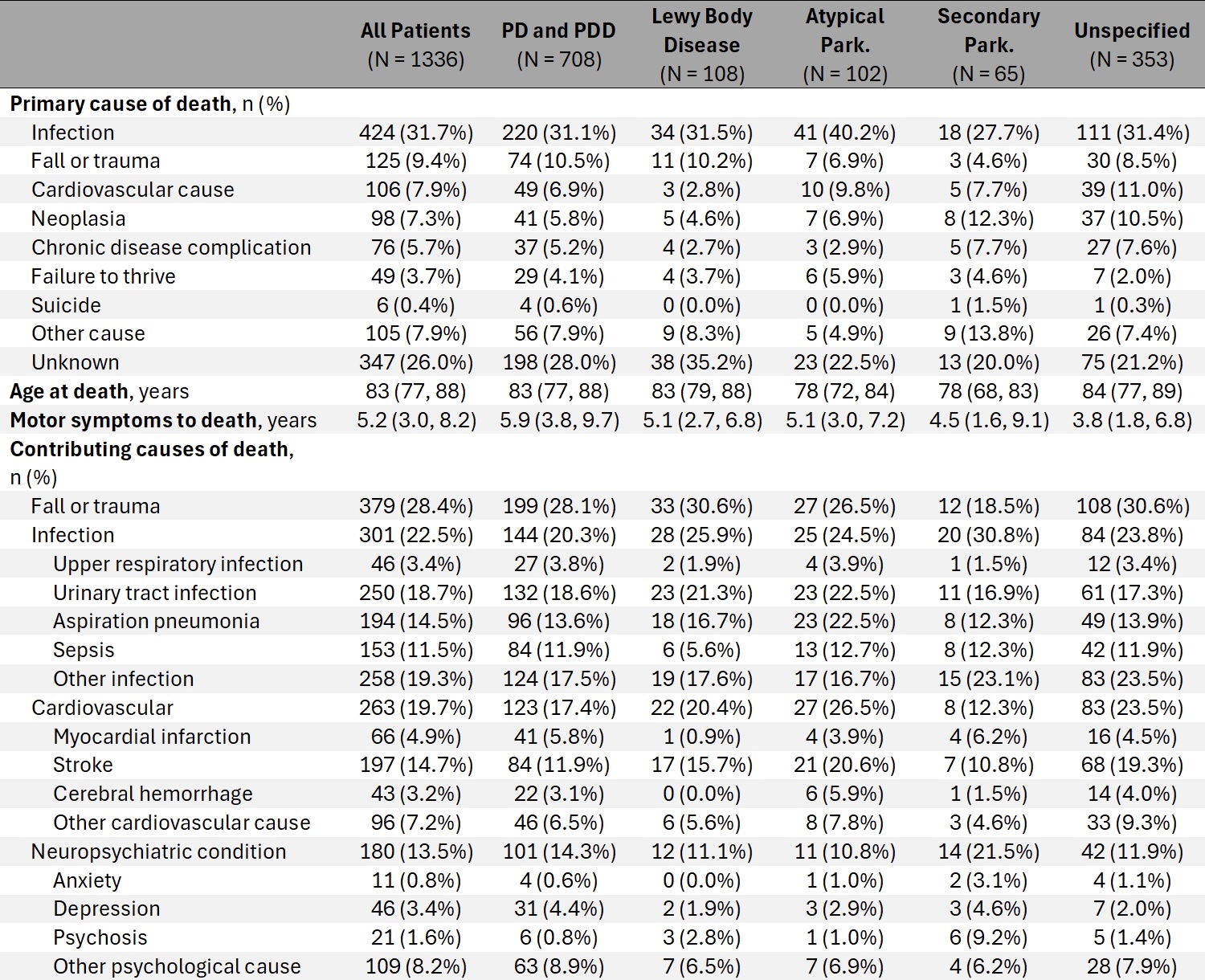
Table 2
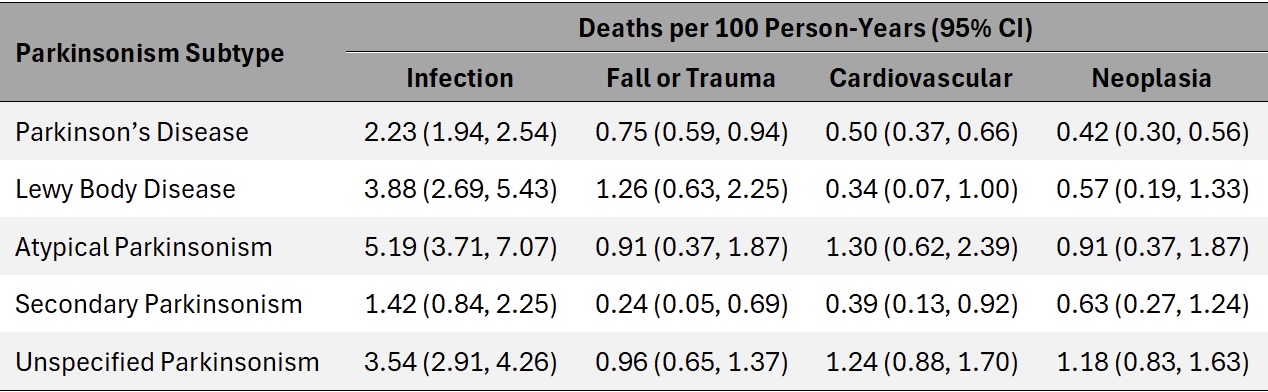
Table 3
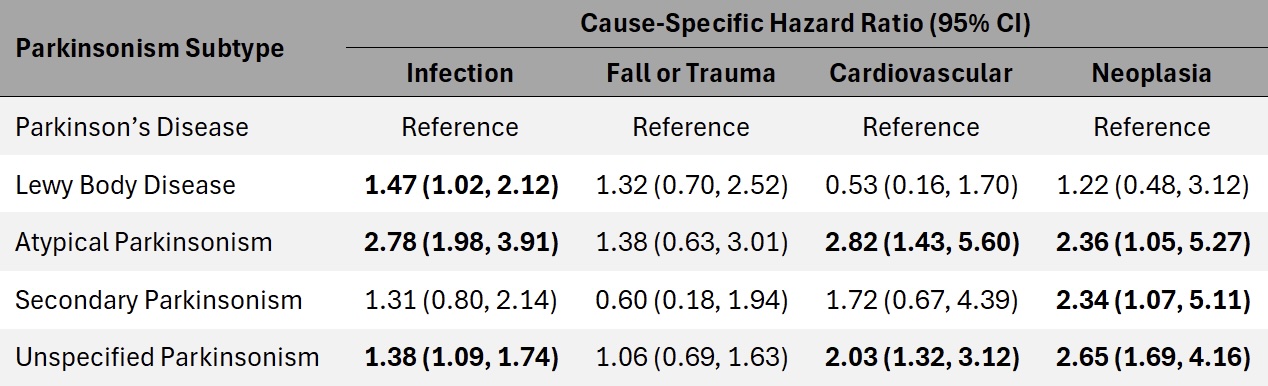
Table 4
References: [1] Hogg E, Frank S, Oft J, Benway B, Rashid MH, Lahiri S. Urinary Tract Infection in Parkinson’s Disease. J Parkinsons Dis. 2022;12(3):743-757. doi: 10.3233/JPD-213103. PMID: 35147552; PMCID: PMC9108555.
[2] Fasano A, Canning CG, Hausdorff JM, Lord S, Rochester L. Falls in Parkinson’s disease: A complex and evolving picture. Mov Disord. 2017;32(11):1524-1536. doi:10.1002/mds.27195
To cite this abstract in AMA style:
F. Onorati, L. Malfer, A. Mullan, R. Savica. Causes of Death and Clinical Predictors of Mortality in Parkinson’s Disease and Parkinsonism: A 30-Year Population-Based Study [abstract]. Mov Disord. 2026; 41 (suppl 1). https://www.mdsabstracts.org/abstract/causes-of-death-and-clinical-predictors-of-mortality-in-parkinsons-disease-and-parkinsonism-a-30-year-population-based-study/. Accessed October 1, 2026.« Back to 2026 International Congress
MDS Abstracts - https://www.mdsabstracts.org/abstract/causes-of-death-and-clinical-predictors-of-mortality-in-parkinsons-disease-and-parkinsonism-a-30-year-population-based-study/