
Category: Technology
Objective: To investigate the incidence, risk factors, and management of DBS-related infections at a center in Vietnam.
Background: Deep brain stimulation (DBS) is an established treatment for advanced Parkinson’s disease and other movement disorders. However, postoperative infection remains a significant complication that may require additional treatment and interrupt therapeutic benefit.
Method: We conducted a retrospective study of all patients who underwent DBS implantation between December 2021 and December 2025 at the University Medical Center, Ho Chi Minh City. Preoperative characteristics, intraoperative variables, and postoperative factors were analysed to identify potential risk factors for surgical site infection.
Results: A total of 42 patients underwent DBS surgery. Postoperative infection occurred in 9 patients (21.4%). The median time from surgery to infection was 28.8 days (range 2–150). Most infections were superficial (55.5%), and seroma was the most common presenting symptom (88.9%). Postoperative hyperglycemia and inflammatory biomarkers (white blood cell count, CRP, ESR) were not associated with infection risk. Longer operative duration was significantly associated with infection in subgroup analysis (p=0.004). Higher BMI, comorbidities, number of MER passes, and length of hospital stay were not associated with infection. Although no pathogens were identified, most infections were successfully managed with intravenous antibiotics, resulting in a longer hospital stay (21.5 ± 15.4 days).
Conclusion: Longer operative duration may increase the risk of postoperative infection following DBS surgery. Clinical symptoms appear to be more useful indicators than inflammatory biomarkers for detecting postoperative infections. Intravenous antibiotics should be initiated in cases with clinical symptoms to manage infection.
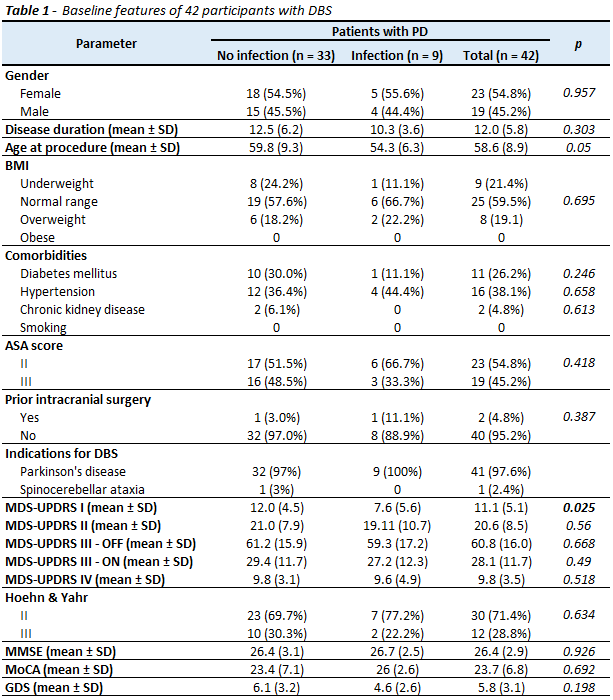
Baseline features of 42 participants with DBS
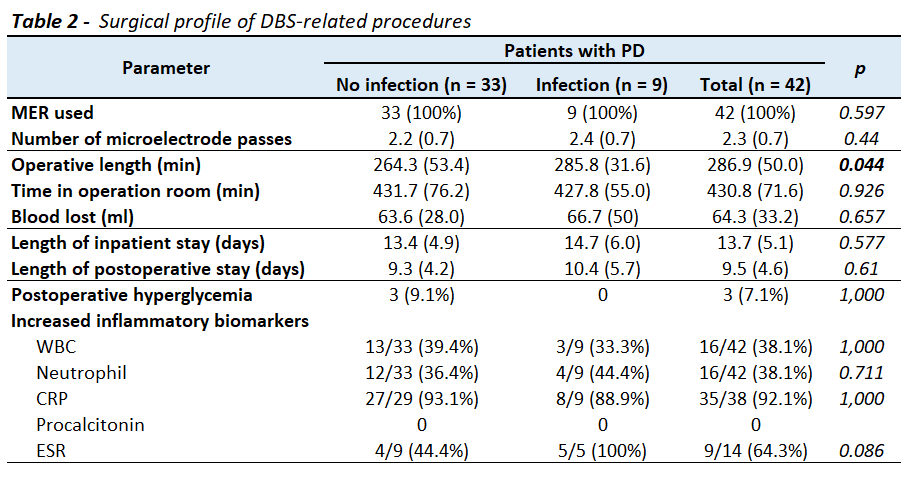
Surgical profile of DBS-related procedures
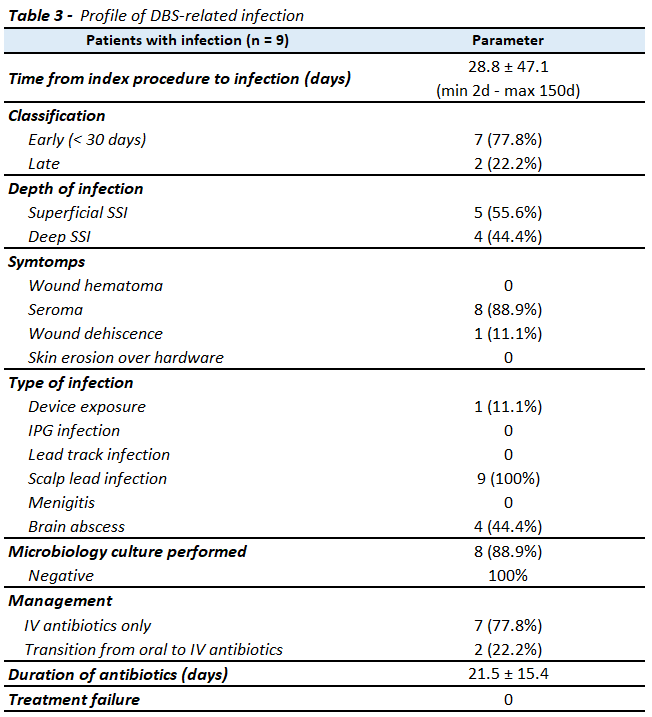
Profile of DBS-related infection
To cite this abstract in AMA style:
K. Vo, T. Tran. Risk factors and management of postoperative infection following deep brain stimulation – A single center experience [abstract]. Mov Disord. 2026; 41 (suppl 1). https://www.mdsabstracts.org/abstract/risk-factors-and-management-of-postoperative-infection-following-deep-brain-stimulation-a-single-center-experience/. Accessed October 1, 2026.« Back to 2026 International Congress
MDS Abstracts - https://www.mdsabstracts.org/abstract/risk-factors-and-management-of-postoperative-infection-following-deep-brain-stimulation-a-single-center-experience/