
Objective: To investigate clinical characteristics of REM sleep behavior disorder (RBD) in multiple system atrophy (MSA) and evaluate associations with disease severity, autonomic dysfunction, and clinical progression, focusing on subtype-specific effects.
Background: MSA is an α-synuclein–related neurodegenerative disorder characterized by autonomic failure and parkinsonian or cerebellar syndromes. RBD is a hallmark sleep manifestation of α-synucleinopathies and has been linked to disease progression in Parkinson’s disease. However, the clinical significance of RBD in MSA remains unclear.
Method: A total of 189 patients with MSA (MSA-P: n=128; MSA-C: n=61) were enrolled. RBD severity was assessed using the RBD-HK questionnaire, with probable RBD defined as score ≥19. Clinical assessments included MDS-UPDRS III, UMSARS, PDQ-39, SCOPA-AUT, and cognition. Multivariable regression examined associations between RBD and clinical variables. Multivariate Cox regression evaluated associations between RBD and five clinical milestones. Neuroimaging analyses using ¹⁸F-FDG PET, dopamine transporter positron emission tomography (DAT PET), and structural MRI assessed relationships between RBD severity and brain metabolism, dopaminergic function, and brain volume.
Results: RBD was significantly associated with clinical phenotype. After adjustment for confounders, patients with RBD showed a higher likelihood of the MSA-C subtype compared with those without RBD (OR = 4.66, 95% CI: 1.81–13.24) (Figure1). RBD was also associated with greater gastrointestinal autonomic symptom burden (β = 3.18). Multivariate Cox regression showed that greater RBD severity predicted earlier onset of dysphagia (HR = 1.042) and urinary retention (HR = 1.038) (Figure 2). In MSA-P patients, RBD severity was associated with reduced glucose metabolism in the bilateral putamen, particularly the posterior putamen (Figure 3). Structural MRI showed higher RBD scores were associated with greater putaminal atrophy (β = −17.04) (Figure4). These associations were not observed in MSA-C.
Conclusion: RBD in MSA is associated with autonomic dysfunction and earlier dysphagia and urinary retention, serving as a marker of disease progression. Greater RBD severity is also associated with reduced basal ganglia metabolism and putaminal atrophy in MSA-P, suggesting subtype-specific neurodegeneration.
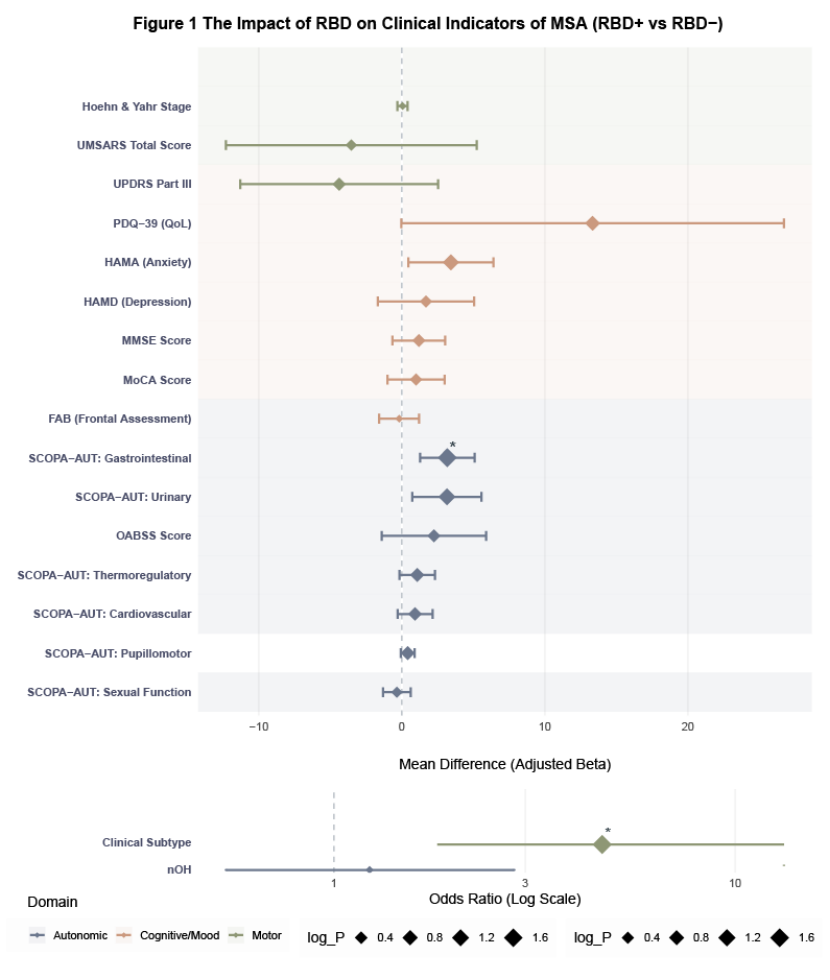
The impact of RBD on Clinical indictors of MSA
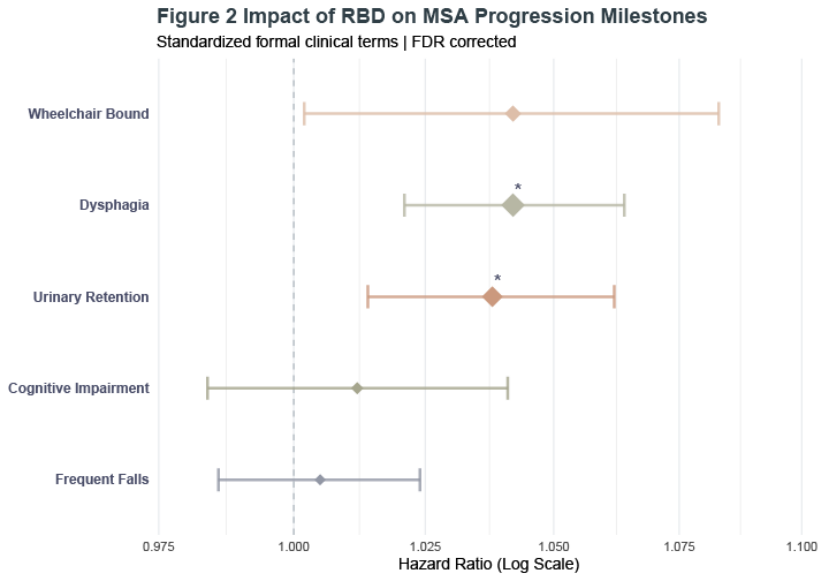
Impact of RBD on MSA Progression milestones
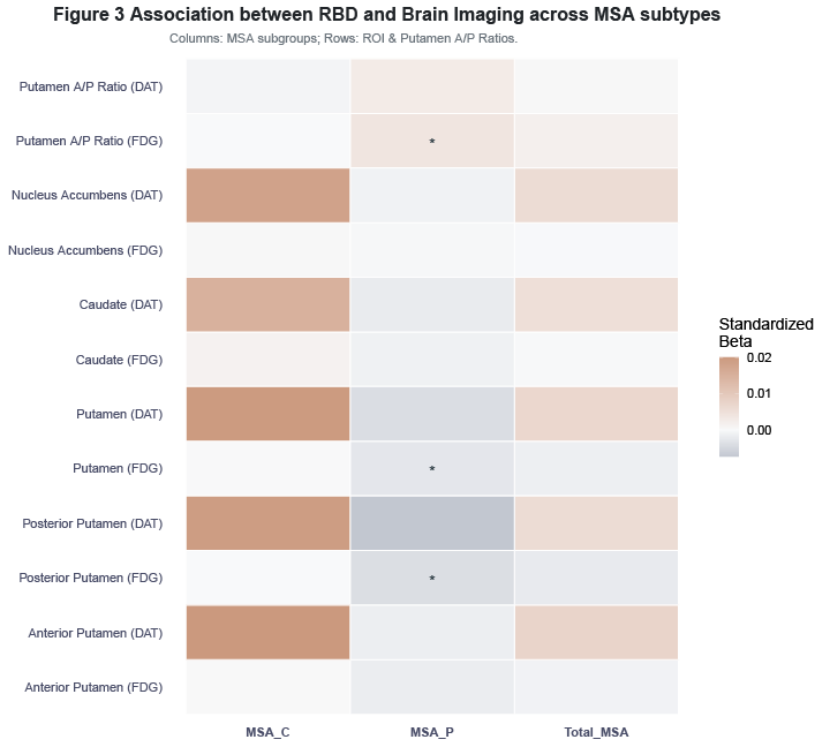
figure 3
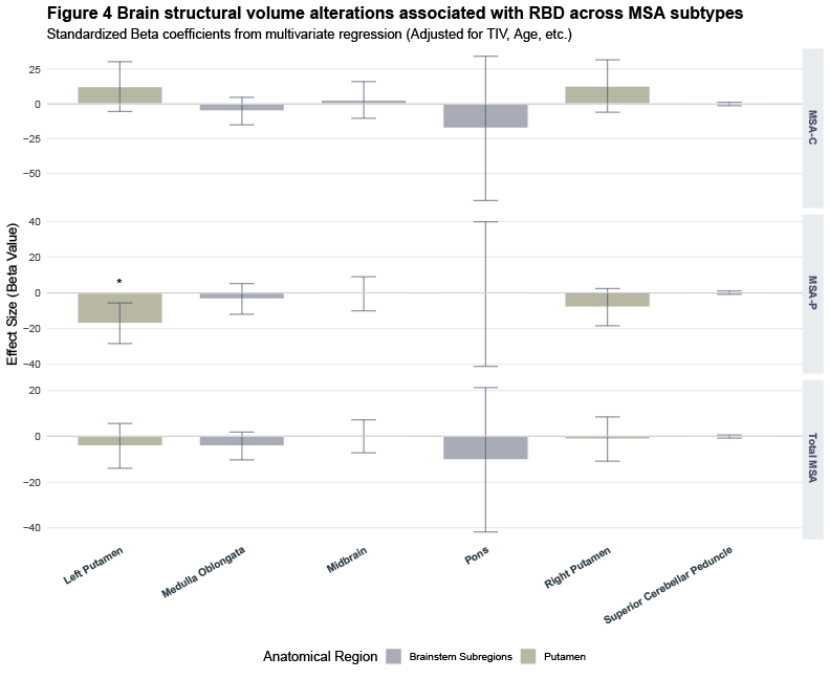
figure 4
To cite this abstract in AMA style:
N. Ni, D. Dong, W. Wang, L. Luo. REM Sleep Behavior Disorder and Clinical Progression in Multiple System Atrophy [abstract]. Mov Disord. 2026; 41 (suppl 1). https://www.mdsabstracts.org/abstract/rem-sleep-behavior-disorder-and-clinical-progression-in-multiple-system-atrophy/. Accessed October 1, 2026.« Back to 2026 International Congress
MDS Abstracts - https://www.mdsabstracts.org/abstract/rem-sleep-behavior-disorder-and-clinical-progression-in-multiple-system-atrophy/