
Objective: To review whether sleep disturbance, particularly sleep fragmentation and reduced sleep efficiency, is associated with gait deterioration, freezing of gait, and fall-related outcomes in Parkinson’s disease.
Background: Sleep dysfunction is highly prevalent in Parkinson’s disease and may reflect degeneration within brainstem networks involved in both sleep–wake regulation and gait control. While rapid eye movement sleep behavior disorder has been widely studied, the contribution of fragmented sleep and reduced sleep efficiency to axial motor decline is less clearly synthesized. Emerging clinical and mechanistic evidence suggests that disrupted sleep may worsen postural control, gait automaticity, and mobility outcomes in Parkinson’s disease.
Method: A structured review of published observational studies was performed using PubMed-indexed literature on adults with Parkinson’s disease. Eligible studies evaluated objective or validated sleep measures, including sleep efficiency, sleep fragmentation, wake after sleep onset, polysomnography-confirmed rapid eye movement sleep behavior disorder, or Parkinson’s Disease Sleep Scale–based sleep disturbance, and reported outcomes related to gait impairment, freezing of gait, motor severity, or falls. Because sleep measures and motor outcomes varied substantially across studies, findings were synthesized qualitatively.
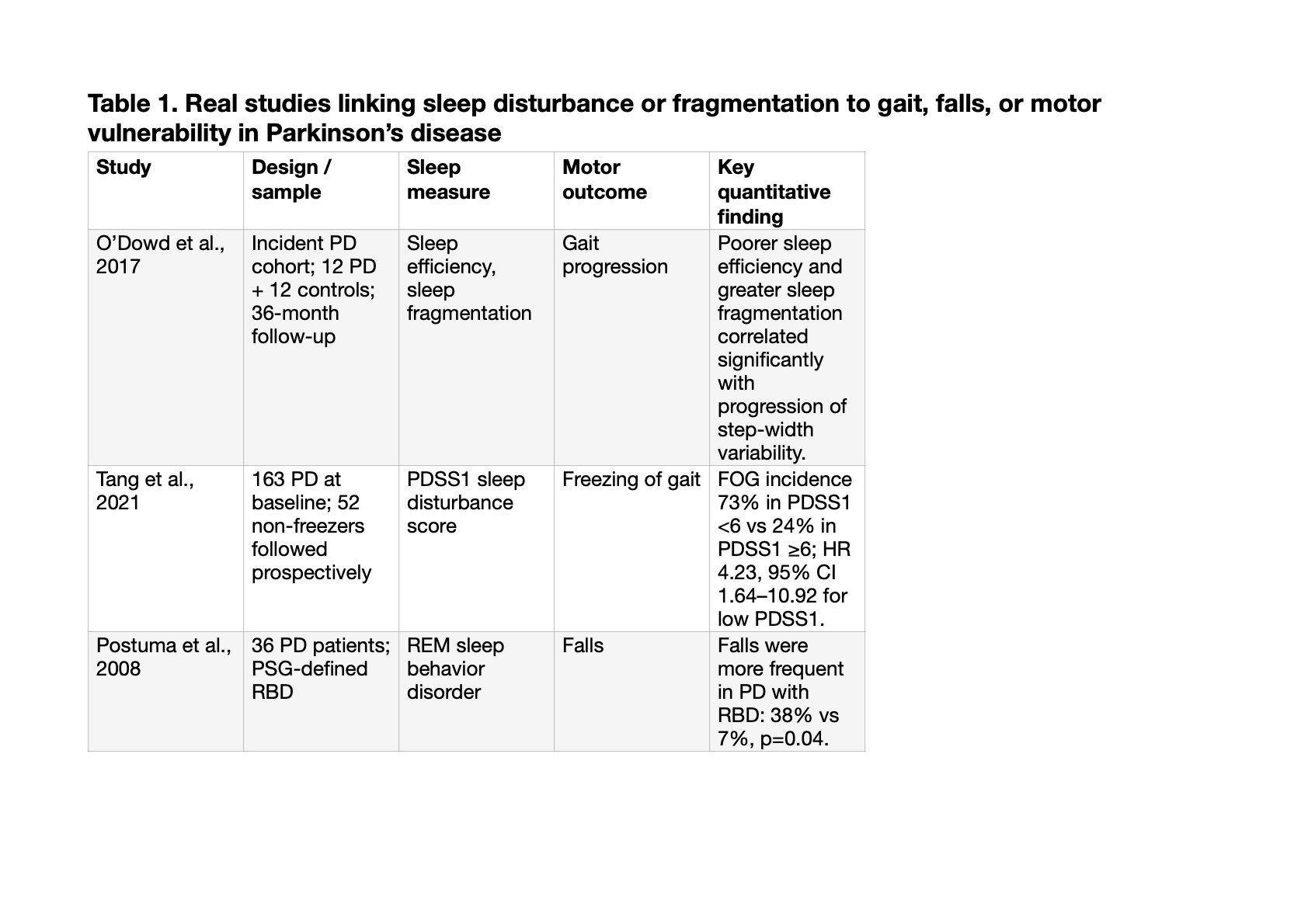
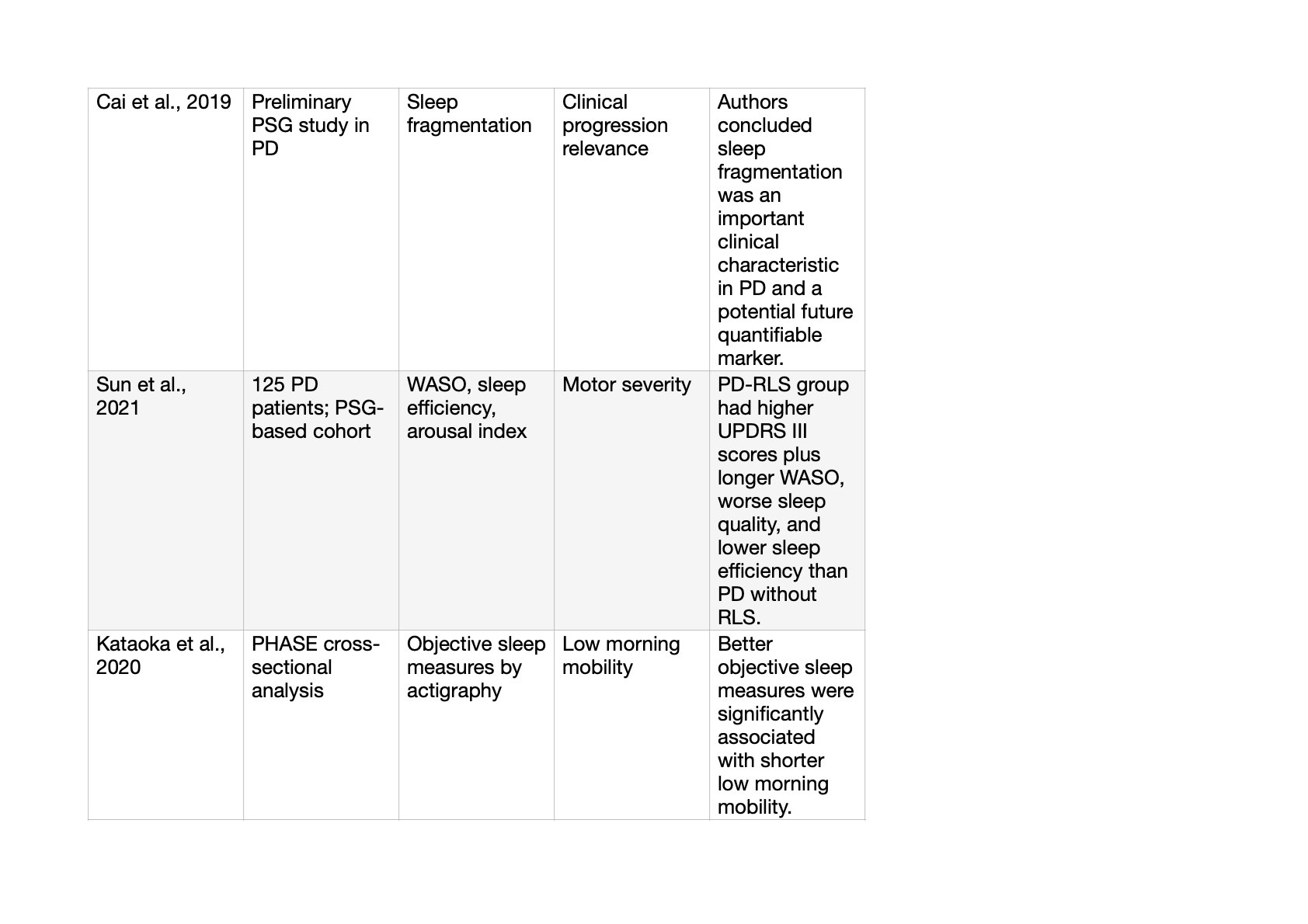
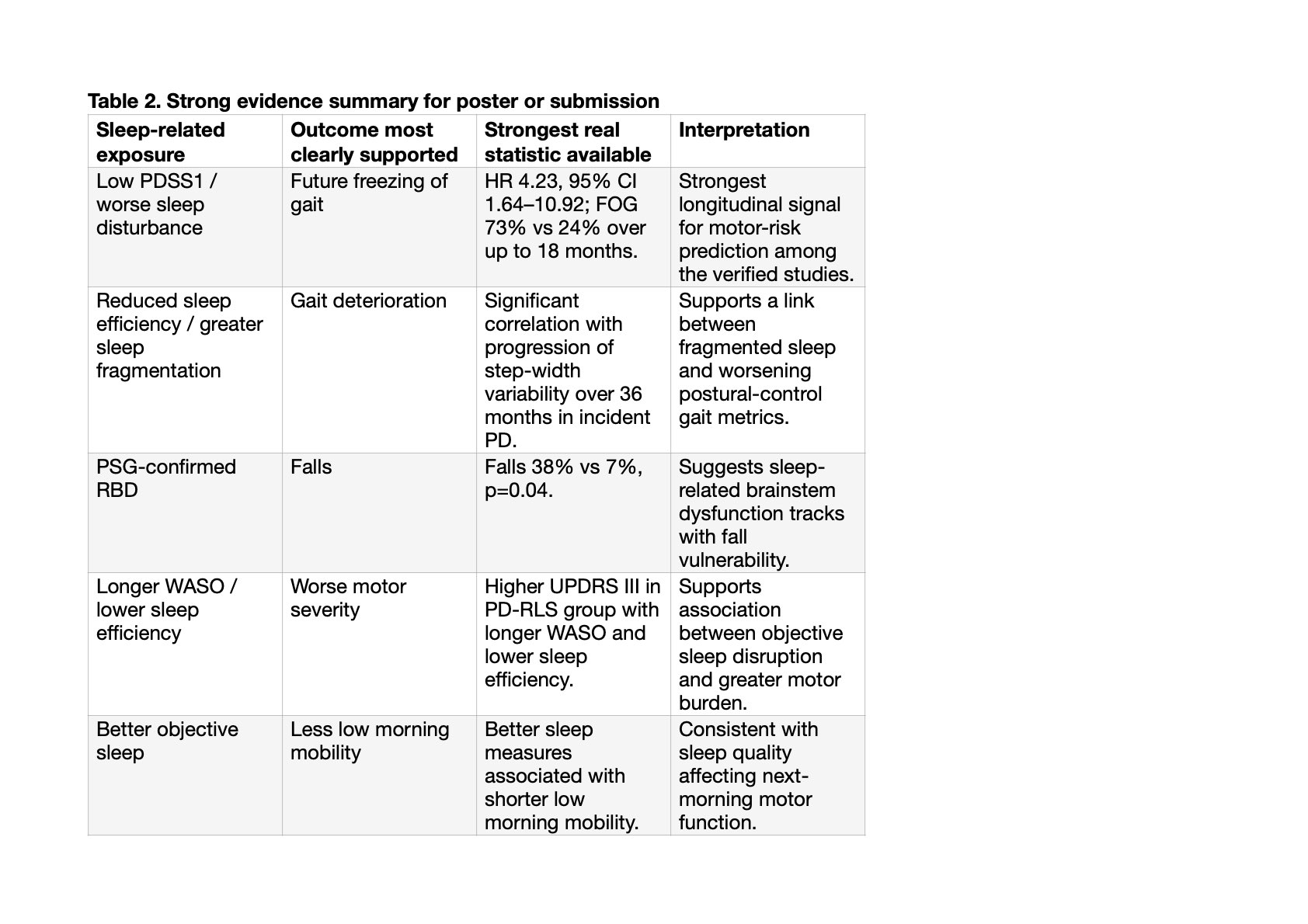
Results: In a prospective Parkinson’s disease cohort followed for thirty-six months, poorer sleep efficiency and greater sleep fragmentation were associated with worsening step-width variability, a marker of impaired postural control. Lower Parkinson’s Disease Sleep Scale scores were associated with a markedly increased risk of freezing of gait during follow-up. Polysomnography-confirmed rapid eye movement sleep behavior disorder was also linked to a higher frequency of falls. Additional studies reported associations between sleep fragmentation, restless legs syndrome, and greater motor severity.
Conclusion: Available evidence suggests that poorer sleep is associated with adverse gait and fall-related outcomes in Parkinson’s disease. Reduced sleep efficiency and sleep fragmentation appear particularly linked to gait deterioration, while broader sleep disturbance may predict freezing of gait. Larger prospective studies using standardized sleep metrics and predefined axial motor outcomes are needed.
MDS 1.1
MDS 1.2
MDS 2
To cite this abstract in AMA style:
S. Kakde, M. Kakde, S. Kakade. Sleep Disturbance and Sleep Fragmentation as Correlates of Gait Deterioration and Fall-Related Outcomes in Parkinson’s Disease: A Systematic Review [abstract]. Mov Disord. 2026; 41 (suppl 1). https://www.mdsabstracts.org/abstract/sleep-disturbance-and-sleep-fragmentation-as-correlates-of-gait-deterioration-and-fall-related-outcomes-in-parkinsons-disease-a-systematic-review/. Accessed October 1, 2026.« Back to 2026 International Congress
MDS Abstracts - https://www.mdsabstracts.org/abstract/sleep-disturbance-and-sleep-fragmentation-as-correlates-of-gait-deterioration-and-fall-related-outcomes-in-parkinsons-disease-a-systematic-review/