
Category: Myoclonus/Tics/Stereotypies
Objective: To synthesize published evidence describing the clinical spectrum and proposed mechanisms of movement disorders occurring after infection with SARS-CoV-2.
Background: Neurological complications have been widely reported following infection with COVID-19. Among these, new-onset movement disorders represent an uncommon but increasingly recognized manifestation. Reported phenotypes include myoclonus, tremor, ataxia, chorea, dystonia, and parkinsonism. Recognition of these disorders is clinically important because they may reflect post-infectious immune mechanisms or injury to motor control circuits.
Method: A structured review of published reports describing new-onset movement disorders temporally associated with SARS-CoV-2 infection was conducted. Evidence from case series, observational studies, and clinical reports was synthesized qualitatively because of heterogeneity in study design and reported phenotypes.
Results: Published reports consistently identify myoclonus as the most frequently described movement disorder associated with COVID-19, often occurring during or shortly after acute infection. Several studies describe a myoclonus–ataxia syndrome, suggesting involvement of cerebellar circuits and possible immune-mediated mechanisms. Tremor and ataxia have also been reported during post-infectious follow-up. In some patients, movement disorders appear after the inflammatory phase of infection and may improve with symptomatic therapy or immunotherapy. Rare cases of chorea and parkinsonism have also been described, suggesting potential basal ganglia involvement.
Conclusion: Movement disorders represent a heterogeneous neurological manifestation following SARS-CoV-2 infection. Myoclonus, tremor, and ataxia appear to be the most commonly reported phenotypes. Improved recognition of post-COVID movement disorders may facilitate earlier diagnosis and guide appropriate neurological evaluation and management.
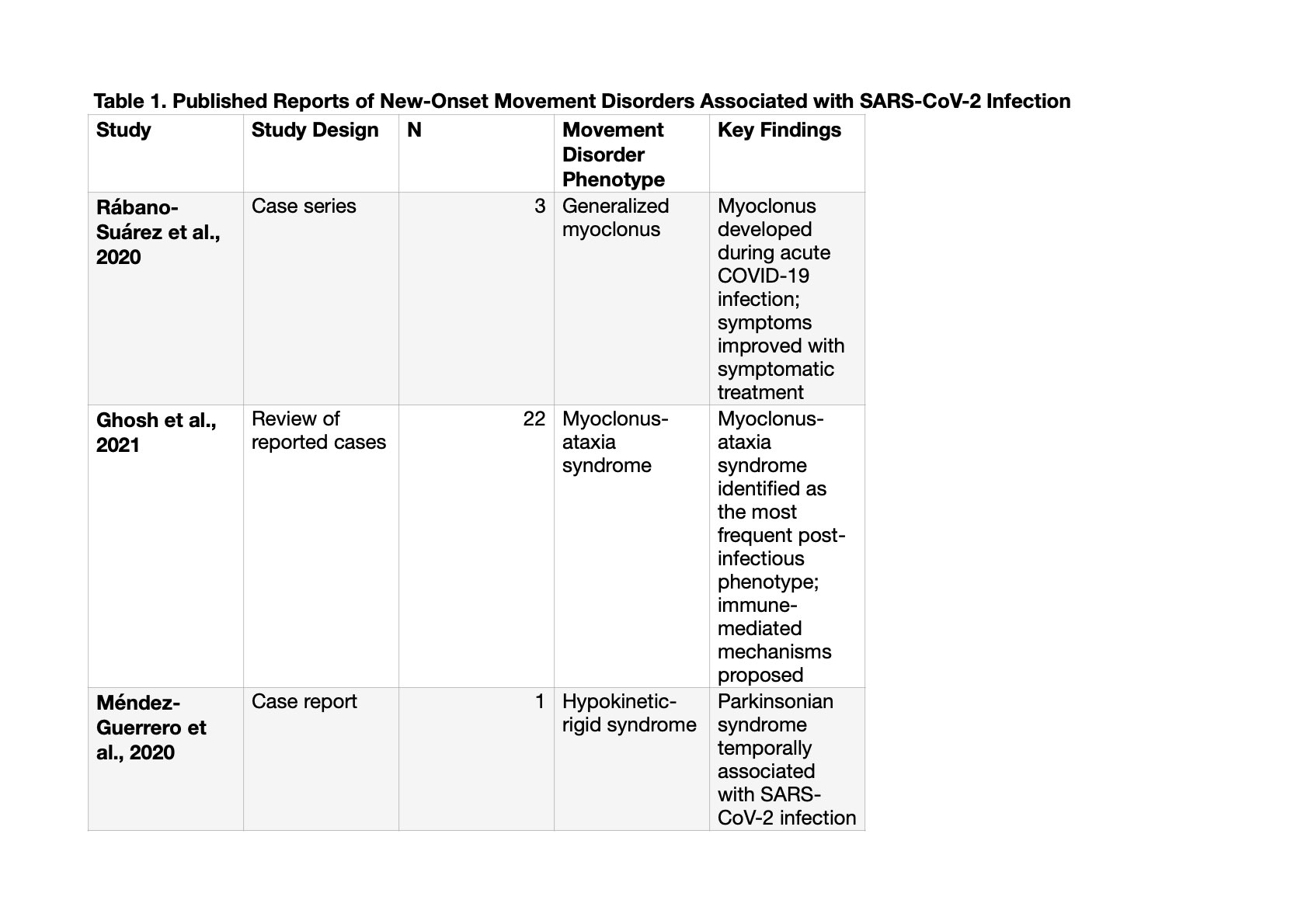
MDS 1.1
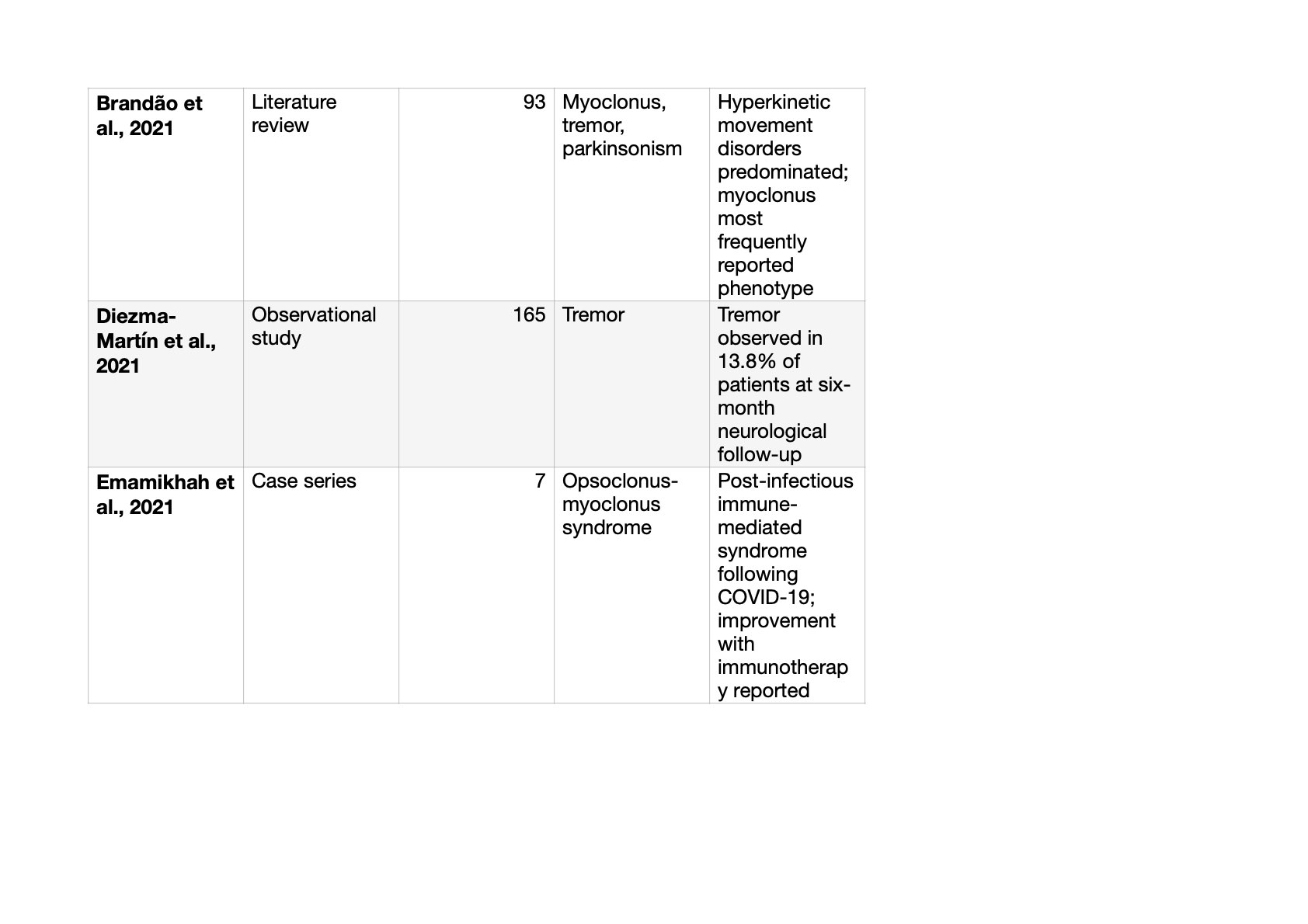
MDS 1.2
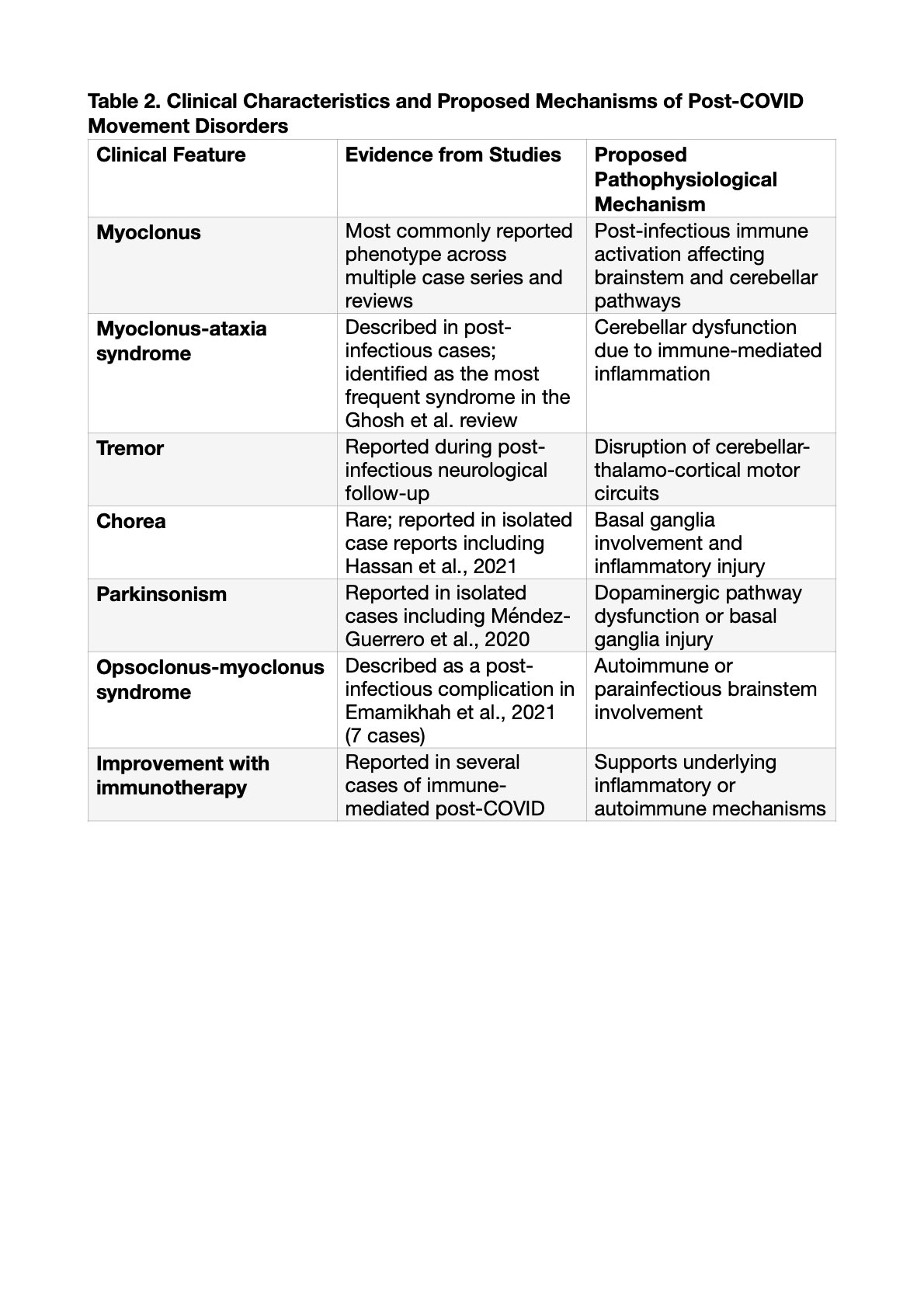
MDS 2
To cite this abstract in AMA style:
S. Kakde, M. Kakde, S. Kakade. Post-COVID Movement Disorders: Clinical Spectrum and Mechanisms A Systematic Review [abstract]. Mov Disord. 2026; 41 (suppl 1). https://www.mdsabstracts.org/abstract/post-covid-movement-disorders-clinical-spectrum-and-mechanisms-a-systematic-review/. Accessed October 1, 2026.« Back to 2026 International Congress
MDS Abstracts - https://www.mdsabstracts.org/abstract/post-covid-movement-disorders-clinical-spectrum-and-mechanisms-a-systematic-review/