
Category: Parkinson's Disease: Genetics
Objective: To report a novel case of early-onset Parkinson’s disease (EOPD) associated with a recurrent 16p11.2 microdeletion involving the PRRT2 gene, further supporting a potential link between PRRT2 haploinsufficiency and parkinsonism.
Background: PRRT2 encodes a synaptic protein involved in vesicle trafficking and neurotransmitter release, with high expression in the basal ganglia. Pathogenic variants in PRRT2 are classically associated with paroxysmal kinesigenic dyskinesia, benign familial infantile epilepsy, and hemiplegic migraine. Parkinson’s disease has not traditionally been considered part of the PRRT2-related spectrum. However, a recent report described a 37-year-old woman with EOPD carrying a deletion encompassing the entire PRRT2 coding region, suggesting a possible association.
Method: Case report with clinical, neuroimaging, and genomic characterization.
Results: A 46-year-old man presented with a one-year history of progressive left-sided bradykinesia. Neurological examination revealed bilateral rigidity, dystonic gait, and marked hyposmia. Dopamine transporter imaging demonstrated reduced presynaptic dopaminergic uptake in the bilateral striata, more pronounced in the posterior putamen. Whole-genome sequencing identified a heterozygous deletion at chromosome 16p11.2, and CNV-seq confirmed an approximately 620-kb microdeletion encompassing 32 genes, including the dosage-sensitive gene PRRT2. The patient had no personal or family history of paroxysmal kinesigenic dyskinesia, infantile seizures, or hemiplegic migraine. Treatment with carbidopa-levodopa resulted in clear symptomatic improvement.
Conclusion: This case provides additional evidence supporting an association between PRRT2 haploinsufficiency and early-onset Parkinson’s disease. Together with the previously reported EOPD case involving PRRT2 deletion, these findings suggest that disruption of PRRT2, including through recurrent 16p11.2 microdeletions, may contribute to dopaminergic dysfunction and parkinsonian phenotypes. These observations expand the phenotypic spectrum of PRRT2-related disorders and highlight a potential role of synaptic vesicle regulation in the pathogenesis of early-onset parkinsonism.
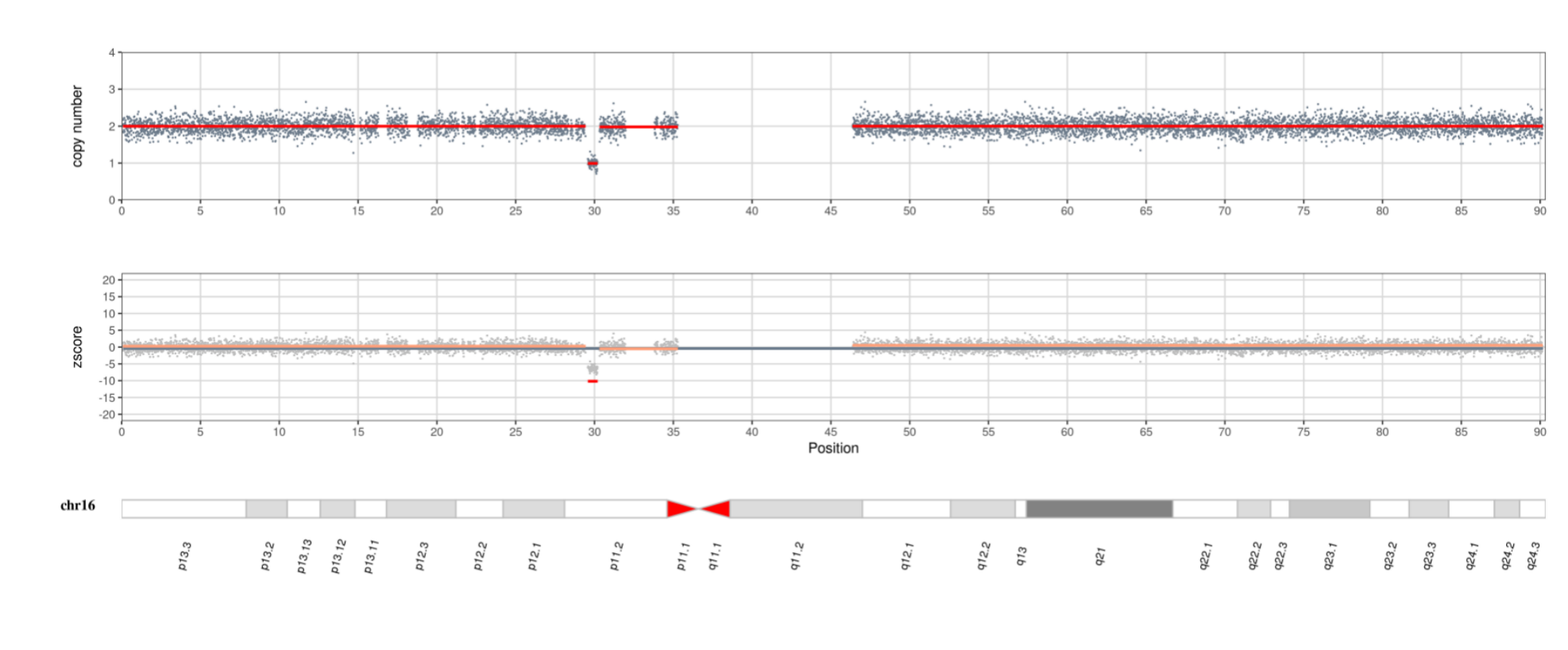
Detailed map of chromosome 16 analysis results
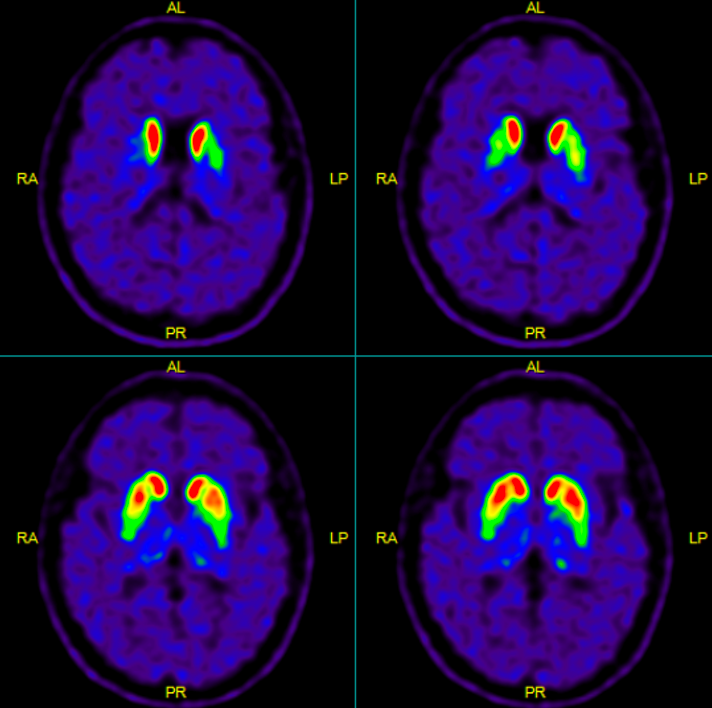
Brain dopamine transporter PET/CT imaging.
References: 1.M. Chen, M. Christie. Young-onset Parkinson’s disease in a female with pathogenic deletion of the PRRT2 gene [abstract]. Mov Disord. 2024; 39 (suppl 1).
To cite this abstract in AMA style:
N. Jin, X. Zheng, W. Luo. Early-Onset Parkinson’s Disease Associated with a Recurrent 16p11.2 Microdeletion Involving PRRT2 [abstract]. Mov Disord. 2026; 41 (suppl 1). https://www.mdsabstracts.org/abstract/early-onset-parkinsons-disease-associated-with-a-recurrent-16p11-2-microdeletion-involving-prrt2/. Accessed October 1, 2026.« Back to 2026 International Congress
MDS Abstracts - https://www.mdsabstracts.org/abstract/early-onset-parkinsons-disease-associated-with-a-recurrent-16p11-2-microdeletion-involving-prrt2/