
Category: Ataxia
Objective: To describe a case of rapidly progressive ataxia in a young adult.
Background: Multiple system atrophy is a rare and progressive synucleinopathy that can present with cerebellar ataxia predominance (MSA-C). Its presentation is typical after age 50, but it can appear earlier. This report describes a case of rapidly progressive ataxia in a young adult.
Method: Male patient, 48 years old, non-consanguineous parents, no relevant comorbidities. Began experiencing symptoms at age 43, in 2020, with imbalances and difficulty walking. In 2021, he worsened with a tendency to fall to the right. In 2022, dysarthria and difficulty writing appeared. He underwent physiotherapy without improvement. In 2024, instability increased. In 2025, dysphagia and significant dysarthria appeared. Urinary incontinence appeared 3 months before hospitalization.
Results: On neurological physical examination, he had severe dysarthria with scanning speech, fragmented saccadic pursuit, symmetrical bradykinesia, dysmetria and dysdiadochokinesia, hyperreflexia, and cerebellar ataxic gait with significant instability. During hospitalization, nocturnal laryngeal stridor was observed. Laboratory tests were normal; brain MRI showed atrophy of the pons and cerebellum with hyperintensity on T2: cross sign, establishing the diagnosis of MSA-C.
MSA-C is a rare and rapidly progressive neurodegenerative disease, with a life expectancy of 7 to 10 years. Although more common after age 50, it can manifest in young adults, evolving with severe morbidity and functional dependence. Brain MRI is essential, showing cerebellar and pons atrophy associated with the “cross sign”, indicative of pontocerebellar degeneration. In this case, due to the young age and accelerated progression, immunological, infectious, and neoplastic causes were investigated, with the diagnosis established based on the predominant cerebellar symptoms and the typical radiological findings. After a period of total dependence, the patient passed away in his sleep this year. Sudden death from vocal cord paralysis lead in laryngeal stridor lead as a respiratory complication in these cases.
Conclusion: MSA-C should be considered in young adults with rapidly progressive ataxia. Recognizing typical clinical and radiological findings allows for timely diagnosis and alerts to potentially fatal complications.
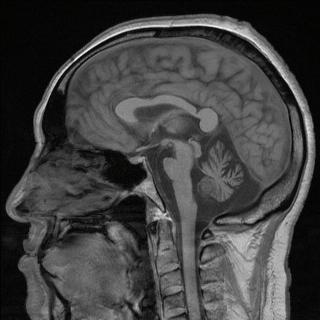
MSA MRI sagital
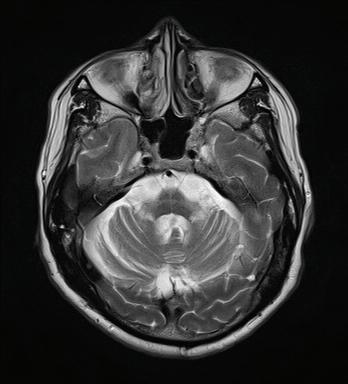
MSA MRI axial
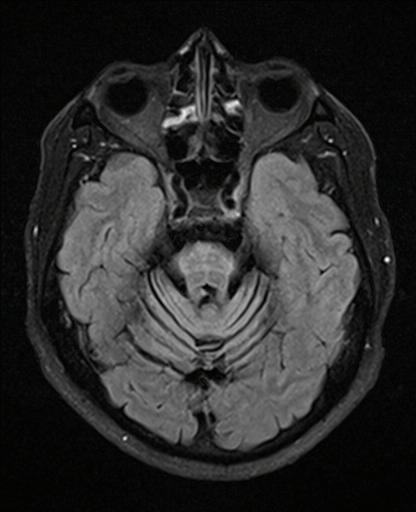
MSA MRI Cross sign
References: Sugiyama A, et al. Revisiting ‘hot cross bun’ sign: a multicentre MRI study of autopsy confirmed MSA. J Neurol Neurosurg Psychiatry. 2026.
Doan TT, et al. MSA C case report and literature review: role of MRI and diagnostic utility of hot cross bun sign. 2023.
Rapidly Progressive Multiple System Atrophy Cerebellar Type in a 52 Year Old Woman: diagnostic challenges. Cureus. 2026.
To cite this abstract in AMA style:
J. Mateo, A. Beteta. A Case of Rapidly Evolving Ataxic Syndrom in a Young Adult [abstract]. Mov Disord. 2026; 41 (suppl 1). https://www.mdsabstracts.org/abstract/a-case-of-rapidly-evolving-ataxic-syndrom-in-a-young-adult/. Accessed October 1, 2026.« Back to 2026 International Congress
MDS Abstracts - https://www.mdsabstracts.org/abstract/a-case-of-rapidly-evolving-ataxic-syndrom-in-a-young-adult/