
Objective: We assessed patient adherence with an app-based patient-centered outcome (PCO) tool for focal dystonia in a prospective study to determine the impact of dystonia subtype and demographics on adherence.
Background: Dystonia is a chronic condition characterized by involuntary muscle contractions resulting in twisting movements and abnormal posturing. Currently, standard of care to treat adult-onset focal dystonia is repeated botulinum neurotoxin (BoNT) injections at 3-month intervals. The Dystonia Coalition developed a digital PCO application to measure the response across motor, disability, and psychiatric symptom domains in individuals with three types of focal dystonia undergoing BoNT treatment. The PCO app is currently being evaluated in a multi-site study collecting patient-reported data weekly.
Method: We studied a convenience sample of people diagnosed with cervical dystonia (CD), laryngeal dystonia (LD), or blepharospasm (BSP) from eleven different sites participating in the Dystonia Coalition PCO Project. Each was required to use the app on a weekly basis for at least one 12-week long BoNT cycle. The average 12-week app adherence and demographics (dystonia type, dystonia severity, age, sex, geographical region) were obtained for each participant.
Results: Figure 1 illustrates the differences in average adherence by dystonia subtype in forty-four participants. The CD cohort (n=18) had the highest adherence rate at 94% (SD 9.0%), followed by LD group (n=12) at 88% (SD 12%) and finally, the BSP sample (n=14) at 80% (SD 24%).
Conclusion: Overall, the adherence rates entering weekly symptomatic data were high (80-94%), demonstrating good feasibility with this PCO app. However, given the range of adherence rates seen in this pilot study, the possibility of dystonia subtype and subject-specific barriers in adhering to weekly PCO data entry is present. Identifying opportunities to improve adherence with this digital outcome measures app is vital to ensure the most accurate patient-reported experiences are collected to improve the standard of care and evaluate the efficacy of future options for treating dystonia.
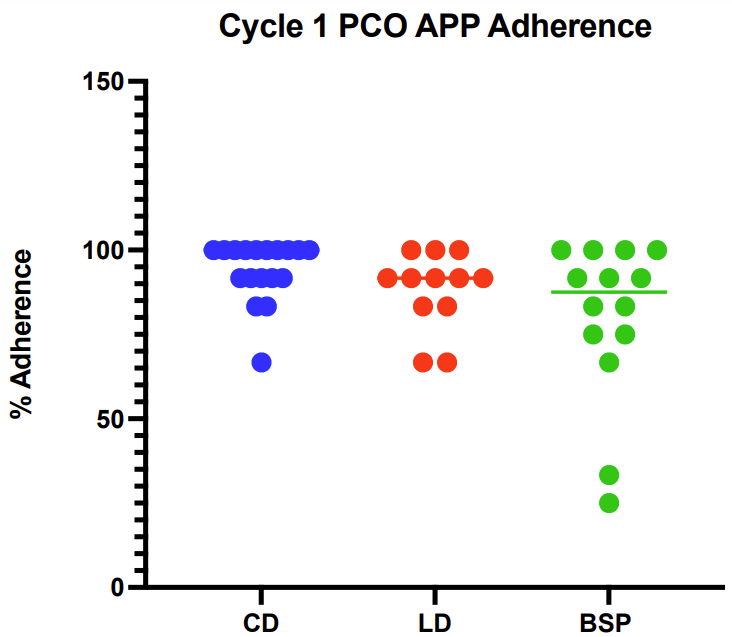
Figure 1
To cite this abstract in AMA style:
A. Tingin, P. Reyes, F. Qeadan, L. Wright, G. Kilic-Berkmen, S. Bellows, S. Fox, D. Martino, J. Feuerstein, A. Wagle Shukla, A. Deik, R. Barbano, B. Berman, J. Perlmutter, H. Jinnah, S. Pirio Richardson. Adherence with Digital Outcome Measures in Focal Dystonias [abstract]. Mov Disord. 2025; 40 (suppl 1). https://www.mdsabstracts.org/abstract/adherence-with-digital-outcome-measures-in-focal-dystonias/. Accessed October 6, 2026.« Back to 2025 International Congress
MDS Abstracts - https://www.mdsabstracts.org/abstract/adherence-with-digital-outcome-measures-in-focal-dystonias/