
Category: MSA, PSP, CBS: Neuroimaging
Objective: To characterize disease- and symptom-specific alterations in the central autonomic network (CAN) in multiple system atrophy (MSA) and associations with autonomic dysfunction.
Background: Autonomic failure is a core feature of MSA, but its neural basis remains incompletely understood. We compared functional connectivity in MSA and healthy controls and examined associations with autonomic function and symptoms.
Method: We studied 80 patients with MSA and 40 matched healthy controls who underwent autonomic evaluation and resting-state fMRI. Seed-to-voxel functional connectivity analyses used predefined cortical, subcortical, and cingulate CAN regions of interest. Associations with clinical scores were examined using correlation and linear regression with false discovery rate correction.
Results: Disease-specific analysis revealed reduced functional connectivity in MSA, particularly in medullary regions, with distributed alterations across subcortical autonomic, cingulate, and cortical autonomic networks [figure1]. Symptom-specific analysis showed distinct changes associated with autonomic dysfunction, including positive correlations in limbic and frontal cortices and negative correlations in medullary and frontal regions [figure2]. Frequency and spatial overlap analyses identified convergent prefrontal involvement, with core regions in lower and higher ventromedial prefrontal cortex (vmPFC) clusters and bilateral dorsolateral prefrontal cortex (DLPFC) [figure3]. DLPFC connectivity increased with greater autonomic dysfunction, whereas connectivity in the higher vmPFC cluster was associated with preserved autonomic function. Domain-specific analyses identified distinct alterations related to urinary dysfunction, orthostatic hypotension, sexual dysfunction, and gastrointestinal dysfunction.
Conclusion: MSA is associated with disease- and symptom-specific CAN alterations. The findings support a hierarchical model in which subcortical autonomic degeneration is followed by region-specific prefrontal reorganization. Disconnection of the lower vmPFC cluster and partial impairment of the higher vmPFC cluster may contribute to progressive autonomic failure, whereas increased DLPFC connectivity may reflect compensatory but potentially maladaptive recruitment. These findings identify candidate targets for symptom-focused neuromodulation in MSA.
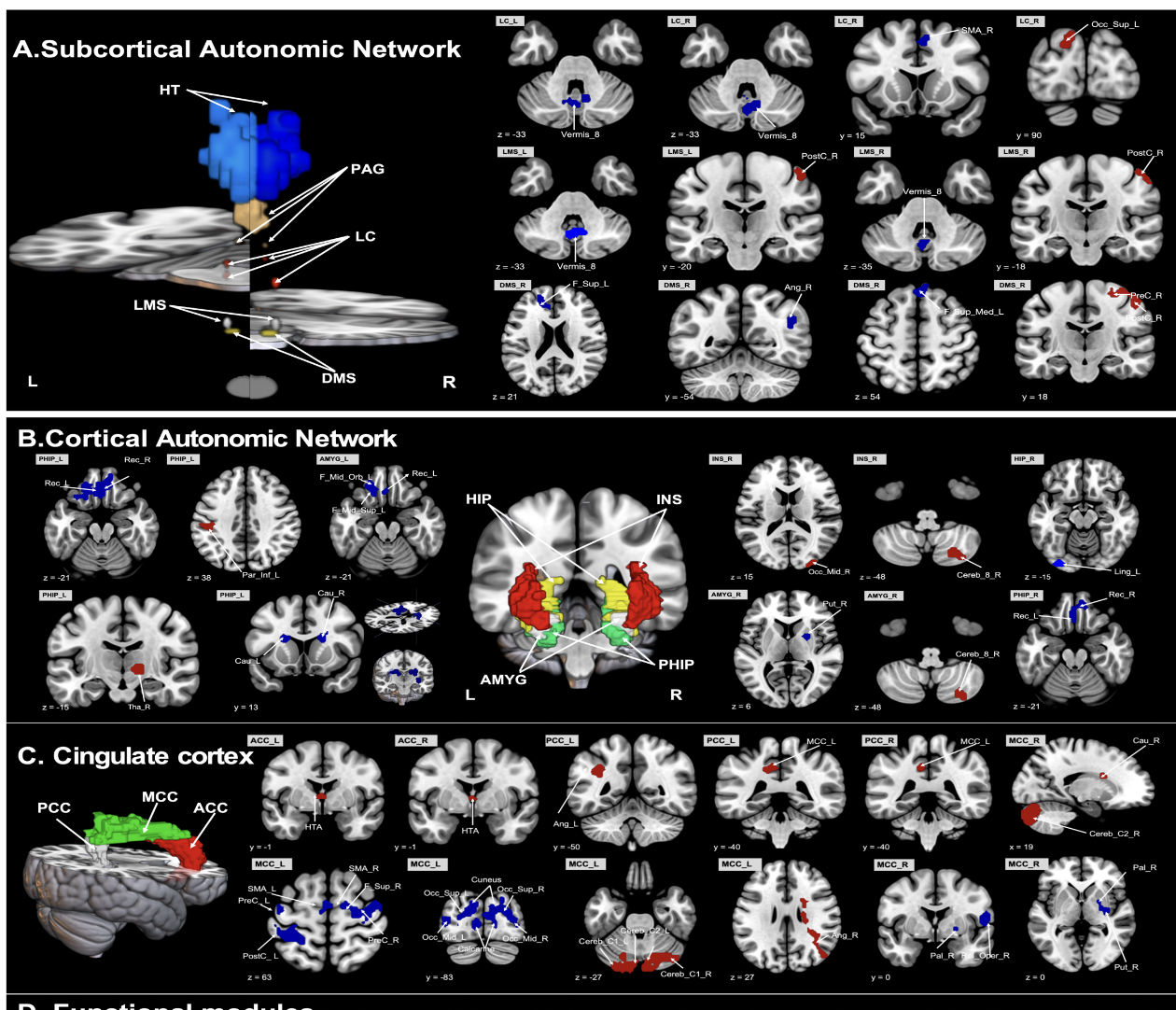
Figure 1
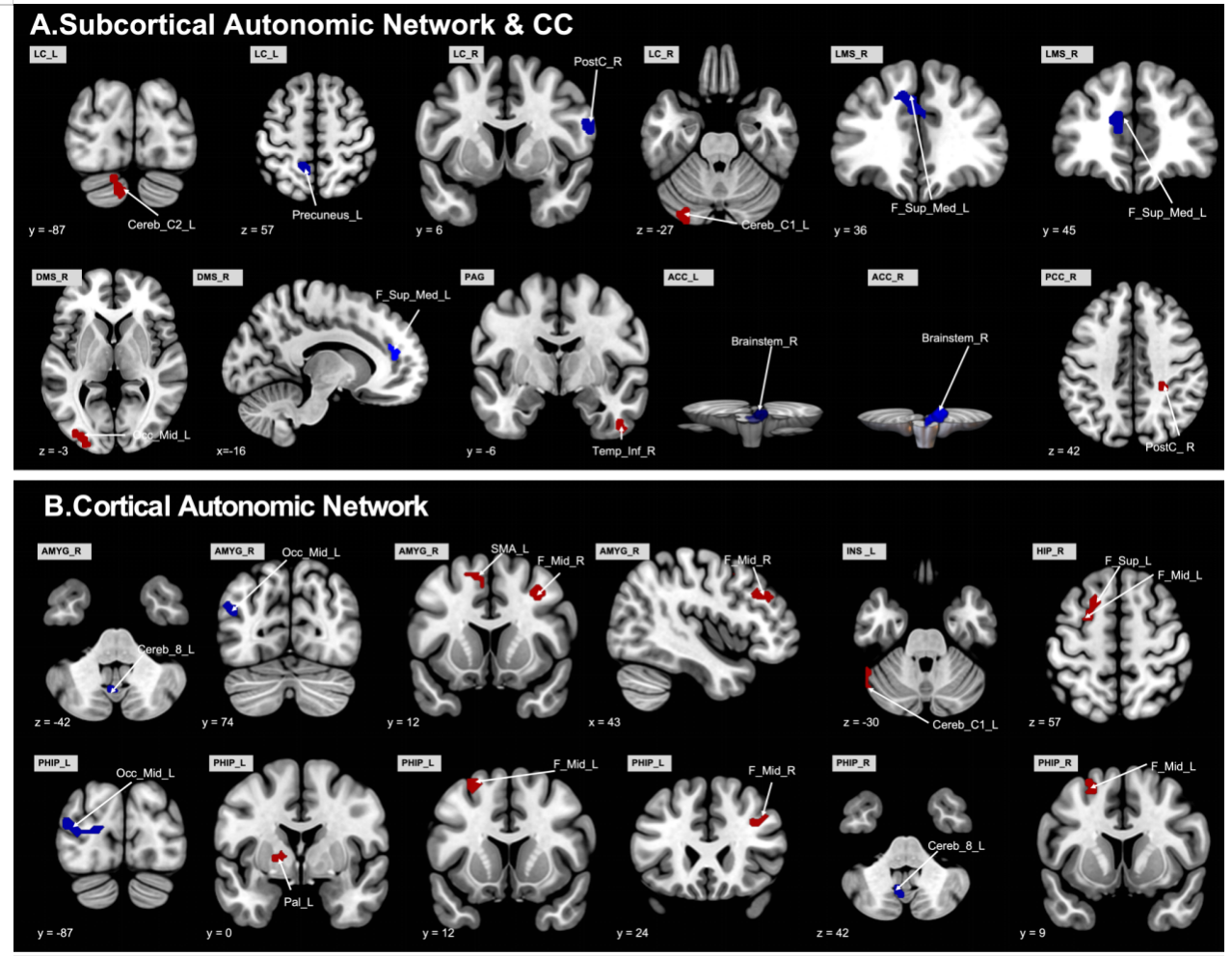
Figure 2
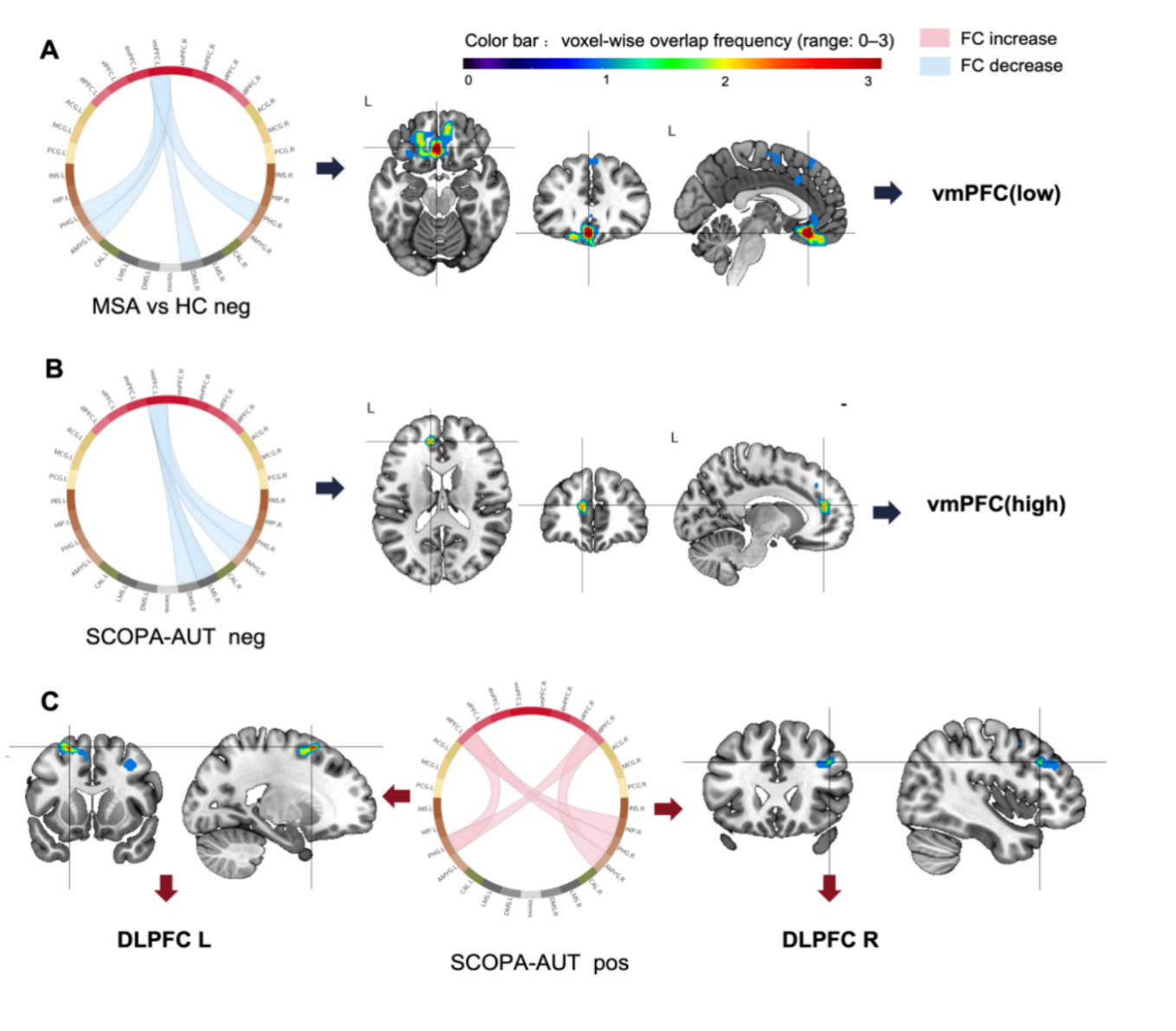
Figure 3
To cite this abstract in AMA style:
Y. Wang, A. He, W. Mao, P. Chen. Central Autonomic Network Alterations in MSA: From Subcortical Degeneration to Prefrontal Reorganization [abstract]. Mov Disord. 2026; 41 (suppl 1). https://www.mdsabstracts.org/abstract/central-autonomic-network-alterations-in-msa-from-subcortical-degeneration-to-prefrontal-reorganization/. Accessed October 1, 2026.« Back to 2026 International Congress
MDS Abstracts - https://www.mdsabstracts.org/abstract/central-autonomic-network-alterations-in-msa-from-subcortical-degeneration-to-prefrontal-reorganization/